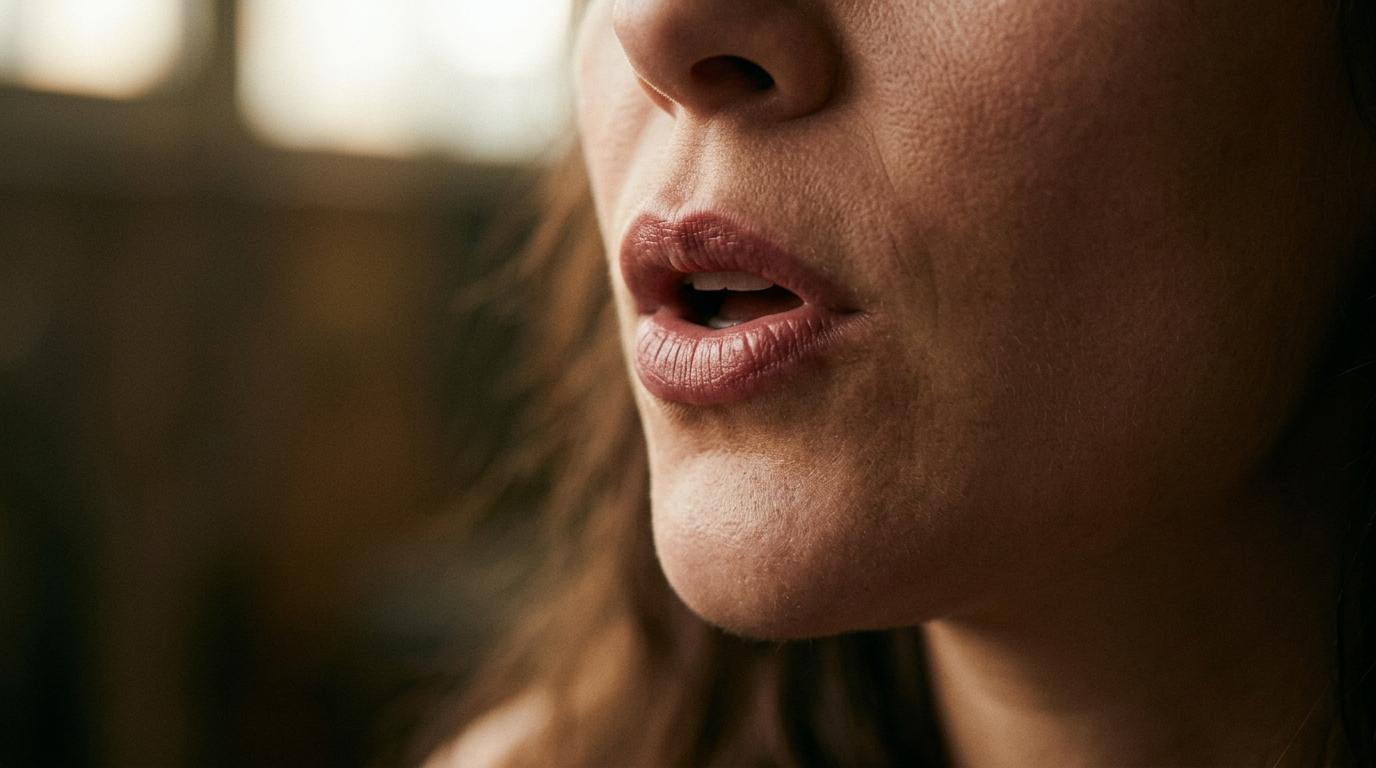
Your mouth is a drum kit
Beatboxing is percussion made entirely with your mouth: lips, tongue, teeth, and breath doing the work your hands would normally do on a drum kit. You've already got everything you need. The three sounds you learn first are the kick drum, the hi-hat, and the snare. Together they form the backbone of almost every beat you've ever heard.
How to think about it
Don't try to imitate what beatbox sounds like on a track. Think about what each drum does physically and replicate the air movement. A kick drum punches air down. A snare snaps. A hi-hat hisses. Match the physics and the sound follows.
Start silent
Mouth the shapes of each sound before adding any air. Muscle memory builds faster when you separate shape from breath.
The three core sounds
Learn these one at a time. Don't rush to combine them until each one feels natural on its own.
Kick drum: the B sound
Close your lips, build a little pressure behind them, then release with a voiced "b", like the word "boot" but stopped immediately. It should feel like a small pop from your lips, not your throat. Keep it short and punchy.
Hi-hat: the ts sound
Press your tongue to the roof of your mouth just behind your front teeth, then release a short sharp burst of air: "ts" or "tss". Clench your teeth slightly for a tighter hiss. This is your highest-pitched, most frequent sound. It sits between every other hit.
Snare drum: the pf or k sound
The classic snare is a "pf": lips together, then a tight exhale that forces air through them like a muffled spit. Some people find the "kh" easier: the back of your tongue hits your soft palate and releases with a sharp, dry crack. Try both and use whichever sounds snappier.
Volume is not the goal
A good beatbox sound is clean and defined, not loud. Neighbours will thank you and your sounds will cut through a mix better too.
Building your first beat
The most common beat pattern in hip-hop and pop is called a four-on-the-floor or boom-bap, depending on where the kick lands. Start with this simple loop.
The basic pattern
Say this out loud slowly, treating each syllable as one hit: B, ts, pf, ts, B, ts, pf, ts. The B is your kick, ts is your hi-hat, pf is your snare. Kick on 1 and 3, snare on 2 and 4, hi-hat in between. That's a real beat.
Locking in the tempo
Use a free metronome app set to 70–80 BPM. Play one beat per click at first, then squeeze two hits per click as you get comfortable. Slowing down isn't failure. Every beatboxer drills slowly. Speed is just slow practice done enough times.
Record yourself
Even a voice memo reveals timing and clarity issues you can't hear while performing. One minute of listening back is worth ten minutes of practice.
Where to go from here
Once the basic loop feels automatic, start adding variations: drop a hi-hat, double the kick, add a snare roll. Each small addition opens up entirely new rhythms. The beatbox community online is large, generous, and full of free tutorials at every level.
Next sounds to explore
After the basics, the most useful sounds to learn are the inward snare (breathed in rather than out, so you can keep a beat without pausing to inhale), the lip roll for fast hi-hats, and vocal scratching for texture. Each one is a standalone skill you can drop into your basic beat once you've got it.
Beatbox is a long game
Most people can make recognisable sounds in one session. Sounding good takes weeks of daily five-minute practice. That's a reasonable trade.