Why radiators need bleeding
When air gets trapped inside a radiator, it stops hot water from filling the whole unit. The result is a radiator that's warm at the bottom but cold at the top, or one that makes gurgling and knocking noises when the heating runs.
Bleeding releases that trapped air so hot water can circulate properly. It's one of the easiest maintenance tasks you can do, and it makes a noticeable difference to how quickly your home warms up.
Signs your radiators need bleeding
Cold patches at the top of the radiator are the clearest signal. You might also notice the whole system is slower to heat up than it used to be, or that some rooms never get as warm as others even with the thermostat turned up.
Check all radiators at once
Walk around and feel every radiator before you start. It only takes a minute, and you can bleed them all in one go rather than coming back later.
What you need
You only need two things: a radiator bleed key and a cloth or small container to catch drips. Bleed keys cost under £2 at any hardware shop and fit the square valve stem on the end of almost every UK radiator.
Before you start
Turn your heating on and let it run for 10–15 minutes so all the radiators are hot and the system is at full pressure. Then turn the heating off and wait another 10 minutes. The water inside is now pressurised but the pump has stopped. This is the ideal moment to bleed.
Don't bleed with the pump running
If the pump is on while you bleed, air can be sucked back into the system rather than pushed out. Always turn the heating off first and let it settle.
Bleeding the radiator
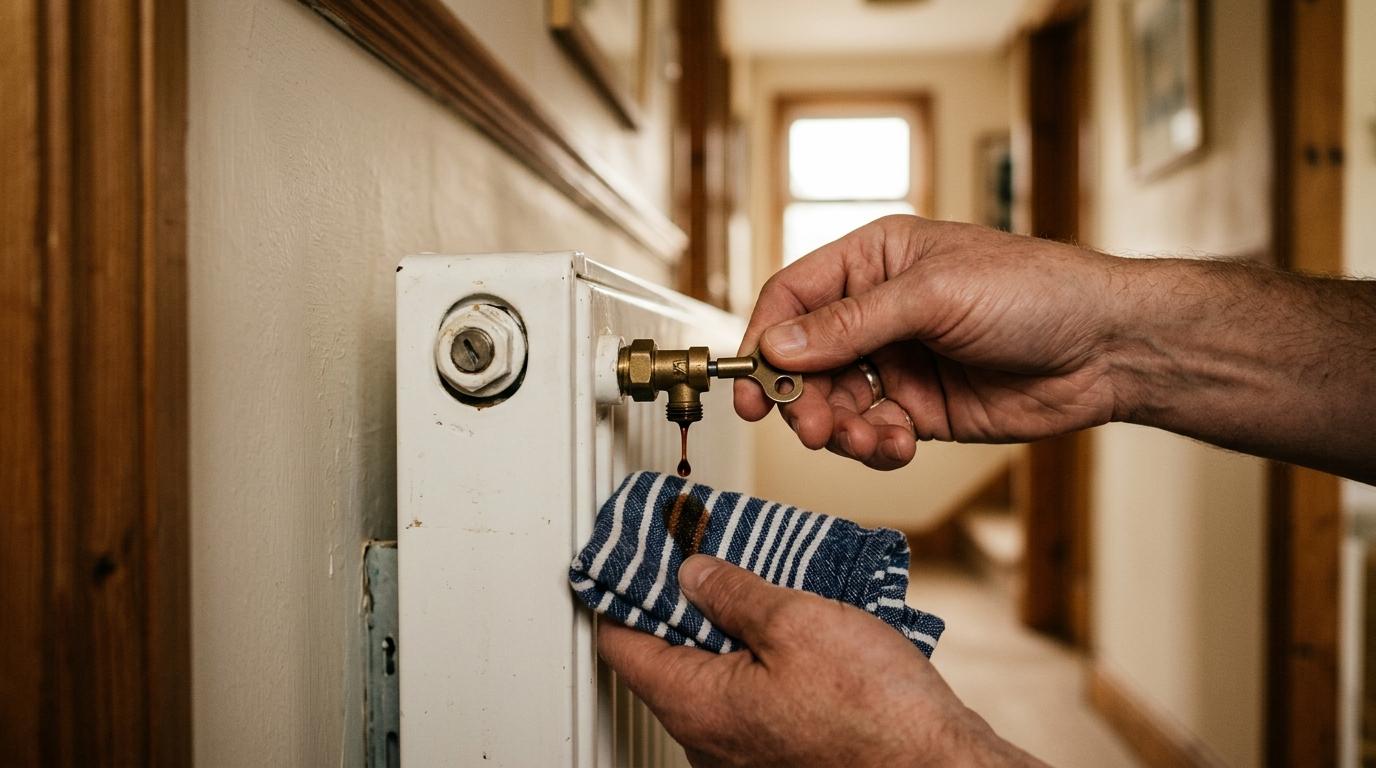
Find the bleed valve: a small square-headed screw at the top corner of the radiator, usually on the opposite end from the main inlet pipe. Hold your cloth underneath it to catch any water.
Insert the bleed key and turn it slowly anti-clockwise by about a quarter to half a turn. You'll hear a hiss as air escapes. Keep the key in place and wait. Once the hissing stops and a steady trickle of water appears, the air is out. Turn the key clockwise to close the valve firmly. Don't overtighten.
After bleeding
Check the pressure gauge on your boiler. Bleeding releases water along with the air, so pressure can drop. Most combi boilers should sit between 1 and 1.5 bar. If it's dropped below 1, use the filling loop underneath the boiler to top it back up. Your boiler manual will walk you through this in two minutes.
Work upstairs to downstairs
Start on the top floor and work your way down. This mirrors how air naturally rises in the system and means you won't push newly introduced air upwards again.
Test and keep on top of it
Turn the heating back on and feel each radiator once it's up to temperature. The cold spots should be gone. If a radiator still has a cold section after bleeding, the issue may be sludge buildup rather than air: a job for a heating engineer rather than a bleed key.
Most homes benefit from bleeding radiators once a year, ideally in early autumn before you start relying on your heating again. If you keep hearing gurgling or find cold spots returning quickly, your system may be letting air in somewhere. Worth having a plumber take a look.