What a body scan is
A body scan is a form of meditation where you move your attention slowly through your body, region by region, noticing physical sensations without trying to change them. It's awareness training, not relaxation. Relaxation often follows, but it's a side effect, not the goal.
Why bother
Most of us carry tension in our shoulders, jaw, or chest for hours without noticing. The body scan trains your attention to pick up on these signals earlier, so you can respond instead of just accumulating stress through the day. It's also one of the most researched mindfulness practices, used in MBSR programmes and backed by solid clinical evidence for anxiety, pain, and sleep.
You don't need to feel relaxed
If you feel bored, restless, or nothing at all during your first scan, that's completely normal. You're still training attention. The results show up later, off the cushion.
Getting set up
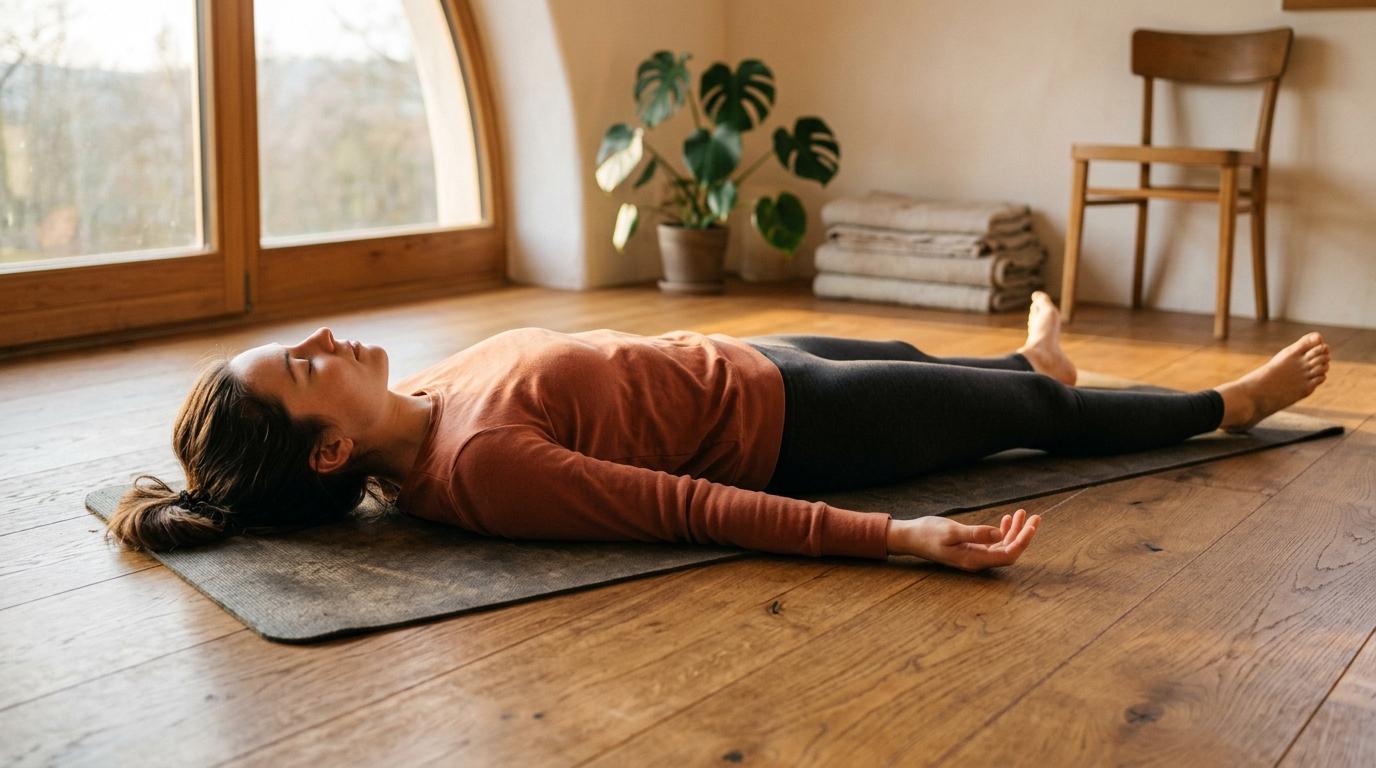
Lie on your back if possible: on a mat, a bed, or a firm sofa. Legs uncrossed, arms resting at your sides with palms facing up. Sit in a chair if lying down makes you fall asleep, which is very common at first. Set a timer for 10 minutes so you're not clock-watching.
Before you begin
Take three slow breaths to settle. Let your eyes close. Don't try to breathe in any special way: just notice that you're breathing. Feel the weight of your body against the surface beneath you. This anchoring moment tells your nervous system the scan is starting.
Falling asleep is fine at first
It usually means you were more tired than you realised. As you practise, your ability to stay alert while relaxed improves. Try sitting upright if it keeps happening past the first week.
Running the scan
Bring your attention to the soles of your feet. Don't move them: just notice. Is there warmth? Pressure? Tingling? Nothing? There's no wrong answer. Hold your attention there for a few breaths, then let it rise slowly: heels, ankles, calves, knees, thighs. Take roughly one breath per region.
What to do when your mind wanders
It will wander. You'll start thinking about dinner, or remember an email you forgot to send. That's the practice, not failure. The moment you notice you've drifted, gently return to whatever body part you left. No commentary, no frustration. Just return.
Continuing upward
Move from legs into the pelvis and lower back, the belly, the chest, then the hands and arms. Pause at the shoulders, where most people find significant tension. Then scan the neck, jaw, tongue, face, and finally the top of the skull. When you reach the top, take a few breaths with a sense of the whole body at once before opening your eyes.
Jaw and tongue are often overlooked
Many people clench their jaw or press their tongue to the roof of their mouth without realising. When you reach the face, let the jaw drop slightly. Notice if the tongue relaxes away from the roof of the mouth. These two often release a surprising amount of held tension.
Building a habit and going further
Ten minutes daily for two weeks is enough to notice a real difference in how quickly you can read your own stress signals. Morning scans help you start the day less reactive; evening scans help you wind down and sleep. Neither is better. The one you'll do is the right one.
Common variations
Once you're comfortable with the basic scan, you can experiment. Some people add a brief breath awareness pause at each region. Others use the scan as a pain management tool, spending longer in areas of discomfort with a spirit of curiosity rather than resistance. The MBSR tradition also uses a 45-minute version, which goes into far more granular detail and is worth trying every few weeks.
Pair it with something you already do
Attaching a 10-minute scan to an existing habit (after brushing your teeth, or before getting out of bed) builds consistency. You're less likely to forget it and more likely to look forward to it.