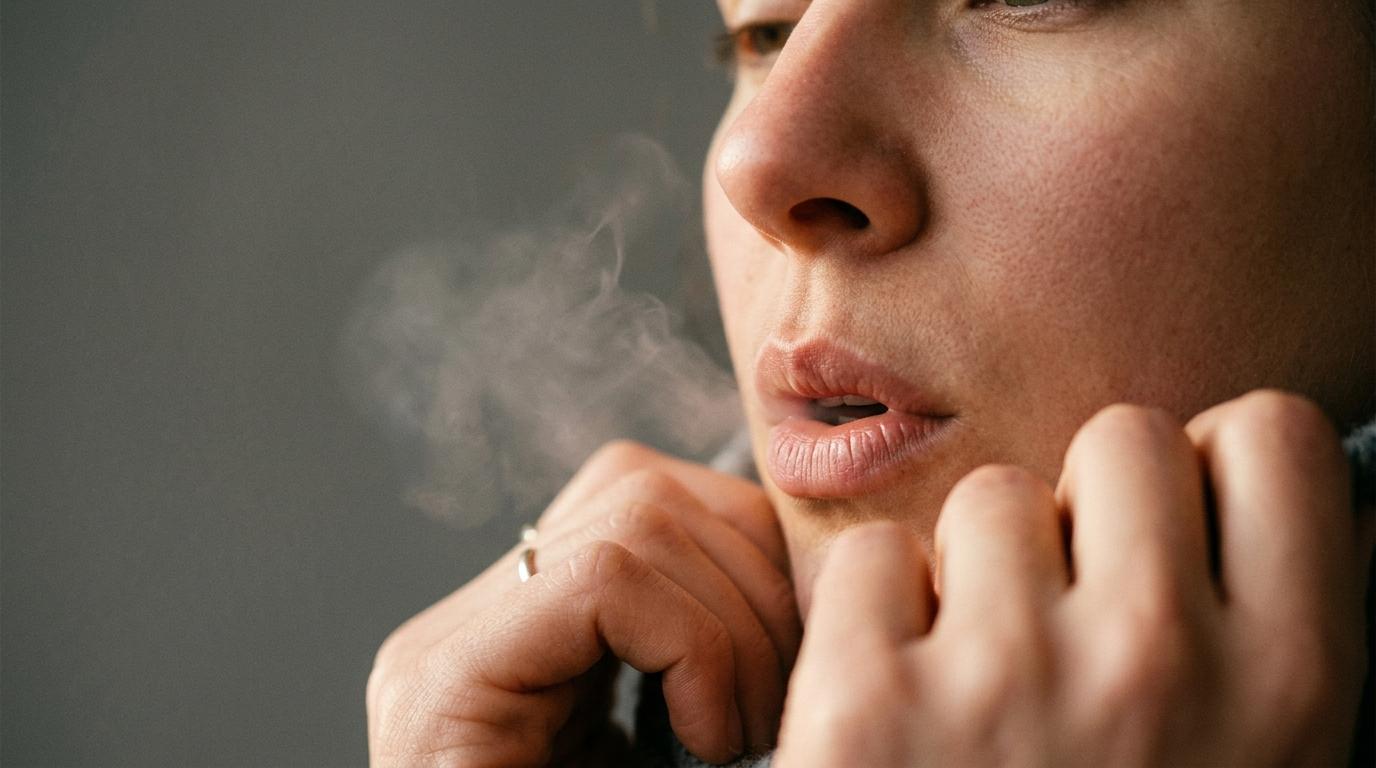
What box breathing does
Box breathing is a controlled breathing technique that deliberately slows your breath to calm the nervous system. It gets its name from the four equal sides of a box: four seconds in, hold, out, hold, and repeat.
When you're stressed, your body breathes fast and shallow, which feeds the stress response. Box breathing interrupts that loop by activating the parasympathetic nervous system: the rest-and-digest counterpart to fight-or-flight.
Who uses it
Navy SEALs use this before high-stakes operations. Surgeons use it before difficult procedures. Athletes use it to recover composure mid-competition. It works because it's precise and repeatable, not because it's complex.
You'll feel it within 60 seconds
Most people notice a shift in their second or third round. Don't skip the holds: they're where the regulation happens.
The 4-4-4-4 pattern
Four equal phases, each lasting four seconds. You do them in sequence without rushing the transitions.
Phase one: inhale
Breathe in slowly through your nose for four counts. Let your belly expand first, then your chest. Shoulders relaxed and down.
Phase two: hold at the top
Hold at the top of the inhale for four counts. Don't strain or tense your face. A gentle pause, not a forced lock.
Phase three: exhale
Breathe out slowly for four counts. Let the air leave steadily. Your belly drops first, then your chest.
Phase four: hold at the bottom
Hold with empty lungs for four counts. This is the phase most people want to skip. It's also the one that triggers the parasympathetic response most powerfully.
Count in your head, not out loud
Silently counting keeps you focused and prevents you disturbing anyone nearby. If four seconds feels too short or long, adjust to 5-5-5-5 once you're comfortable.
Your first practice session
Find a position where your back is supported: seated in a chair works best for beginners. Uncross your legs, rest your hands on your thighs, close your eyes if you're comfortable.
Start with four complete rounds: about 64 seconds of active breathing. Most people do four to six rounds for stress relief, and up to ten minutes for a dedicated session.
Common beginner mistakes
Breathing too fast between phases is the main one. If your four-count inhale feels short, you're rushing. Slow down until four seconds feels like a comfortable, full breath. The other mistake is tensing during the holds: the holds should feel still, not effortful.
When to use it
Before a difficult conversation, after bad news, mid-panic, before sleep, or as a morning reset. Unlike most tools, it works in public (on the bus, at your desk, in a waiting room) because nothing about it looks unusual.
Set a soft timer instead of counting rounds
A two-to-four minute timer means you're not mentally tracking when to stop. It lets you stay in the practice rather than managing it.
Going further
Once the 4-4-4-4 pattern feels natural, you can extend the hold phases to 4-4-4-6, or try the 4-7-8 variation popularised by Dr. Andrew Weil, which focuses on longer exhales. The core mechanic is the same; the ratio changes to suit different goals.
Box breathing is also a foundation for longer breath-work practices like coherence breathing (five seconds in, five out) and diaphragmatic training used in yoga and athletic performance. Once you can do four rounds without losing count, you've got the attention control to explore those too.
Building a habit
Attach box breathing to something you already do: before your first coffee, when you sit down at your desk, or just before bed. Habit stacking is the most reliable way to make this stick without relying on willpower.