Understand what you're working with
A firesteel (also called a ferro rod) is a rod of ferrocerium that throws sparks at around 3,000°C when scraped with a hard edge. Unlike matches or lighters, it works soaking wet, at altitude, and lasts thousands of strikes, which is why bushcrafters and survivalists swear by it.
What you need
Three things: a firesteel rod, a striker (the spine of a knife, a dedicated scraper, or the edge of a steel file), and a tinder bundle: dry, fine material that catches a spark and holds an ember. Cotton wool balls are the perfect learning tinder because they catch instantly and are forgiving.
Start with cotton wool
Buy a bag of pure cotton wool balls from any chemist. They catch sparks reliably every time, which lets you focus on technique without cursing your tinder.
Master the striking technique
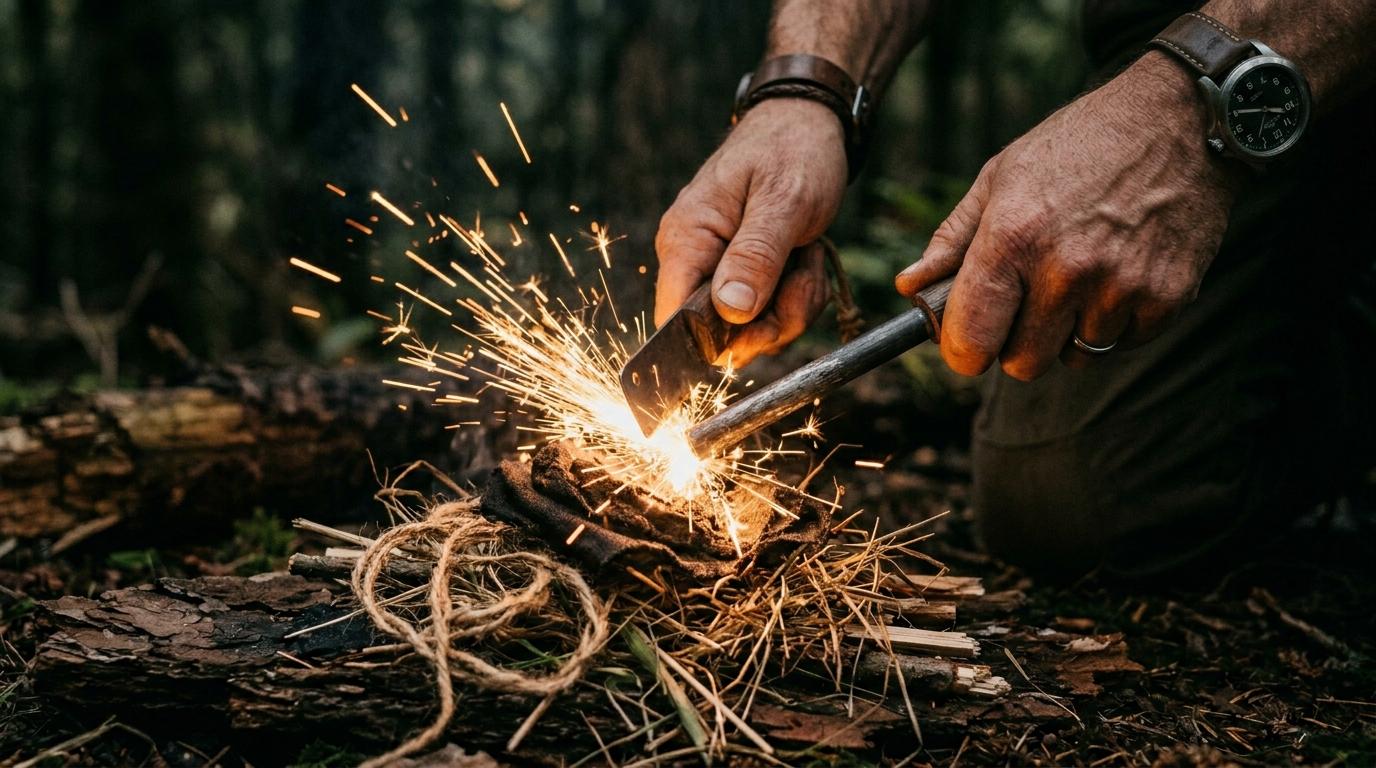
Most beginners wave the rod through the air like a wand. That rarely works. The correct approach is to hold the firesteel steady and push the striker away from you along the rod, rather than moving the rod. This keeps your tinder bundle exactly where you aimed and produces a consistent shower of sparks.
Body position
Place your tinder bundle on a flat surface or pinch it between two fingers close to the end of the rod. Rest the tip of the firesteel lightly against or just above the tinder. Lock your wrist and push the striker firmly and quickly along the rod in one smooth motion, at an angle of about 45 degrees. Aim the spark shower directly into the densest part of your tinder.
Common mistakes
Striking too slowly produces weak sparks. Striking too gently produces the same. Apply firm pressure and move fast. Think of it like striking a match, not sanding wood. If you keep knocking your tinder bundle away mid-strike, switch to holding the rod still and moving just the striker wrist.
Watch the blade edge
If you're using the spine of a knife as a striker, make sure it is the spine (the blunt back), not the blade edge. Scraping the blade dulls it and you lose skin.
Build and transfer your ember
Catching a spark is only half the job. Once your tinder smoulders, you need to nurse that ember into a flame. Hold the burning tinder bundle gently in both hands, tilted so the ember sits above your hands, and blow steadily and softly, not in sharp puffs. Think of breathing on it rather than blowing it out.
Making a tinder bundle
In the field, a good tinder bundle looks like a bird's nest: an outer layer of dry grass, bark strips, or dead leaves shaped into a cup, and a dense inner core of the finest, driest material you can find: birch bark scrapings, dry bracken rubbed to dust, cattail fluff, or dried fungi. The spark lands in the core; the outer bundle feeds the flame as it grows.
Transferring to your fire lay
Have your fire lay already built before you strike: dry kindling arranged in a small teepee or log-cabin structure waiting for the bundle. Once the bundle is flaming, push it under the kindling and let the fire breathe upward. Don't hover over it and block the airflow.
Prepare your lay first
Nothing kills the mood like a perfect ember dying while you scramble to stack sticks. Build the fire lay, then strike.
Practice, progress, and go deeper
After your first success with cotton wool, challenge yourself to natural tinder only. Try dried grass, birch bark, or dried pine needles. Each material teaches you something new about moisture content, density, and airflow. Try striking in wind, in drizzle, and with gloves on. These are the conditions where the skill earns its keep.
Choosing a firesteel
Beginner rods are often short and thin: they work but wear out faster and are harder to grip. A rod around 8–10mm diameter and at least 10cm long gives you more surface, easier grip, and thousands more strikes. Brands like Light My Fire, Exotac, and Bayite all produce reliable rods at reasonable prices.
The more you use it, the better it gets
New firesteels often have a protective coating that needs scraping off first. Your first few strikes may seem weak. Push through the coating and the sparks improve dramatically.