How the illusion works
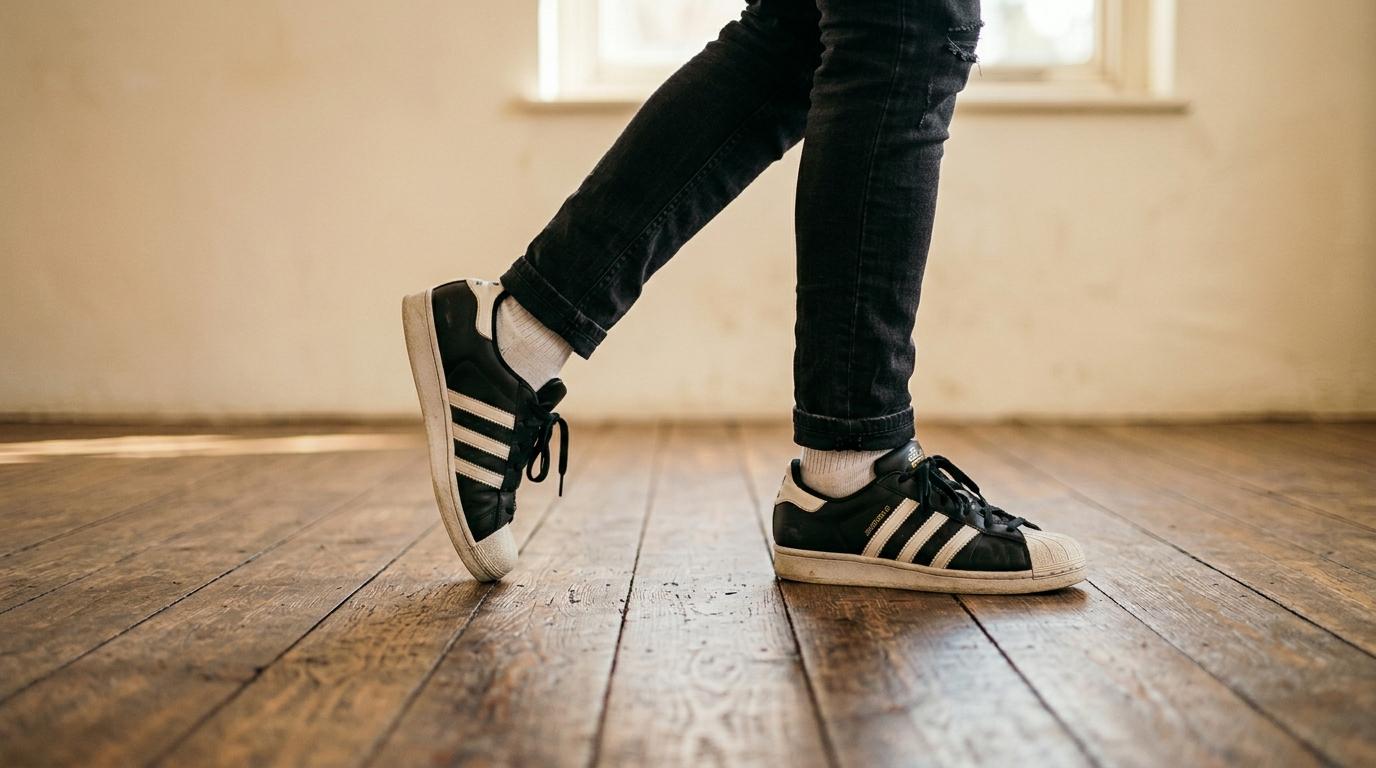
The moonwalk looks like magic but it's pure geometry. One foot stays flat and slides backward while the other foot's heel rises, then falls. That heel drop is what sells the illusion of a forward step.
The two roles your feet play
At any moment, one foot is the gliding foot (flat on the ground, sliding back) and the other is the stepping foot (heel up, then heel down as the glide finishes). They swap roles with each cycle.
Socks on a hard floor
Do your first practice runs in socks on a smooth surface, not trainers on carpet. You need the glide to feel effortless before worrying about shoes.
Learn the basic glide
Stand with feet hip-width apart. Lift your right heel so you're balanced on the ball of your right foot. Your left foot stays completely flat. Now slide your left foot straight back while keeping it in full contact with the floor.
The heel drop that makes it click
As your left foot reaches the back, drop your right heel down to the floor at the same moment. This simultaneous drop-and-arrive is the heartbeat of the move: it creates the impression that weight is shifting forward when you're travelling backward.
Putting it on a loop
The instant your right heel drops, lift your left heel and begin sliding your right foot back. You're now set up for the next cycle. Run through this heel-up, slide, heel-drop sequence slowly until your brain stops second-guessing which foot does what.
Slow is smooth, smooth is fast
Five minutes of slow, deliberate reps beats thirty minutes of frantic practice. Get the mechanics clean before adding speed or style.
Add posture and style
The mechanics alone won't look like a moonwalk: your upper body has to play along. Keep your torso upright and relaxed, let your arms hang naturally at your sides, and allow a very slight forward lean from the ankle (not the waist).
Arm movement
MJ's arms barely moved during the moonwalk. They swung gently in opposition to the feet, the way they would in a normal confident walk. Resist the urge to flail or stiffen. Think cool, not robotic.
Where to look
Eyes forward, chin level. Looking down at your feet collapses your posture and gives the trick away. Trust the muscle memory you're building and keep your gaze on a point straight ahead at eye level.
Practice in front of a mirror
Side-on is the money angle: you'll see straight away whether your torso is drifting or your heel drops are landing on time. Ten seconds of mirror feedback fixes what twenty minutes of blind practice won't.
Common fixes and next steps
If your glide keeps stuttering, the floor is probably too grippy or your weight is too far back on the gliding foot. Shift a fraction more weight onto the stepping foot's ball and make sure your gliding foot is truly flat, not angled.
The most common mistake
Lifting the gliding foot even slightly off the ground destroys the illusion. The whole trick depends on that foot maintaining full contact throughout the slide. If it's popping up, slow down and feel the floor the entire time.
Where to go from here
Once you have a clean four or five cycle run, try it in shoes: leather-soled or smooth-bottomed work best. From there you can explore the side moonwalk, the toe-to-heel version, and eventually combine it with a spin or a toe-stand to build a short routine.