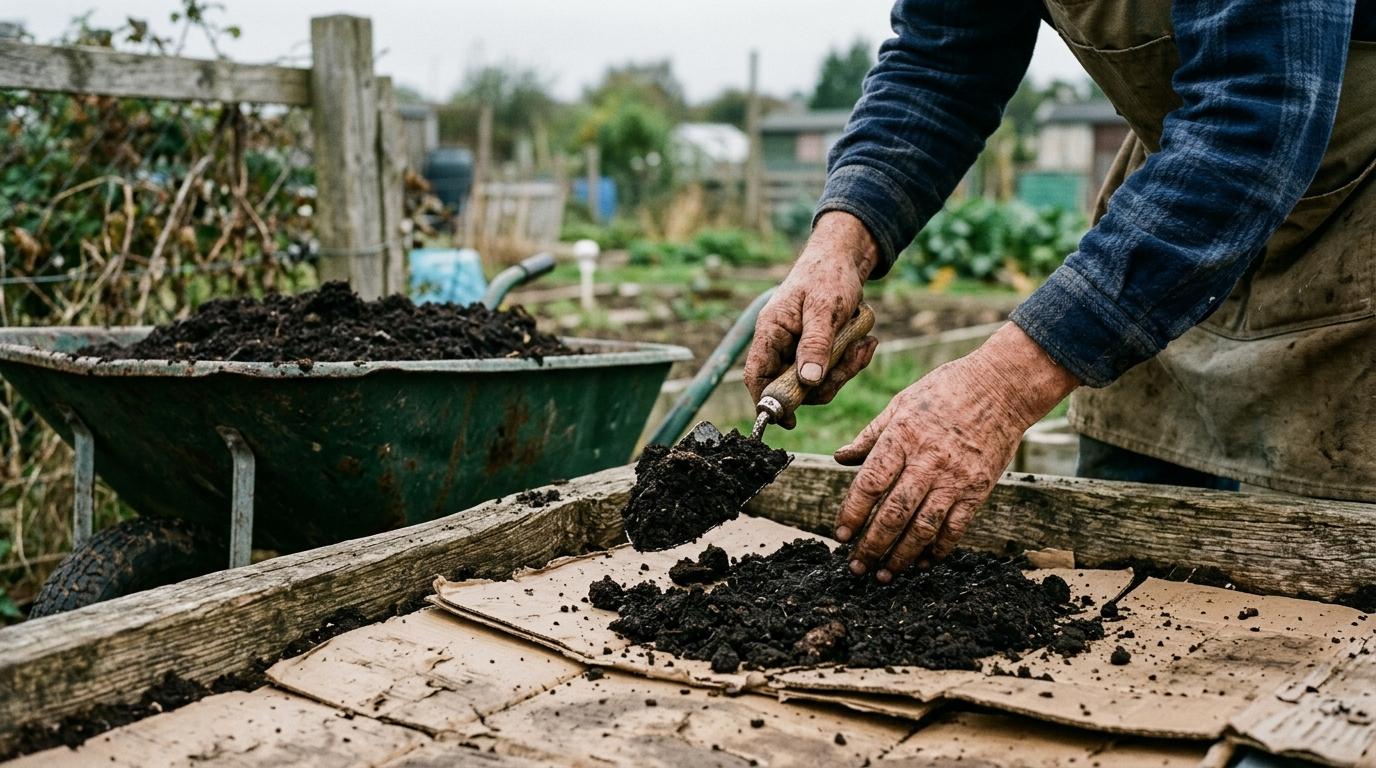
Mark out the bed and clear the surface
No-dig beds work on almost any ground: grass, weeds, compacted soil, even gravel paths. The principle is to smother what's there rather than disturbing the soil structure by digging. Mark out your bed first. A maximum width of 1.2 metres means you can reach the centre from both sides without stepping on the growing surface, which is critical because the whole point is to never compact the soil.
Clearing
If the ground has coarse weeds with thick stems (docks, brambles, nettles), cut them back to near ground level with a strimmer or hand shears. Don't dig them out: leave the roots in place. They'll be smothered by the layers you add on top. Perennial weeds with very deep roots (bindweed, horsetail) may need a thick compost layer (15–20 cm) to suppress them in year one. Grass is the easiest: you can plant straight into the compost the same day.
Autumn is the best time
Lay no-dig beds in autumn to let the layers settle over winter. By spring the worms will have partially incorporated the compost and the bed will be ready to plant without any further work.
Lay the cardboard layer
Flatten cardboard boxes and lay them over the entire bed area with a generous overlap (at least 20 cm) between sheets. The cardboard smothers existing vegetation by blocking light, then breaks down over 3–6 months to become food for worms and soil life. Use plain corrugated cardboard: remove any tape and staples, and avoid printed packaging with heavy coloured ink. Any gaps and weeds will push through.
Wet the cardboard
Before adding compost, wet the cardboard thoroughly. Dry cardboard resists moisture from above, takes longer to break down, and can blow around before you cover it. Soak it with a watering can or leave it in rain. Once saturated it will conform to the ground surface and stay put.
Sourcing cardboard
Supermarket delivery boxes, appliance packaging, and flat-pack furniture boxes are ideal. Ask at your local white goods shop or furniture store: they often have more than they can dispose of.
Add the compost layer
Apply 10–15 cm of well-rotted compost on top of the wet cardboard. This is the growing medium for the first season: plant roots will live in this layer, which is why quality matters. Well-rotted garden compost is ideal if you have it. Bought-in municipal green waste compost (dark brown, crumbly, no visible plant material) works well and is often available cheaply in bulk bags from local councils or garden centres.
How much compost?
A 1.2 m × 2.4 m bed at 12 cm deep needs approximately 345 litres of compost: roughly three or four 100-litre bulk bags. For larger areas, order a half-tonne bag delivered to the kerb. Don't use fresh farmyard manure directly: it can scorch roots and may contain weed seeds. Composted horse or cow manure that has sat for 12+ months is fine.
Avoid council compost containing wood chip
Some council green waste compost is coarsely chipped and not fully composted. It continues to break down in the bed, which temporarily locks up nitrogen. Ask to see it before buying in bulk: it should smell earthy, not musty or woody.
Plant straight through on the same day
You don't need to wait for the bed to settle. Make a planting hole through the compost layer: if the cardboard is still stiff, push through it with a trowel. Settle the plant in, firm around it, and water well. The roots will establish in the compost layer, then push through the decomposing cardboard into the original soil below over the following weeks.
Year two onwards
At the end of each growing season, add another 5 cm of compost as a topdressing. No digging needed: the worms incorporate it from below. Each year the soil underneath improves: better structure, more organic matter, more worm activity. No-dig beds get better over time rather than wearing out, unlike intensively dug plots that degrade soil structure.
Do not walk on the bed
Keep a plank to kneel on if you need to reach the centre. Even one set of footprints on wet compost compacts it noticeably. Raised sides (scaffold boards or timber edging) help prevent footstep damage from the sides.