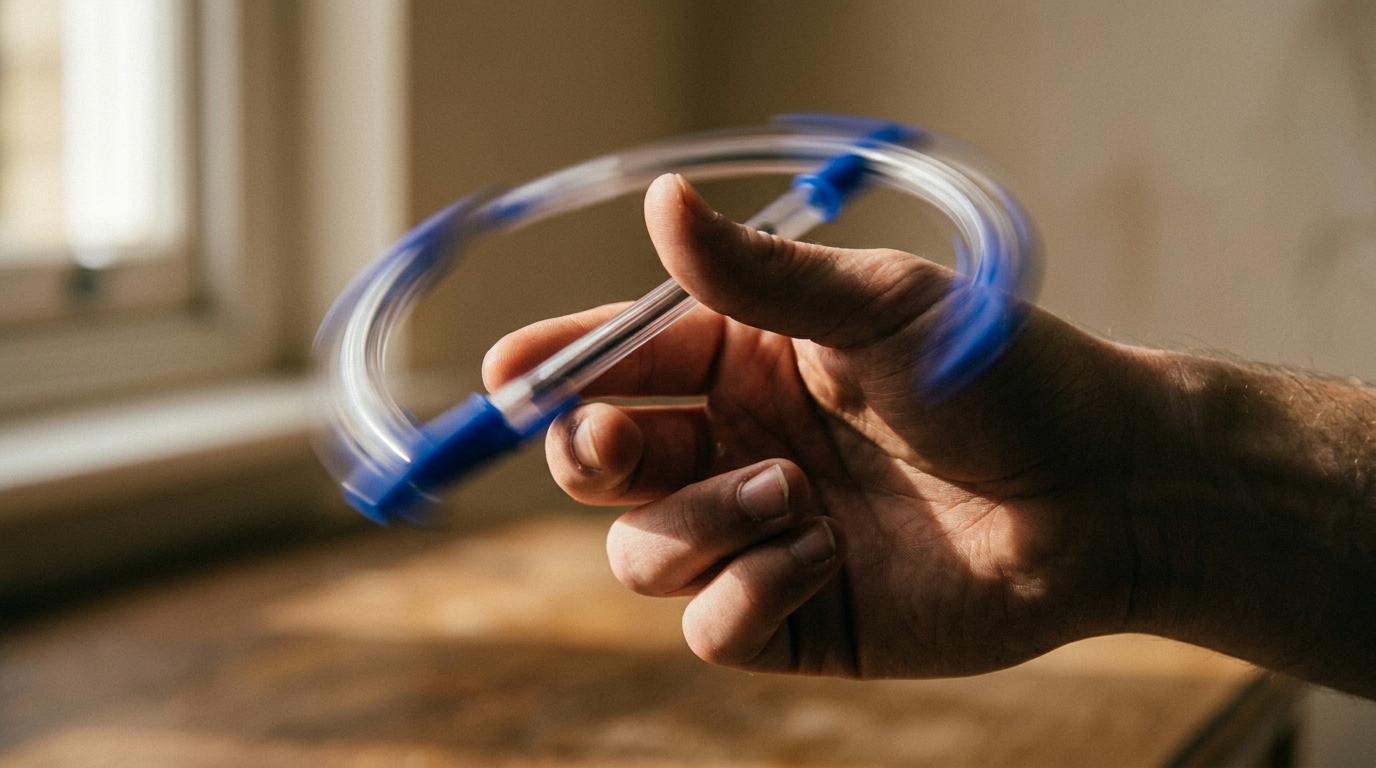
Choose the right pen
Not every pen spins well. You want something balanced, cylindrical, and roughly the same weight throughout: a pen that's heavier at one end will fight you the whole way.
What to look for
A mod pen (a pen modified by swapping caps and grips between two identical pens) is the gold standard, but to start, look for a standard ballpoint like a Pilot G2, Zebra Sarasa, or a Bic Round Stic. Avoid pens with a chunky clip or a rubber grip that creates drag.
The homemade mod trick
Take two identical cheap pens. Put both caps on one end and both back tips on the other. You now have a heavier, symmetrical mod that spins much more smoothly.
Hold it lightly
Pen spinning rewards a relaxed hand. If you're gripping hard, you're working against yourself before the spin even starts. Let the pen rest. Don't clench it.
Master the thumb around
The thumb around is the foundational trick: everything else builds from it. The pen rotates 360 degrees around your thumb, propelled by your index finger and caught between your thumb and middle finger.
Starting position
Hold the pen between your index finger and middle finger, roughly at the pen's balance point. Your thumb should be relaxed, curled slightly inward. The pen tip points away from you.
The motion
Push the rear of the pen with your index finger while simultaneously pulling your index finger back and out of the way. The pen swings around your thumb and lands between your thumb and middle finger. Your thumb is the axle: it doesn't move.
Expect to drop it constantly
Dropping the pen in the first hour is part of learning, not failure. Every drop tells you something about where your timing is off. Pick it up and go again.
Breaking it into two micro-steps
First, just practise the push: let the pen fly off your hand without worrying about catching it. Once the launch feels consistent, focus on the catch. Learning push and catch separately is faster than trying to do both at once.
Build consistency and flow
A single clean spin is satisfying. Doing it ten times in a row without looking is what separates a party trick from a real skill. Consistency comes from repetition with intent, not just mindless repetition.
Practice in short bursts
Ten focused minutes beats an hour of distracted fumbling. Spin while watching TV or sitting in a meeting. The idle-hand practice adds up fast.
Slow it down
If you keep dropping the catch, you're almost certainly spinning too fast. A slower, more controlled rotation is easier to catch and teaches your fingers the correct arc. Speed comes naturally as the movement becomes automatic.
Mirror practice
Watching yourself in a mirror or recording your hand on your phone reveals grip problems you can't feel. One five-minute session of video review is worth an hour of blind practice.
Where to go next
Once the thumb around is clean, the natural next moves are the sonic (pen pivots between index and middle finger) and the charge (a half-rotation variation). Both use the same relaxed hand principle you've already built.
Resources to go deeper
The pen spinning community is surprisingly large and welcoming. The resources below range from beginner-friendly tutorials to advanced trick libraries built by dedicated spinners.