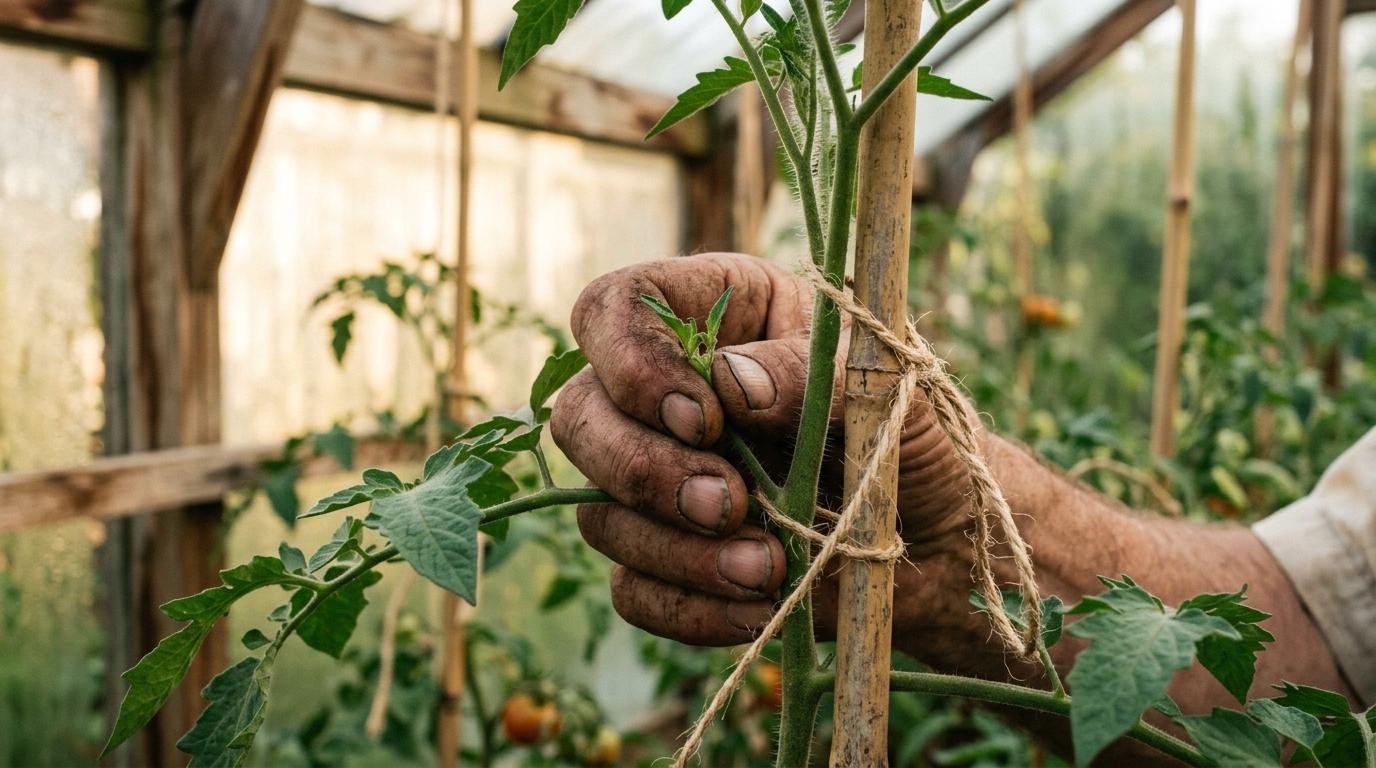
Understand why side-shooting matters
Tomatoes grow as either cordon (single-stem, trained upright) or bush varieties. Cordon tomatoes (the classic tall greenhouse type) produce side shoots from every leaf axil if you let them. Each side shoot becomes a new main stem, and the plant puts energy into growing those stems rather than ripening fruit. Removing them keeps the plant to one main stem and concentrates growth where you want it: the trusses of tomatoes.
Cordon vs. bush
Bush tomatoes (often labelled "tumbling" or sold for hanging baskets) need no side-shooting: they're bred to branch freely and produce lots of small fruit on their own. Only cordon varieties need this treatment. Check the label: it'll say "cordon," "indeterminate," or "needs support and training." If it says "bush" or "tumbling," leave it alone.
Common cordon varieties
Alicante, Gardener's Delight, Ailsa Craig, and Moneymaker are all cordons and need regular side-shooting. Hundreds more varieties are cordon. When in doubt, check whether the plant needs staking to grow tall.
Find and remove the side shoot
A side shoot grows from the leaf axil: the V-shaped junction between a leaf stem and the main stem. It looks like a miniature plant with its own tiny stem and leaves, emerging at 45° from the main stem. Small side shoots (under 3 cm) can be snapped off cleanly with your fingers: pinch at the base and snap sideways. Larger shoots should be cut with a sharp, clean knife or snip.
Do this in the morning
Removing side shoots creates a small wound on the plant. Morning removal gives it all day to callous over and dry before the cooler, damper night. Evening removal leaves wet wounds overnight, which invites fungal disease. Always remove cleanly at the base. Don't leave a stub, which can rot.
Never remove the growing tip or flower trusses
The growing tip is the central shoot at the very top of the plant. The flower trusses are the clusters of yellow flowers that become fruit. Neither is a side shoot. Removing them would stop the plant growing or destroy the harvest.
Train the main stem upward
As you side-shoot, tie the main stem loosely to its cane or support string every 15–20 cm of new growth. Use soft garden twine or tomato clips: never wire or tight string, which can cut into the stem as it thickens. For greenhouse string-trained tomatoes, twist the string gently around the stem (don't tie it) and attach the upper end to an overhead wire.
Check every week
Side shoots grow fast in warm weather: a shoot that was 1 cm on Monday can be 5 cm by Friday. Check and side-shoot at least once a week during summer. If a shoot gets past 10 cm before you spot it, remove it, but the wound will be larger and take longer to heal.
Stop the plant at the right height
In a UK season, a cordon tomato will only ripen 4–6 trusses of fruit reliably. When your plant has set 4 or 5 trusses (clusters of developing fruit), pinch out the growing tip (the very top of the main stem), leaving two leaves above the top truss. This stops the plant putting energy into more stem and redirects it into ripening what's already there.
Feeding after stopping
From the moment you see the first orange tinge on any truss, switch from a balanced tomato feed (high nitrogen) to a high-potassium feed such as a dedicated tomato fertiliser (Tomorite, Chempak Tomato). Potassium promotes ripening and flavour. Feed weekly and water consistently. Uneven watering causes blossom end rot (black patch on the base of the fruit) and split skins as the plant takes up too much water at once.
Green tomatoes at end of season
If frost threatens before all fruit has ripened, cut the whole truss and bring it indoors. Lay on a warm windowsill or in a drawer lined with newspaper. They'll ripen slowly off the vine. A ripe tomato stored at room temperature beats a supermarket one any day.