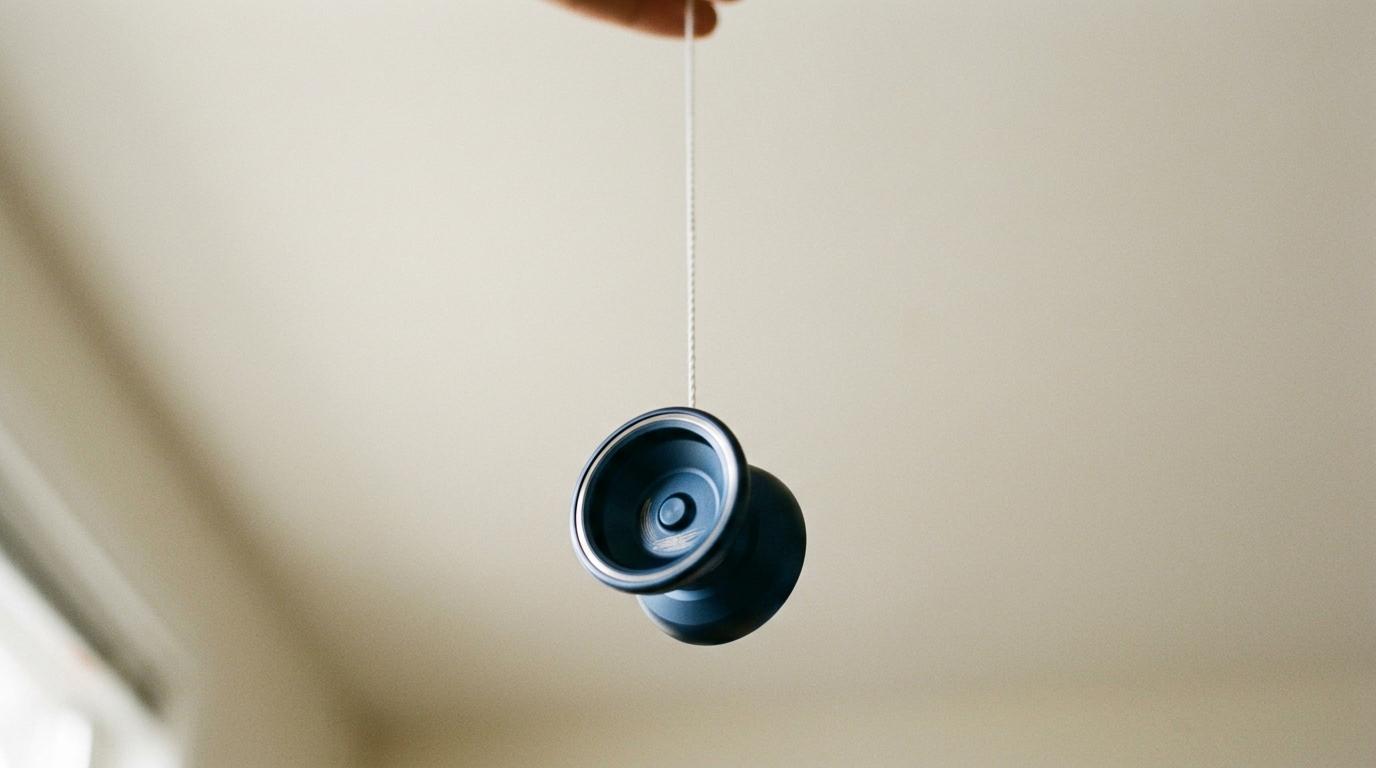
Understanding your yo-yo
A sleeper is when the yo-yo spins freely at the end of the string instead of returning immediately. Nearly every trick builds on this one movement, so getting it right is worth your full attention before moving on.
Responsive vs unresponsive
Beginner yo-yos are responsive: a light tug brings them back. Unresponsive yo-yos require a special bind move to return. Start with a responsive model until your sleeper is consistent.
String tension matters
Fresh string that's slightly twisted returns more reliably. If your yo-yo keeps snagging or refusing to come back, replace the string. It's cheap and makes a huge difference.
Hand position and grip
Hold the yo-yo loosely in your throw hand with the string coming off the bottom of the spool, not the top. A tight grip kills spin time before the yo-yo even leaves your hand.
Throwing a clean sleeper
Raise your throw hand to shoulder height, palm facing up. Snap your wrist downward firmly. Think of it like throwing a baseball straight at the floor. The snap is what generates spin, not raw arm force.
The return
Once the yo-yo is spinning at the bottom, give the string a gentle upward tug with your throw hand. It should climb the string and land back in your palm. If it comes back too fast without tugging, loosen the axle gap slightly.
Aim for five seconds
A clean sleeper should hold spin for at least five seconds. If yours dies faster, focus on a sharper wrist snap rather than a bigger arm swing.
Common mistakes
Tilting the yo-yo at release is the most frequent problem. It kills spin and causes wobble. Watch the yo-yo from the front as it drops: it should hang perfectly vertical with no side-to-side lean.
Your first three tricks
Once your sleeper is consistent, these three tricks follow naturally. Learn them in order. Each one builds hand awareness that makes the next easier.
Walk the dog
Throw a sleeper and gently lower the spinning yo-yo to the floor. Let it roll forward a few inches, then tug it back before it runs out of spin. Keep your finger out of the way: the string can snap back fast.
Around the world
Throw a sleeper, then swing the yo-yo forward in a full overhead circle. Let it complete the loop and return as it comes back around to your hand. Do this outdoors or in a clear room: you need space above and in front of you.
Check your ceiling clearance
Around the world needs at least eight feet of overhead space. Hitting a ceiling fan or light fixture is a fast way to lose a yo-yo and break something.
The creeper
Throw a sleeper and crouch down so the yo-yo touches the floor. Roll it forward along the ground, then tug it back. It looks effortless when done smoothly and is a reliable crowd-pleaser.
Practice habits and next steps
Ten focused throws beats an hour of mindless repetition. Each session, pick one thing to fix (your release angle, your tug timing, or your spin duration) and drill only that until it clicks.
Where to go from here
Once your sleeper and returns feel automatic, the natural next step is string tricks: landing the yo-yo on the string itself rather than spinning in the air. Brain Twister and Trapeze are the classic entry points and both reward the wrist control you've been building.
Log your progress
After each session, write down one thing that improved and one thing that still needs work. It keeps practice purposeful and shows you how quickly the basics solidify.