The essentials
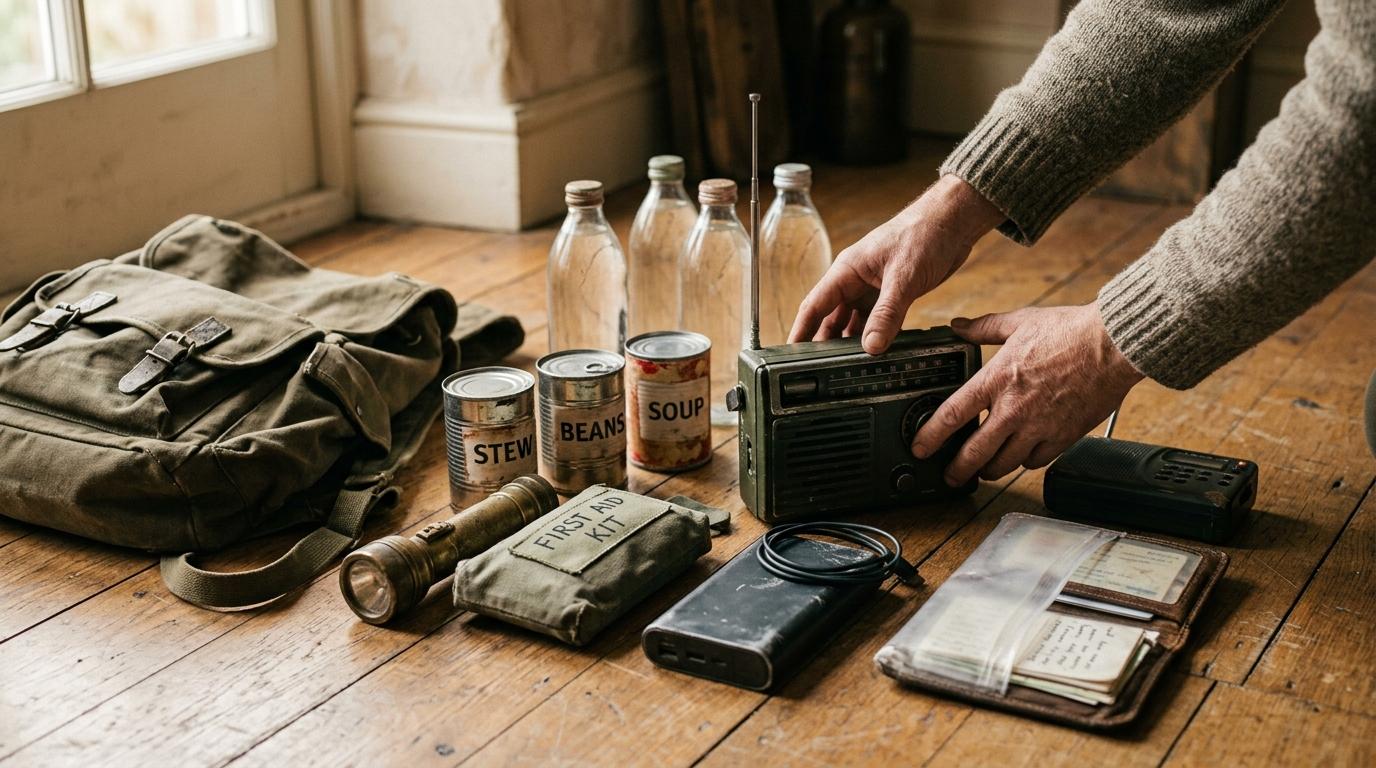
the concept is simple: water, food, first aid, light, and a way to communicate, gathered in one place and ready to go. most UK households have none of it in one place. this is the thing you build once and don't think about again.
Water (3 litres per person per day)
£10–30the non-negotiable. for a household of two, that's 18 litres over 72 hours. sealed bottled water is the simplest option; dedicated food-grade water storage containers (10–20 litre) work well and take up less space. store in a cool, dark location and rotate every 6 months.
Affiliate link. We may earn a small commission.
Emergency food rations (3-day supply)
£20–60high calorie, no cooking required, long shelf life. energy bars, tinned goods, peanut butter, crackers, dried fruit, and nuts cover the basics. freeze-dried meals last 5–25 years and are worth considering for a serious kit. aim for 2,000 kcal per person per day. a manual tin opener is not optional.
Affiliate link. We may earn a small commission.
First aid kit (comprehensive)
£20–35British Red Cross specification: sterile wound dressings in assorted sizes, triangular bandage, non-latex gloves (multiple pairs), scissors, safety pins, emergency foil blanket, adhesive plasters, and a first aid guide. a basic comprehensive kit runs around £20–35. check expiry dates annually.
Affiliate link. We may earn a small commission.
LED head torch + spare batteries
£15–30hands-free light is the difference between managing in the dark and not. minimum 100 lumens. lithium batteries outlast alkaline in cold storage and don't drain over time. buy at least two sets of spares and keep them with the torch in the kit.
Affiliate link. We may earn a small commission.
Battery, wind-up, or solar radio (DAB/FM)
£20–40when the internet is down and your phone battery is gone, this is how you know what's happening. DAB and FM. wind-up or solar means no dependency on spare batteries. the BBC broadcasts emergency information on FM during major incidents.
Affiliate link. We may earn a small commission.
Portable power bank (20,000mAh, USB-C)
£25–40enough for 4–6 full phone charges. USB-C is the current standard; include a multi-cable to cover older devices. 20,000mAh keeps a phone running for 3–5 days of normal use. recharge the bank every 6 months or it will not hold capacity when you need it.
Affiliate link. We may earn a small commission.
Cash (small notes)
ATMs run on electricity and network connections. card readers run on network connections. in a widespread emergency, neither works. £50–100 in small notes (a mix of £5s, £10s, and £20s) covers food, fuel, and small services when digital systems are down.
Emergency whistle + multi-tool
£10–20a whistle carries further than a voice, costs next to nothing, and keeps working when you can't shout. a multi-tool adds a blade, can-opener, pliers, and screwdriver in one pocket-sized package. both together cost under £20 and take up almost no space.
Affiliate link. We may earn a small commission.
Waterproof document wallet
£8–15holds copies of your passport, driving licence, insurance documents, medication list, emergency contacts, NHS number, and bank details. originals stay at home in their normal location; copies go in the kit. a waterproof wallet protects them from flood, rain, and general chaos.
Affiliate link. We may earn a small commission.
Where to buy emergency kit supplies (UK)
- Amazon UK: Wide selection of individual components; useful for water storage containers, power banks, radios, and multi-tools
- Go Outdoors: Camping and outdoor supplies; good for head torches, emergency blankets, first aid kits, and portable radios
- BCB International: UK specialist in emergency preparedness and survival equipment; military-grade quality; used by UK emergency services
- Decathlon: Good-value head torches, first aid kits, and outdoor gear; UK stores and online
Some links are affiliate links. Airgap.life may earn a small commission at no extra cost to you.
Keep cash in the kit
Keep at least £50–100 in small notes in the kit. Cash still works when card readers don't, networks are down, or systems are overwhelmed.
Why 72 hours
The 72-hour rationale
most acute emergencies in the UK (power cuts, flooding, severe storms, localised infrastructure failure) resolve within three days. in major incidents, emergency services are overwhelmed for 48–72 hours and triage their resources accordingly. the 72-hour kit is built around a single assumption: for the first three days of a serious emergency, you're largely on your own. the kit is the plan for that window.
Four categories
Shelf life and rotation
Go-bag vs home kit
these are two different things. the home kit is the full 72-hour supply: 18 litres of water, three days of food, the complete first aid kit, everything. it lives in a cupboard. the go-bag is a smaller subset: what you could carry in one rucksack if you had 2 minutes to leave. it lives by the front door. both have their purpose; the go-bag is useless without the home kit behind it, and the home kit is useless if you've had to leave without it.
History
UK civil defence has a long tail. the Protect and Survive series (booklets and films produced by the Home Office and distributed to UK households during the Cold War and updated through the 1980s) advised the public on surviving nuclear attack. they are historically interesting documents. the assumed self-sufficiency window was seven days, in a sealed interior room, with improvised fallout protection. not particularly reassuring.
the modern 72-hour standard came from US emergency management. FEMA's 'Build a Kit' programme, developed through the 1990s and progressively refined after major incidents including Hurricane Katrina, established the 72–96-hour self-sufficiency window now used by emergency preparedness agencies worldwide. the principle is unchanged: in a major incident, professional response takes time to mobilise and scale. the UK government now publishes its own guidance at gov.uk/prepare-for-emergencies, with the same underlying logic and similar recommended contents.
Building the kit
Maintaining it
a kit that's never checked is a kit that fails at the worst possible moment. rotate it like a smoke alarm battery: twice a year, same dates, no exceptions.
Water stored
30 minutes18 litres minimum for a 2-person household; sealed containers in a cool, accessible location; labelled with the fill or purchase date.
Food supply assembled
1–2 hours3-day no-cook supply; 12,000 kcal for two people; manual tin opener in the kit; all items checked for expiry dates.
Go-bag ready
30–60 minutesWater, 24-hour food, torch, power bank, first aid, cash, documents, phone charger, and medication, in a rucksack by the front door.
Documents copied and stored
1 hourPassport, driving licence, insurance, medication list, emergency contacts written on paper, NHS number: copies in a waterproof wallet inside the kit.
Household briefed
15 minutesEveryone in the household knows where the kit is, what is in it, and what the plan is if something happens.
6-month review schedule in place
5 minutesCalendar reminders set for April and October. The kit is now a maintained system, not a box that quietly goes off in a cupboard.
The people and organisations to learn from
- gov.uk/prepare-for-emergencies: UK government emergency preparedness guide: practical, no-nonsense, updated regularly
- British Red Cross (emergency preparedness): UK charity with clear household emergency guides: redcross.org.uk/get-help/prepare-for-emergencies
- Ready.gov (US FEMA guide): the most comprehensive 72-hour kit guide available anywhere, directly applicable despite the US origin
Qualifications worth adding
British Red Cross First Aid (1-day course)
The single most useful skill addition for any emergency scenario: covers CPR, choking, bleeding, and burns; available across the UK; around £50–80
Community Emergency Response Team (CERT) training
Available through some UK councils and voluntary groups: teaches neighbourhood emergency response, triage, and working alongside emergency services in major incidents
Best resources
Community
Reader tips
No tips yet. Be the first to share what worked for you.
Share a tip
Sign in to share what worked for you.