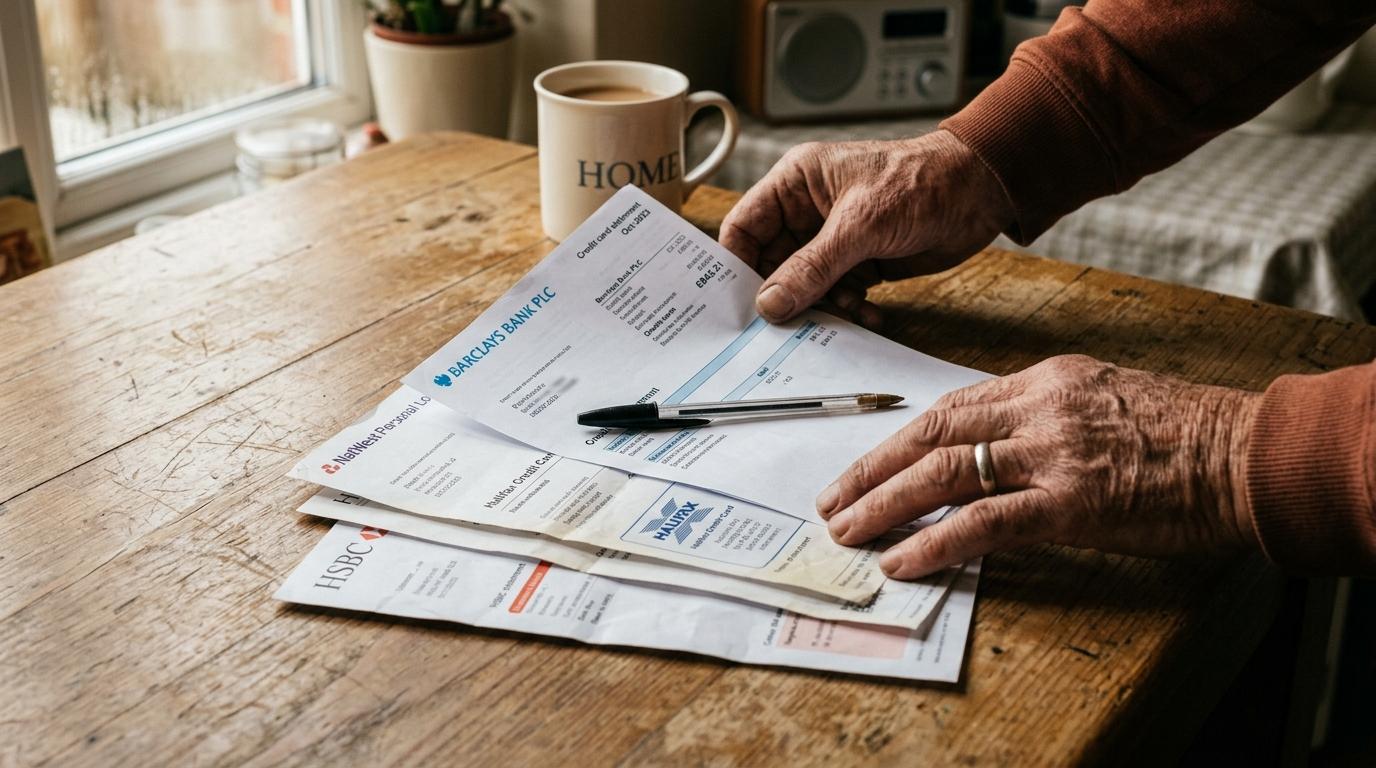
Understand your debt
Your debt map from Phase 1
FreeThe list of every debt, its balance, rate, and minimum payment. If you haven't done Phase 1, start there.
StepChange Debt Charity
FreeFree, confidential debt advice. If your situation feels out of control, call them before doing anything else: 0800 138 1111.
MyOwnPurse repayment calculator
FreePut in a card or loan and see how long it takes to clear, what paying only the minimum costs, and what a bit more each month saves. Free, no sign-up.
Not all debt is equal. Understanding the difference between types of debt changes how you approach it.
Secured vs unsecured
Secured debt is backed by an asset: your mortgage is secured against your home. If you don't pay, the lender can repossess. Unsecured debt (credit cards, personal loans, overdrafts) isn't backed by anything. The lender can't take your stuff without going to court, but missed payments destroy your credit file and can lead to CCJs (County Court Judgements).
Good rate vs bad rate
A mortgage at 4–5% is very different from a credit card at 29.9% APR. The rate determines how fast the debt grows if you don't clear it. A £3,000 balance on a 29.9% card costs roughly £900/year in interest if you only pay the minimum.
Buy-now-pay-later
Buy-now-pay-later can carry 0% interest, but only if paid within the promotional period. Miss the deadline and backdated interest charges can be enormous. Treat BNPL balances as high-priority.
Debt that's different
Student loans (Plan 1 and Plan 2) in the UK are income-contingent and written off. Unless your salary will exceed the threshold for the full repayment period, overpaying is usually a waste. Council tax debt is priority debt: councils can send bailiffs without a court order. Prioritise it above credit cards.
Choose your method
The Avalanche Method (mathematically optimal)
Pay minimums on everything. Put every extra pound toward the highest-interest debt first. Once it's clear, roll that payment onto the next highest rate. Repeat until debt-free. This method saves the most money in interest. It requires patience: your first win might take a year.
The Snowball Method (psychologically effective)
Pay minimums on everything. Put every extra pound toward the smallest balance first. Once it's clear, roll that payment onto the next smallest. Repeat. This method creates faster wins. Research (including work by Dave Ramsey and academic studies) shows people stick to the snowball longer because early wins build momentum.
Which one should you choose?
If you have good willpower and care about total interest paid: avalanche. If you need wins to stay motivated: snowball. The best debt payoff method is the one you actually do for 12 straight months.
The hybrid approach
A hybrid approach works well: use the snowball to clear one or two small debts quickly, then switch to the avalanche for the larger balances. The psychological momentum carries over.
The repayment plan
Before you start: build a small buffer
If you have zero savings and throw every spare pound at debt, one unexpected expense sends you straight back to borrowing. Hold £500–1,000 in cash as a starter emergency fund before aggressive debt repayment. It's not optimal mathematically, but it prevents the vicious cycle.
Automating your payments
Set up a standing order on payday for at least the minimum on every debt, then an additional payment on your target debt. Automation removes the temptation to spend first and pay later.
Negotiating with lenders
Credit card companies will sometimes reduce your interest rate if you call and ask, especially if you've been a customer for several years and have a good payment history. It takes 10 minutes and occasionally works. You can also ask about hardship plans if you're struggling: these are formal arrangements that freeze interest.
If payments are in arrears
If a debt is in arrears (you've missed payments), contact the lender before they contact you. Proactive communication usually results in better outcomes (hardship arrangements, interest freezes, or payment holidays) than ignoring letters.
Balance transfers
A 0% balance transfer credit card lets you move high-interest credit card debt to a new card that charges no interest for an introductory period (typically 12–30 months). You pay a transfer fee (usually 2–3% of the balance) but save on interest. The risk: if you don't clear it before the period ends, you're back at a high rate, sometimes higher than before.
Debt consolidation loans
A personal loan at a lower rate than your credit cards can make sense, but only if it reduces your total interest burden AND you don't then run the credit cards up again. The loan solves the debt; the spending habit has to be solved separately.
When to get professional help
If your debt is more than you can realistically clear in 3–5 years, or if you're being contacted by bailiffs, consider formal options: Debt Management Plan (through StepChange, free), Individual Voluntary Arrangement (IVA), or Debt Relief Order. These have consequences for your credit file but they're designed for situations where the debt is unmanageable.
Your credit score
List every debt with rate
Week 1Balance, APR, minimum payment. Order by interest rate (avalanche) or balance (snowball).
Choose your method
Week 1Avalanche or snowball. Write it down. Tell someone if that helps you commit.
Set up automated minimums
Week 1Standing orders for every minimum payment, leaving the bank on payday.
Make your first extra payment
Week 1Even £20 extra on your target debt. The habit matters more than the amount.
Check your credit report
Month 1From Experian, Equifax, and TransUnion, free by law. Look for errors (common) and fix them.
Track payoff date
MonthlyRecalculate your projected debt-free date every month. Watching it move earlier is motivating.
Community
Reader tips
No tips yet. Be the first to share what worked for you.
Share a tip
Sign in to share what worked for you.
Same category
What to learn next

The Power of Compound Interest
How compound interest works, why starting early matters more than how much you earn, and the tax-efficient wrappers that maximise it.
Earning on the Side: The Rules
Start earning from a skill without tripping over tax, Universal Credit, a debt plan, insurance or licences. The £1,000 trading allowance, platform reporting, pricing your time, and who to tell first.

Build Your Safety Net
Build a proper emergency fund: how much, where to keep it, and why it's the most important financial step you'll ever take.