Materials and costs
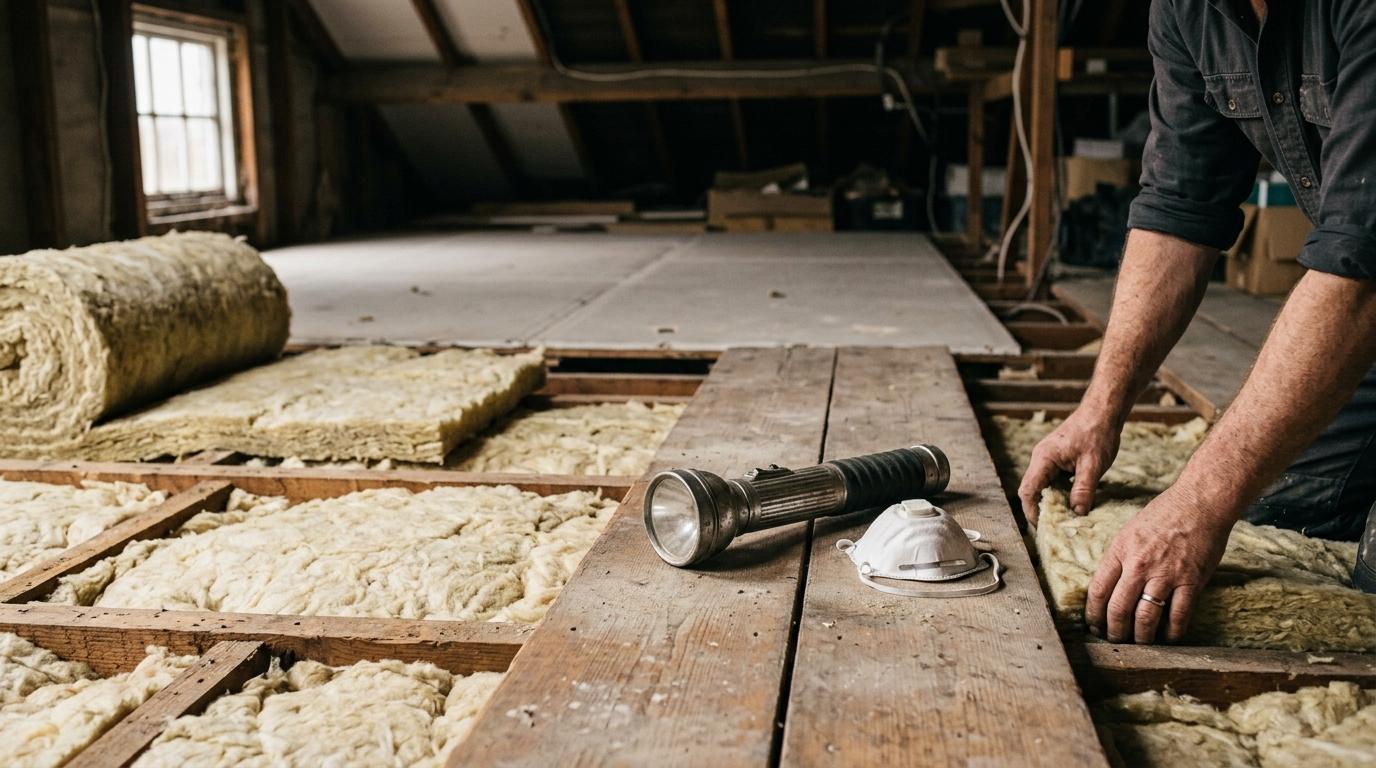
the hardest part of home insulation is starting. once you understand where heat leaves and what stops it, the rest is buying rolls of mineral wool and spending a weekend in the loft. the materials are inexpensive. the savings are real. and the job is within reach of anyone with a Stanley knife and a dust mask.
Loft Insulation Roll
Knauf Earthwool or Rockwool Loft Roll (100mm + 270mm, two cross-laid layers)
£100–200 for an average semi-detachedMineral wool rolled insulation is the standard for UK loft floors. Fit the first 100mm layer between the joists, then lay a second layer of 170–200mm at right angles across the joists to reach the 270mm depth the government recommends. Cross-laying the second layer eliminates the thermal bridges created by the joists themselves, a significant detail that most rushed loft jobs miss. Knauf Earthwool and Rockwool are both widely available from builders' merchants and DIY sheds and perform comparably. Buy both layers at once.
Affiliate link. We may earn a small commission.
Rigid PIR Board (Kingspan Kooltherm or Celotex GA4000)
£12–20 per 2400 × 1200mm sheetPIR board delivers roughly twice the thermal resistance per millimetre compared to mineral wool, making it the right material where space is limited: the back of the loft hatch, between floor joists, and solid walls. Kingspan Kooltherm and Celotex GA4000 are the two main products; both are foil-faced, moisture resistant, and widely stocked at builders' merchants. Score and snap with a Stanley knife and straight edge, or cut cleanly with a handsaw.
Affiliate link. We may earn a small commission.
Floor Insulation (PIR between joists or EPS below screed)
£8–15 per m²For a suspended timber floor, rigid PIR cut to friction-fit between the joists is the most effective option: better thermal resistance per millimetre than mineral wool, and the closed-cell foam won't absorb moisture rising from the ground below. For a solid concrete floor, EPS (expanded polystyrene) board laid over the slab before a floating chipboard or OSB deck is the practical approach. 75mm PIR between joists or 75mm EPS under a floating deck are both sound starting points.
Affiliate link. We may earn a small commission.
Loft Legs and Boarding Kit (storage above deep insulation)
£80–150 for a basic kit covering 6m²270mm of insulation means you can no longer walk on the joists without compressing it. Compressed insulation loses performance quickly. Loft legs (plastic stilts screwed down to the joists) raise a deck of loft boards above the insulation, creating usable storage without squashing it beneath. A 1m × 1m raised deck near the hatch handles the storage most households need. Don't skip this if you currently store anything in your loft.
Affiliate link. We may earn a small commission.
Vapour Control Layer (1200-gauge polythene sheet)
£20–35 for a 25m rollRequired under any floor insulation laid on a solid concrete slab and recommended with floor insulation between joists over a damp subfloor. A 1200-gauge (300 micron) polythene sheet laid over the slab and lapped up the walls stops moisture vapour rising from the concrete and condensing within the insulation above. Without it, floor insulation gradually dampens from below and loses effectiveness. A 4m-wide roll covers large areas without a mid-floor join.
Affiliate link. We may earn a small commission.
Breathable Membrane (for external wall insulation systems)
£0.50–1.50 per m² (usually contractor-supplied)External solid wall insulation and some cavity wall systems use a breathable (vapour-permeable) membrane as part of the render or cladding system. It allows moisture vapour to pass outward while keeping liquid water from penetrating. In most cases this is contractor-supplied. It's listed here so you know what to ask for and can verify it's included in any quote. Tyvek Housewrap and Wraptite are the two most common products.
Affiliate link. We may earn a small commission.
Protective Gear (FFP2 dust mask, nitrile gloves, safety glasses)
£10–20 for a pack of eachMineral wool fibres irritate skin, eyes, and lungs on contact. Wear an FFP2 or FFP3 rated dust mask (not a thin paper dust sheet), nitrile gloves, and safety glasses whenever you cut or handle fibrous insulation. Old long-sleeved clothing or a disposable boilersuit keeps fibres off your arms. You're working in a confined loft space with limited ventilation, which makes the mask especially important.
Affiliate link. We may earn a small commission.
Where to Buy
- Screwfix: best for insulation rolls, PIR board, and VCL in smaller quantities, with click and collect same day from most branches
- Wickes: competitive on sheet goods and VCL membranes, useful if you're collecting a van-load of materials at once
- Buildbase: trade merchant with the best prices for larger orders, worth a call for any project covering more than 20m²; will deliver to site
- National Insulation Association (NIA): not a supplier: the industry body for finding registered cavity wall and solid wall insulation contractors; verify any installer is on their register before work starts
For cavity wall or external solid wall insulation, always use an NIA-registered installer. The work requires specialist equipment and must be covered by a CIGA 25-year guarantee.
Some links are affiliate links. Airgap.life may earn a small commission at no extra cost to you.
Check for Grants Before You Spend a Penny
the Great British Insulation Scheme (GBIS) and ECO4 offer funded insulation for qualifying households: cavity wall, loft, and in some cases solid wall insulation can be free or heavily subsidised. check eligibility at gov.uk/apply-great-british-insulation-scheme before ordering any materials. the income threshold is lower than most people expect, and the scheme covers rented homes as well as owner-occupied.
Community
Reader tips
No tips yet. Be the first to share what worked for you.
Share a tip
Sign in to share what worked for you.