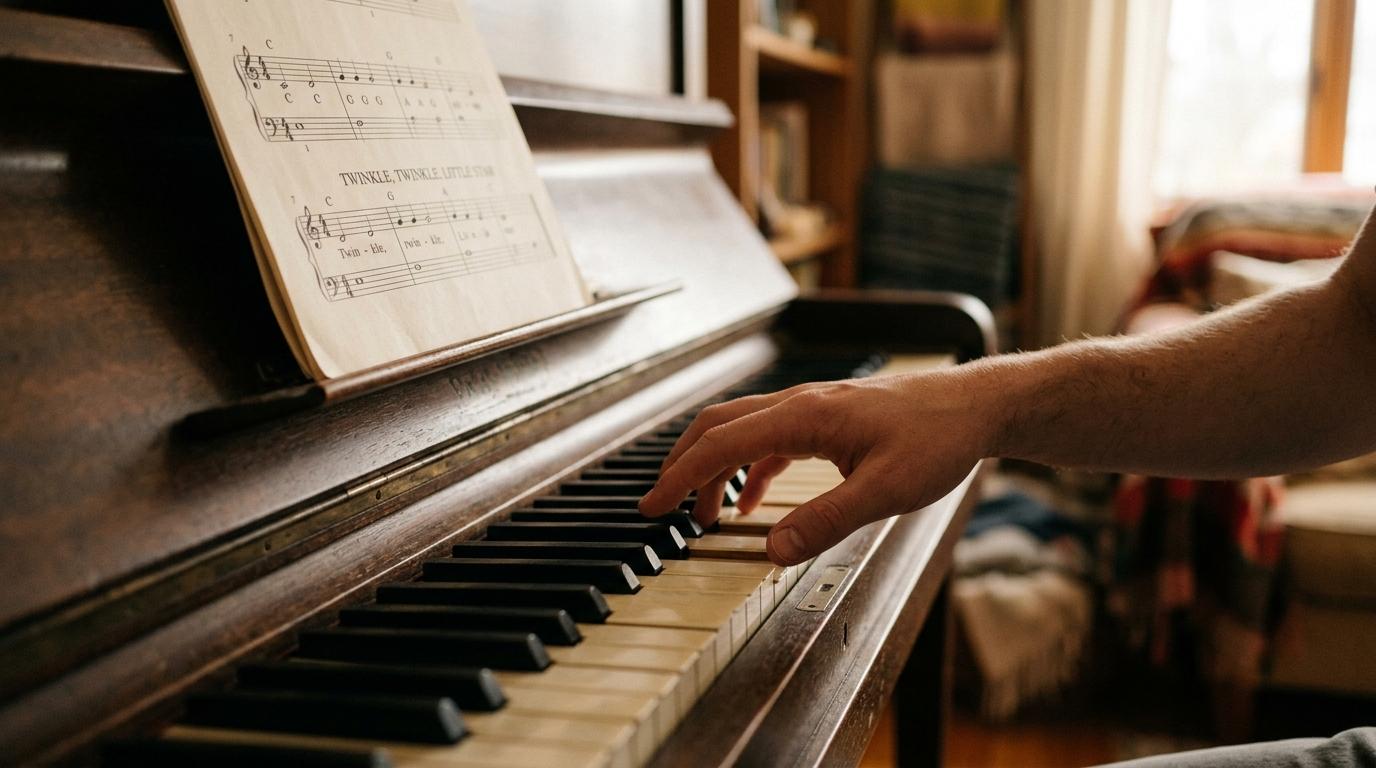
Finding and setting up: the instrument matters
You need access to a piano or keyboard with weighted keys. An unweighted keyboard teaches bad habits from day one, and the touch response of weighted keys is how you develop finger strength and dynamic control. Every other choice is secondary to this.
A digital piano with weighted keys (if you don't have an acoustic)
£0 (acoustic access) to £300–600 (entry digital piano)A good digital piano (Yamaha P-45, Roland FP-30, Casio PX-S1100) costs £300–600 and is sufficient for several years of learning. 88 weighted keys are required. Avoid 'keyboards' (unweighted, 61 keys): they're wholly unsuitable for learning piano technique. Many churches, community centres, schools, and music societies have accessible pianos for members or small fees.
Affiliate link. We may earn a small commission.
Piano stool or adjustable bench
£20–80 for an adjustable piano stoolSeat height is technique. The forearm should be roughly parallel to the floor, with the wrist neither dropped nor arched. A stool that can be raised or lowered matters: a fixed chair at the wrong height causes tension in the wrists, arms, and shoulders that limits technique and causes injury over time.
Affiliate link. We may earn a small commission.
A beginner method book
£10–15Alfred's Adult All-in-One Piano Course (Level 1) and Faber Adult Piano Adventures are the two most used beginner methods in UK music teaching. Both introduce notation, technique, and repertoire in a structured, progressive order. Either works. The choice matters less than sticking to one.
Affiliate link. We may earn a small commission.
The best time to practise
Daily practice of 20–30 minutes produces far more progress than a single two-hour session per week. Skill acquisition in piano is about repetition over time, not volume in one sitting. Early morning, before the day makes other demands, is often the most reliable time slot for adults.
Community
Reader tips
No tips yet. Be the first to share what worked for you.
Share a tip
Sign in to share what worked for you.
Same category
What to learn next
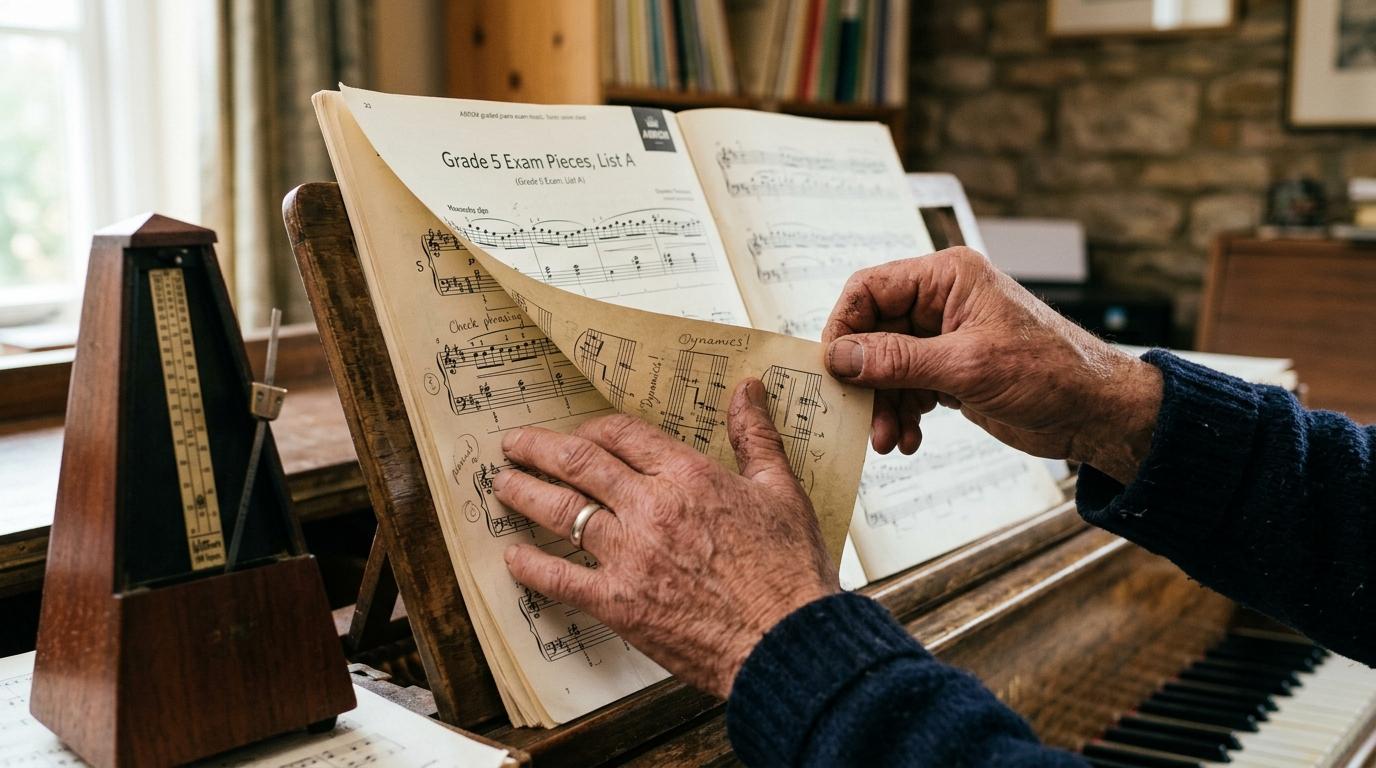
Taking a Graded Music Exam
How UK graded music exams work: the boards, what a grade consists of, marking, preparing over a year, digital versus face-to-face, and the route from Grade 1 to diplomas and UCAS points.
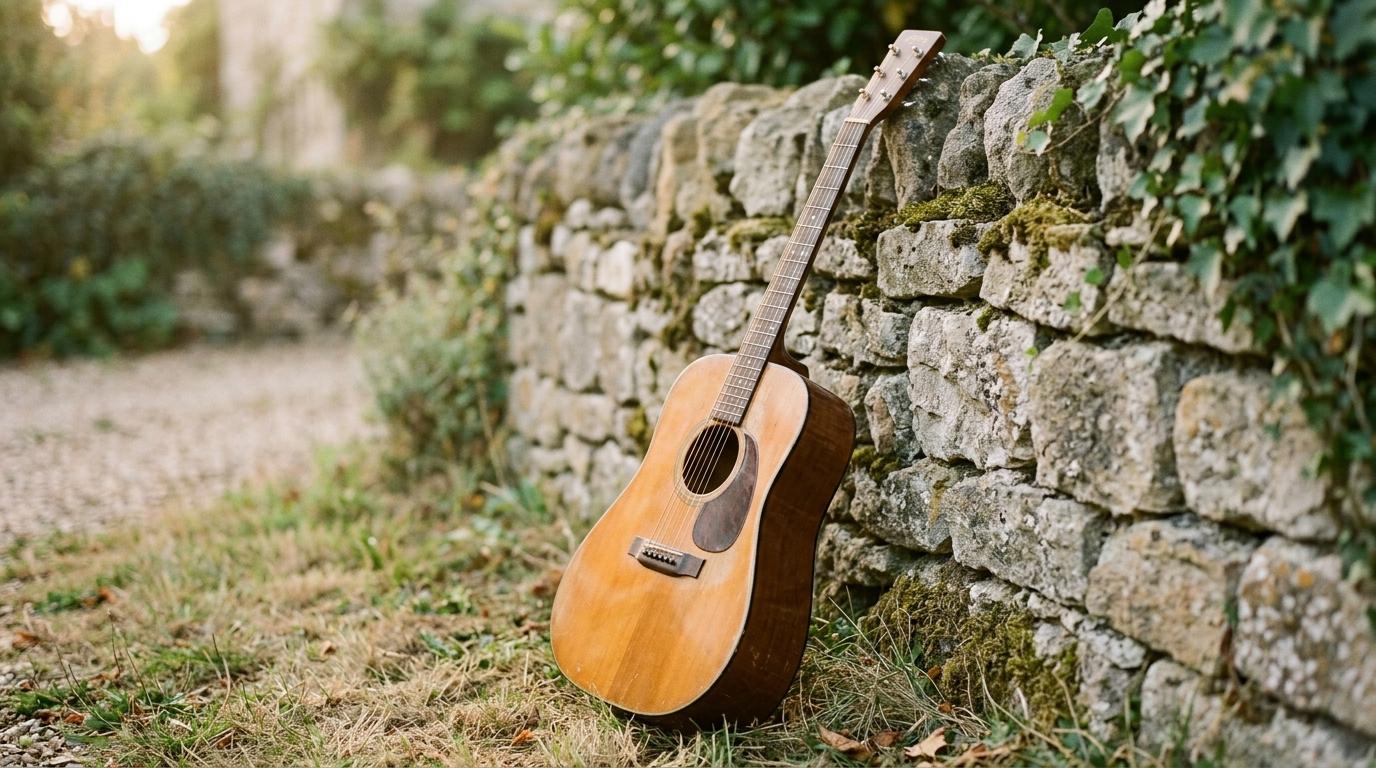
Acoustic Guitar from Zero
Your first chords, your first song, and a practice routine that sticks. No tab-reading required.
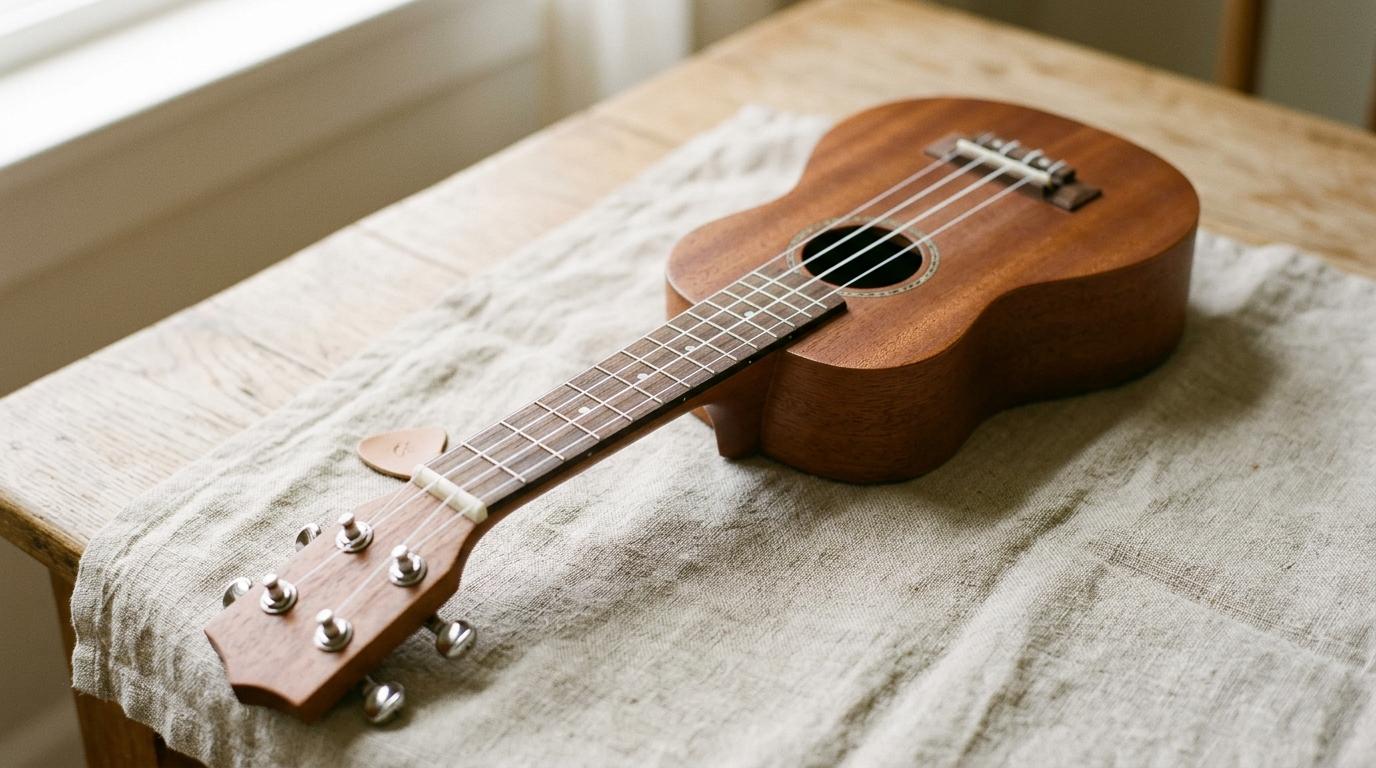
Ukulele: Your First Songs
Four strings, three chords, and you're playing songs. The ukulele is the fastest route from complete beginner to actual music, achievable in a single afternoon.