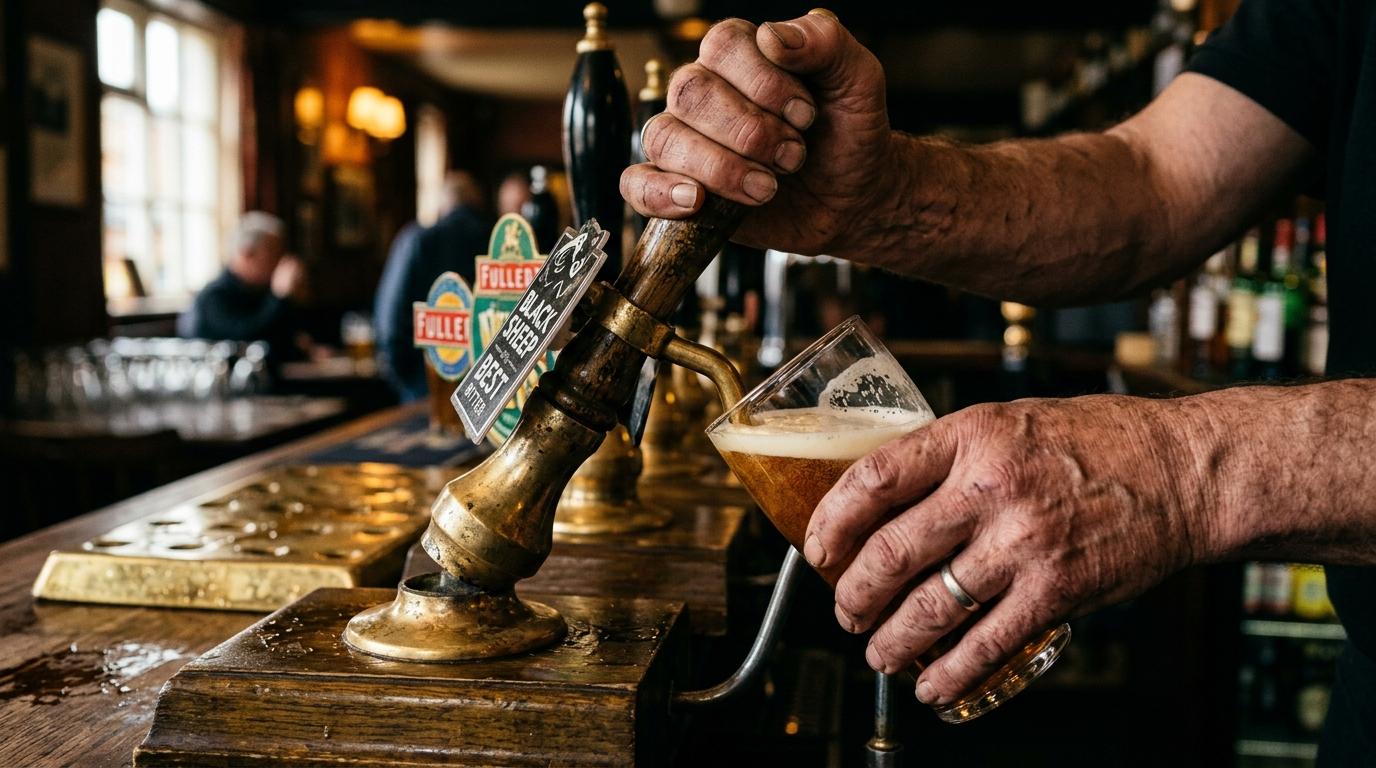
The families of beer
Almost every beer on Earth belongs to one of two families, and the line between them is not colour or strength. It is yeast. Get this division clear and the bewildering wall of taps resolves into a map you can read. This is where the Cicerone Beer Server syllabus begins, because you cannot talk about a beer until you know what kind of thing it is.
Ale and lager: the fundamental split
The four raw ingredients
Every beer is made from four things, and knowing what each contributes lets you predict a beer from its description. Malt (usually barley) gives sugar to ferment, plus colour and bready, caramel or roasted flavours. Hops give bitterness to balance the malt's sweetness, plus aroma from floral through citrus to pine. Yeast ferments the sugar to alcohol and defines the family. Water: its mineral profile shaped the classic styles, which is why Burton bitter and Pilsen lager taste of their home towns.
Read a style from its name
Once the map is in place, a name tells you the beer. 'Imperial stout' is a dark, strong ale, roasty and full. 'Dry-hopped pale ale' is an ale with extra late hops for aroma, not bitterness. 'Czech dark lager' is a clean, cold-fermented beer coloured and flavoured by dark malt. The Beer Server exam tests exactly this ability to place a beer from its description.
Community
Reader tips
No tips yet. Be the first to share what worked for you.
Share a tip
Sign in to share what worked for you.
Same category
What to learn next
Home Beer Brewing
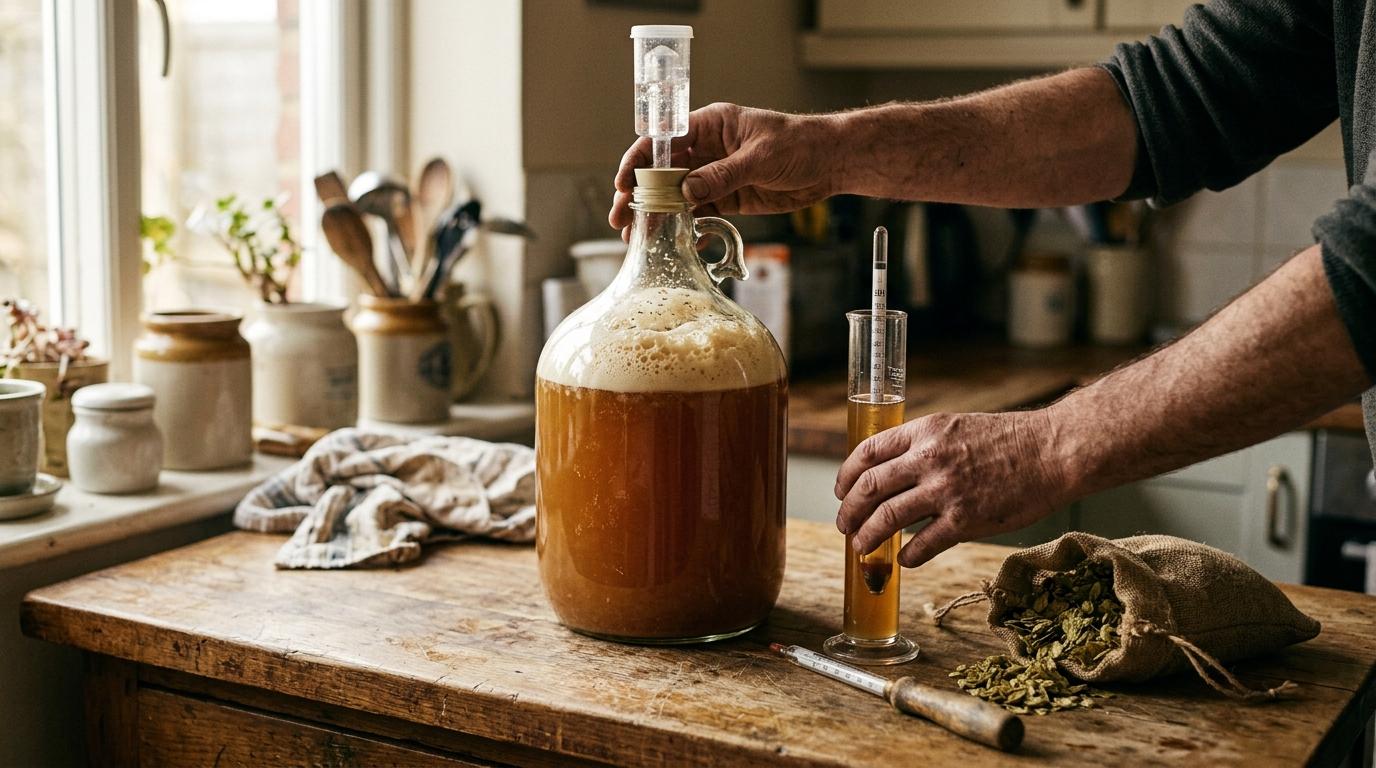
Brew your first batch of real ale at home. Equipment, ingredients, the brewing process, fermentation, and bottling, step by step.
Bread Baking from Scratch
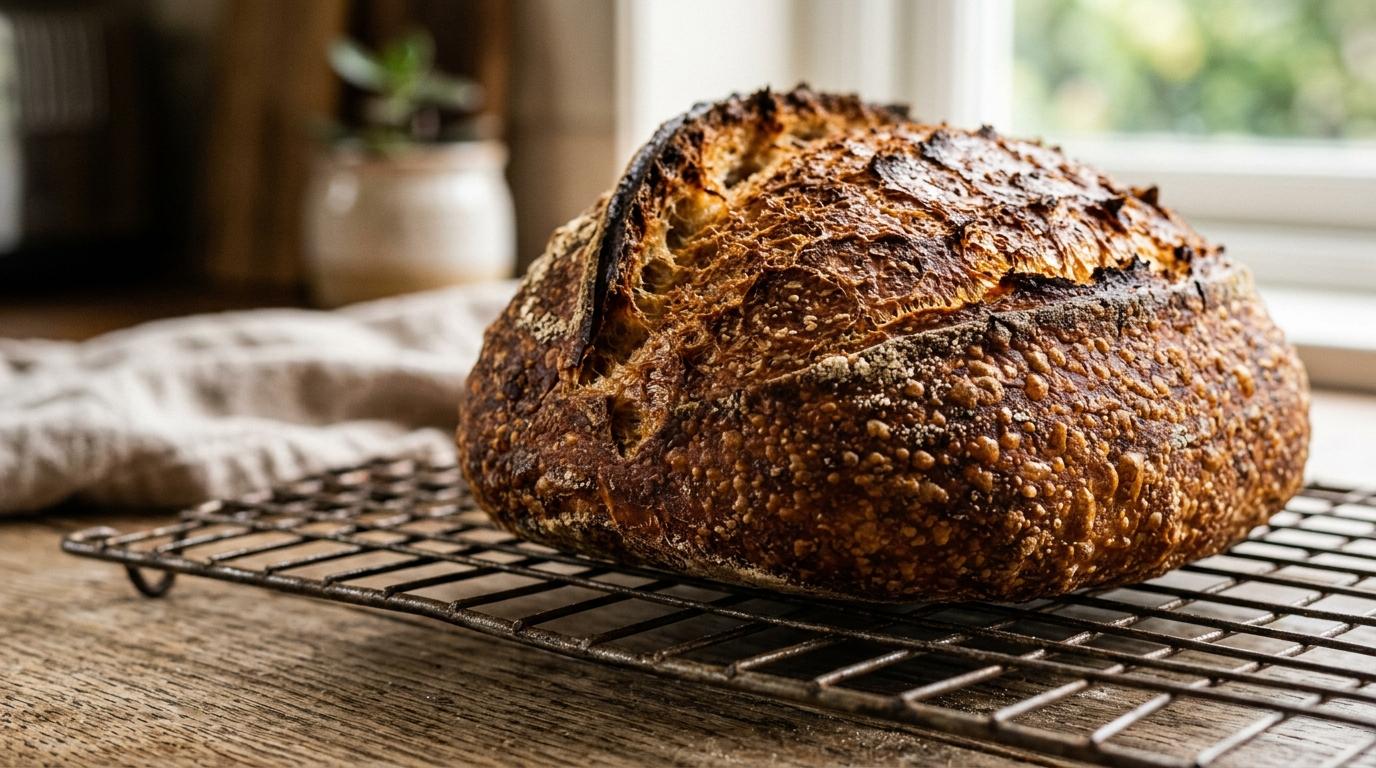
Your first proper loaf in an afternoon. Flour, water, salt, time, and the foundations of a skill that will feed people for life.
Cheese Making: The First Four Cheeses
Make paneer, labneh, mozzarella and halloumi at home with pasteurised milk, a pan and a thermometer. Four fresh cheeses, each done in an afternoon.