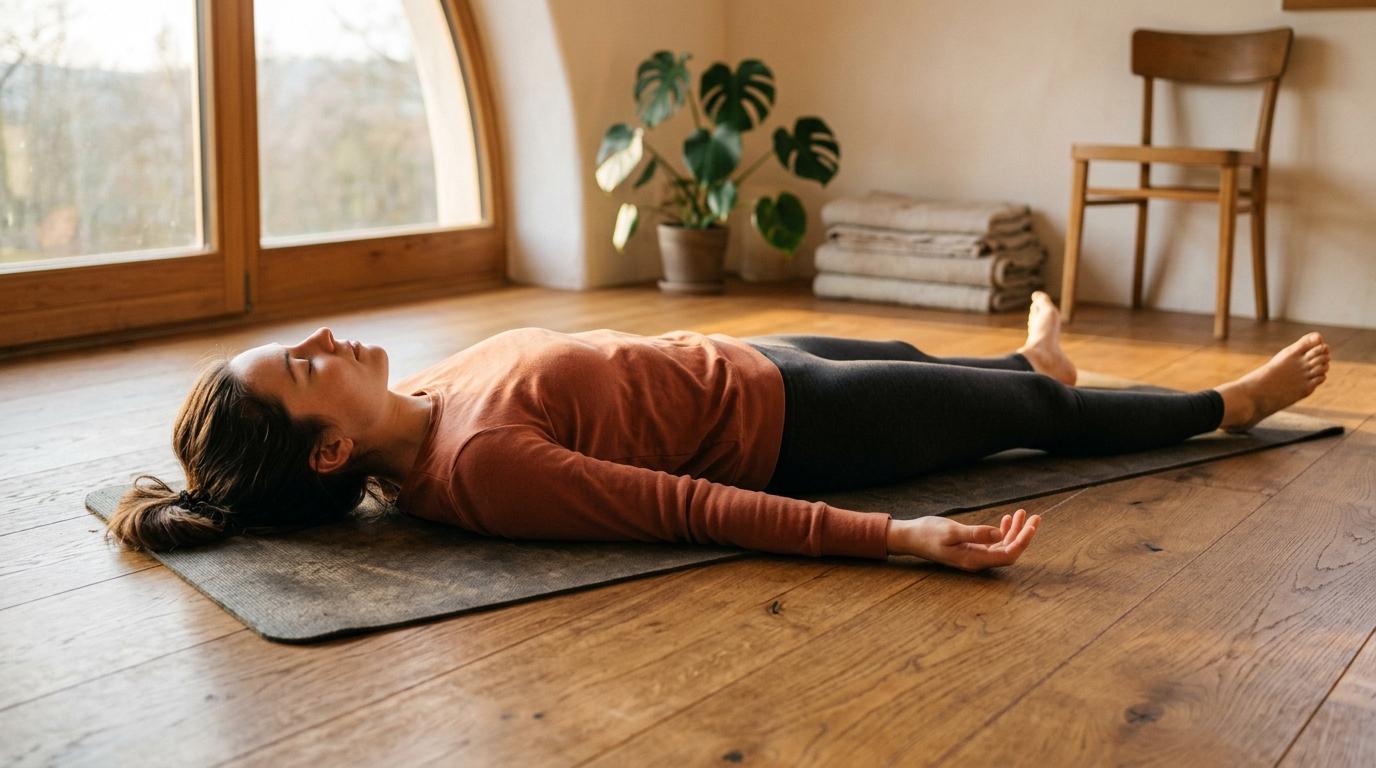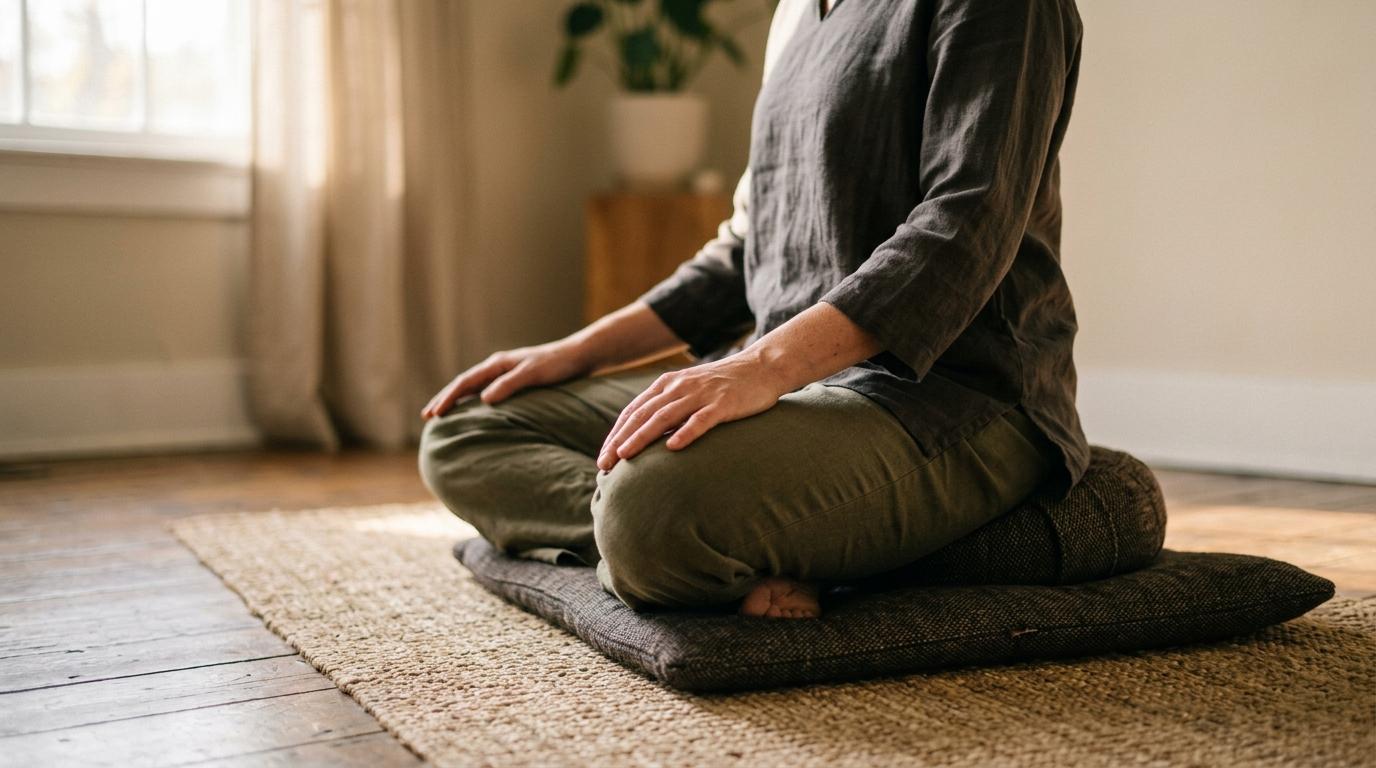
What you need to get started
Meditation requires nothing. No cushion, no incense, no specific posture, no app. It can be practised sitting on a chair, in a park, on a train. The only necessary condition is that you can be relatively undisturbed for the time you've set aside.
A chair or cushion
Already ownedSit in a way that allows your spine to be upright without effort. A dining chair is ideal: sit toward the front of the seat so your back doesn't lean against the backrest. A meditation cushion (zafu) or a folded blanket on the floor works well if you prefer to sit cross-legged. The posture should be stable and alert, not rigid.
Affiliate link. We may earn a small commission.
A timer
Your phone timer is freeDecide how long you'll sit before you start and set a timer. Without a timer, most beginners spend the session wondering how long is left. Even a phone timer works. The sound of it going off is not disruptive; it's a gentle signal that you can stop. Start with 10 minutes.
Affiliate link. We may earn a small commission.
When to practise
Morning practice is consistently reported to be more sustainable than evening practice. The mind is slightly fresher and the day's events haven't yet accumulated. First thing after waking, before checking any screens, is the easiest habit to establish and maintain. Even 10 minutes is worthwhile.
What meditation is, and what it isn't
The common misconception
Most people believe meditation means emptying the mind of thoughts. It doesn't. The mind produces thoughts automatically and continuously. Asking it to stop is like asking a river to stop flowing. You can't empty the mind through meditation; you can change your relationship to its contents.
Meditation is the practice of placing attention on a chosen object (usually the breath) and noticing when the mind has wandered away from it. When you notice the wandering, you return attention to the breath. That's the entire practice.
The moment of noticing is not a failure. It is the practice. The gap between the distraction and the return is where you learn: what pulled the attention away, how long you were gone, what it feels like to return. A session of 100 wanderings and 100 returns is a successful session. It's only unsuccessful if the wandering goes unnoticed.
The three foundational techniques
Breath awareness (shamatha)
The universal starting point. Fix attention on the physical sensation of breathing: the feeling of air entering and leaving the nostrils, or the rise and fall of the chest or belly. When the mind wanders, return. No judgement of the wandering; no praise for the return. Just return.
Body scan
Systematic, deliberate movement of attention through the body from feet to crown. Noticing sensation (warmth, pressure, tingling, numbness) without trying to change it. Develops the ability to separate sensation from the story about the sensation. Used in MBSR (Mindfulness-Based Stress Reduction) programmes.
Open awareness (shikantaza)
A more advanced practice: instead of fixing attention on a single object, awareness rests open, receiving whatever arises (sounds, sensations, thoughts, emotions) without chasing or avoiding any of it. Less structured than breath awareness; sometimes described as 'just sitting'. A natural development after months of breath work.
What the evidence says
Clinical research on meditation is substantial and ongoing. Well-established findings: regular mindfulness practice reduces cortisol (a stress hormone), improves working memory, increases activity in the prefrontal cortex (associated with executive function), and reduces amygdala reactivity (the area associated with threat response). The effect sizes are meaningful. Nothing mystical about it: the practice has documented, repeatable physiological effects.
Your first two weeks
What a session looks like
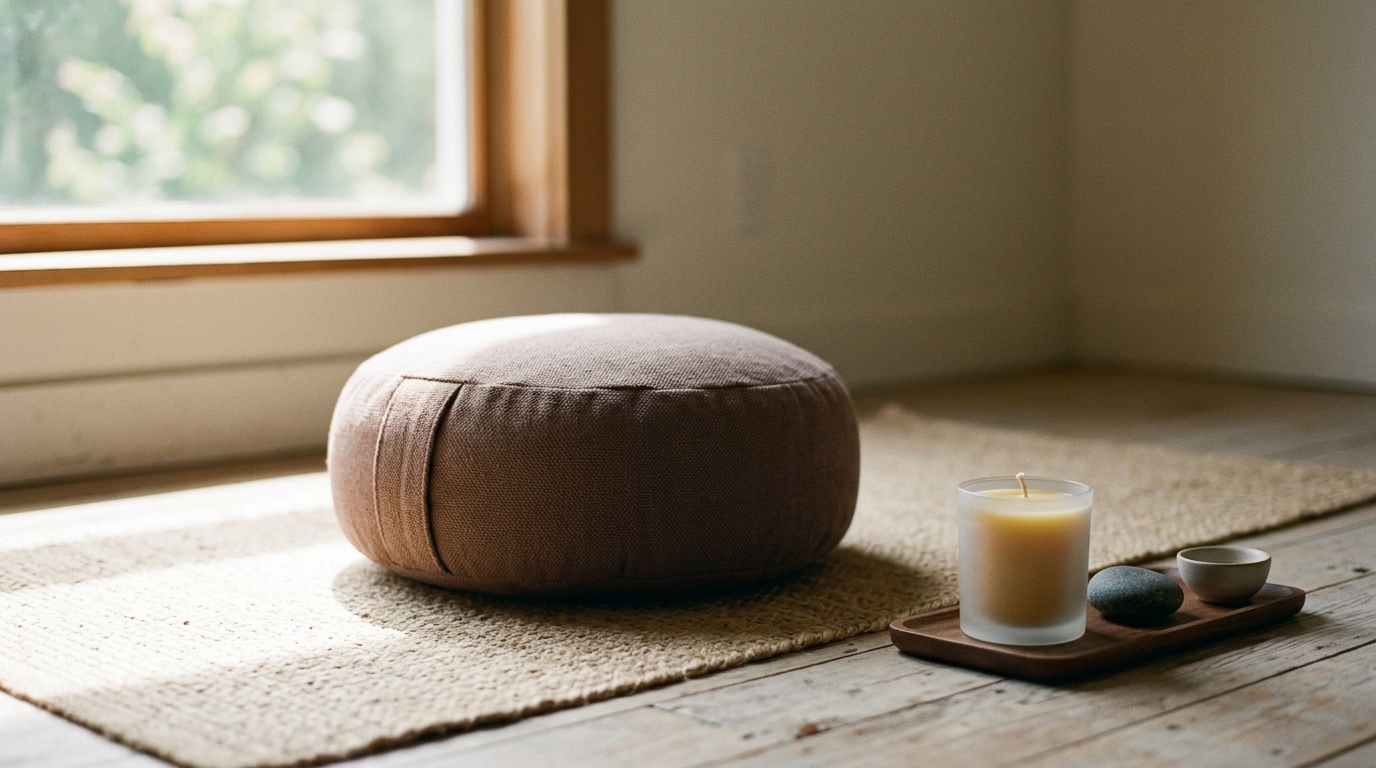
Set up your space: The same place, the same time, every day. Remove obvious distractions. A cushion that allows the hips to sit slightly higher than the knees (a zafu, folded blanket, or firm pillow). Or a chair, feet flat on the floor, back upright but not rigid. The space doesn't need to be special. It needs to be consistent.
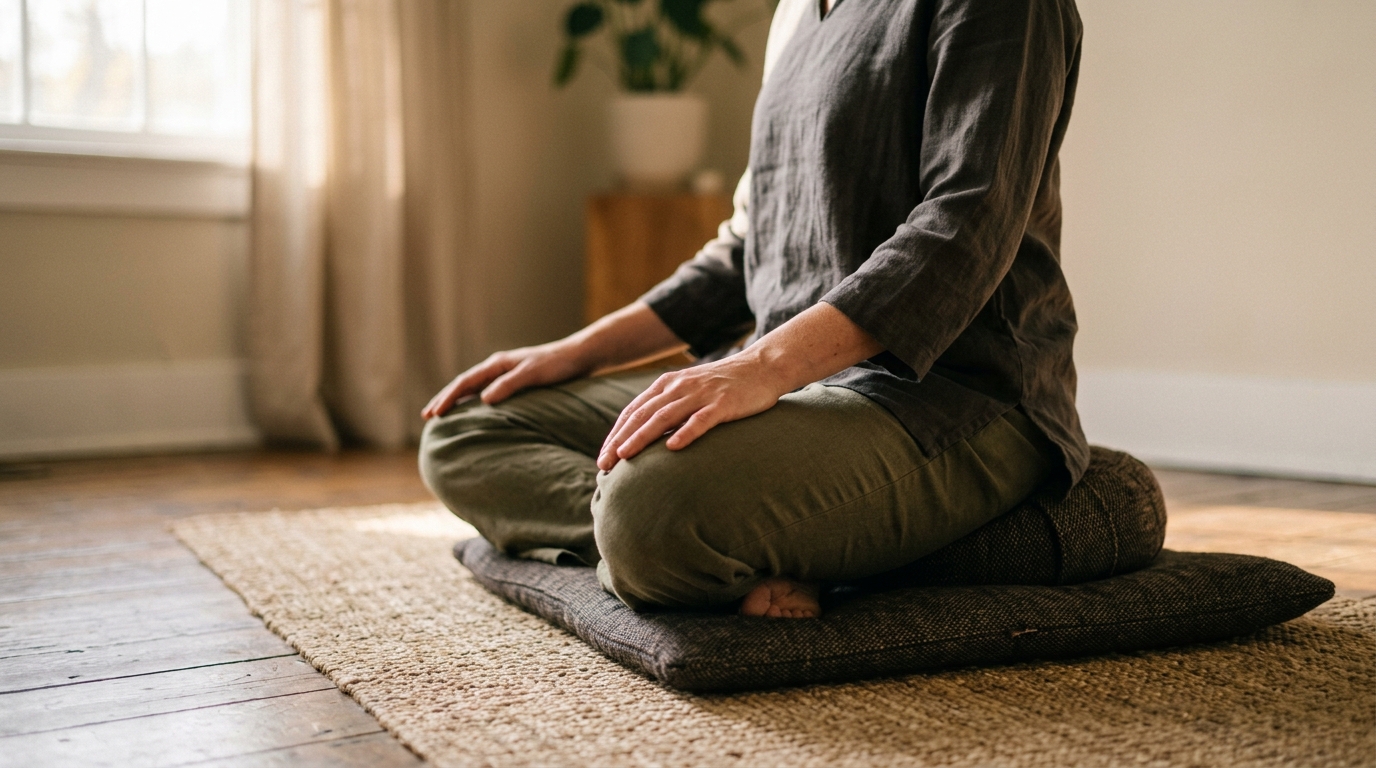
Seated position: Spine upright, the vertebrae stacked, not slumped. Chin very slightly tucked. Shoulders relaxed and dropped. This posture is for alertness, not discomfort. A slumped posture encourages sleepiness. An upright posture keeps the mind engaged without tension.
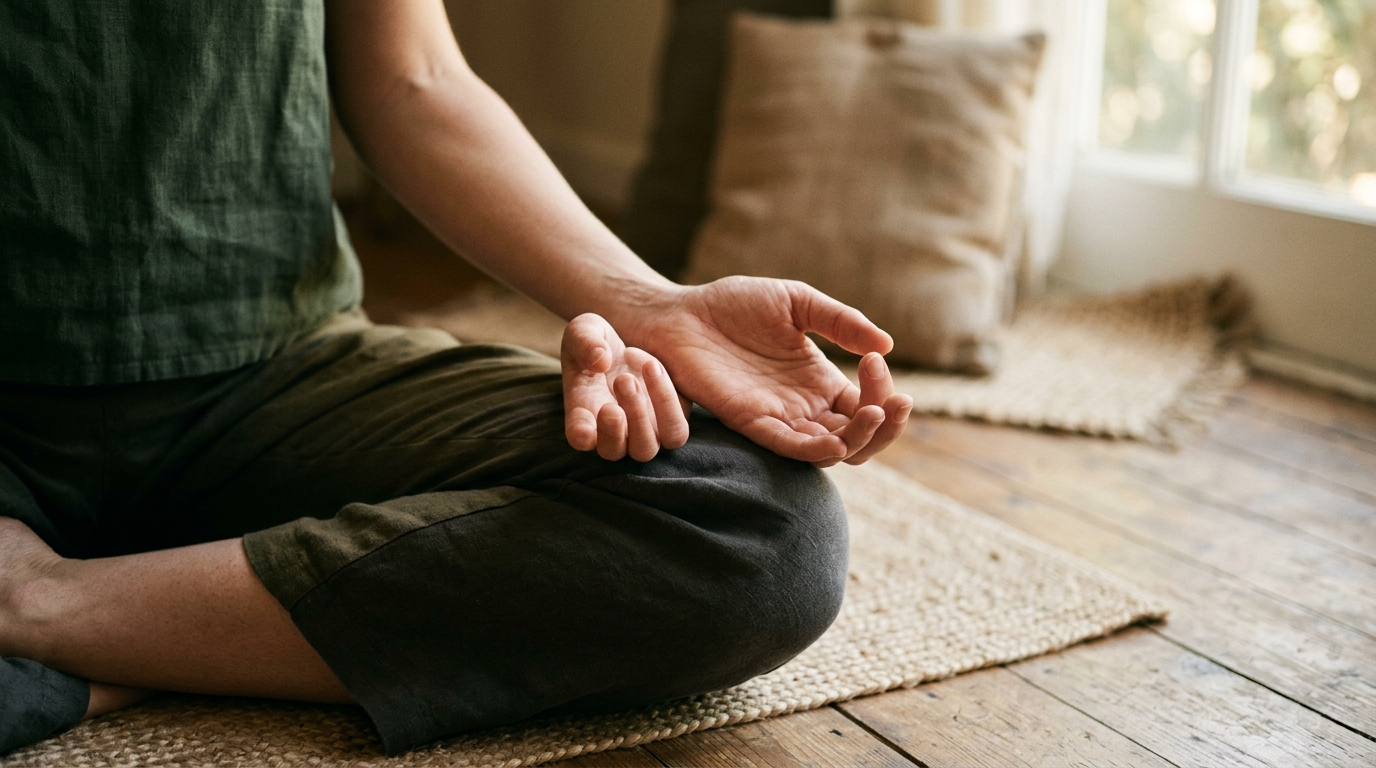
Hand position: Hands resting on the thighs, palms down or up, whatever feels natural. Or left hand cradling the right in the lap, thumbs lightly touching. The hands should be completely relaxed. Any tension in the hands spreads to the shoulders. Release it deliberately at the start of each session.

Breath focus: Place attention at the nostrils: the physical sensation of air entering and leaving. Or at the belly, the rise and fall. Choose one point and stay with it. When the mind wanders (within seconds, always), notice that it has wandered, and return. That noticing and returning is the practice.
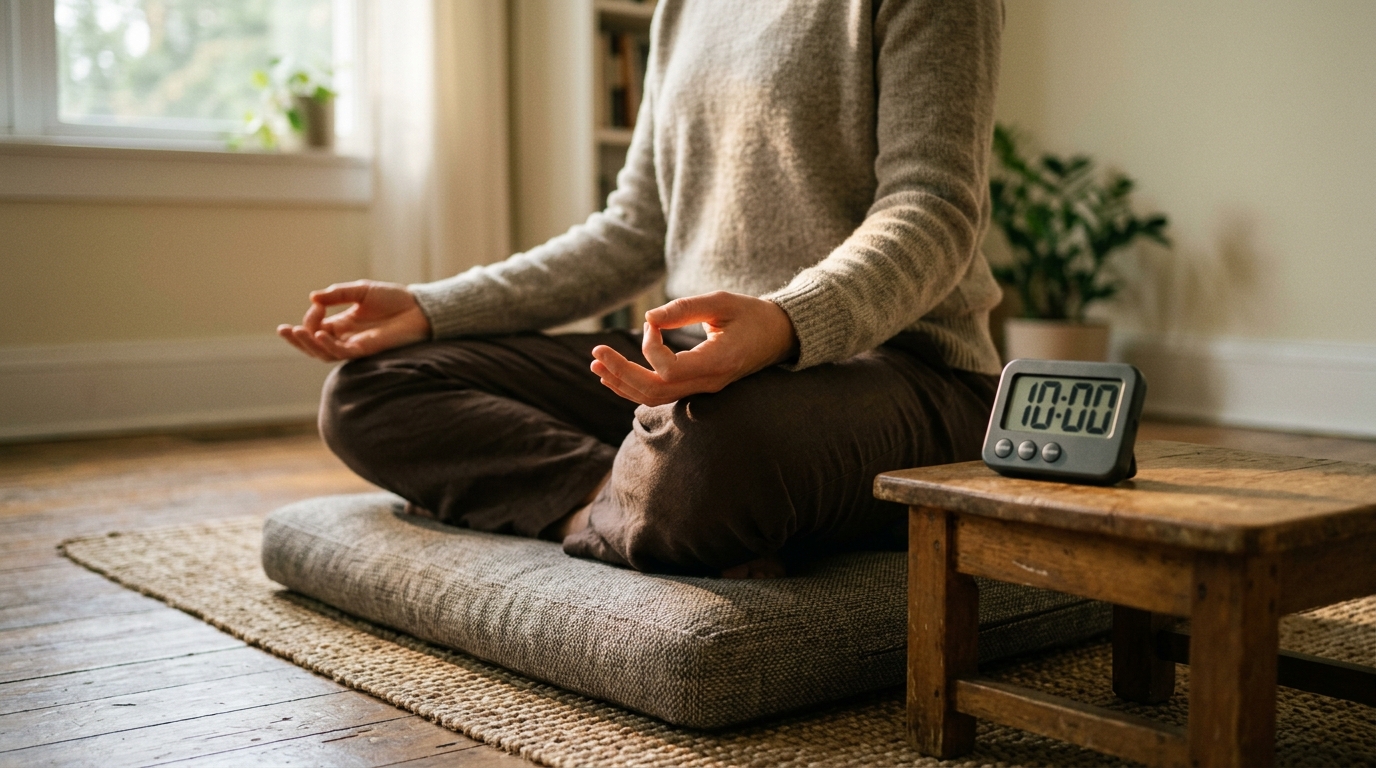
During the session: Thoughts will arise. Let them pass without following them. The instruction is 'don't engage', not 'stop thinking'. Imagine thoughts as clouds passing through the sky. You are the sky. The clouds are not problems. You don't need to chase them or push them away.

Body scan (Week 2 addition): After breath awareness, scan the body slowly from feet to crown. Not to relax, just to notice. Whatever sensation is present at each area: warmth, pressure, tingling, numbness. Stay with each area for 30–60 seconds before moving upward. The scan develops body awareness and often reveals where tension has been held without knowing it.
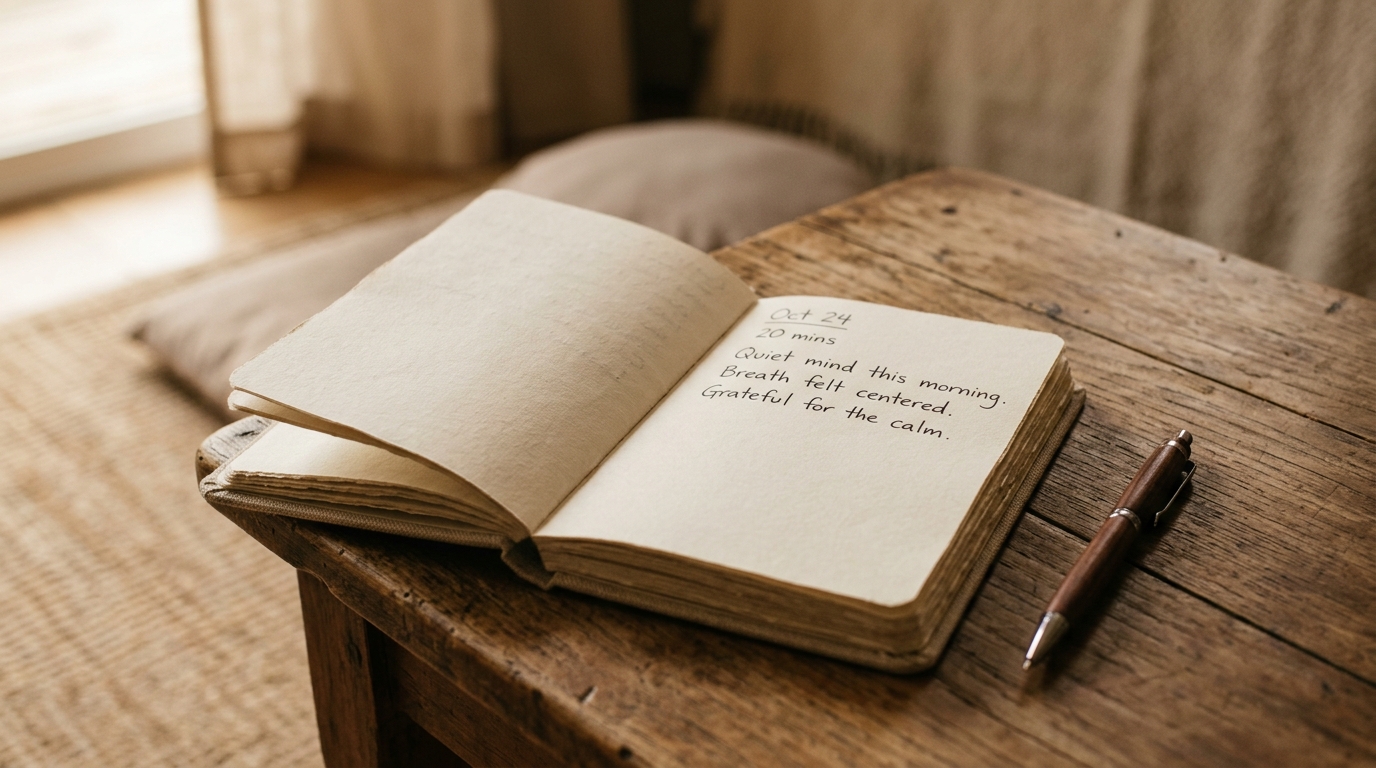
After the session: A moment of stillness before reaching for a phone or beginning the day. Optional: a brief journal note covering what arose during the session, what was difficult, what was easy. Not analysis, just observation. Over weeks, patterns appear in what the mind returns to repeatedly. These patterns are information.
Week 1: Breath awareness, 10 minutes
- Sit comfortably, spine upright. Set a timer for 10 minutes.
- Close your eyes (or gaze soft and downward at the floor).
- Take three deliberate slow breaths to arrive and let the body settle.
- Let the breath return to its natural rhythm. Place attention at the nostrils, the sensation of air entering and leaving. Or at the belly, the physical movement of the abdomen rising and falling. Choose one point and stay with it.
- When the mind wanders (it will, within seconds), notice that it has wandered. Acknowledge gently where it went (thinking about lunch, planning tomorrow, replaying a conversation). Return attention to the breath. That's one repetition.
- Do this for 10 minutes. When the timer sounds, take a few deliberate breaths before opening your eyes and moving.
- Do this every morning for 7 days. No variation. No evaluation. Just return.
Week 2: Add the body scan
- Start with 5 minutes of breath awareness.
- Shift attention to the soles of your feet. Notice whatever is there: warmth, pressure, the sensation of the floor. Stay for 30–60 seconds.
- Move attention slowly up the body: ankles, calves, knees, thighs, pelvis, abdomen, chest, hands, arms, shoulders, neck, face, crown. Notice sensation at each area. Don't try to relax, just notice.
- When the mind wanders, return to whatever body area you were at.
- After reaching the crown, rest for a minute in open awareness, receiving whatever is present without directing attention anywhere specifically.
The most common difficulty in the first two weeks
'I can't stop thinking.' That's not a failure at meditation; it's what the mind does. The practice isn't the stopping; it's the noticing. A session full of distraction and returns is identical in value to a session of effortless focus. The effort of returning is the exercise.
Your pathway to mastery
Beginner: you're here
Week 1–4Daily 10-minute breath awareness. Beginning to recognise the wandering and return. The habit established.
Developing
Month 2–6Sessions extending to 20–30 minutes. Body scan and loving-kindness practice added. Noticing the effects of practice in daily life: slightly less reactive, slightly more present.
Confident
Year 1A stable 20–30 minute daily practice. A retreat attended (even a weekend retreat deepens practice significantly). Reading the foundational texts. Formal training in one tradition if desired.
Skilled
Year 2+Practice as a settled part of daily life, not as a project but as maintenance, like sleep. Longer retreats. Potentially teaching or introducing others to practice. The fruits of practice visible to others.
The teachers to learn from
- Jon Kabat-Zinn: Founder of MBSR; Full Catastrophe Living (1990) is the most important secular mindfulness text; Wherever You Go, There You Are (1994) is more accessible as a starting point
- Thich Nhat Hanh: Vietnamese Zen Buddhist monk and peace activist; The Miracle of Mindfulness (1975) is the most elegant introduction to mindfulness practice in print; deeply practical, gently philosophical
- Tara Brach: US-based psychologist and meditation teacher; her podcast and teaching integrate psychological insight with meditation practice; excellent for Western practitioners
- Sam Harris: Waking Up (2014) is a secular, rigorous account of what meditation is and why it works; his app (Waking Up) offers structured guided meditations without spiritual packaging
Best resources
Community
Reader tips
The biggest shift for me was stopping trying to clear my mind and just watching thoughts pass like clouds. Once I gave up fighting the thoughts, sitting became easy.
James C. · April 2026
Share a tip
Sign in to share what worked for you.
Same category
What to learn next
Side quests