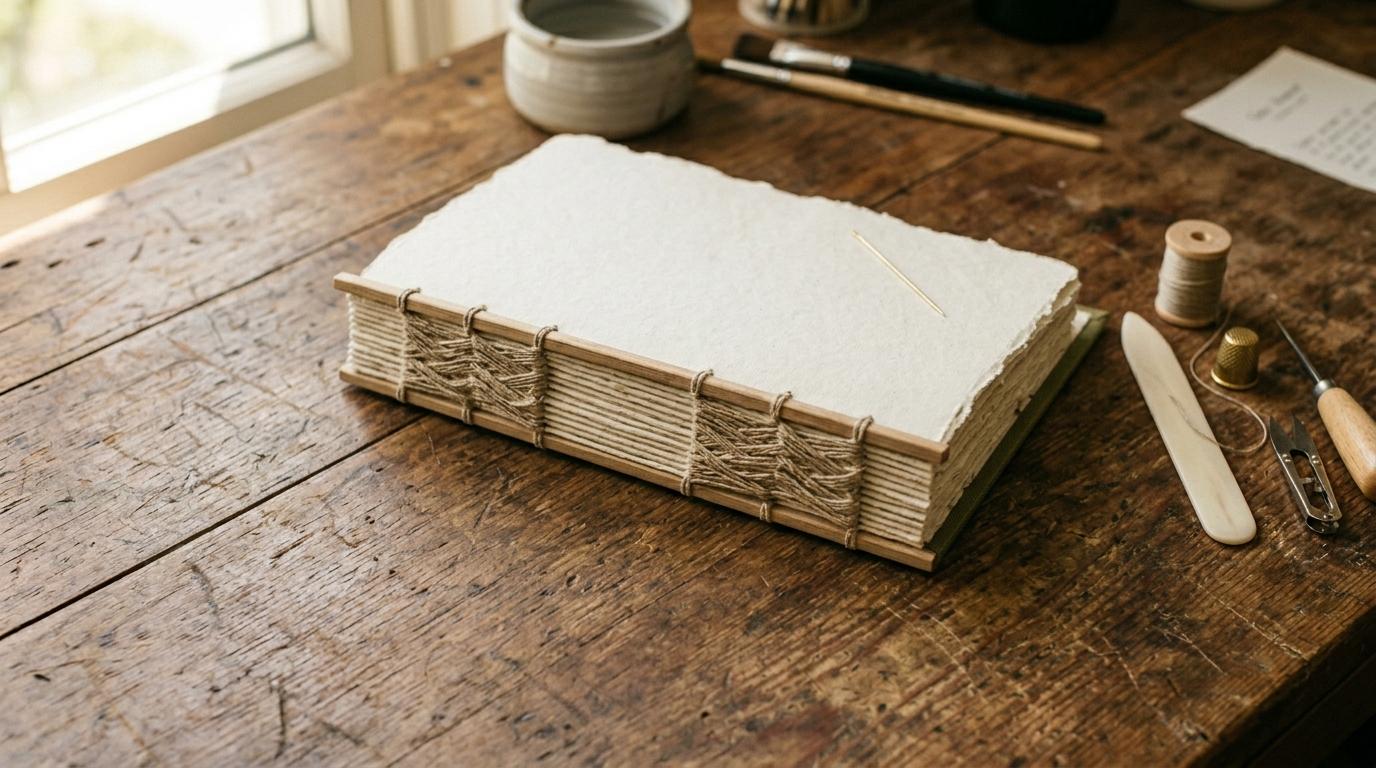
What you need to get started
Paper (80–90gsm)
Already in your home, or £5–7 for a reamStandard printer paper (80gsm) is ideal for a beginner journal. It's easy to fold, accepts pen and pencil well, and is cheap enough to use without precious feelings. A ream of A4 printer paper divided into folded sections (signatures: folded sheets nested together, the basic sewn unit of a hand-bound book) is your text block, meaning all the signatures combined before being cased into the cover.
Affiliate link. We may earn a small commission.
Bookbinding thread or waxed linen thread
£3–8 for a spool (lasts many books)Bookbinding thread is thicker and stronger than sewing thread. Waxed linen thread, coated in wax to reduce friction and tangling, is the traditional choice. The wax stops the thread snagging as you sew. Available from bookbinding suppliers (Shepherds, Hewit). Or wax ordinary thread by pulling it across beeswax.
Affiliate link. We may earn a small commission.
Bookbinding needles (blunt-tipped)
£2–4 for a packBlunt needles (or tapestry needles) for sewing signatures together. Sharp needles tear paper. Bookbinding suppliers sell packs; tapestry needles from a haberdashery are identical.
Affiliate link. We may earn a small commission.
An awl or a bradawl
£4–8For piercing the holes in the spine of each signature before sewing. A sharp awl (a pointed hand tool for piercing paper and board) driven through the folded paper creates a clean, consistent hole. An ice pick or a thick darning needle works for small projects.
Affiliate link. We may earn a small commission.
Cover boards: greyboard or bookbinding board
£4–10 for a sheetFor the front and back covers. Bookbinding board (Davey board), a dense rigid board made for book covers, is the professional choice: rigid, stable, and available in various thicknesses. Thick card (cereal box card doubled up) works for practice. Cut 3mm larger than the text block on the top, bottom, and fore-edge.
Affiliate link. We may earn a small commission.
PVA adhesive
£3–6 for a small bottleBookbinding PVA (polyvinyl acetate, a flexible reversible adhesive) is the correct choice. It dries flexible, stays reversible (important for conservation), and bonds book cloth and paper reliably. Standard craft PVA works for beginners. Apply with a brush, always in the direction of the paper grain.
Affiliate link. We may earn a small commission.
Community
Reader tips
No tips yet. Be the first to share what worked for you.
Share a tip
Sign in to share what worked for you.
Same category
What to learn next
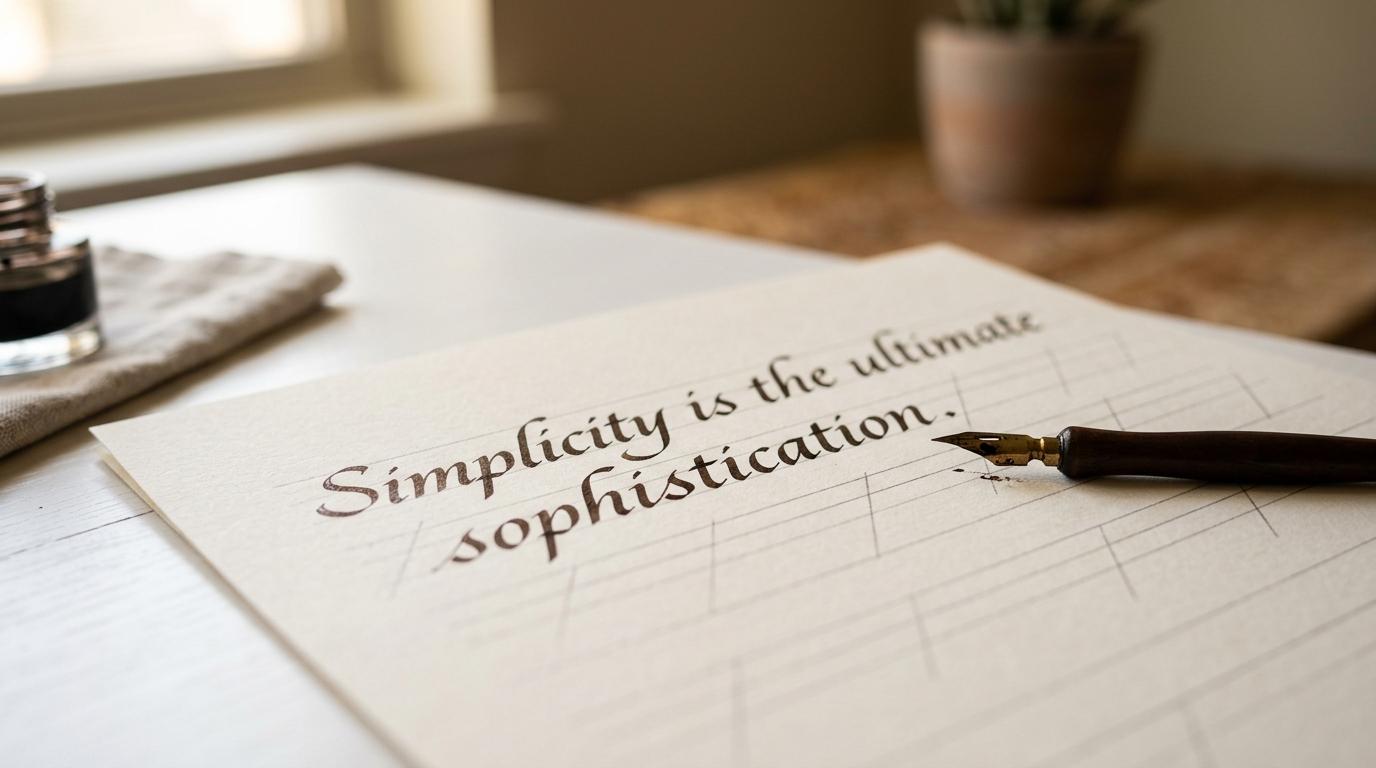
Calligraphy: The Foundational Script
Italic script with a pointed nib. The foundational Western calligraphy hand: clear, elegant, and achievable. Every lettering tradition descends from this one.
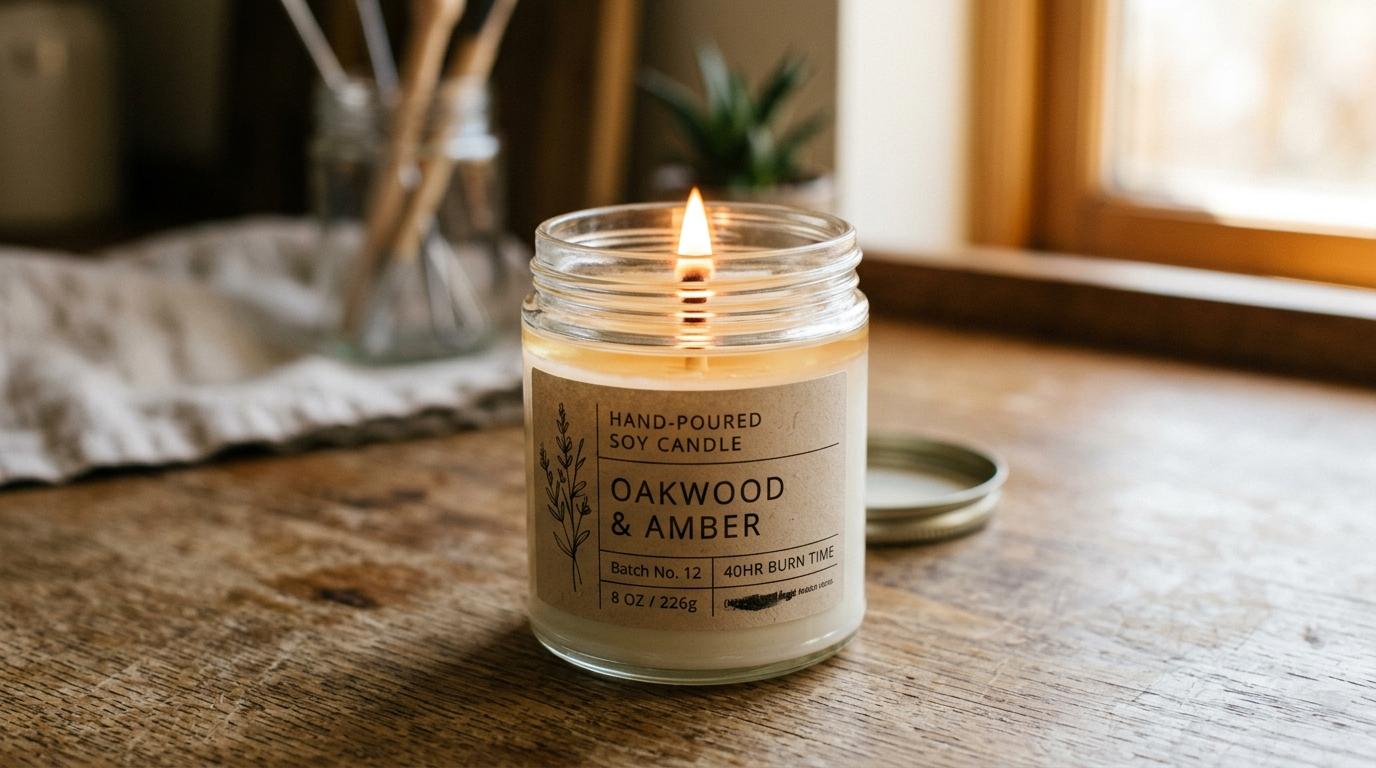
Candle Making
Make container candles with soy wax, fragrance oil, and cotton wicks. Published in late October, six weeks before Christmas: enough time to make gifts.
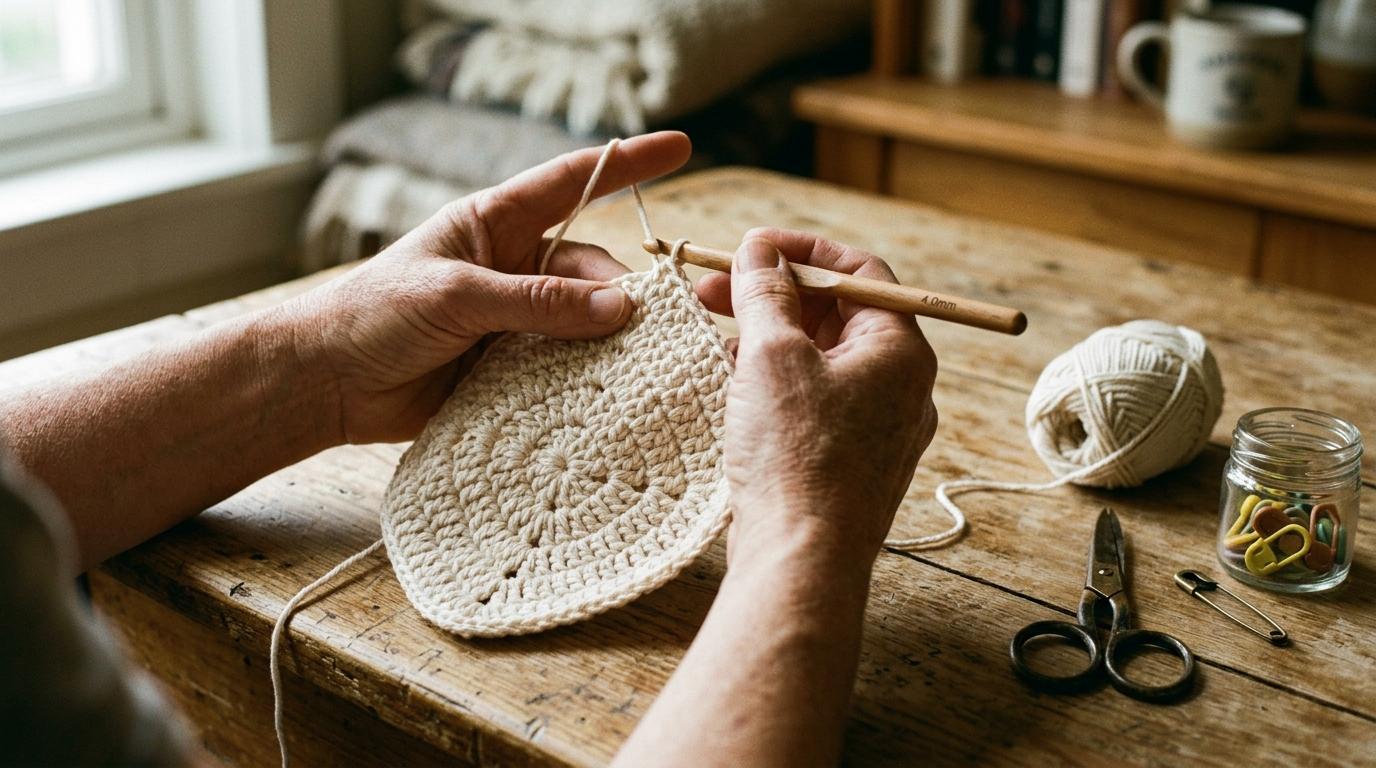
Crochet: Your First Project
Learn to crochet from scratch: chain, slip stitch, single crochet, and double crochet, then make your first finished object.