What you need to get started
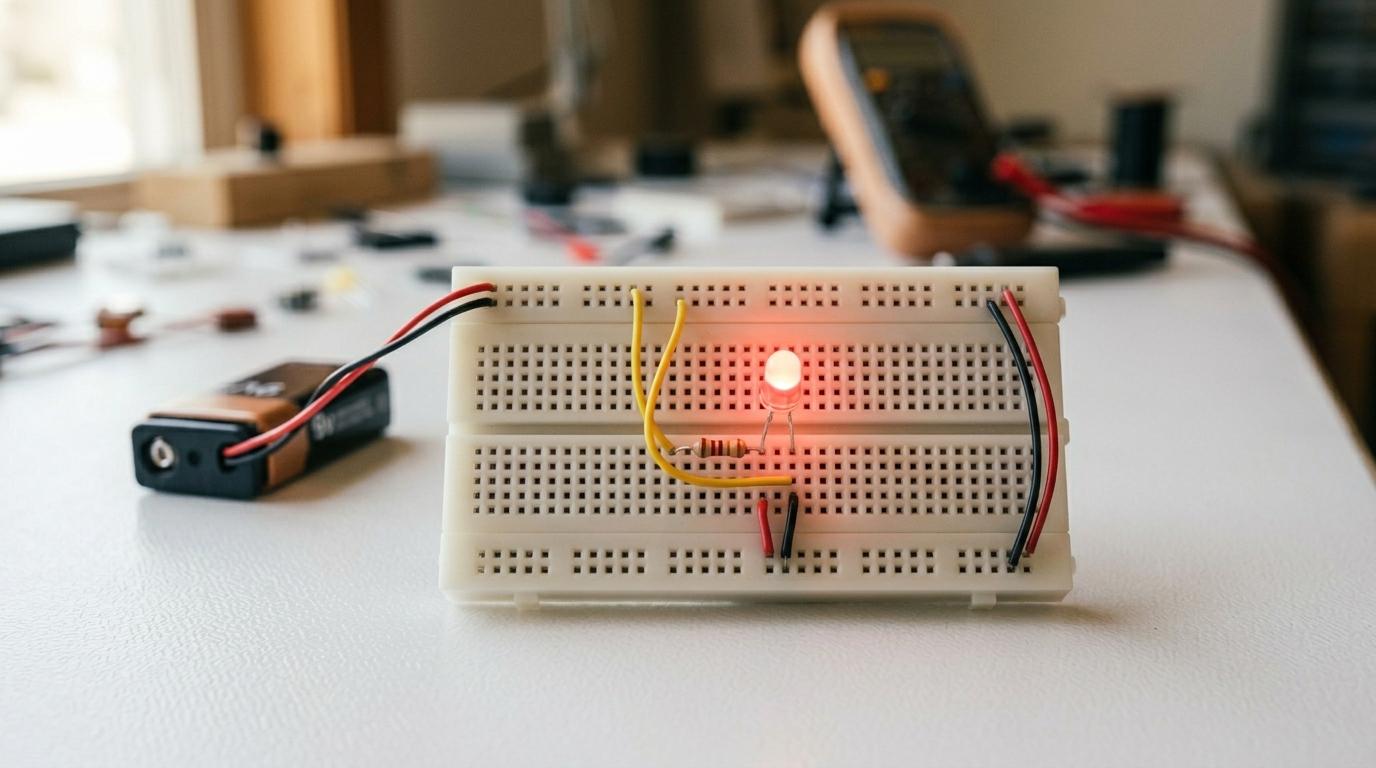
A starter kit covers everything. No soldering required for the first projects: the breadboard lets you prototype circuits by pushing components into holes, with no heat and no commitment.
A starter electronics kit
£20–35 for a comprehensive kitKits from Elegoo, Adafruit, or the Raspberry Pi Foundation include a breadboard, a selection of resistors and LEDs, jumper wires, a 9V battery and clip, and often an Arduino microcontroller. Everything you need to follow the first 10 projects in any beginner book. The Elegoo Super Starter Kit is the standard UK beginner recommendation.
Affiliate link. We may earn a small commission.
A multimeter
£10–20 for a reliable basic modelMeasures voltage, current, and resistance. Essential for understanding what's happening in a circuit and for diagnosing problems. A basic digital multimeter (Uni-T, AstroAI) does everything a beginner needs.
Affiliate link. We may earn a small commission.
A 9V battery
£2–3 per battery; use a rechargeable 9V to save money long-termYour power source for breadboard projects. 9V is safe, provides enough voltage to power most beginner circuits, and 9V batteries are universally available. An Arduino can also power your circuits via USB.
Affiliate link. We may earn a small commission.
Why not solder first
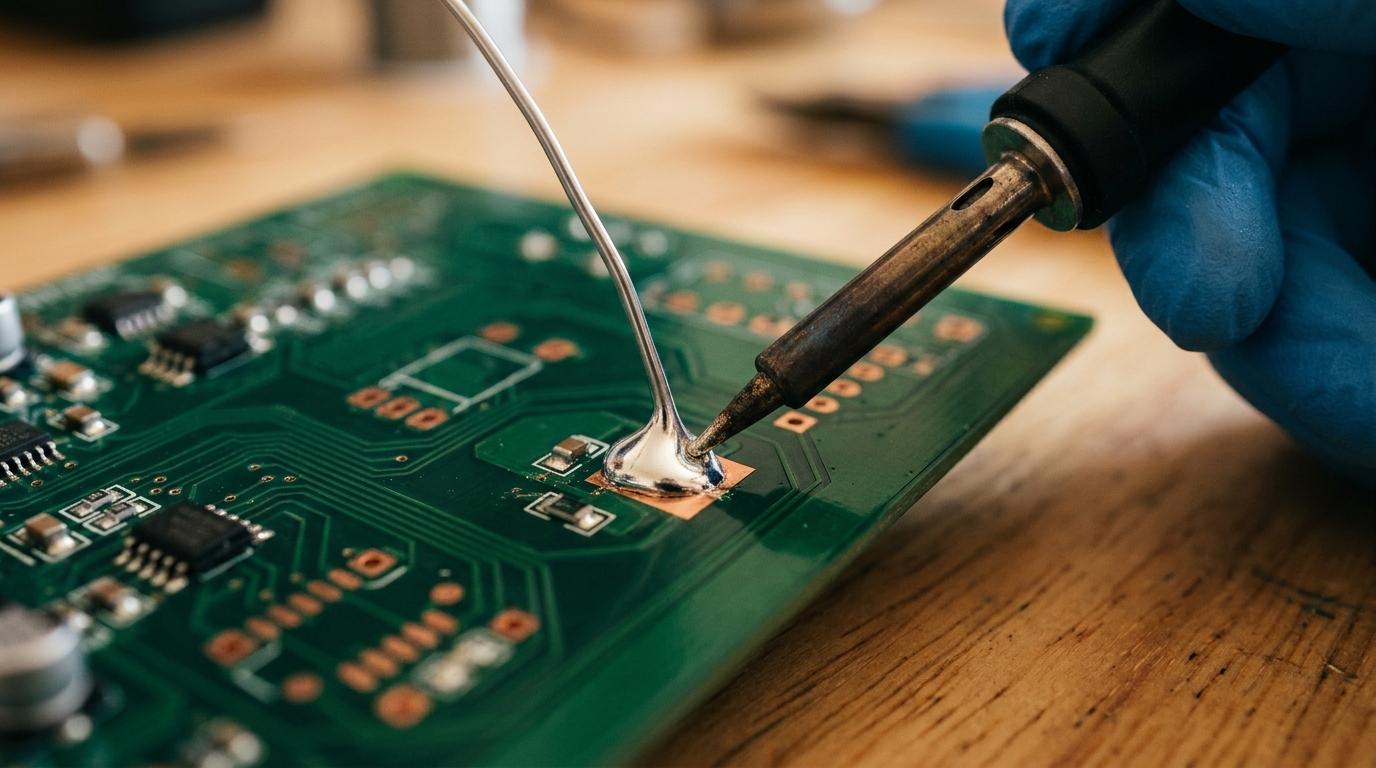
Soldering makes connections permanent. It's the technique used in finished electronics. But beginners need to undo things, move components, and experiment without damage. A breadboard is the right first tool because mistakes are free. Learn the concepts first; learn to solder when you have circuits worth making permanent.
Community
Reader tips
No tips yet. Be the first to share what worked for you.
Share a tip
Sign in to share what worked for you.
Side quests