What you need to get started
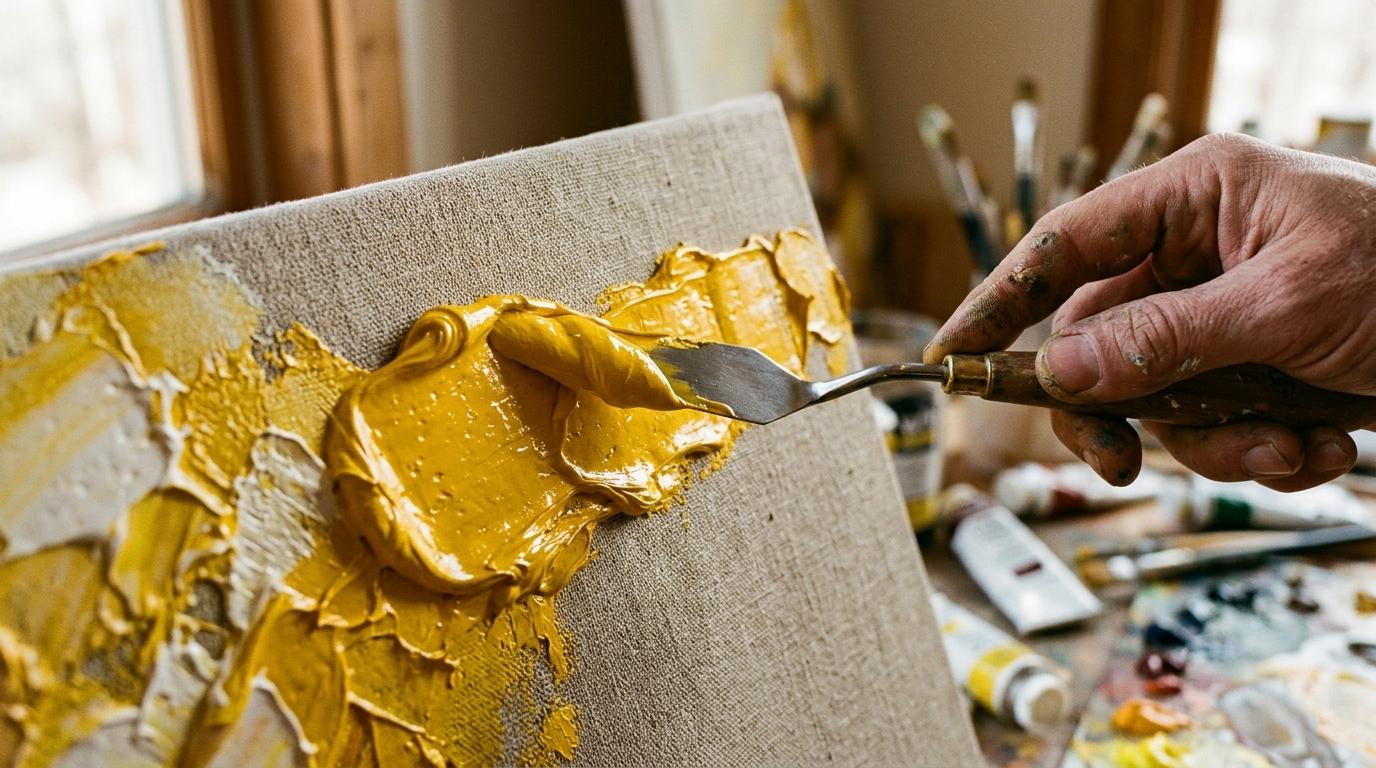
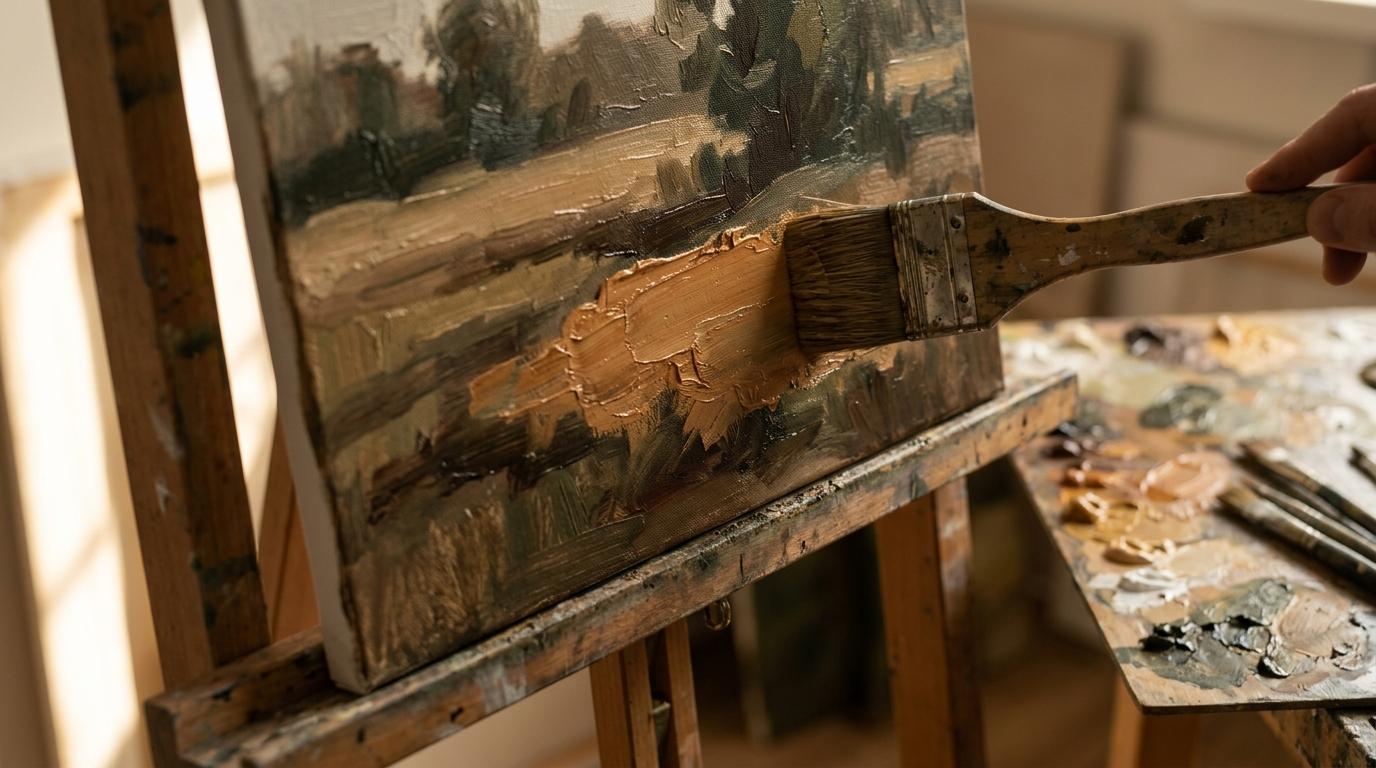
Oil painting requires more equipment than drawing but less than most beginners assume. A limited palette of 6–8 colours, three brushes, a canvas, and some solvent is enough to paint anything.
Paints: a limited starter palette
The only 6 colours you need
- Titanium White: The most used colour on your palette. You'll mix it into almost everything. Buy the largest tube you can find.
- Ivory Black: For darks and neutralising colours. Dries slowly, so add a little linseed oil or use a fast-dryer medium.
- Yellow Ochre: A warm earth yellow, the most useful yellow for beginners; more controllable than Cadmium Yellow, which is very strong.
- Burnt Sienna: A warm, transparent brown. Essential for skin tones, wood, earth. One of the most versatile pigments in the box.
- Ultramarine Blue: A rich, slightly warm blue. Mixes into excellent greens with yellow, and near-blacks with Burnt Sienna.
- Cadmium Red Medium (or Alizarin Crimson): Cadmium Red is opaque and warm; Alizarin Crimson is transparent and cool. Alizarin is more versatile for beginners.
Student-grade paints (Winton by Winsor & Newton, Galeria) are appropriate for learning. Artist-grade paints have higher pigment load and more consistent behaviour. Move to them when you're committed.
Some links are affiliate links. Airgap.life may earn a small commission at no extra cost to you.
Brushes: three is enough
£15–25 for three good brushesA flat (size 6 or 8) for blocking in large areas. A round (size 4) for mid-sized work. A small round or filbert (size 2) for detail. Hog bristle brushes for oil painting: they hold more paint and push it around better than synthetic brushes. Cheap brushes shed hairs into your paint. Spend £5–8 per brush.
Affiliate link. We may earn a small commission.
Canvas or canvas board
£3–8 per canvas board; £8–20 for a stretched canvasStretched canvas is traditional. Canvas board (canvas glued to card) is cheaper and easier for beginners. Start with A4 or A3 size: small enough to finish in one or two sessions, large enough to work freely. Prime (gesso) the surface if using raw canvas.
Affiliate link. We may earn a small commission.
Linseed oil and odourless mineral spirits
£5–10 for bothLinseed oil: added to paint to make it flow more smoothly and increase transparency. Mineral spirits (odourless): for thinning paint in early layers and cleaning brushes. Keep in small dipping jars with lids. The smell of regular white spirit/turpentine is powerful, so use odourless mineral spirits at home.
Affiliate link. We may earn a small commission.
Community
Reader tips
No tips yet. Be the first to share what worked for you.
Share a tip
Sign in to share what worked for you.
Same category
What to learn next
Drawing from Observation
You don't need talent, you need to learn to see. Drawing from observation teaches you to put aside what you know and draw what's actually in front of you.
Linocut Printing
Carve a design into soft linoleum, ink it, press it to paper. Relief printing at its most direct: no press required, strong results from the first session.
Watercolour for Beginners
Master water control, mixing, and light-to-dark technique. Paint a complete landscape on your first day.