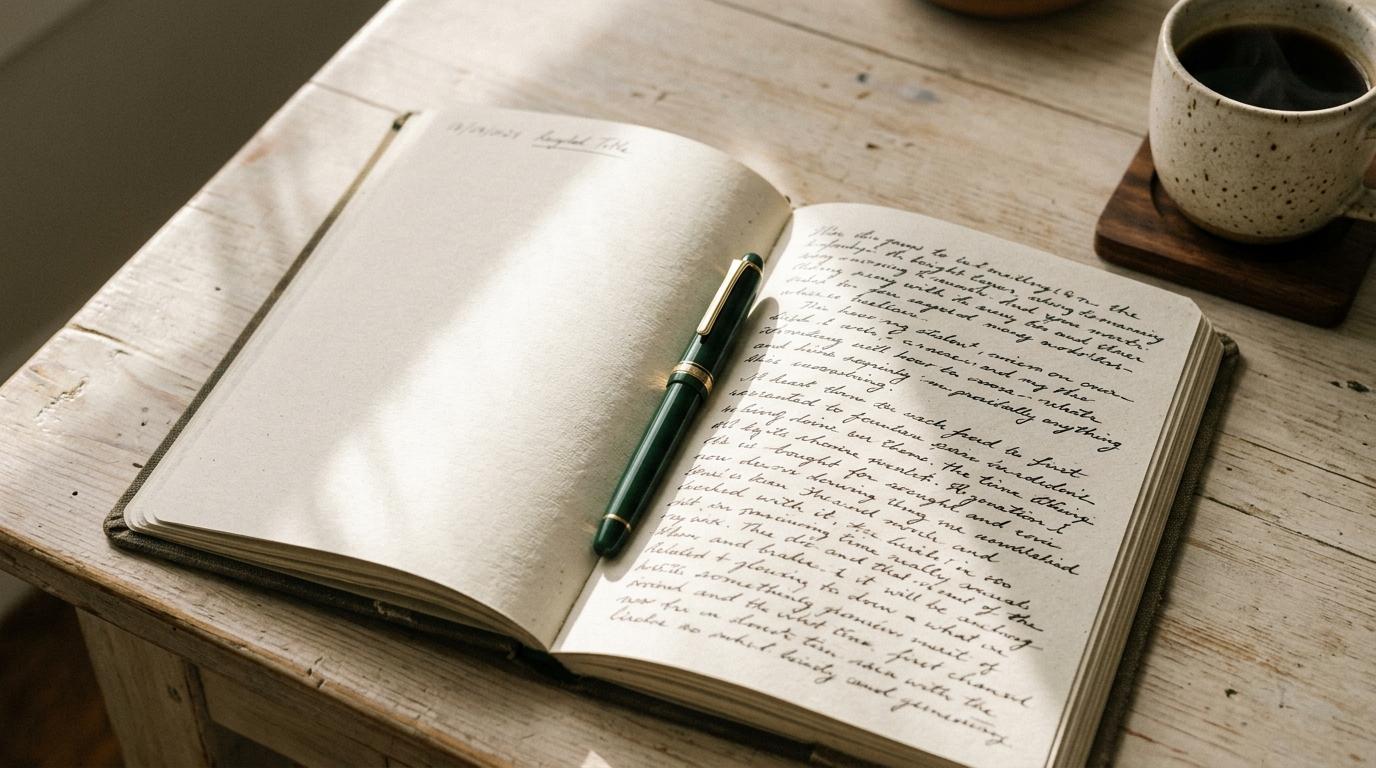
Starting and not stopping: the blank page problem
The most common journal entry is the first one. The second most common is the one written three months later, beginning "I always mean to do this more regularly, but…" Most journaling advice focuses on motivation and habit-building. This course starts somewhere different: with the actual difficulty of the blank page, and why most approaches make it harder than it needs to be.
What journaling is for
Journaling isn't a diary. A diary records events. A journal processes them. The difference is the relationship between the writer and the material. A diary says what happened. A journal asks what does this mean, how do I feel about it, what do I want to do with it. Both are valid, but only the journal tends to produce the kinds of benefit (clarity, emotional regulation, self-knowledge) that practitioners report most strongly.
The research is specific. James Pennebaker's work at the University of Texas showed that writing about difficult experiences for fifteen to twenty minutes on three or four consecutive days produced measurable improvements in immune function, reduced medical visits, and decreased reported distress, effects that persisted at follow-up months later. The mechanism is cognitive processing: translating raw emotional experience into language seems to help the brain organise and integrate it in a way that passive rumination doesn't.
The blank page
The blank page is blank because you're waiting for the right thing to write. Stop waiting. Write the wrong thing. Write "I don't know what to write" and keep going. The first two minutes of any journaling session are almost always the worst. The resistance isn't a signal that you have nothing to say. It's the feeling of shifting from the reactive surface of the day to a slower, more reflective gear. Most people stop here and conclude that journaling isn't for them. The people who journal regularly have learned that continuing past this point is where the value is.
Tools
Paper beats screen for most people. The slower physical process of handwriting keeps pace with the slower process of reflection. Typing invites the performance of writing: the backspace key, the urge to edit, the sense that the output should be readable. A handwritten journal is entirely private and entirely uneditable, which makes it safer.
Leuchtturm1917 A5 notebook (dotted or ruled)
£15–£18The standard recommendation for a reason: good paper, numbered pages, an index at the front, a ribbon marker, and a back pocket. Holds up to daily use for roughly four to five months. The dotted version is the most flexible: you can write in lines or use the dots as a grid.
Affiliate link. We may earn a small commission.
Uni-ball Jetstream or LAMY Safari pen
£8–£25Write with something that doesn't snag or bleed. The Jetstream writes smoothly on almost any paper. The LAMY Safari takes cartridges and has a satisfying weight. Either makes the physical act of writing more enjoyable, which matters when you're trying to build a habit.
Affiliate link. We may earn a small commission.
Write badly on purpose
Give yourself permission to write terrible sentences. The internal editor (the voice that says "this is obvious" or "this sounds self-indulgent") is the enemy of honest journaling. You're not writing for an audience. You're writing for the act of writing.
Community
Reader tips
No tips yet. Be the first to share what worked for you.
Share a tip
Sign in to share what worked for you.
Same category
What to learn next
Dog Training: The First Six Weeks
Reward-based foundation training for a new dog: markers, recall, loose-lead walking and a settle, built in six weeks of short daily sessions.
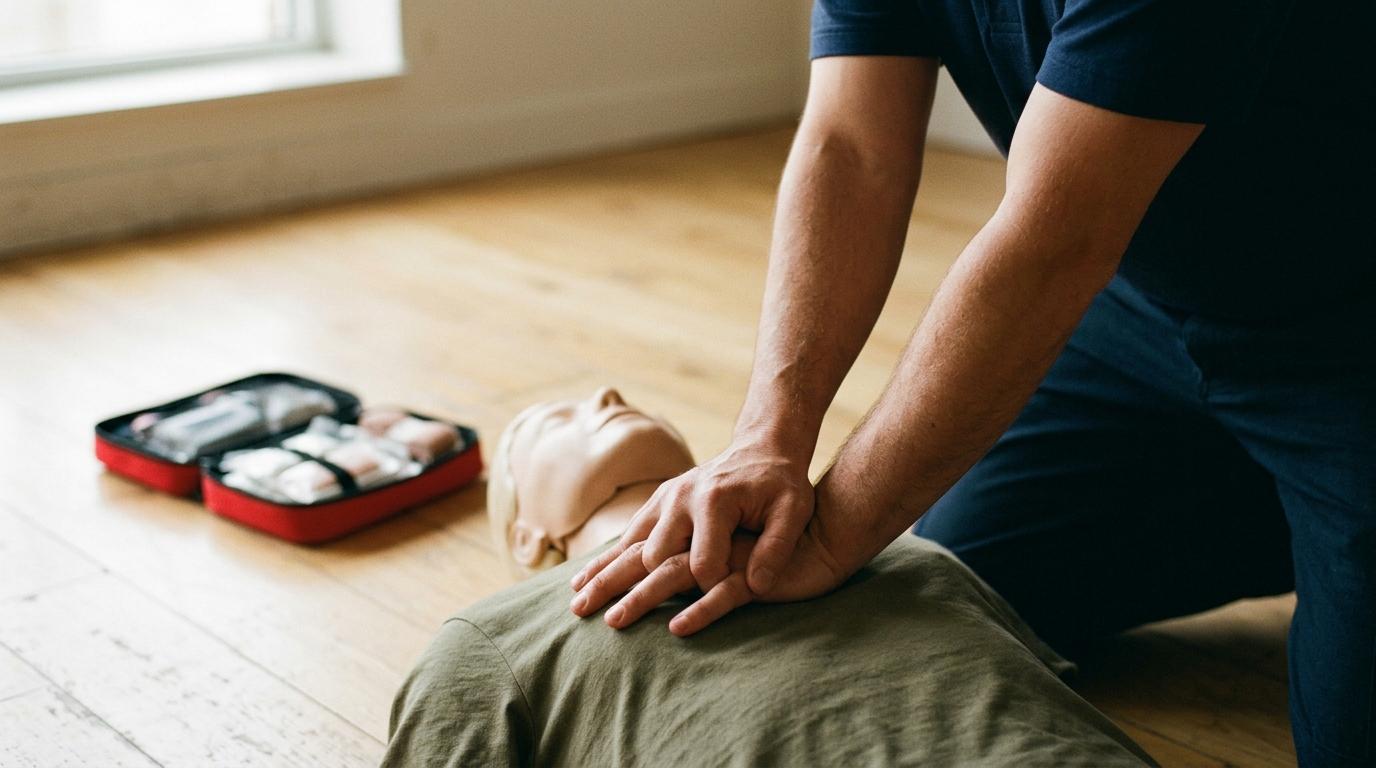
First Aid Essentials
CPR, choking response, wound management, burns, and fractures. The skills that matter most when there's no one else. Practical, remembered under pressure.

Learning a Language
How to learn a language as an adult without classrooms or expensive courses. Comprehensible input, vocabulary strategies, speaking confidence, and a sustainable system.
Side quests