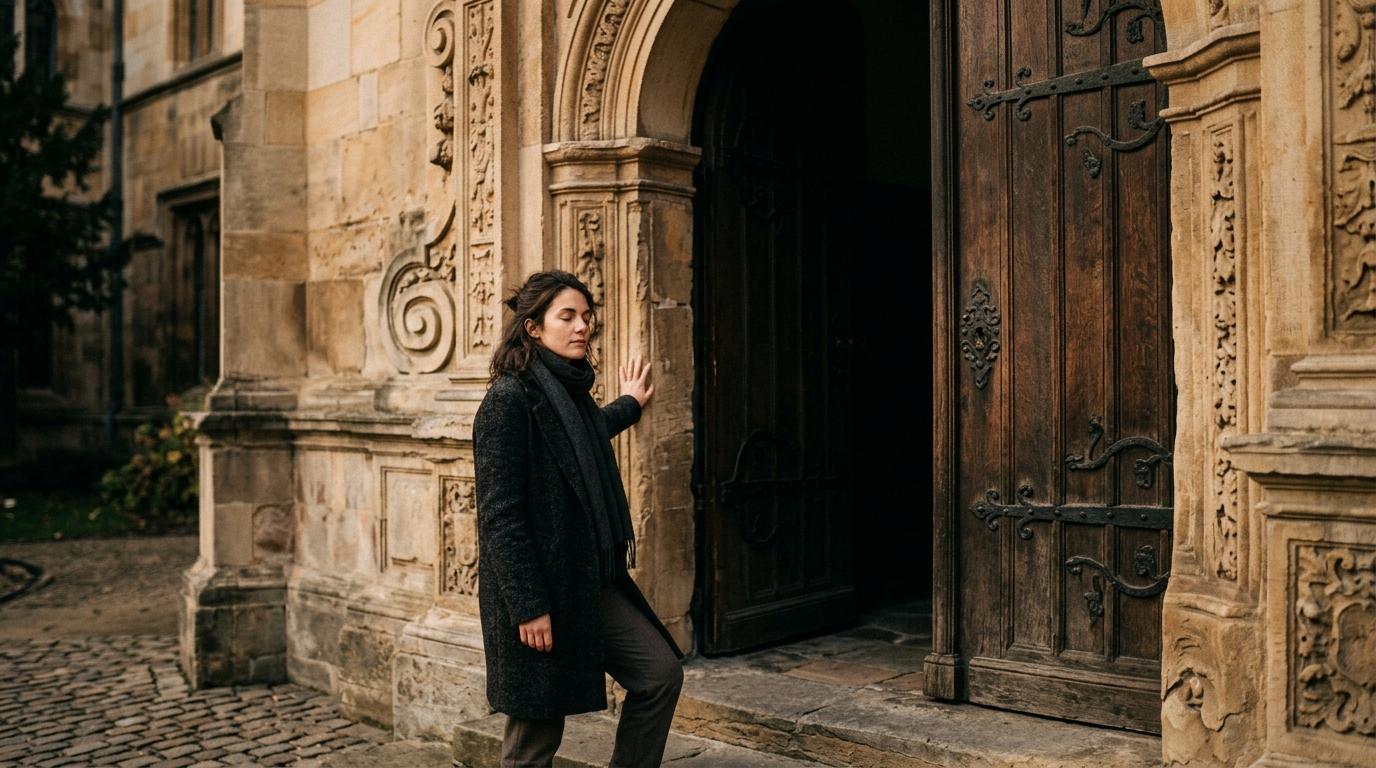
Why most people freeze, and what to do instead
Public speaking anxiety is the most commonly cited fear in survey after survey, ranking above flying, above illness, sometimes above death. Worth pausing on: the fear isn't of the speaking itself but of social evaluation. The amygdala treats a room of watching faces the same way it treats a predator. Understanding this changes your relationship with the feeling.
The anxiety isn't a sign that something is wrong with you. It's a sign that you care. Every competent public speaker has felt it. The difference between someone who's good at speaking and someone who isn't is rarely talent. It's almost always accumulated repetition under that discomfort until the nervous system recalibrates.
What happens in your body
Adrenaline raises heart rate, tightens the throat, dries the mouth, and narrows attention. These responses were designed for short bursts of physical action, not ten minutes at a lectern. The mismatch is the problem. The most effective interventions work with physiology rather than against it:
Slow exhalation. The exhale activates the parasympathetic nervous system. Before speaking, five slow breaths (inhale four counts, exhale eight) demonstrably lowers cortisol. This isn't relaxation theatre: it has a measurable physiological effect within 90 seconds.
Physical grounding. Plant both feet flat. Feel the floor. Drop your shoulders. This isn't about posture performance; it interrupts the physical collapse that anxiety produces (rounded shoulders, raised chest, locked knees) and signals safety to the nervous system.
Reappraisal, not suppression. Research by Alison Wood Brooks at Harvard shows that telling yourself "I am excited" before speaking outperforms telling yourself "I am calm." Excitement and anxiety share the same physiological signature. Reappraisal (labelling the arousal as excitement rather than fear) is more effective than attempting to suppress it.
The voice
Anxiety raises pitch and speeds pace. Both make you harder to listen to and signal nervousness to the audience. The corrections are mechanical, not psychological:
Slow down. Your felt pace is always faster than your actual pace. A pause that feels awkward to you reads as confident to the audience. Three seconds of silence is nothing to a listener; it's an eternity to a nervous speaker. Practise pausing deliberately.
Drop your pitch. Not artificially: breathe from the diaphragm rather than the chest. Chest breathing produces a thinner, higher sound. Diaphragmatic breathing produces more resonance. Put a hand on your belly: it should move outward as you inhale.
Project, don't shout. Projection comes from support (the sustained breath pressure behind the voice), not from volume. Imagine speaking to the back wall, not the front row.
Voice recorder (portable)
£15–£40The most useful tool in speaking development. You can't hear yourself accurately while speaking. Recording and listening back, even for five minutes, reveals pace, filler words, and dropped endings that you're completely unaware of in the moment.
Affiliate link. We may earn a small commission.
The audience is on your side
Almost every audience wants the speaker to succeed. They're not hoping you stumble. They're hoping you tell them something interesting. Keep this in mind when the pre-talk anxiety peaks: the threat is imaginary; the goodwill is real.
Community
Reader tips
No tips yet. Be the first to share what worked for you.
Share a tip
Sign in to share what worked for you.
Same category
What to learn next
Dog Training: The First Six Weeks
Reward-based foundation training for a new dog: markers, recall, loose-lead walking and a settle, built in six weeks of short daily sessions.
First Aid Essentials
CPR, choking response, wound management, burns, and fractures. The skills that matter most when there's no one else. Practical, remembered under pressure.
Journaling
How to build a journaling practice that lasts: formats, prompts, methods for processing difficult things, and making it a habit that compounds over years.