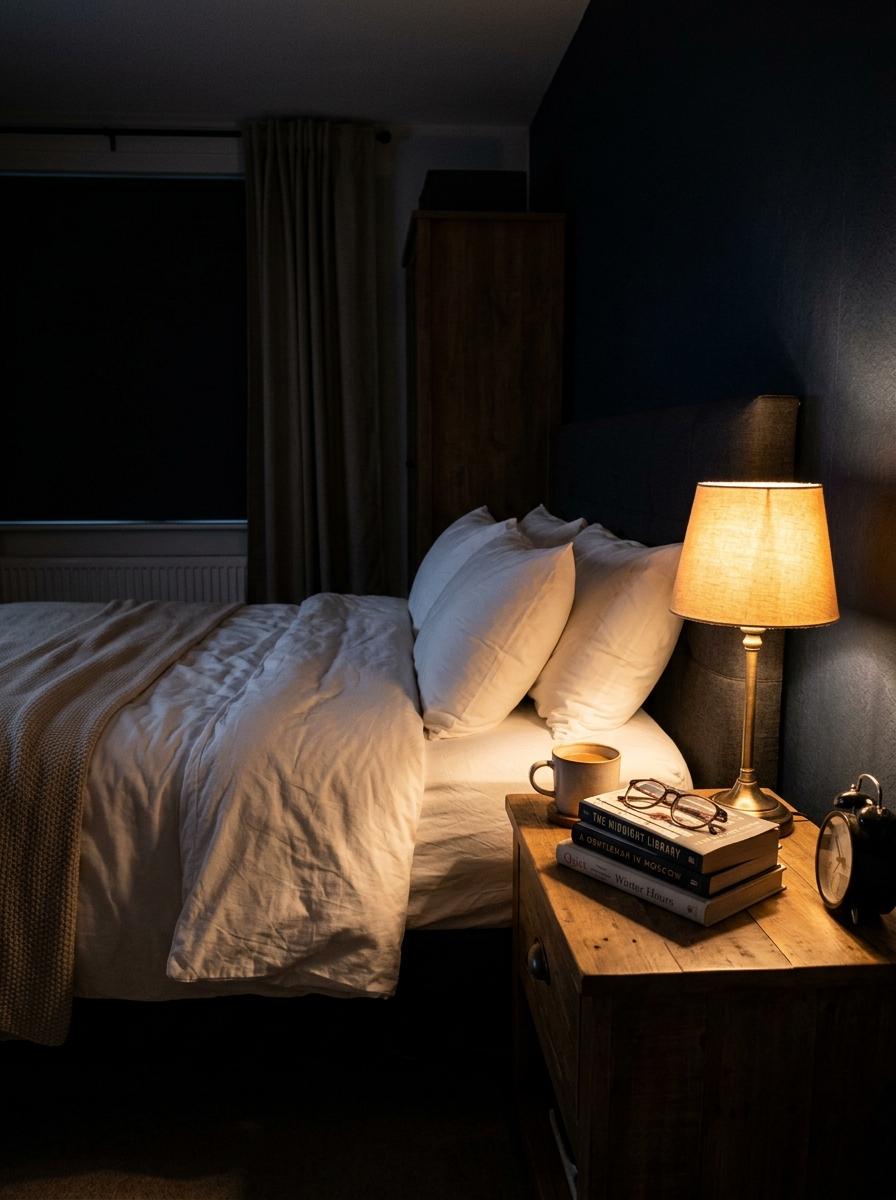
Your sleep environment: the foundation
Most sleep problems start before you get into bed. The room is too warm, too bright, or too noisy. Your body can't manufacture the conditions for deep sleep if the environment is working against it. Every one of these is fixable, and most of the fixes are free.
Temperature
Your core body temperature needs to drop by about 1°C to initiate sleep. The ideal bedroom temperature for most adults is 16–18°C. Warmer than 20°C and sleep quality measurably degrades: you spend less time in deep slow-wave sleep and more time in lighter stages. Open a window before bed, use lighter bedding than you think you need, and if you share a bed with someone who runs warmer, consider separate duvets (the Scandinavian solution, widely adopted for good reason).
Darkness
The human eye can detect light through closed eyelids at levels too low to feel bright. Even a standby LED, a streetlight through thin curtains, or the glow of a phone screen suppresses melatonin production. The goal is complete darkness: if you can see your hand in front of your face, it's too light. Blackout blinds are the highest-return purchase most people make for sleep quality. A sleep mask is a cheaper first step if you rent or don't want to fit blinds.
Blackout blinds or curtain liner
£12–£80Eliminates early-morning light intrusion, the single most common cause of early waking in summer. Stick-on blackout liners (Bloc-It, Amazon Basics) fit any curtain rail in 10 minutes and cost under £15. Proper blackout roller blinds (Hillarys, IKEA FYRTUR) are more permanent and more effective.
Affiliate link. We may earn a small commission.
Sleep mask
£8–£35Instantly blocks all light without any fitting or installation. Essential for shift workers or anyone in a room where blinds aren't possible. Silk masks (Drowsy, Slip) are cooler and gentler on skin than polyester. A contoured mask avoids pressure on eyelids, important if you're a side sleeper.
Affiliate link. We may earn a small commission.
Noise
Sudden noise (a car alarm, a partner's snoring, a neighbour) causes micro-arousals that fragment sleep even if you don't fully wake. Continuous low-frequency noise (rain, a fan, pink noise) is helpful because it masks sudden changes. You're not trying to eliminate all sound; you're trying to eliminate spikes. Foam earplugs give the highest noise reduction (around 33dB) at almost no cost. A white noise machine or a fan works well if earplugs are uncomfortable.
Foam earplugs
£5–£10 for 50 pairsThe cheapest and most effective solution for noise. 3M Classic or Howard Leight MAX earplugs reduce noise by 33dB, more than any electronic white noise machine. Roll, insert, let expand. Buy in bulk; they are disposable.
Affiliate link. We may earn a small commission.
White noise machine
£35–£60Better than phone apps because it doesn't require your phone to be in the bedroom. The LectroFan Evo and Yogasleep Dohm are the two standouts. The Dohm uses a mechanical fan (no looping), the LectroFan is purely electronic. Both eliminate sudden noise spikes without requiring earplugs.
Affiliate link. We may earn a small commission.
Your bed
You spend roughly a third of your life in bed. A mattress that causes you to wake with back pain or to overheat isn't a neutral object. A medium-firm mattress suits most people. Memory foam retains heat, a problem if you sleep warm. If your mattress is older than 8–10 years and you wake feeling unrested despite good sleep habits, it's worth considering. Pillows matter too: your head and neck should be in a neutral line with your spine, not tilted up or forward.
Check your room temperature tonight
Get a cheap room thermometer (under £8 on Amazon) and check your bedroom temperature at 11pm and 6am. Most people are sleeping 2–4°C warmer than ideal without knowing it. Cracking the window can improve sleep quality within a week.
Community
Reader tips
No tips yet. Be the first to share what worked for you.
Share a tip
Sign in to share what worked for you.
Same category
What to learn next
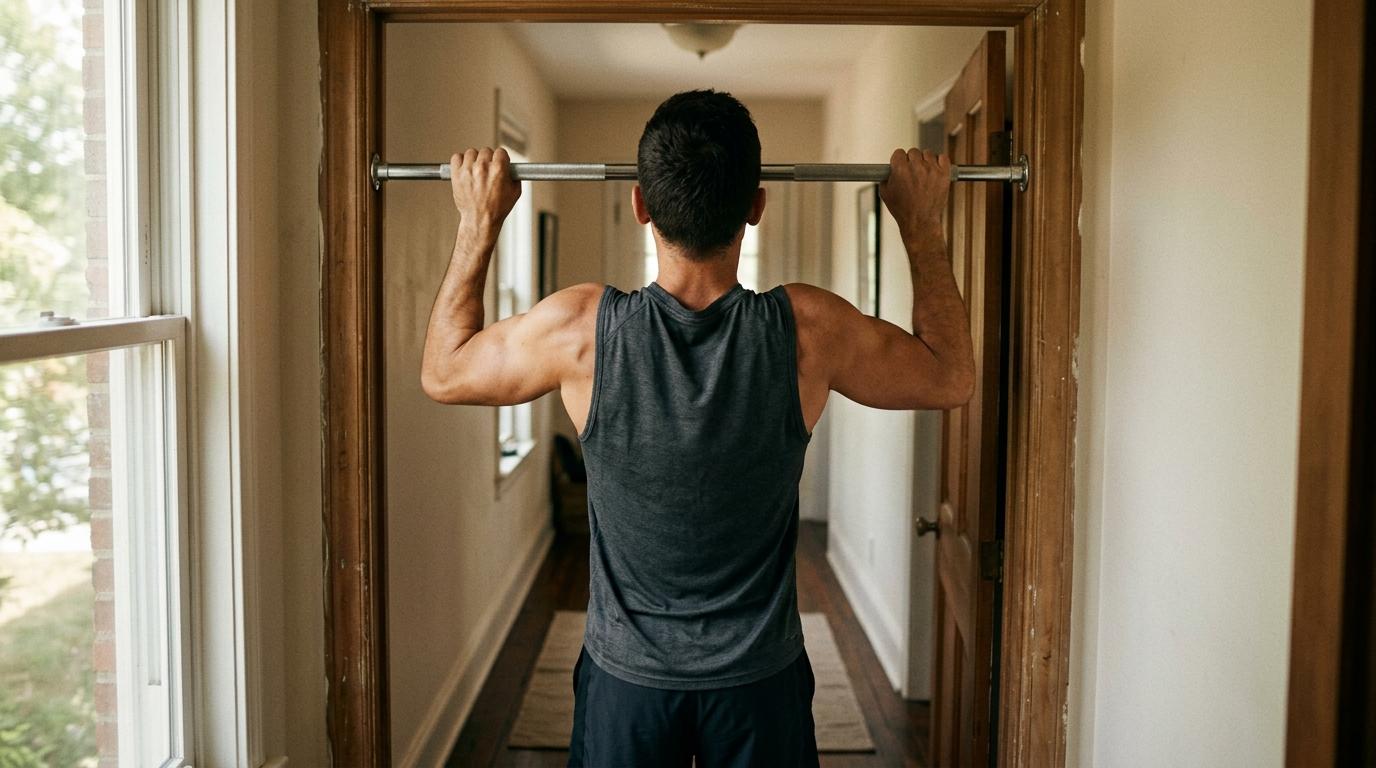
Strength Training
Build real, lasting strength using the fundamental movement patterns: push, pull, hinge, squat. Bodyweight progressions to barbell basics, with a sustainable programme.

Tai Chi: A Practical Beginning
Learn the foundations of Yang-style tai chi: rooting, weight transfer, the core principles, and a first short form you can practise anywhere.
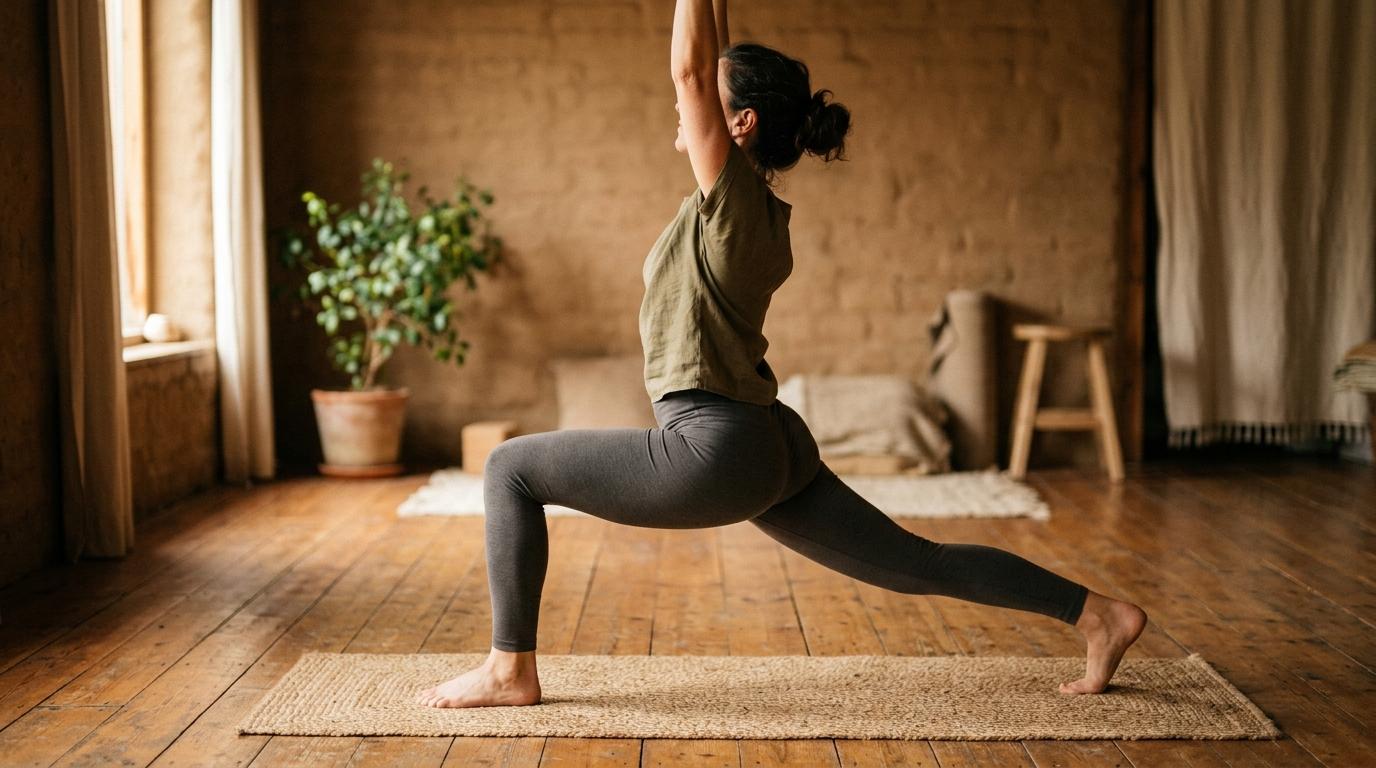
Yoga at Home: A Practical Start
Build a sustainable home yoga practice from scratch: postures, breathing, sequencing, and how to create a routine that sticks.