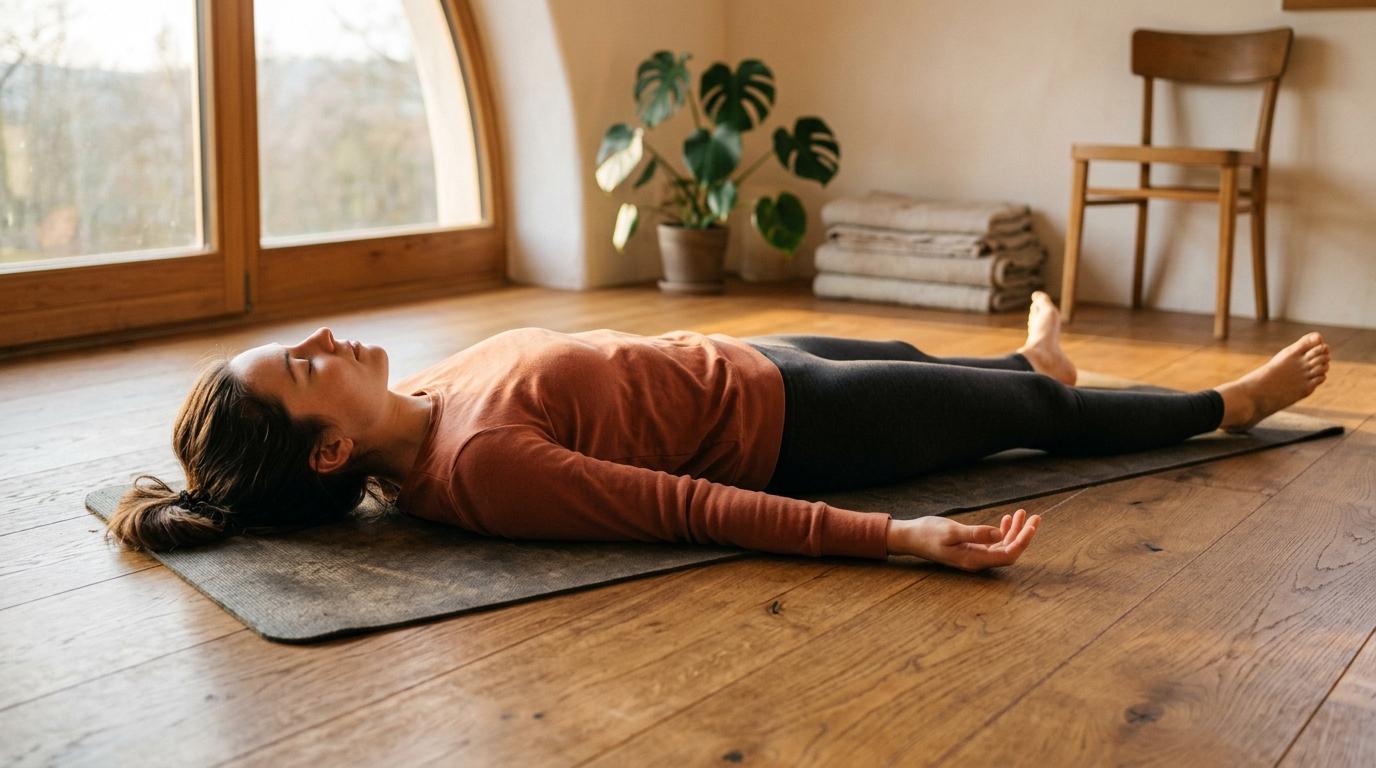
What you need: almost nothing
Tai chi originated as a martial art in China. In the West it's practised primarily for its health benefits: balance, joint mobility, stress reduction, and the cultivation of a quality the Chinese call song: deep, relaxed alertness. It requires no strength, no flexibility, no fitness baseline, and no equipment. It can be practised in a small room, a garden, or a park.
Which style to learn
There are five main family styles: Yang (slow, large movements, most widely practised), Chen (the oldest, including fast sections and martial applications), Wu (compact, high stance), Sun (incorporates qigong and ba gua elements), and Hao (rare, internal focus). For a beginner, start with Yang style. It's the most documented, has the most learning resources, and the large, open movements make the principles easy to see and feel.
Space and clothing
You need enough floor space to take a large step in any direction: roughly two metres square. Loose trousers are essential; jeans restrict hip movement. Any comfortable top works. Practise in bare feet or flat-soled shoes. Trainers with thick cushioned soles prevent you from feeling the ground, which matters for balance training.
Tai chi shoes (thin-soled canvas)
£12–£25Traditional tai chi shoes have a thin, flat canvas sole that lets you feel the ground and rotate your foot cleanly. Regular sports shoes raise you off the ground and make pivoting awkward. These are optional. Bare feet on a non-slip surface work just as well indoors.
Affiliate link. We may earn a small commission.
Loose-fit training trousers
£10–£25Hip rotation (turning from the kua) is central to every tai chi movement. Any trousers that restrict the hips will limit your form. Loose cotton or linen trousers are ideal. Tracksuit bottoms are fine.
Affiliate link. We may earn a small commission.
Morning practice is traditional, but any time works
Many practitioners prefer early morning when the mind is quiet and the air is cool. The deeper reason is practical: morning practice happens before the day's interruptions arrive. If mornings don't work, any consistent time beats an inconsistent ideal time.
Community
Reader tips
No tips yet. Be the first to share what worked for you.
Share a tip
Sign in to share what worked for you.
Same category
What to learn next
Sleep Better: A Complete Guide to Rest
Build the environment, timing, and mental habits that produce deep, consistent sleep, without medication, gadgets, or hacks.
Strength Training
Build real, lasting strength using the fundamental movement patterns: push, pull, hinge, squat. Bodyweight progressions to barbell basics, with a sustainable programme.
Yoga at Home: A Practical Start
Build a sustainable home yoga practice from scratch: postures, breathing, sequencing, and how to create a routine that sticks.
Side quests