What the law actually requires
The First Aid Essentials course teaches you what to do when someone is injured. This one is about the framework around it: the duties an employer carries, who has to be trained and to what, and what has to be recorded. It is dull in the way that seatbelts are dull, and it is most of what separates the classroom day from what you already know.
The duty, and why it has no fixed number in it
The Health and Safety (First-Aid) Regulations 1981 require an employer to provide adequate and appropriate equipment, facilities and personnel so that employees receive immediate attention if injured or taken ill at work. Note what it does not say: it names no headcount, no kit contents, and no qualification. What counts as adequate is established by a first aid needs assessment.
Self-employed people are covered too
The Regulations apply to the self-employed in respect of their own work: you must have such equipment as is adequate and appropriate to render first aid to yourself while working. In practice that usually means a suitable kit in the van. Modest, but it is a legal duty rather than a suggestion.
Appointed person or first aider
The needs assessment produces an answer about people, and there are two distinct roles the law recognises. Confusing them is the most common workplace first aid mistake.
The two roles
The two qualifications
Both EFAW and FAW are Level 3 qualifications
You will still find guidance and course listings calling EFAW "Level 2". That comes from the old QCF framework; under the current RQF both EFAW and FAW sit at Level 3 in England, Wales and Northern Ireland, with SCQF equivalents in Scotland. If a provider's paperwork still says Level 2, that is a reason to check how current the rest of their material is.
Kit, records and RIDDOR
The first aid box
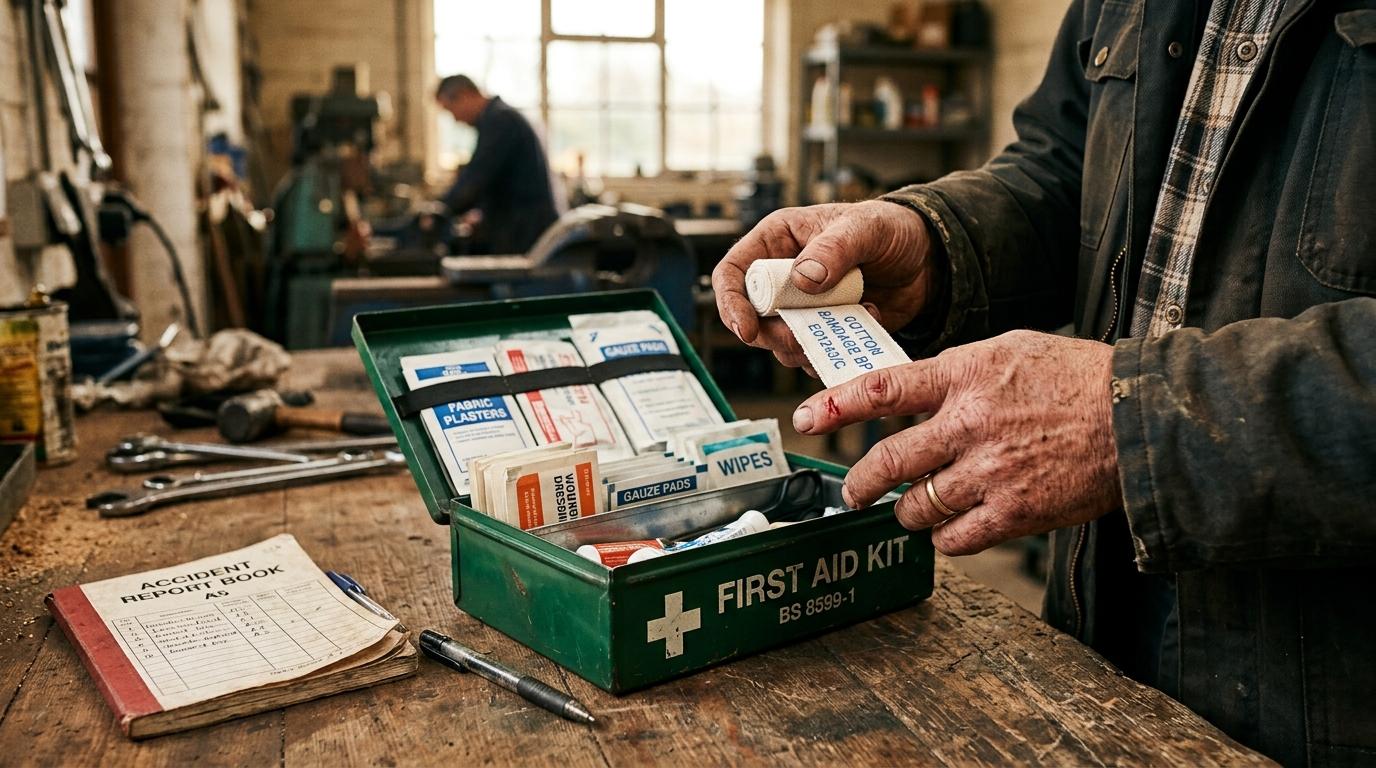
There is no legally mandated list of contents (the needs assessment governs this too), but BS 8599-1 is the British Standard for workplace first aid kits and gives small, medium and large specifications that most employers buy to. What the Regulations are firm about is that kits should contain no medication of any kind: a first aider does not administer drugs, and aspirin or paracetamol in a workplace kit is a longstanding and avoidable mistake. Check contents and expiry dates on a schedule, and record that you did.
Records
Every incident treated should be recorded: date and time, who was injured, what happened, what treatment was given, and by whom. Two reasons: it is evidence if a claim or an investigation follows months later, and patterns in the book are how you notice that the same step keeps causing the same injury. The record contains health information about identifiable people, so it is personal data and must be kept securely and only as long as needed. The old-style open accident book where everyone can read the previous entries is a data protection problem.
RIDDOR
The Reporting of Injuries, Diseases and Dangerous Occurrences Regulations 2013 require certain things to be reported to the HSE, and this sits on top of your own records rather than replacing them. Reportable categories include deaths, a defined list of specified injuries (fractures other than to fingers, thumbs and toes; amputations; serious burns; loss of consciousness from head injury or asphyxia, among others), over-seven-day incapacitation where a worker cannot do their normal work for more than seven consecutive days, certain occupational diseases, and dangerous occurrences: near misses serious enough to report even though nobody was hurt.
Seven days, and the day of the accident does not count
The over-seven-day threshold trips people up. You count consecutive days including weekends and non-working days, but you exclude the day the accident happened. There is also a separate three-day threshold for recording rather than reporting, which is why the accident book matters even for incidents that never reach the HSE.
Sitting EFAW, and beyond
No online course can qualify you, and this is the one to understand
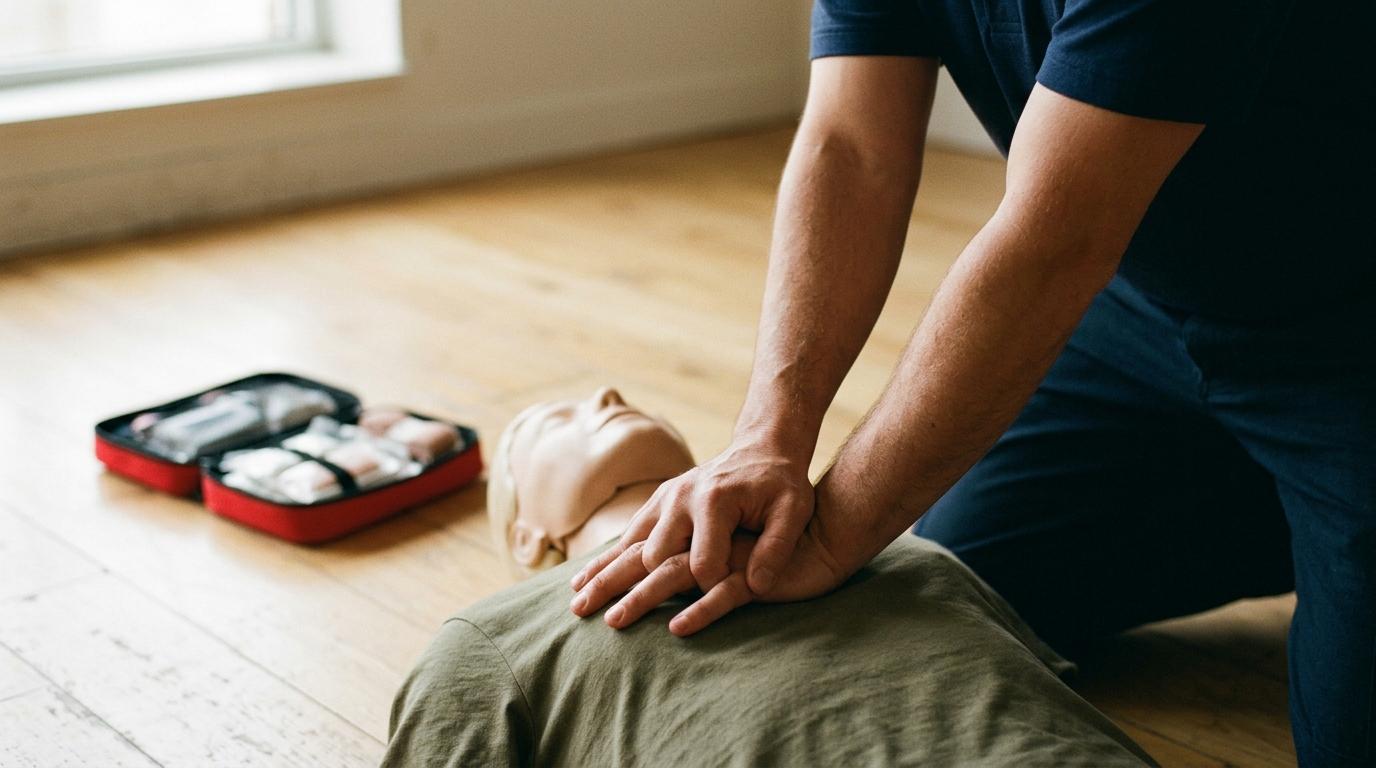
EFAW is assessed practically. You demonstrate CPR on a manikin, casualty handling and the recovery position while an assessor watches. That cannot happen through a screen, which is why an entirely online "first aid certificate" does not evidence the qualification however official the PDF looks. Blended delivery (theory online, practical and assessment face to face) is legitimate and common. Everything on this page prepares you for the day; it cannot replace it.
Choosing a provider
Since 2013 the HSE no longer approves first aid training providers, which surprises people and means the responsibility for due diligence sits with the employer. In practice you are looking for one of three things: a provider working under a recognised awarding organisation (so the certificate is a regulated qualification), a member of a voluntary aid society (St John Ambulance, British Red Cross, St Andrew's First Aid), or a provider operating a recognised trade body membership. The HSE publishes guidance (GEO1) on selecting a provider. Expect roughly £60–£120 for a one-day EFAW course, and confirm current fees and the awarding organisation when you book.
You're here: the framework
This courseThe 1981 Regulations and the needs assessment. Appointed person versus first aider. EFAW and FAW, both Level 3, valid three years. BS 8599 kits and no medication. Records, data protection and RIDDOR thresholds.
Level 3 Award in Emergency First Aid at Work
1 day, around 6 hoursThe standard workplace qualification for lower-risk settings. Classroom and practical assessment, certificate valid three years. Cannot be obtained online only.
Level 3 Award in First Aid at Work
3 days, around 18 hoursThe fuller qualification most larger or higher-risk employers require: fractures, spinal and chest injuries, and the medical emergencies EFAW does not cover.
Specialist routes
1–5 days eachPaediatric first aid, statutory in early years settings. Mental Health First Aid, increasingly asked for. Outdoor and remote first aid where help is hours rather than minutes away. And for a few people, the route onward into pre-hospital care.
Best resources
Community
Reader tips
No tips yet. Be the first to share what worked for you.
Share a tip
Sign in to share what worked for you.
Same category
What to learn next
Dog Training: The First Six Weeks
Reward-based foundation training for a new dog: markers, recall, loose-lead walking and a settle, built in six weeks of short daily sessions.
First Aid Essentials
CPR, choking response, wound management, burns, and fractures. The skills that matter most when there's no one else. Practical, remembered under pressure.

Journaling
How to build a journaling practice that lasts: formats, prompts, methods for processing difficult things, and making it a habit that compounds over years.