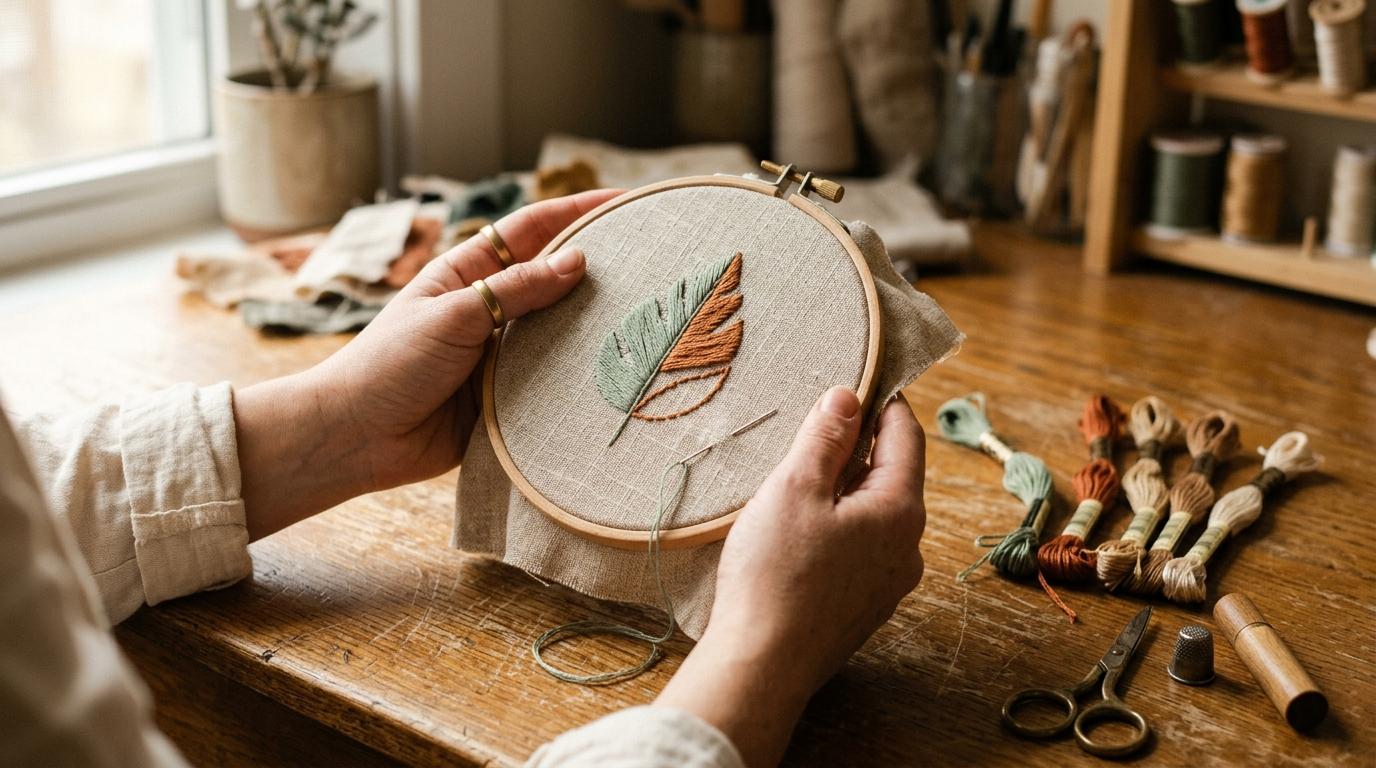
What you need to get started
embroidery has very low barriers to entry. a hoop, a needle, thread, and fabric. you can start for under £20 and the equipment lasts for years.
Embroidery hoop (20–25cm, wooden)
£4–8the hoop holds your fabric drum-tight so your stitches sit flat rather than puckering. wooden hoops grip fabric better than plastic. 20–25cm is the right size for a first project: large enough to work comfortably, small enough to hold steady. look for hoops with a smooth inner ring and a brass-screw outer ring.
Affiliate link. We may earn a small commission.
Crewel embroidery needles (size 7–9)
£2–4 for a mixed packcrewel needles have a sharp point and a long eye to accommodate multiple strands of thread. sizes 7, 8, and 9 are the beginner range. the higher the number, the finer the needle. a size 7 or 8 is a good starting point. buy a mixed pack. they're inexpensive and you'll find your preference quickly.
Affiliate link. We may earn a small commission.
Stranded cotton embroidery floss (DMC or Anchor)
£4–8 for a starter selectionDMC and Anchor are the two standard brands. they're colourfast, widely available, and their colours are numbered so you can match them between projects and suppliers. buy a small selection of colours to start: one or two greens, a neutral, and two or three colours you like. a skein costs around 90p.
Affiliate link. We may earn a small commission.
Cotton or linen fabric (calico or quilting cotton)
£2–5 for a fat quartercalico is the standard practice fabric: cheap, tightly woven, and easy to stitch through. quilting cotton also works well. avoid loosely woven or stretchy fabrics for your first project. they distort under the hoop and make accurate stitching much harder. a fat quarter (50×55cm) from a craft shop is plenty to start.
Affiliate link. We may earn a small commission.
Small embroidery scissors (sharp-pointed)
£6–14small, sharp-pointed scissors let you snip threads close to the fabric without accidentally cutting surrounding stitches or the fabric itself. this is one tool worth spending a little more on. a good pair of embroidery scissors lasts decades. standard kitchen scissors are not a substitute.
Affiliate link. We may earn a small commission.
Transfer pencil or water-erasable pen
£3–6for tracing your design onto fabric before you stitch. a water-erasable pen (also called a fabric marker) disappears when you dampen the fabric after finishing. a transfer pencil transfers a printed design when ironed face-down onto fabric. either works. the water-erasable pen is simpler for beginners.
Affiliate link. We may earn a small commission.
Where to buy (UK)
- Hobbycraft: good physical stores and online; stocks DMC thread, hoops, and fabric together
- Sewandso.co.uk: the best specialist online embroidery shop in the UK; wide DMC and Anchor range, kits, and accessories
- Amazon UK: convenient for starter kits and hoops; check thread is DMC or Anchor rather than unbranded
- John Lewis haberdashery: reliable quality, good thread selection in store; useful if you want to see colours in person
for your first project, a starter kit from Sewandso or Hobbycraft that includes thread, hoop, and fabric is a perfectly sensible option.
Some links are affiliate links. Airgap.life may earn a small commission at no extra cost to you.
Separating strands: the most overlooked step
embroidery floss comes in a skein of six strands twisted together. you almost never use all six at once. most detail work uses two or three strands. bold outlines can use four to six. to separate strands without tangling: cut a length no longer than 45cm, hold the bundle at the top, and pull out individual strands one at a time, pulling upward slowly while the rest of the skein hangs. rushing this step causes knots. separating correctly takes five seconds and saves five minutes of untangling.
Community
Reader tips
No tips yet. Be the first to share what worked for you.
Share a tip
Sign in to share what worked for you.
Same category
What to learn next
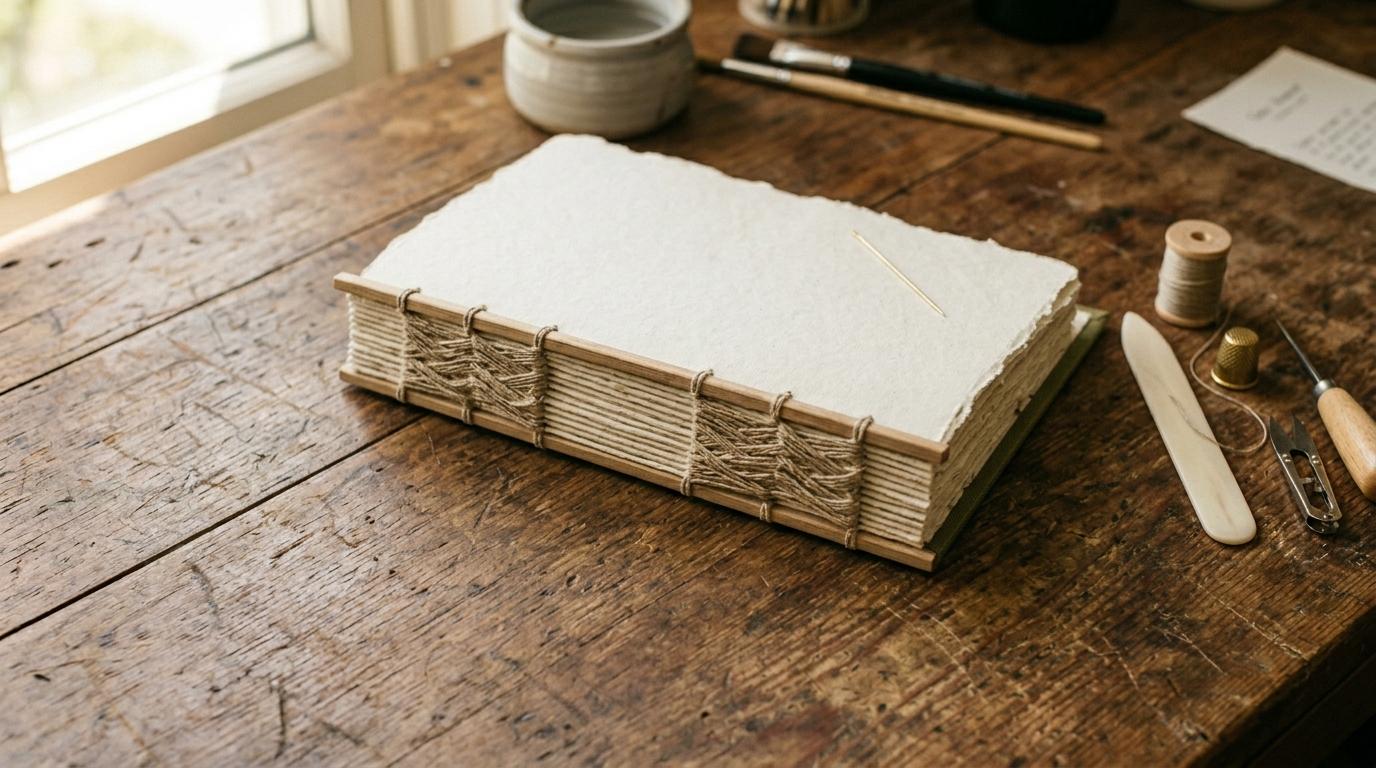
Bookbinding: Your First Journal
Fold, sew, and case a hardback journal by hand. The Coptic stitch and case binding are the two foundational methods, both achievable in a single afternoon session.
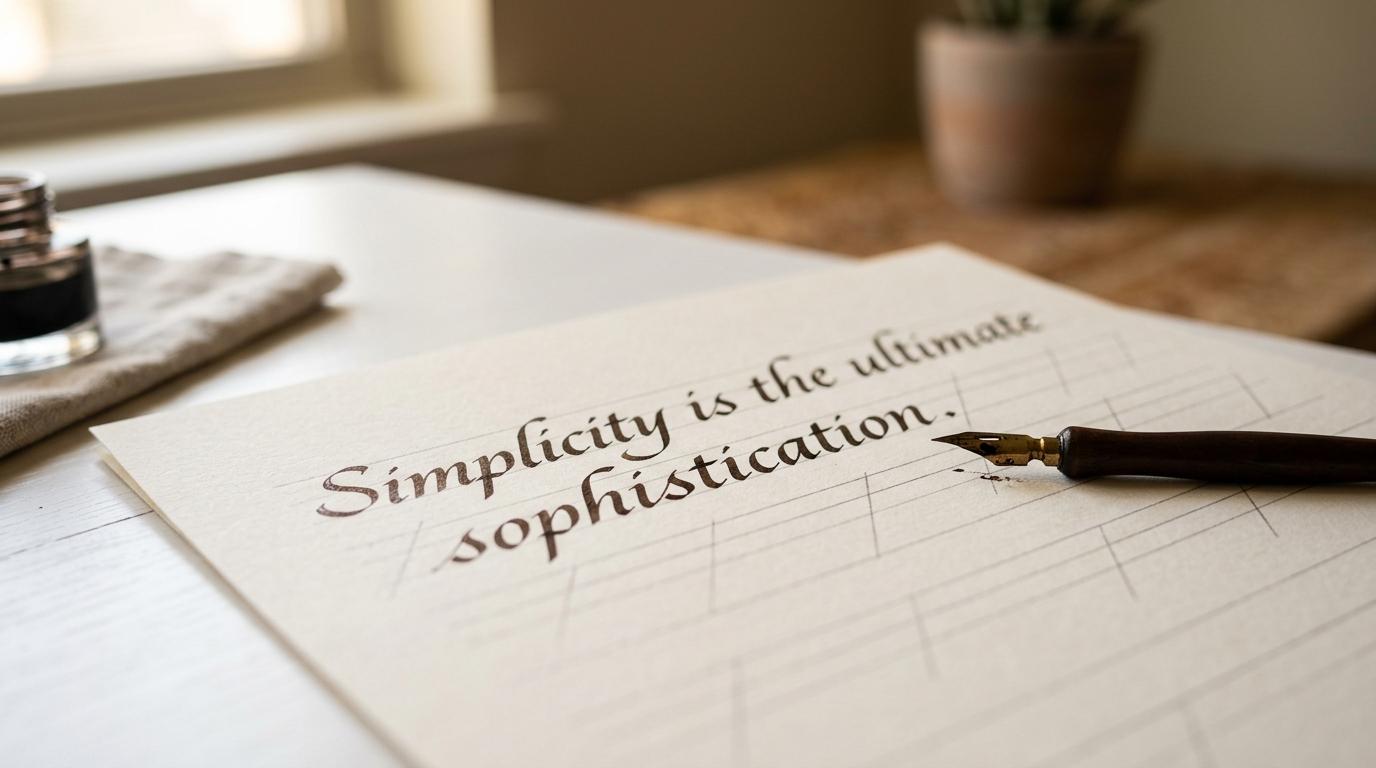
Calligraphy: The Foundational Script
Italic script with a pointed nib. The foundational Western calligraphy hand: clear, elegant, and achievable. Every lettering tradition descends from this one.
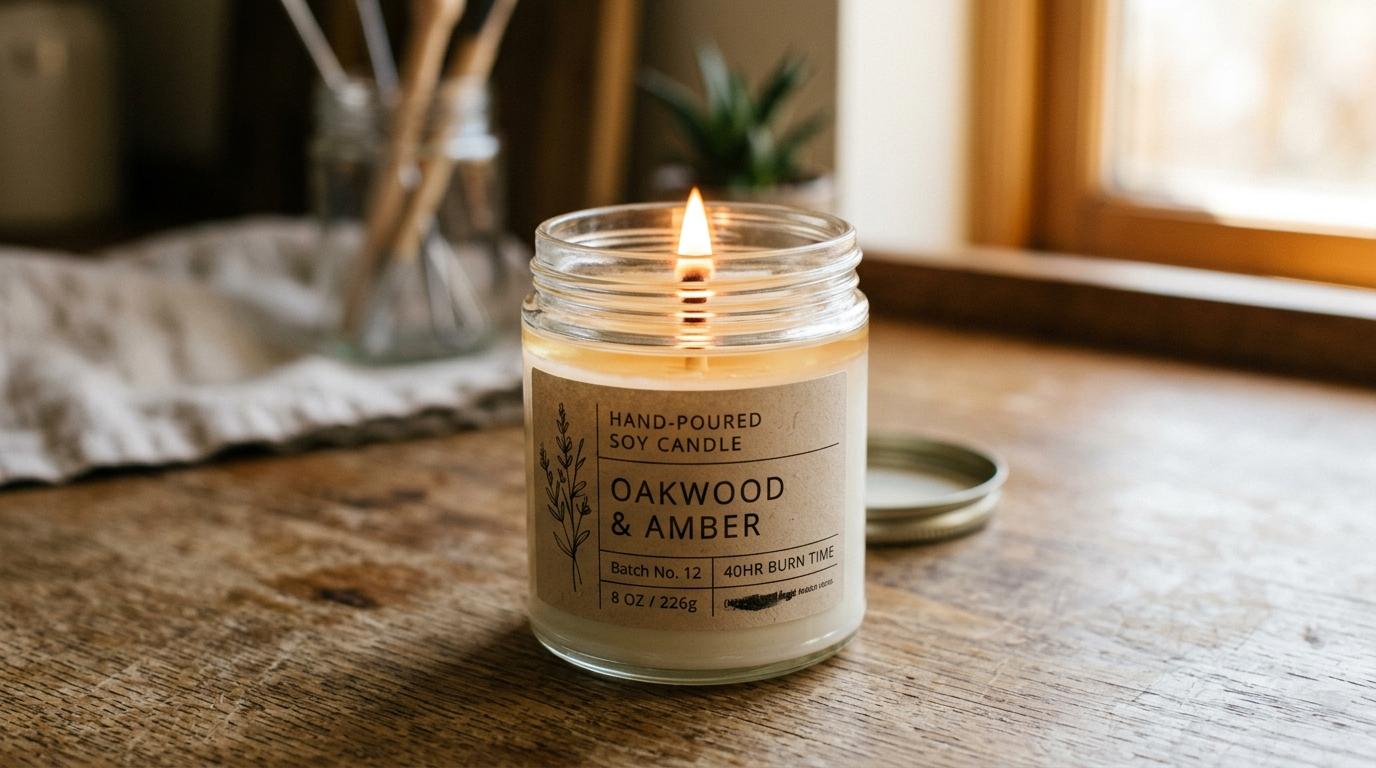
Candle Making
Make container candles with soy wax, fragrance oil, and cotton wicks. Published in late October, six weeks before Christmas: enough time to make gifts.