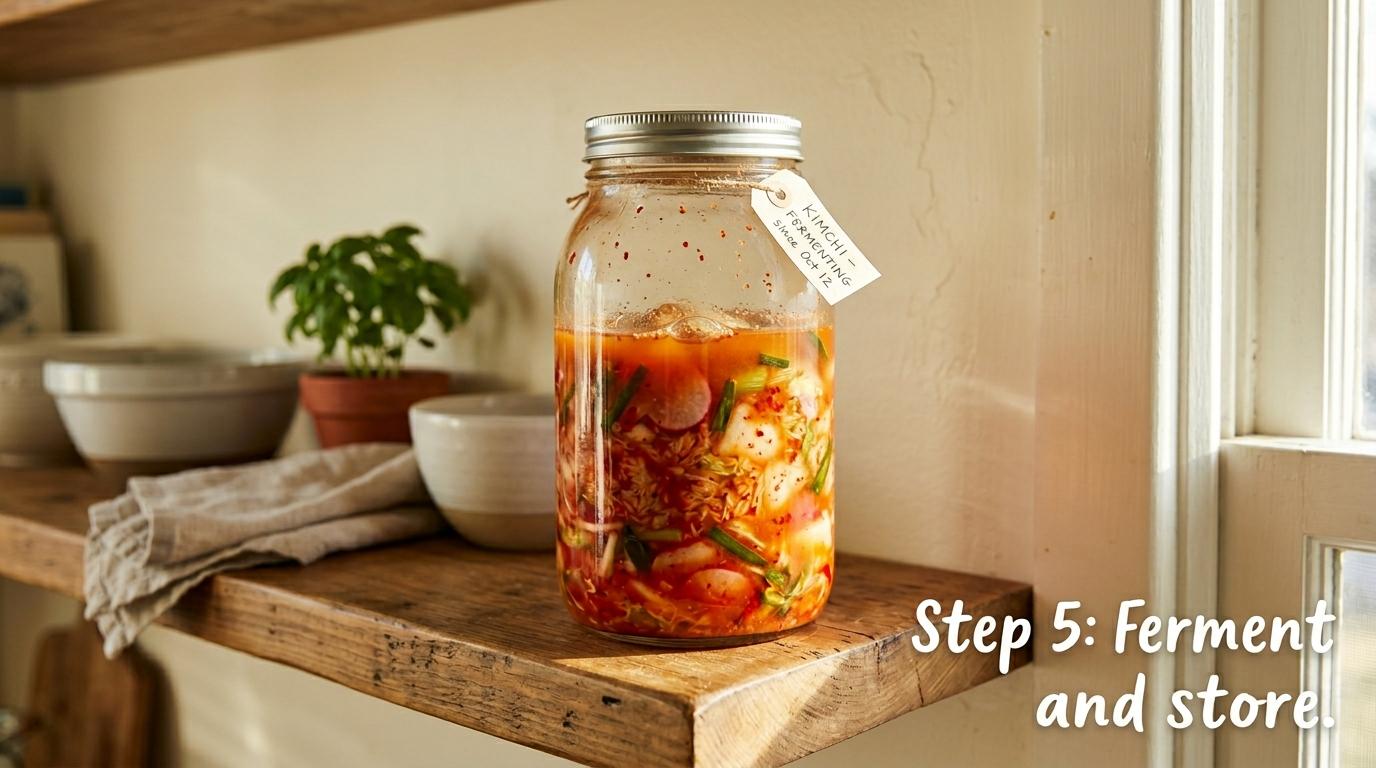
What you need to get started
Fermentation requires almost nothing. The salt does the work. The vegetables do the rest. The most critical piece of equipment is a clean jar.
Glass jars (1 litre)
£2–6 per jar (or use empty pickle jars)Wide-mouthed Kilner or Mason jars are ideal. The ferment needs to be submerged below the brine and the jar left loosely covered (not sealed, because the CO₂ produced needs to escape). If you don't have Kilner jars, a regular wide-mouthed glass jar with a cloth secured over the top works perfectly.
Affiliate link. We may earn a small commission.
Non-iodised salt
Already in your kitchenIodine in iodised table salt can inhibit the beneficial bacteria. Use pure sea salt, flaked salt, or pickling salt. Maldon flaked sea salt works perfectly and is in most UK kitchens.
Affiliate link. We may earn a small commission.
Scales
Already in your kitchen (baking scales are fine)Salt percentage is critical in lacto-fermentation: too little and the wrong bacteria thrive, too much and fermentation stalls. 2% salt by weight of the vegetables is the reliable starting point for most ferments. Scales eliminate guesswork.
Affiliate link. We may earn a small commission.
What to ferment first
The shopping list for two ferments
- White cabbage (1 medium head): For sauerkraut. Any variety of cabbage works. Green is traditional; red produces a striking deep purple kraut. Buy the most intact, fresh cabbage you can find.
- Chinese (napa) cabbage (1 head): The base for kimchi. Napa/Chinese cabbage is essential for traditional kimchi; regular cabbage produces a different texture. Available in most UK supermarkets and all Asian grocery stores.
- Gochugaru (Korean red pepper flakes): The defining ingredient of kimchi. Available at Asian grocery stores and online. It's coarser and less hot than standard chilli flakes, with a fruity flavour. There is no substitute that gives the same result, though standard chilli flakes work in a pinch.
- Garlic, ginger, spring onions: For the kimchi paste: a small knob of ginger, 4–6 garlic cloves, 3–4 spring onions.
- Fish sauce or soy sauce: Fish sauce is traditional in kimchi; use soy sauce for a vegan version. Both work.
Total cost for both ferments: £8–15. Both make enough to last 4–6 weeks once fermented.
Some links are affiliate links. Airgap.life may earn a small commission at no extra cost to you.
Community
Reader tips
No tips yet. Be the first to share what worked for you.
Share a tip
Sign in to share what worked for you.
Same category
What to learn next
Home Beer Brewing
Brew your first batch of real ale at home. Equipment, ingredients, the brewing process, fermentation, and bottling, step by step.

Beer: Styles, Serving and Off-Flavours
Beer styles, storage and draught service, glassware, pouring, and the common off-flavours and their causes. Preparation for the Cicerone Certified Beer Server (Level 1) exam.
Bread Baking from Scratch
Your first proper loaf in an afternoon. Flour, water, salt, time, and the foundations of a skill that will feed people for life.