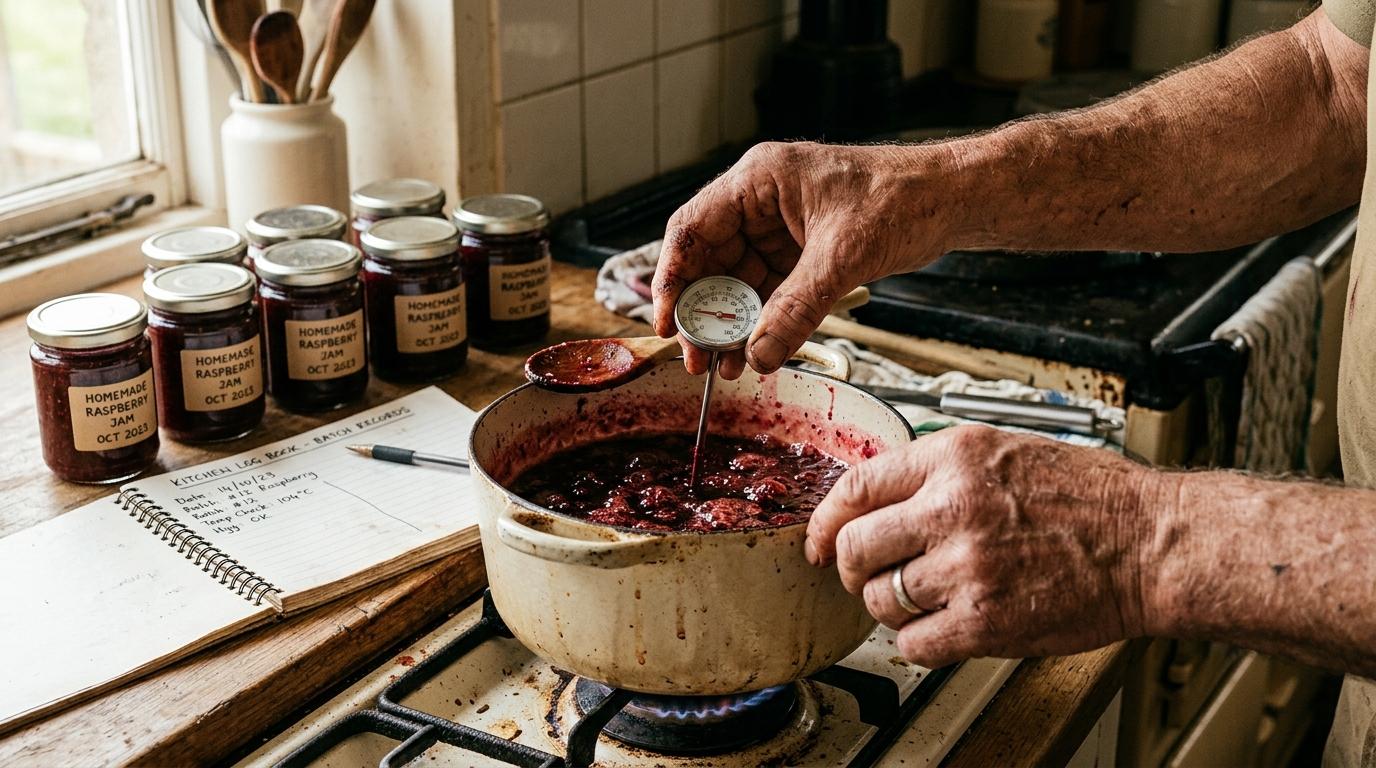
The law and your kitchen: becoming a food business
The moment you sell food with any regularity (a monthly market stall, a standing order of sourdough for neighbours, jam through a village shop) you are a food business in the eyes of UK law, even if the kitchen is the one you cooked tea in last night. That's not a reason to stop. Thousands of registered food businesses run from home kitchens. It just means three things now apply to you: registration, inspection, and the hygiene standards this course teaches.
What the law says
Digital probe thermometer
£8–15The single most important piece of food safety equipment. Guessing temperatures is the failure mode behind most food poisoning. A probe settles every question in this course in five seconds: is it cooked, is it cool enough, is the fridge lying to you.
Affiliate link. We may earn a small commission.
Fridge thermometer
£3–7The dial on the fridge is a setting, not a measurement. A separate thermometer that lives on the middle shelf tells you the truth. Your fridge should read 5°C or below. The legal maximum in England is 8°C, but 5°C is the standard you run to.
Affiliate link. We may earn a small commission.
Food-safe sanitiser (BS EN 1276)
£4–8Washing-up liquid cleans; it does not disinfect. A sanitiser certified to BS EN 1276 or BS EN 13697 kills bacteria, but only if left on the surface for the contact time printed on the bottle, which almost nobody reads. Thirty seconds to five minutes, depending on the product.
Affiliate link. We may earn a small commission.
Registering is the step people fear and shouldn't
Registration is free, can't be refused, and doesn't invite the council to shut you down: it invites them to help you get a 5. EHOs spend most of their time advising small producers, not prosecuting them. The producers who get in trouble are the ones who never registered.
Hazards: what makes people ill
Food safety hazards come in four kinds: biological (bacteria and their toxins), chemical (cleaning products, excess additives), physical (glass, plasters, jewellery), and allergenic. The first and last cause nearly all the real harm, so they get nearly all of this step.
The bacteria worth knowing by name
The 14 allergens
UK law names fourteen allergens that must always be declared: celery, cereals containing gluten, crustaceans, eggs, fish, lupin, milk, molluscs, mustard, peanuts, sesame, soya, sulphur dioxide (in many dried fruits, and your chutneys), and tree nuts. For a market stall this means knowing every ingredient in everything you sell, including the ones inside bought-in ingredients: the mustard in the curry powder, the sulphites in the dried apricots.
Natasha's Law applies to what you pack in advance
Since October 2021, any food packed before the customer chooses it (a labelled jar of jam, a bagged loaf) needs a full ingredient list on the label with the allergens emphasised (bold, capitals, or colour). This came from the death of Natasha Ednan-Laperouse, who ate a baguette with unlabelled sesame baked into the dough. It is the piece of law a small producer is most likely to trip over, and the easiest to comply with once labelling is part of your routine.
Temperature and the four Cs
Almost everything practical in food hygiene reduces to four Cs (chilling, cooking, cleaning, cross-contamination), and most of those reduce to temperature. Bacteria multiply between 5°C and 63°C, fastest at body temperature. In ideal conditions one bacterium becomes two every twenty minutes: millions by morning. The whole game is keeping food out of that zone, or moving it through quickly.
The numbers to know cold
Cleaning that counts, and hands
Cleaning is a two-stage job: wash with hot soapy water to remove grease and debris, then sanitise to kill what's left, respecting the contact time on the bottle. Cloths are the classic vector: either disposable, or boil-washed daily. Hands: before starting, after raw meat or eggs, after the bin, after your phone, after the loo, washed for twenty seconds with soap. And the rule that makes the rest credible: 48 hours clear of any vomiting or diarrhoea before you handle food anyone else will eat. No exceptions for market day.
Your jam and pickles are on the safe side of the science
High-sugar preserves and properly acidified pickles are classified low-risk: sugar binds the water bacteria need, and vinegar at 5% acidity keeps pH below 4.6, which is what rules out botulism. This is why jam keeps and chicken doesn't. It doesn't exempt you from anything above, but it does mean a preserves stall run on these rules is about as safe as food gets, and you can say so to an EHO with a straight face.
HACCP without the acronym fear, and the certificate
Your food safety management system
The law requires every food business to have a written food safety management system based on HACCP principles. That sounds corporate; for a home producer it means: walk through what you make, name what could go wrong at each stage, say what you do about it, and write that down. For jam: mould from under-sterilised jars → jars into the oven at 140°C for 15 minutes, lids boiled. For chutney: spoilage from weak vinegar → measure it, never dilute. The Food Standards Agency publishes Safer Food, Better Business, a free pack that turns this into a fill-in diary an EHO will recognise on sight. Download it, fill it in, keep it in the kitchen.
The certificate itself
Here is the honest legal position: no law names a certificate. The requirement is training or supervision appropriate to the work. But the Level 2 Food Hygiene certificate (sometimes "Food Safety in Catering" or "for Manufacturing") is the universal way to evidence it: EHOs expect it, market organisers ask for it, and insurers like it. The exam is a short online multiple-choice test after one to three hours of study, costs £10–25 from dozens of providers, and if you've done this course properly you will find it comfortable. Choose a provider whose course is CPD-assured or, better, an Ofqual-regulated qualification (Highfield and RSPH are the recognisable awarding bodies). Certificates don't legally expire; renewing every three years is the convention.
Beginner: you're here
This courseRegistered food business, or ready to be. The 14 allergens. Danger zone and the numbers. Two-stage cleaning. Natasha's Law labelling. A written routine an EHO would recognise.
Level 2 Food Hygiene certificate
1–3 hours + examThe standard certificate for anyone handling food commercially. Online course and multiple-choice exam, £10–25. This course maps to its syllabus. Sit it while the numbers are fresh.
Level 3 Food Hygiene (Supervising)
1–2 daysFor when you employ or supervise others: a stall with staff, a shared production kitchen. Covers implementing and monitoring the safety system, not just following it.
Running a certified producer business
OngoingRegistered, rated 5, labelled to Natasha's Law, SFBB diary current, certificate on the wall. At this point wholesale buyers, farm shops, and food fairs stop being closed doors.
Best resources
- Food Standards Agency (official channel)
- Highfield e-learning sample Level 2 modules
- Any Level 2 provider's practice tests: most publish free mock exams
Community
Reader tips
No tips yet. Be the first to share what worked for you.
Share a tip
Sign in to share what worked for you.
Same category
What to learn next
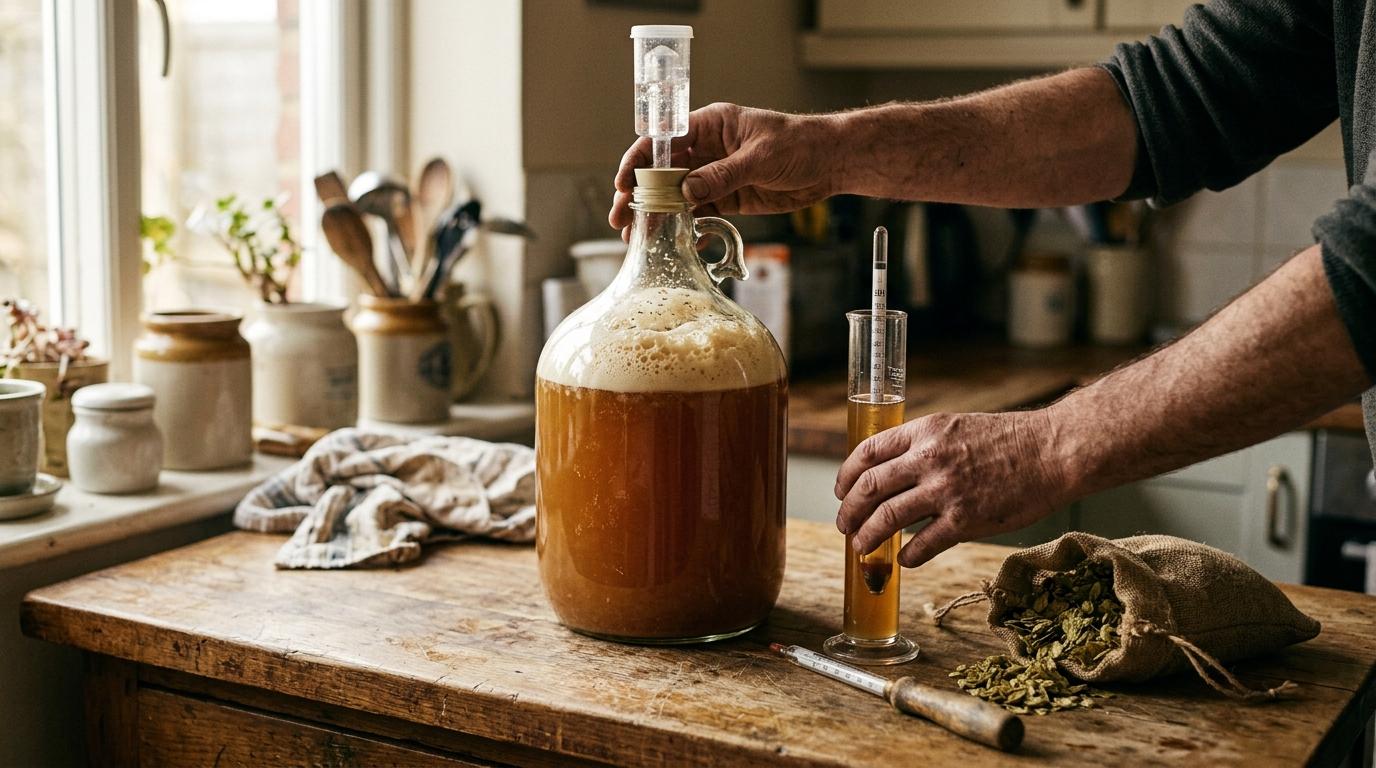
Home Beer Brewing
Brew your first batch of real ale at home. Equipment, ingredients, the brewing process, fermentation, and bottling, step by step.
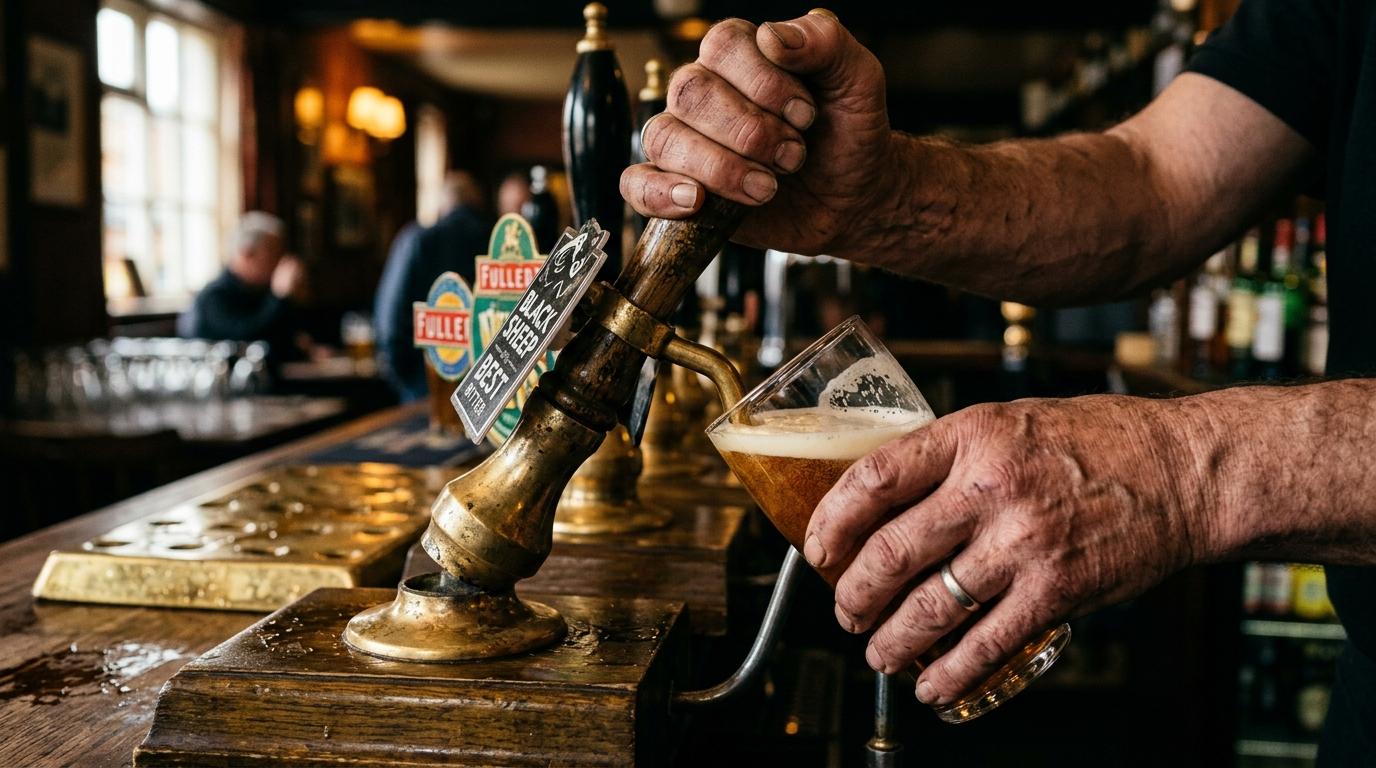
Beer: Styles, Serving and Off-Flavours
Beer styles, storage and draught service, glassware, pouring, and the common off-flavours and their causes. Preparation for the Cicerone Certified Beer Server (Level 1) exam.
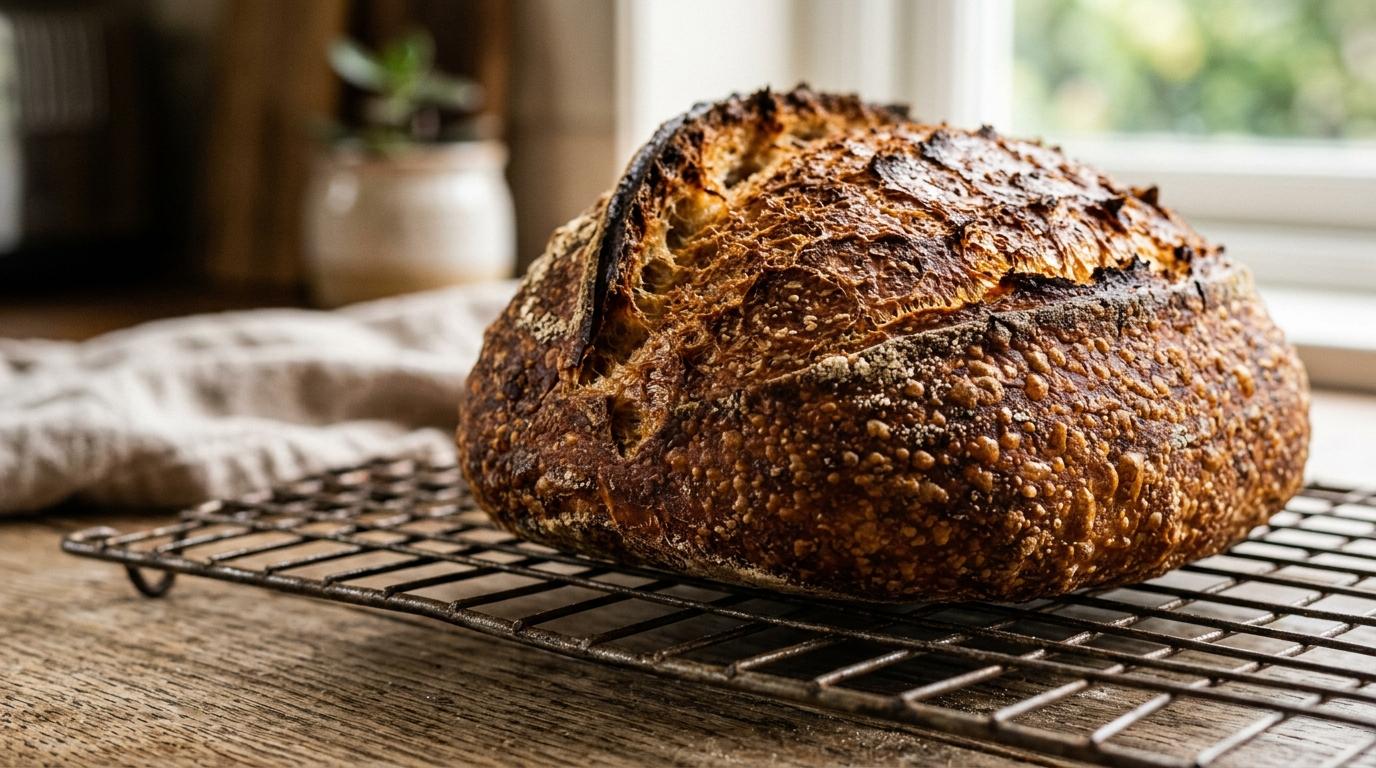
Bread Baking from Scratch
Your first proper loaf in an afternoon. Flour, water, salt, time, and the foundations of a skill that will feed people for life.