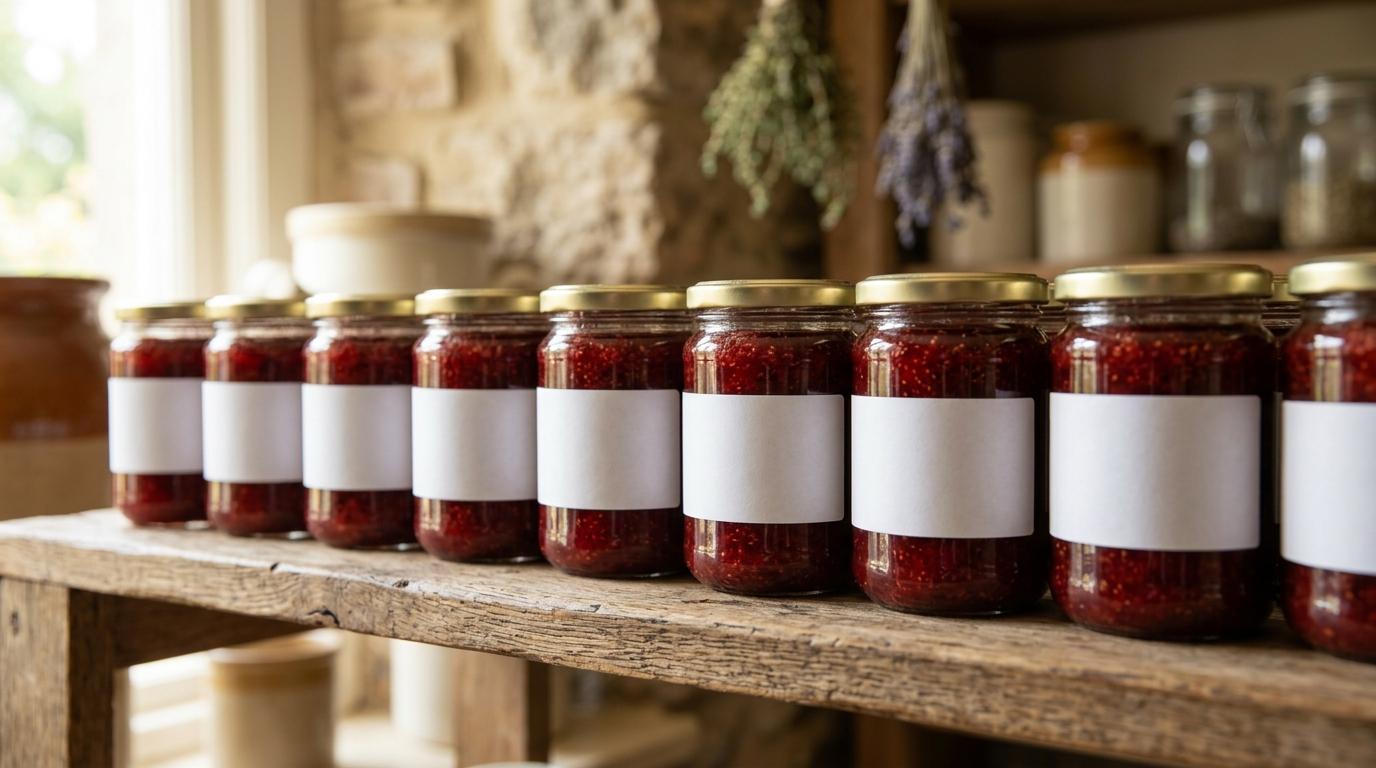
What you need to get started
Jam making requires very little equipment. The two things that matter most are a large enough pan (jam can triple in volume at a rolling boil) and a thermometer, which removes all guesswork about the setting point.
Equipment
A large, heavy-based pan, 6–8 litre capacity
£20–40 for a dedicated preserving pan; any large stockpot worksJam boils up to three times its starting volume at a full rolling boil. An undersized pan overflows. A preserving pan (wide, sloping sides, heavy base) is ideal: the wide base promotes rapid evaporation and even heat. A large stockpot works fine. Avoid unlined aluminium or copper with acidic fruit.
Affiliate link. We may earn a small commission.
Digital or sugar thermometer
£5–15Setting point is 105°C. A thermometer takes all the guesswork out. A digital probe thermometer (the same one used for bread and yoghurt) works perfectly. Jam thermometers with a clip for the pan side are convenient but not essential.
Affiliate link. We may earn a small commission.
Glass jars with lids, sterilised
£1–3 per jar, or reuse any glass jar with a good lidAny glass jar with a metal screw-top lid works. Kilner jars with twist tops are ideal. Wash in hot soapy water, then sterilise: place upright on a baking tray in an oven at 120°C for 20 minutes. Fill while both jam and jars are hot. A jam funnel (£3–5) makes filling much cleaner.
Affiliate link. We may earn a small commission.
A wide, flat-bottomed spoon or skimmer
Already in most kitchensFor skimming the foam that rises during boiling. A wide metal spoon or a dedicated jam skimmer (slotted, flat) makes this quick. Foam is just air and protein: it doesn't affect safety or taste, but it clouds the jam.
Small cold plates, kept in the freezer
Free: any small plate or saucerFor the wrinkle test: drop a teaspoon of jam onto a frozen plate. If it wrinkles when you push it with a finger, it's set. The plate test is the traditional backup check alongside the thermometer. Use both until you trust your readings.
Ingredients for strawberry jam
What to buy
- Strawberries, 1kg: Firm, slightly underripe strawberries work better than overripe ones: they contain more pectin and hold their shape. British strawberries in June–July are the best value. Hull and halve large ones.
- Jam sugar, 750g: Jam sugar contains added pectin, which makes setting more reliable with low-pectin fruits like strawberries. Regular caster sugar also works but requires longer boiling and more lemon juice. The ratio here is 1kg fruit to 750g sugar (75%, typical for a soft-set jam).
- Lemon, juice of 1: Lemon juice adds acid, which activates pectin and brightens flavour. It also helps preserve colour. Always include it, even if the recipe doesn't specify.
This batch makes approximately 4–5 standard 340g jars. Cost per jar: roughly £1–1.50 versus £2–4 for a quality shop-bought equivalent.
Some links are affiliate links. Airgap.life may earn a small commission at no extra cost to you.
Fruit season = jam season
Jam is how surplus seasonal fruit becomes shelf-stable for the rest of the year. Strawberries in June, raspberries in July, plums in August, blackberries in September. The principle is identical across all of them: only the fruit-to-sugar ratio and boiling time change.
The science of setting: why jam sets
What makes jam set
Jam sets because of pectin, a natural thickening agent found in fruit cell walls and particularly concentrated in peel, cores, and seeds. When pectin is heated with sugar and acid (lemon juice) above 104–105°C, it forms a three-dimensional gel network that traps water. That gel is what we call set jam.
The three ingredients that make it work
Pectin is the structural agent. High-pectin fruits (cooking apples, damsons, plums, redcurrants, gooseberries, citrus peel) set easily without added pectin. Low-pectin fruits (strawberries, raspberries, cherries, peaches) need either jam sugar (with added pectin), a pectin-rich partner fruit (apple, redcurrant), or longer boiling.
Sugar plays two roles: it activates the pectin and it preserves the jam by binding the water that bacteria would otherwise use to grow. Jams below 60% sugar content are at risk of mould. The standard range is 60–65% final sugar concentration.
Acid (lemon juice, or the fruit's own acidity) lowers the pH, which helps pectin molecules bond together. Without sufficient acid, even a pectin-rich mixture may not set.
Setting point: 105°C
At 105°C, enough water has evaporated and the sugar concentration is high enough for pectin to form its gel. Below this temperature, the jam will be runny. Above it (prolonged over-boiling) you start to break down the pectin and caramelise the sugar. The jam darkens, loses fruit flavour, and can go chewy rather than soft.
Why your jam didn't set
Two most common failures: (1) didn't reach 105°C, so check your thermometer is accurate; (2) low-pectin fruit without jam sugar or added lemon. If your jam is already in jars and still runny after 24 hours, decant it back into the pan, add the juice of a lemon, bring back to a rolling boil and re-pot.
Your first strawberry jam
1kg strawberries, 750g jam sugar, 1 lemon. Makes 4–5 jars. Total time: about 1 hour.
Ingredients
- Strawberries: 1kg, hulled and halved
- Jam sugar: 750g
- Lemon: 1, juice only
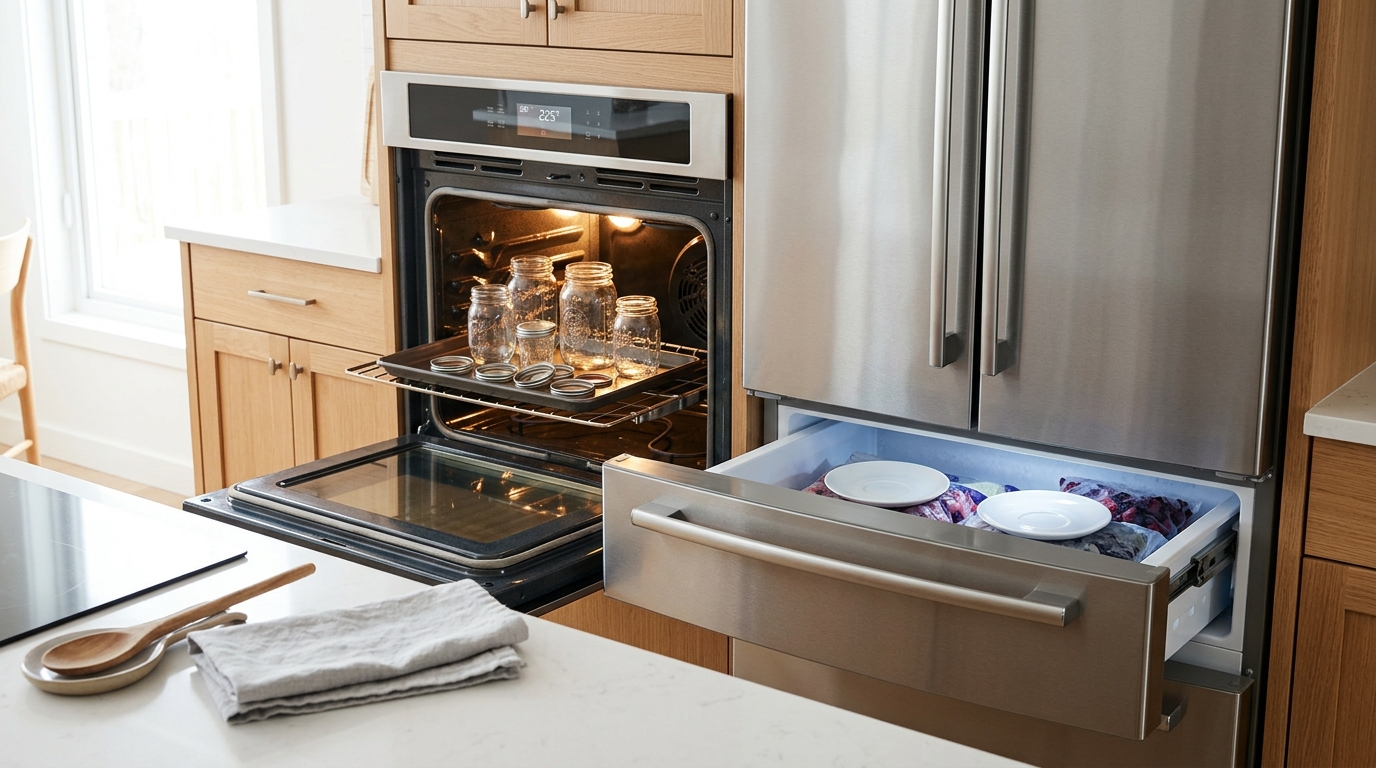
Sterilise your jars: Wash in hot soapy water. Place upright on a baking tray and heat in the oven at 120°C for 20 minutes. Leave in the oven until needed. Put 2–3 small saucers in the freezer for the wrinkle test.
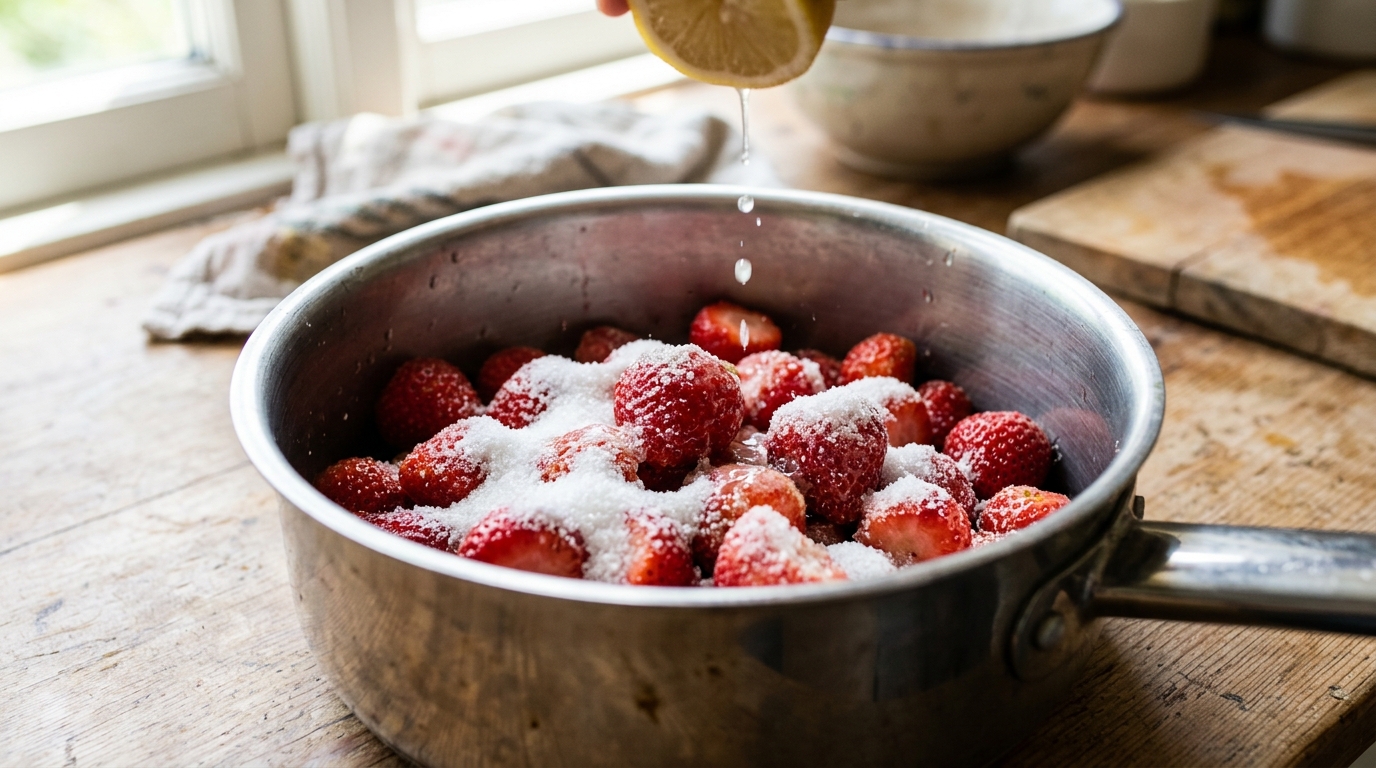
Macerate: Layer strawberries and sugar in the pan. Add the lemon juice. Leave for at least 30 minutes (or overnight in the fridge). The sugar draws the juice from the fruit, making the mixture easier to dissolve without burning.
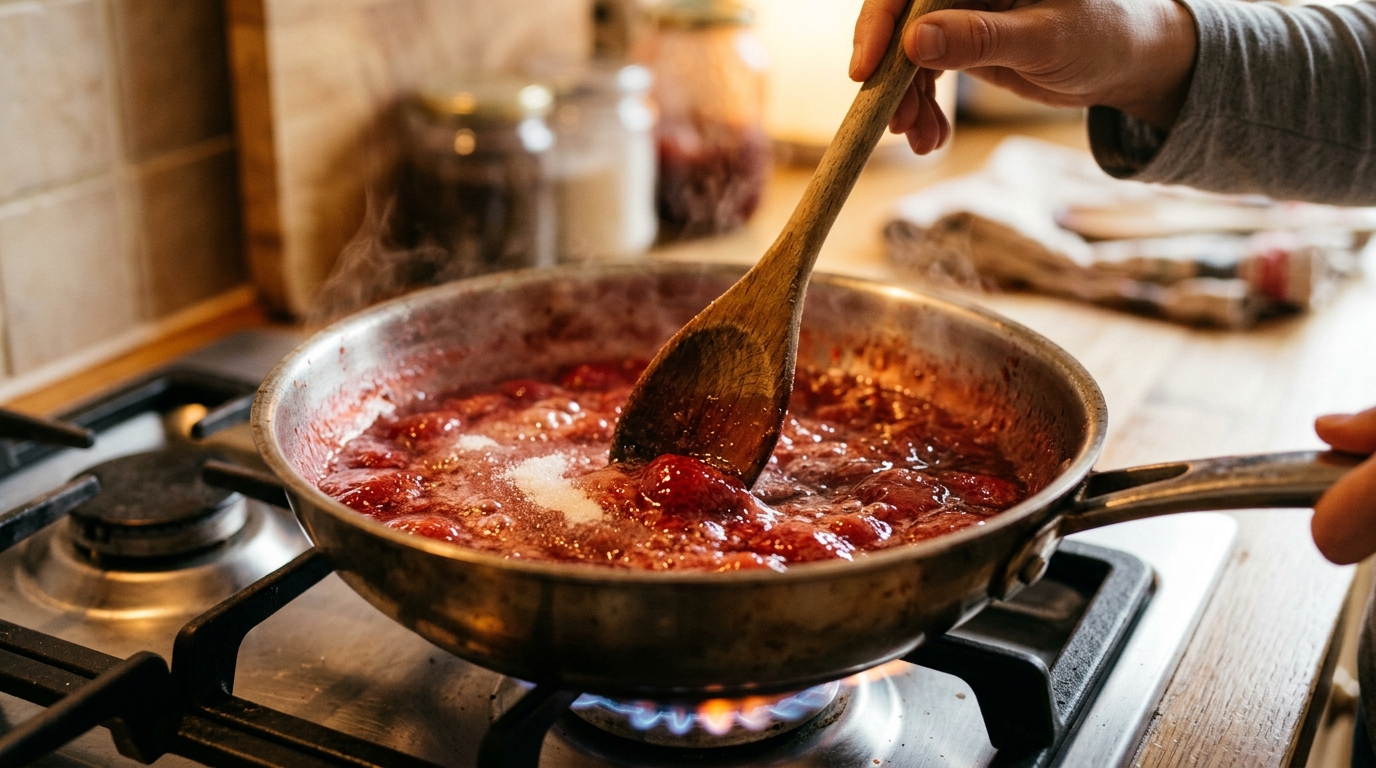
Dissolve the sugar: Set over a low-medium heat. Stir constantly until every grain of sugar has dissolved, about 10 minutes. Don't boil before the sugar is fully dissolved, or it can crystallise.
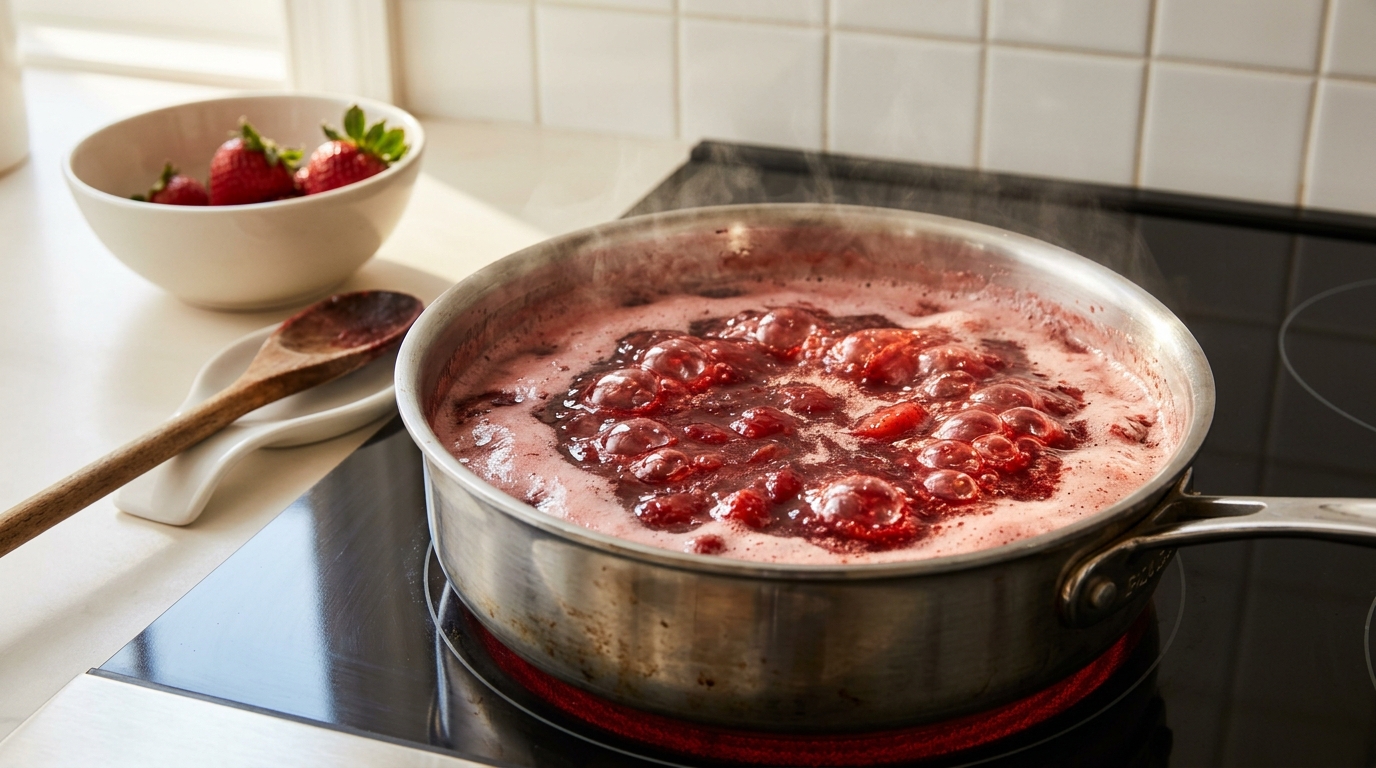
Rolling boil: Increase to high heat and bring to a full rolling boil: one that can't be stirred down. Boil hard, without stirring, for 10–15 minutes. Skim off the pink foam as it rises.
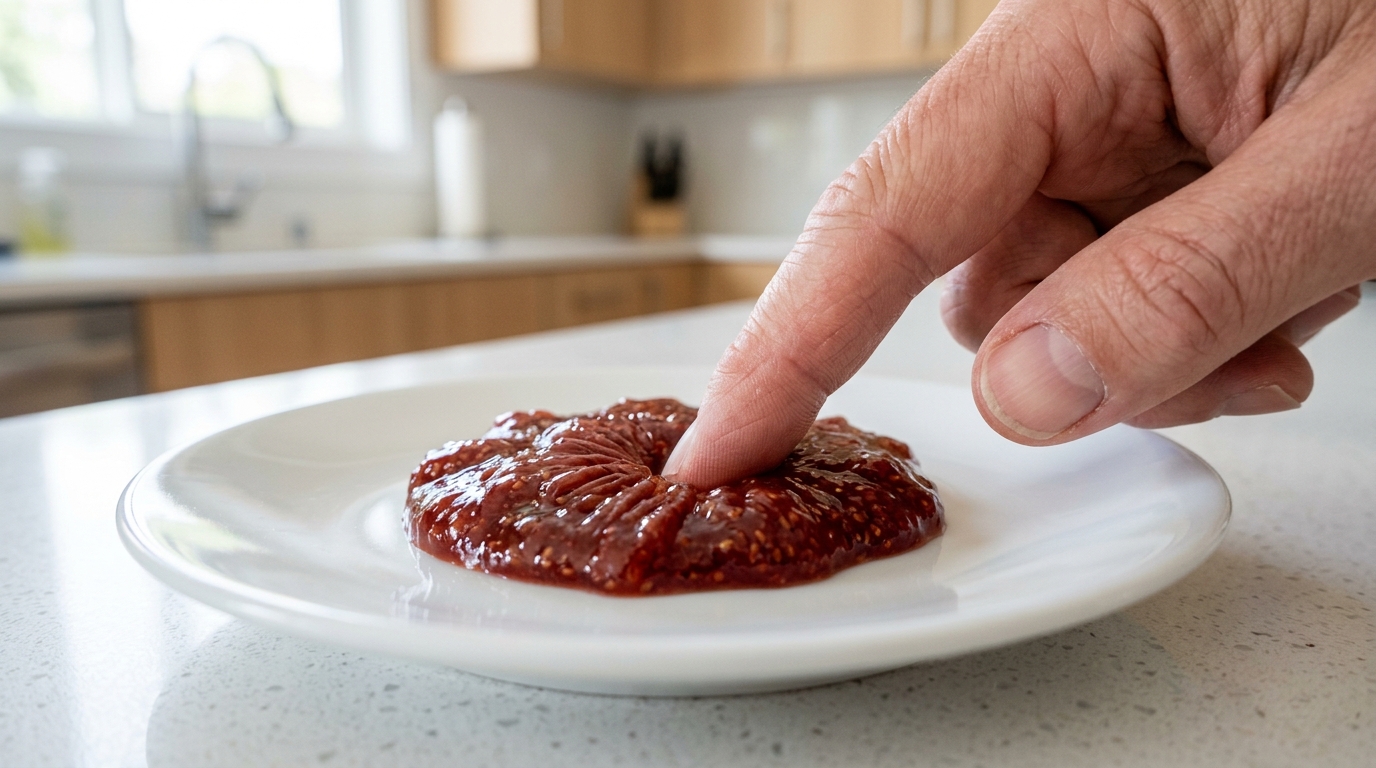
Test for set: After 10 minutes, check the temperature: you want 105°C. Then confirm with the wrinkle test: drop a teaspoon on a frozen plate, wait 30 seconds, then push it with your finger. If it wrinkles and holds a peak, it's ready. If it slides, boil for another 2 minutes and test again.
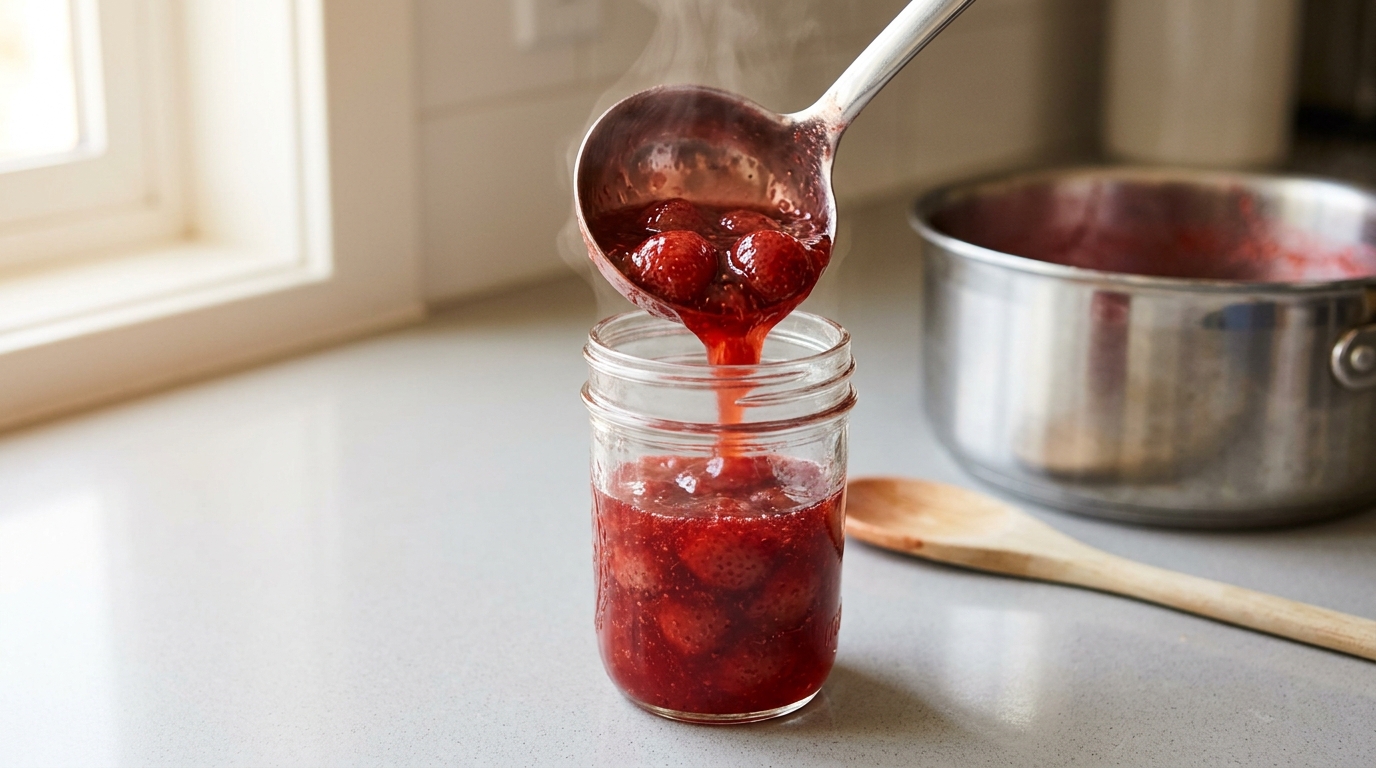
Rest and pot: Remove from heat and leave for 10 minutes. This prevents the fruit from floating to the top of the jar. Skim any remaining foam. Ladle into hot sterilised jars, leaving 5mm headspace. Seal immediately with the lids. The lids will ping as the jam cools and creates a vacuum.
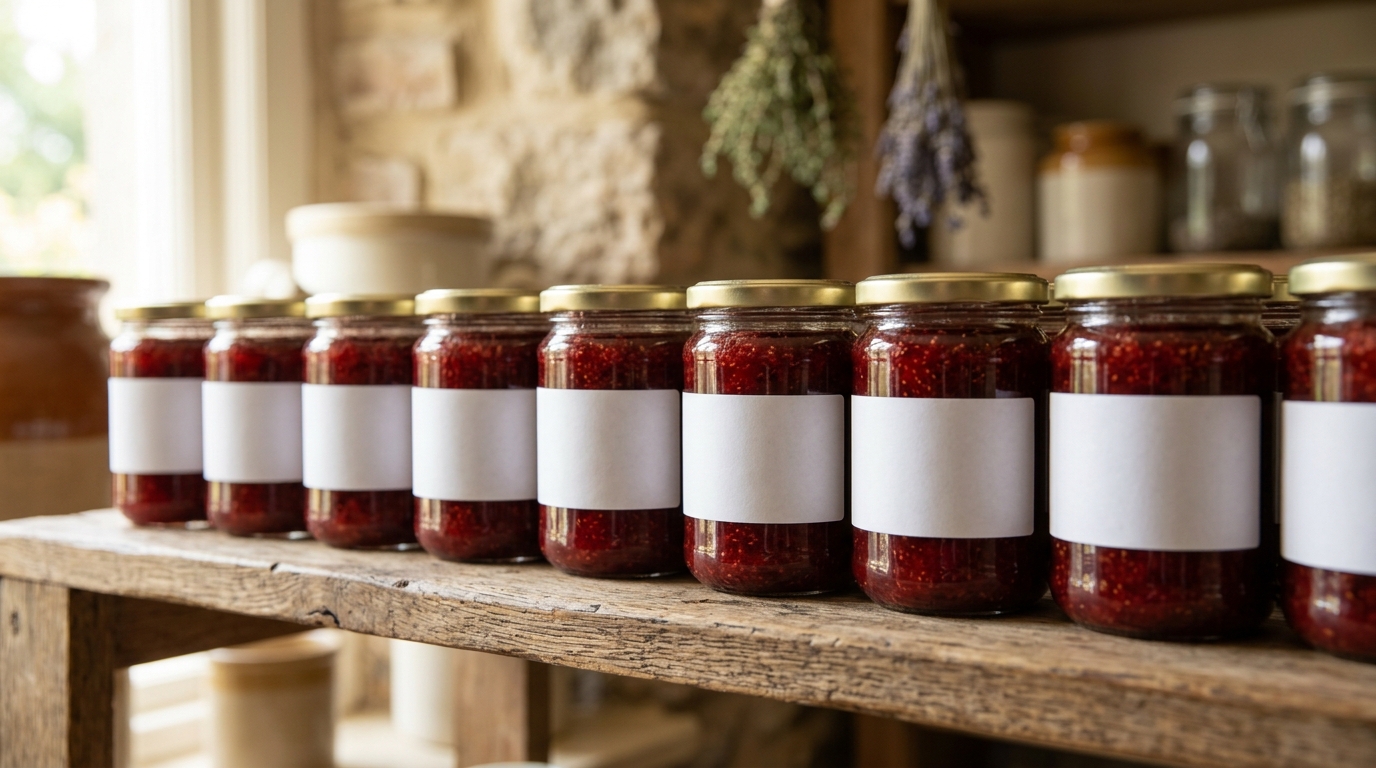
Label and store: Once cool, label with fruit and date. Unopened jam keeps for 1–2 years in a cool, dark cupboard. Once opened, refrigerate and use within 4–6 weeks.
Invert the jars while hot
As soon as the lids are on, turn each jar upside down for a few minutes. The hot jam heats the small air gap at the top and pushes it out, creating a stronger vacuum seal as the jar cools. Once the jar is cold, turn it right-side up. Store in a cool, dark place: a cellar is ideal, a kitchen cupboard away from the hob works well too.
A knob of butter stops the foam
Add a small knob of butter (about 10g) to the pan just before bringing to the boil. It breaks the surface tension and cuts the foam considerably: less skimming, cleaner jam.
Your pathway to mastery
Beginner: you're here
Week 1–4Strawberry jam with jam sugar. Understanding dissolving, rolling boil, setting point, sterilisation. First successful batch in jars.
Developing
Month 2–6Low-sugar soft-set jams. Raspberry jam (add apple for pectin). Plum jam (high pectin, easier set). Blackberry and apple. Jelly (strained fruit: clear, seedless). Jam with whole fruit or chunky pieces rather than pulp.
Confident
Year 1Marmalade (citrus peel, longer process). Curd (egg-based: lemon, passion fruit; different preservation rules, shorter shelf life). Fruit butter (smooth, low-sugar; for the fridge or freezer). Chutney and relish (acid-preserved, not sugar). Whole fruit in syrup.
Skilled
Year 2+Making pectin stock from apple cores and peel. Wild fruit jams from hedgerow foraging. Preserving to the French confiture standard: small-batch, high-fruit. Gifting, selling at markets, or entering WI competitions.
Beyond strawberry: how other fruits differ
The people to learn from
- Pam Corbin: Author of Pam the Jam (2019) and River Cottage Preserves; the most thorough modern British book on jam, jelly, marmalade, and pickles; precise and methodical
- Rachel de Thample: Author of Preserves (River Cottage Handbook); excellent on both jam-making and the wider world of fermentation and pickling
- The WI (Women's Institute): The traditional authority on British jam-making; WI Complete Book of Home Preserving is a classic reference; their competition judging standards are the informal benchmark for quality
Best resources
Community
Reader tips
No tips yet. Be the first to share what worked for you.
Share a tip
Sign in to share what worked for you.
Same category
What to learn next
Home Beer Brewing
Brew your first batch of real ale at home. Equipment, ingredients, the brewing process, fermentation, and bottling, step by step.
Beer: Styles, Serving and Off-Flavours
Beer styles, storage and draught service, glassware, pouring, and the common off-flavours and their causes. Preparation for the Cicerone Certified Beer Server (Level 1) exam.
Bread Baking from Scratch
Your first proper loaf in an afternoon. Flour, water, salt, time, and the foundations of a skill that will feed people for life.