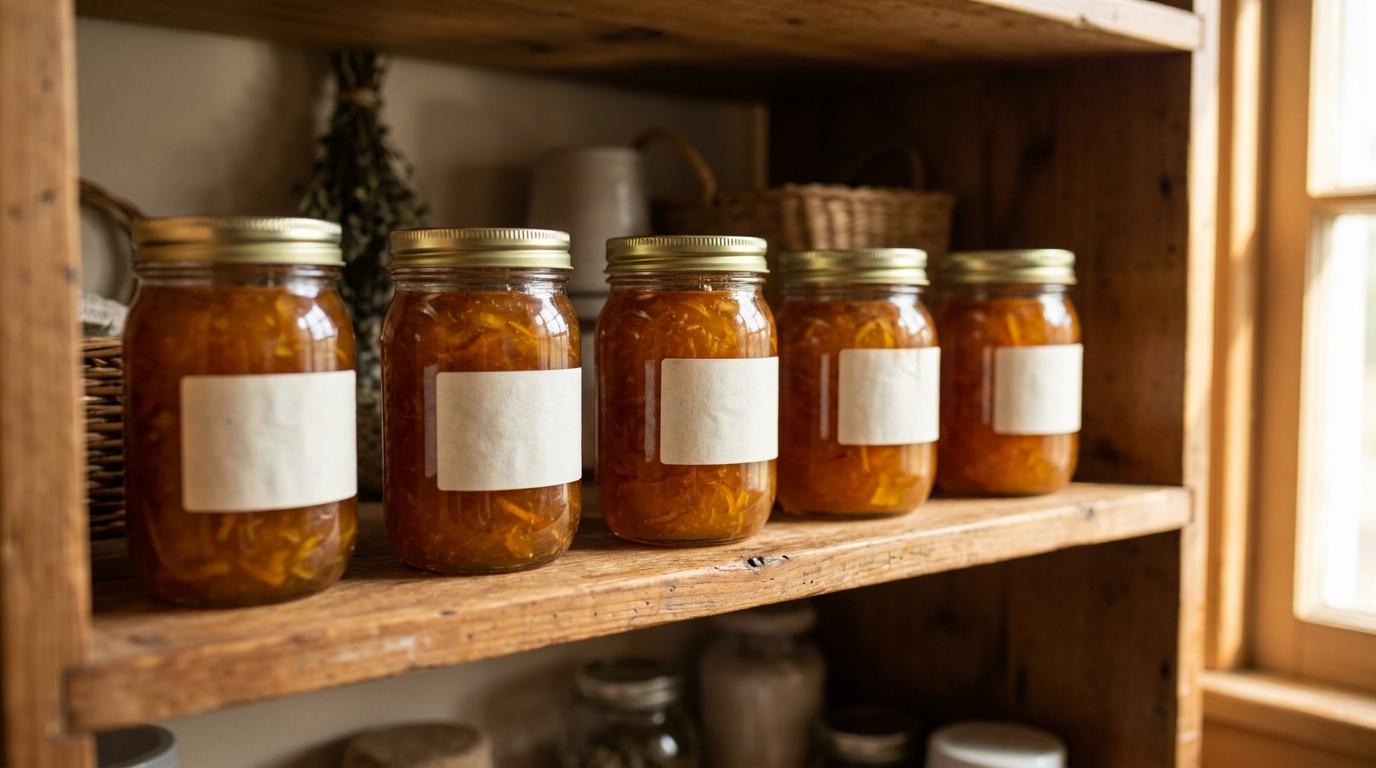
What you need to get started
Marmalade takes longer than jam but it's not harder. The key differences: the peel needs long, slow cooking before the sugar goes in, and Seville oranges are only available fresh in January–February. Everything else is the same principle as any other preserve.
Equipment
Large preserving pan, 8–10 litre capacity
£20–45 for a dedicated preserving panMarmalade is made in larger batches than most jams (2kg fruit produces 8–10 jars). It also boils up significantly. A wide, heavy-based maslin pan is traditional: the sloping sides and wide base promote even cooking and rapid evaporation. A large stockpot works.
Affiliate link. We may earn a small commission.
Muslin cloth or a jelly bag
£2–5 for a muslin square; £8–12 for a dedicated jelly bag and standThe pips and pith contain the majority of the pectin. You simmer them in a muslin bag, then squeeze the bag hard at the end to extract the pectin-rich liquid into the pan. This is what makes marmalade set. Without it, the marmalade won't have enough pectin.
Affiliate link. We may earn a small commission.
Digital thermometer
£5–15Setting point for marmalade is 105°C, the same as jam. A thermometer is especially important for marmalade because the long preparation time makes you reluctant to re-boil if it doesn't set. Confirm the temperature and the wrinkle test together.
Affiliate link. We may earn a small commission.
Sharp knife and a chopping board
Already in your kitchenThe entire preparation is hand-cutting peel to your preferred thickness. A sharp knife is the only tool. Thin-cut (2mm strips) gives a delicate, fine-shred marmalade. Thick-cut (5–7mm) gives the chunky, robust style. Both are correct: it's a matter of preference.
Glass jars, sterilised, 6–8 × 340ml
£1–3 per jarThe same as for jam: wash, then sterilise in an oven at 120°C for 20 minutes. Keep in the oven until needed. Marmalade is slightly more forgiving than low-acid jams because the citrus acid acts as an additional preservative.
Affiliate link. We may earn a small commission.
Ingredients
What to buy
- Seville oranges, 1kg: Available fresh from UK supermarkets and greengrocers from late January to mid-February only. Seville oranges are inedible raw (intensely bitter and sour), but that's what makes the marmalade work. Buy them in bulk when available and freeze for later use. Frozen Sevilles work identically to fresh.
- Lemons, 2, juice only: Adds acid to help the pectin activate and brightens the citrus flavour.
- Granulated sugar, 2kg: Standard granulated white sugar is all you need: citrus peel is so high in pectin that you don't need jam sugar with added pectin. The traditional ratio is 1kg fruit to 2kg sugar, making a firm-set, well-preserved marmalade.
- Water, 2 litres: For the initial peel-softening simmer. The peel must be cooked soft in water before any sugar is added: sugar toughens peel and prevents it from ever softening if added too early.
This batch makes approximately 6–8 × 340g jars. Cost per jar: roughly £1.50–2, versus £3–6 for a quality artisan marmalade.
Some links are affiliate links. Airgap.life may earn a small commission at no extra cost to you.
Freeze Seville oranges in January
Seville oranges are available for only 6–8 weeks each year. Buy 4–5kg when you see them, freeze in 1kg bags, and make marmalade throughout the year. Frozen and thawed Sevilles are slightly easier to work with: the freezing breaks down the cell walls and they release juice more readily.
Community
Reader tips
No tips yet. Be the first to share what worked for you.
Share a tip
Sign in to share what worked for you.
Same category
What to learn next
Home Beer Brewing
Brew your first batch of real ale at home. Equipment, ingredients, the brewing process, fermentation, and bottling, step by step.
Beer: Styles, Serving and Off-Flavours
Beer styles, storage and draught service, glassware, pouring, and the common off-flavours and their causes. Preparation for the Cicerone Certified Beer Server (Level 1) exam.
Bread Baking from Scratch
Your first proper loaf in an afternoon. Flour, water, salt, time, and the foundations of a skill that will feed people for life.