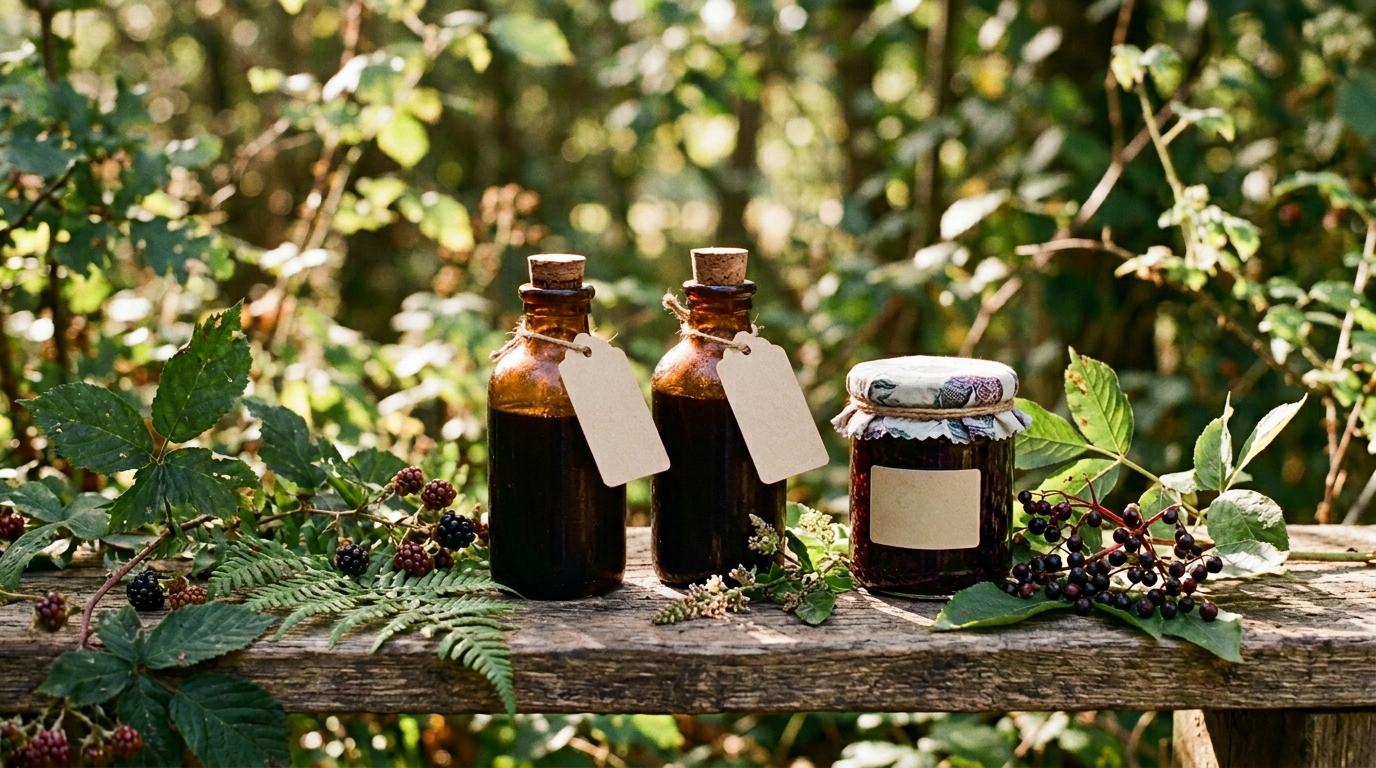
What you need
This course is timed for late summer: August and September in the UK are the richest months for hedgerow foraging. Elderberries, blackberries, hawthorn berries, hazelnuts, rosehips, and the first field mushrooms are all findable by a careful beginner.
A reliable field guide (UK-specific)
£6–18 for a field guideThe essential investment. Collins Gem Mushrooms or Roger Phillips's Mushrooms (for fungi); Food for Free by Richard Mabey for plants and berries. You need photographs taken in the field, not illustrations, and the book must be UK-specific: toxic lookalikes differ by region. Do not rely on apps as your primary identification tool.
Affiliate link. We may earn a small commission.
A basket or cloth bag
£5–20; a cloth bag works fine to startA basket allows spores to fall through (matters for fungi, not berries but good habit). Plastic bags make mushrooms sweat and deteriorate quickly. A traditional basket is also a pleasure to carry.
Affiliate link. We may earn a small commission.
A small knife
£5–15For cleanly cutting mushroom stems (rather than pulling, which disturbs the mycelium) and separating berries from stalks. A penknife or basic folding knife is sufficient.
Affiliate link. We may earn a small commission.
What's available in late summer
August–September in the UK hedgerow
- Blackberries (Rubus fruticosus): The most approachable forage. Ripe late July through September; later in cooler years. Pick when deep black and pull away from the stem easily. Best in sheltered hedges away from roads.
- Elderberries (Sambucus nigra): Dark purple-black berries in heavy clusters. Ripe from late August. Raw berries cause stomach upset. They must be cooked. Excellent for cordial, jam, and wine. Avoid any red elderberries.
- Hawthorn berries / haws (Crataegus monogyna): Small deep red berries, ripe from late September into October. Edible raw (floury, mild) but best as ketchup or jam. The most reliable UK hedgerow tree.
- Hazelnuts (Corylus avellana): Ripe September to October; green nuts can be harvested from August. Look for clusters of 2–4 nuts in leafy husks on small trees. Beat the squirrels by checking in mid-August when nuts are just filling.
- Rosehips (Rosa canina): The fruit of the wild dog rose; ripe from September. High in vitamin C. Best for syrup and jelly. Remove seeds and hairs before use: the hairs cause irritation.
- Field mushrooms (Agaricus campestris): Classic white-brown mushroom of old pasture and field edges. August–October. White cap, pink then brown gills, smells mushroomy. Requires careful identification. See Step 02 before touching any fungi.
Rule of thumb: if in doubt, it's a berry, not a mushroom, because the consequences of misidentification are different in kind.
Some links are affiliate links. Airgap.life may earn a small commission at no extra cost to you.
The golden rules of safe foraging
The three rules that keep you safe
Rule 1: Identify with 100% certainty, or leave it
Not 90% certain. Not 'pretty sure'. 100% certain using multiple identification features, not just one. Every identification must be confirmed by at least three separate features: shape, colour, habitat, smell, the underside of the cap (for fungi), the leaf shape, the stem, the season. One matching feature is not identification.
Rule 2: Never eat anything until you've confirmed it with a physical field guide
Apps using AI image recognition for mushroom identification have been involved in poisoning cases. They're useful for logging finds and generating initial hypotheses, not for final identification decisions. Use a physical field guide written by an expert, cross-referenced against multiple photographs.
Rule 3: Start with the unmistakeable ones
Blackberries have no deadly lookalike in the UK. Elderberries are easy to identify correctly (though elder leaves, bark, and unripe berries are toxic). Hazelnuts in their distinctive frilly husks are unmistakeable. Build confidence on these before approaching fungi, which require deeper knowledge.
Mushroom identification: a separate discipline
Fungi identification is more complex than plant identification and requires dedicated study. Every characteristic must match before you eat any mushroom. The main dangerous lookalikes in the UK:
The field mushroom test
If you find a white-capped mushroom in old pasture: cut the base of the stem. Field mushroom (edible), flesh stays white. Yellow-staining mushroom (inedible), the base flushes bright yellow within 30 seconds. This single test eliminates the most common confusion species. But still confirm all other features before eating.
The law
In England, Wales, and Scotland, picking wild fruit, flowers, and fungi for personal consumption is generally legal under the Theft Act 1968, provided you're not on private land without permission and you're not taking commercial quantities. Always ask permission on private land. Many Sites of Special Scientific Interest (SSSIs) prohibit picking. Check before you go.
Your first harvest: blackberries and elderberries
For your first outing, focus on two species you can identify with complete confidence: blackberries and elderberries. Both are abundant in the UK in August–September, neither has dangerous lookalikes if correctly identified, and both make excellent things to eat.
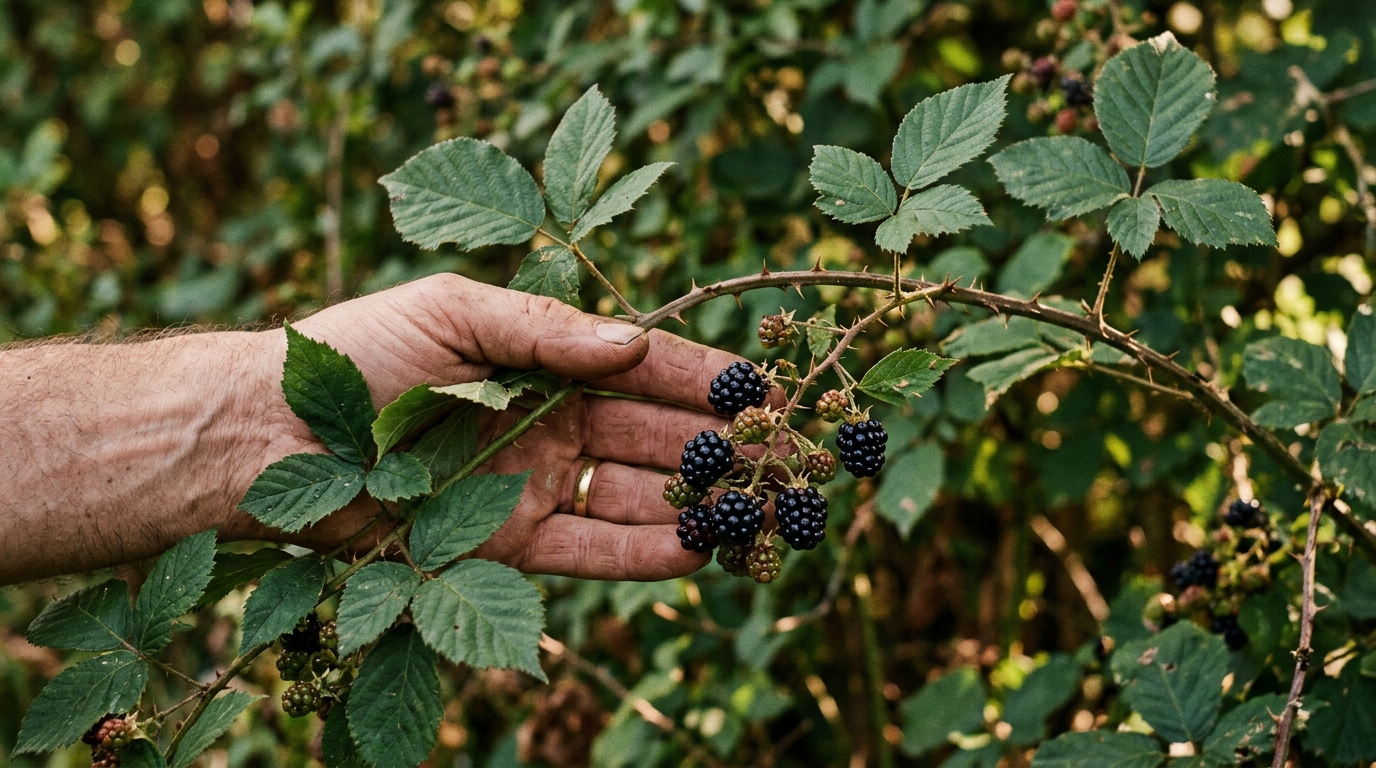
Choose your location and identify: Footpaths along woodland edges, away from main roads (the first 5 metres from heavy traffic accumulates pollution on fruit). Confirm blackberries before picking: compound leaves with 3–5 leaflets, thorny stems, aggregate berry structure. Berries that come away easily are ripe; anything requiring force isn't.
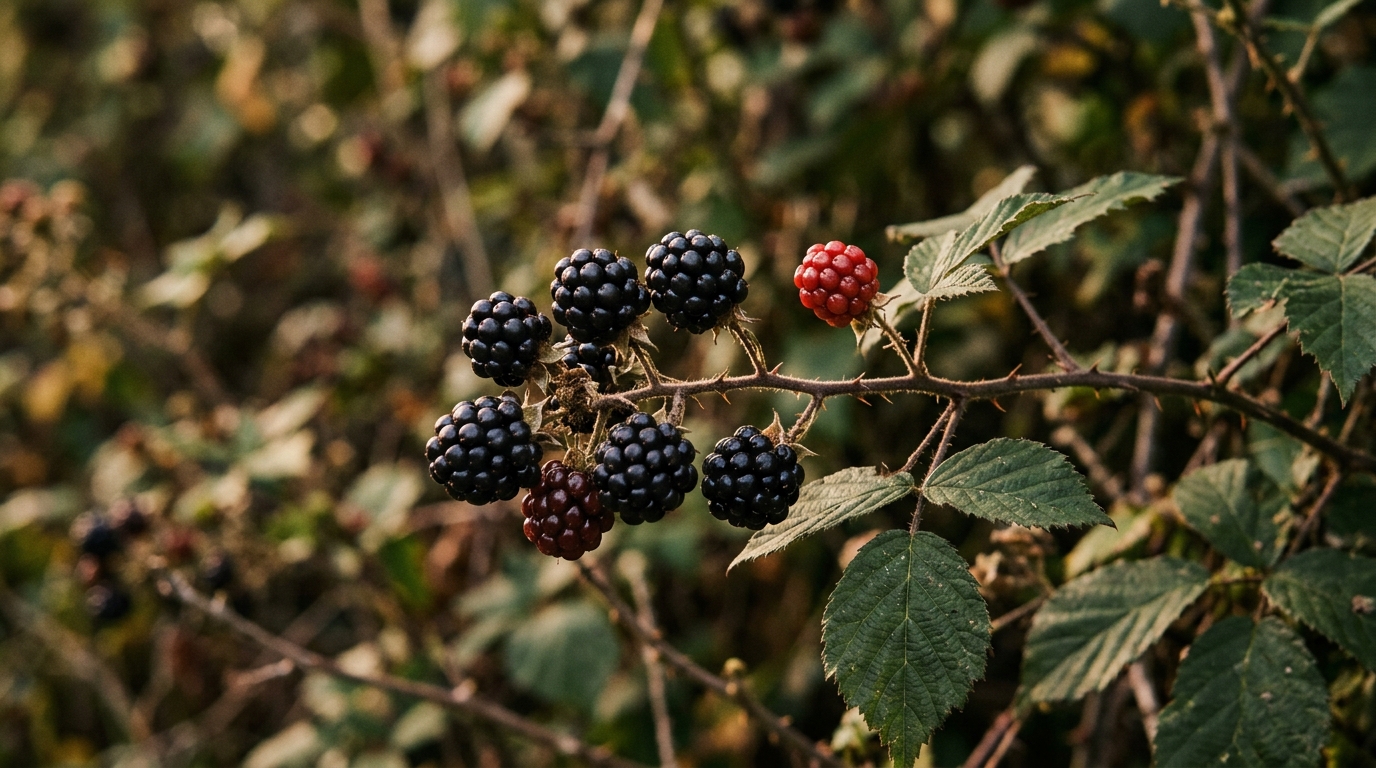
Identify before picking: Each berry in the aggregate cluster must be dark and fully ripe. Even one red berry means it's not ready. Check the stem for thorns (a key identifier: no thorns means it's a different species). Smell: ripe blackberries have a sweet, earthy fragrance.
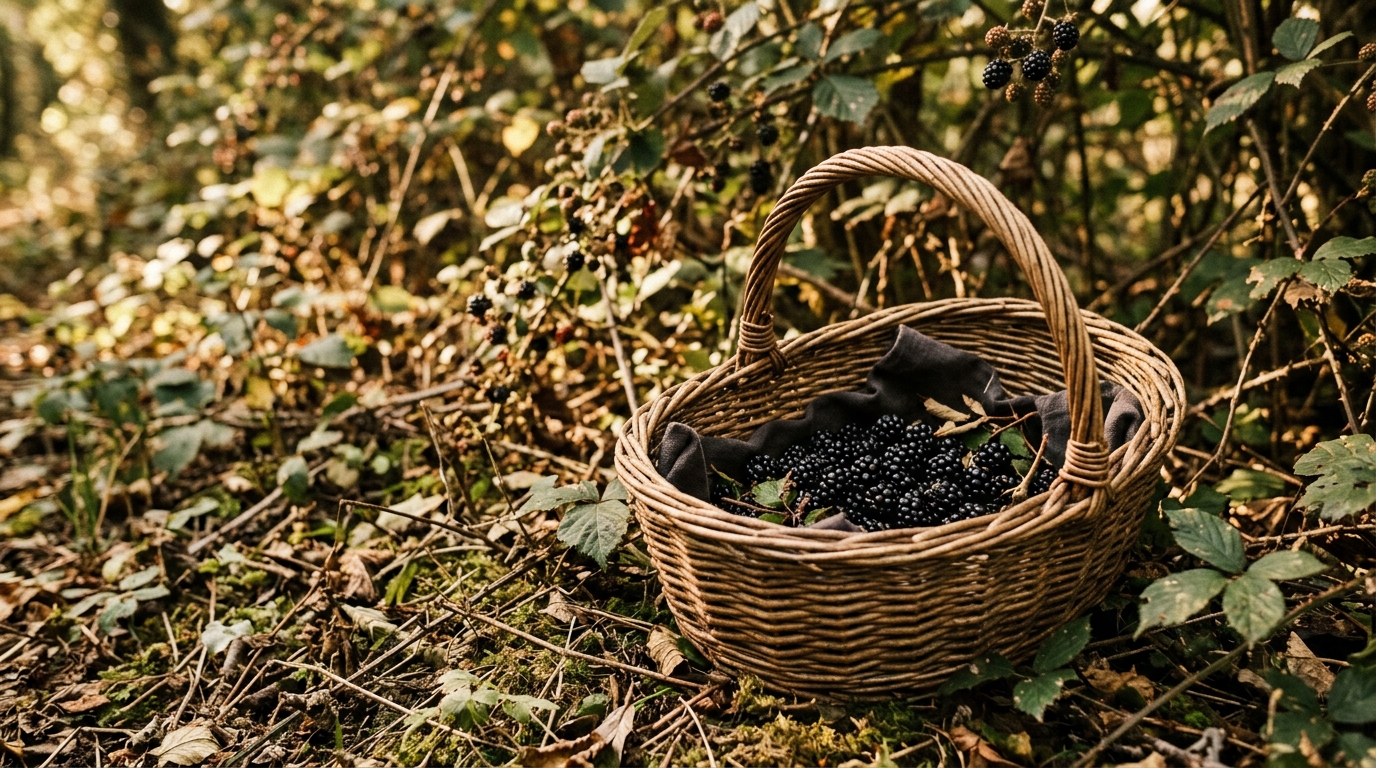
Pick with care: Take what you'll use. Leave plenty for birds and small mammals who depend on late-season fruit for winter weight. Blackberries: eat fresh, make jam (equal weights fruit and sugar, boil to setting point), or freeze raw for winter crumbles. Handle gently: ripe berries crush.
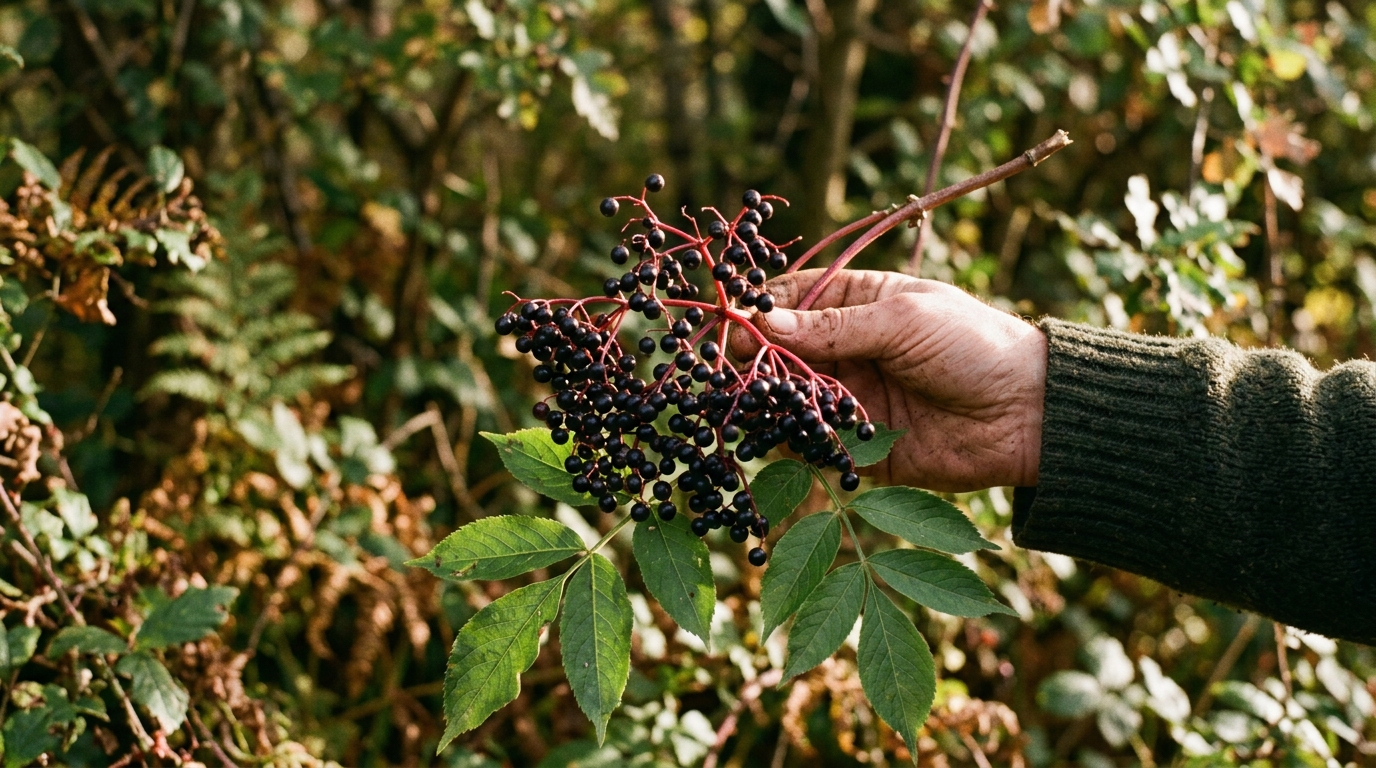
Identify elderberries: Flat-topped clusters (corymbs) of very small dark purple berries on red stems. Compound leaves with 5–7 leaflets. Distinctive smell when leaves are crushed. Look for the remains of the cream-white flower clusters from June. Never eat them raw. Elderberries must be cooked before consumption.
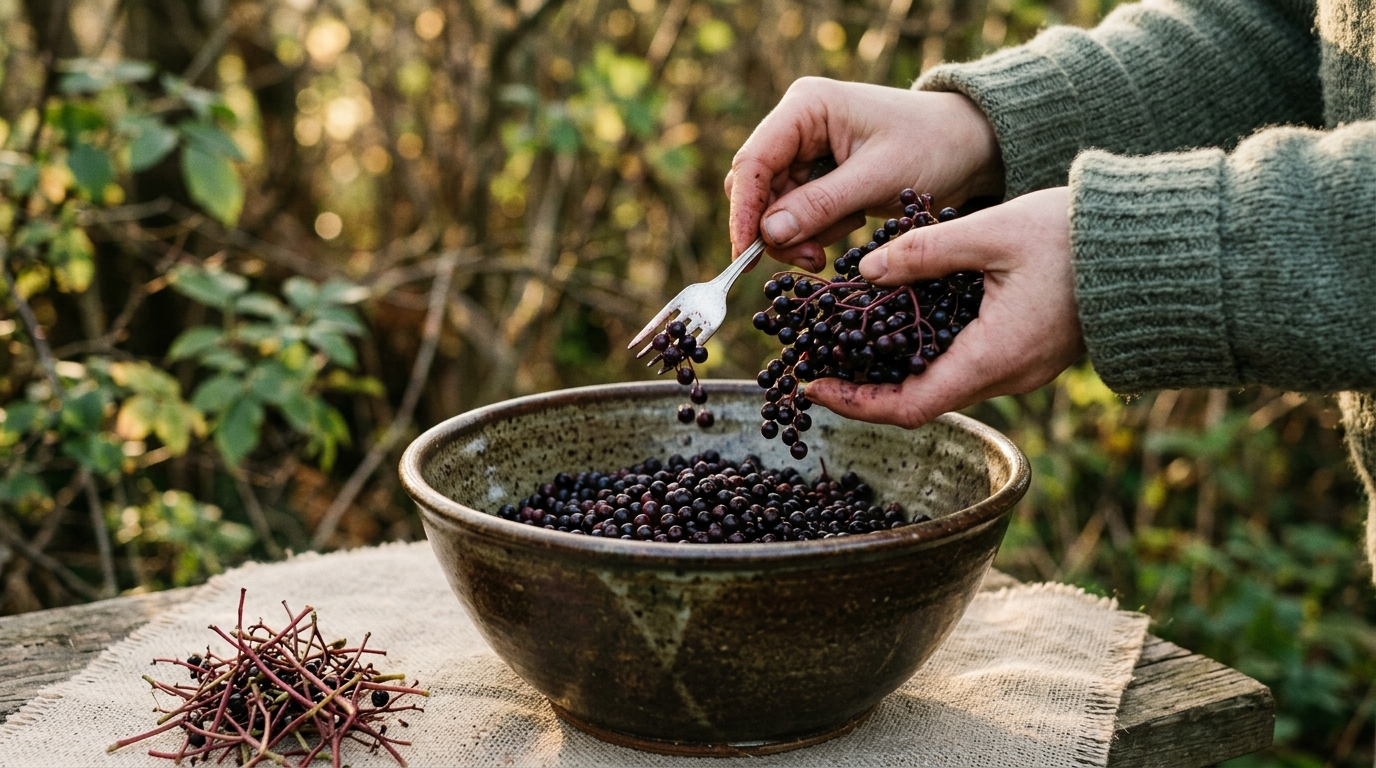
Strip from stems: Run a fork along each stem to strip the berries into a colander. Remove as much stem as possible: the stems contain cyanogenic compounds that cause nausea even when cooked. Rinse the berries well. At this stage, weigh them for the cordial.
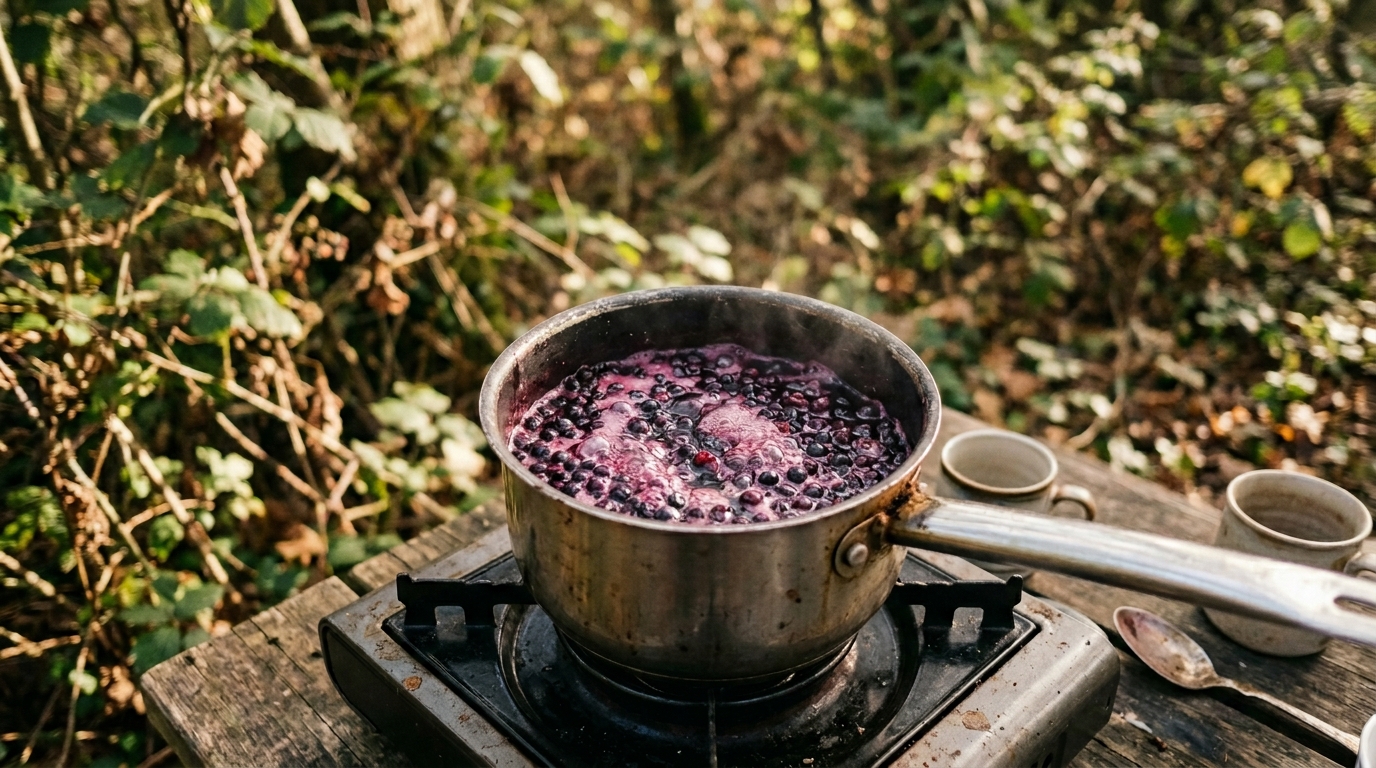
Simmer the elderberries: Combine 500g stripped elderberries with 300ml water in a saucepan. Bring to a simmer over medium heat and cook for 15–20 minutes until the berries have completely collapsed and released their colour. Add a cinnamon stick and star anise if desired.
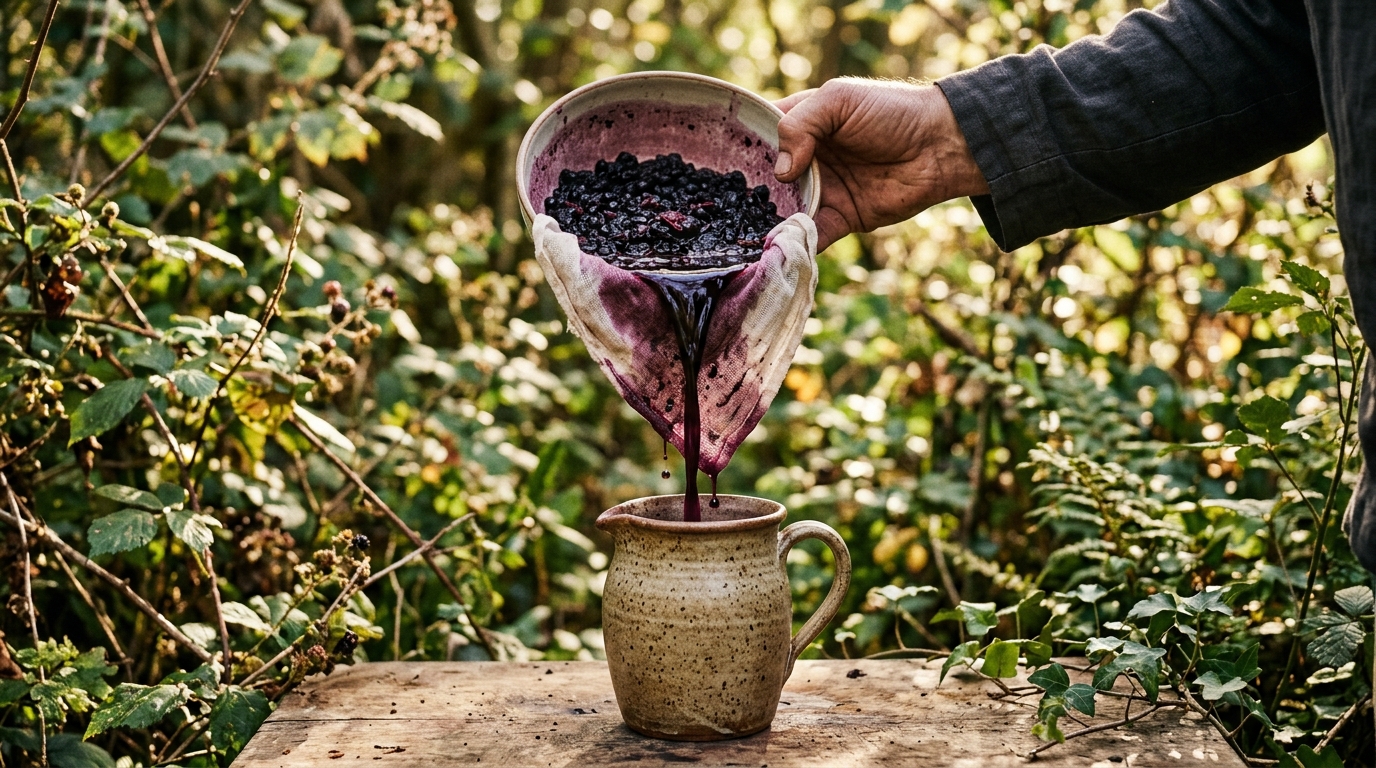
Strain the liquid: Pour through a muslin-lined sieve or a jam bag. Press lightly: squeezing too hard makes the cordial cloudy. Measure the strained liquid. Add 300g sugar per 300ml juice. Stir over low heat until dissolved. Don't boil. Boiling drives off volatile flavour compounds.
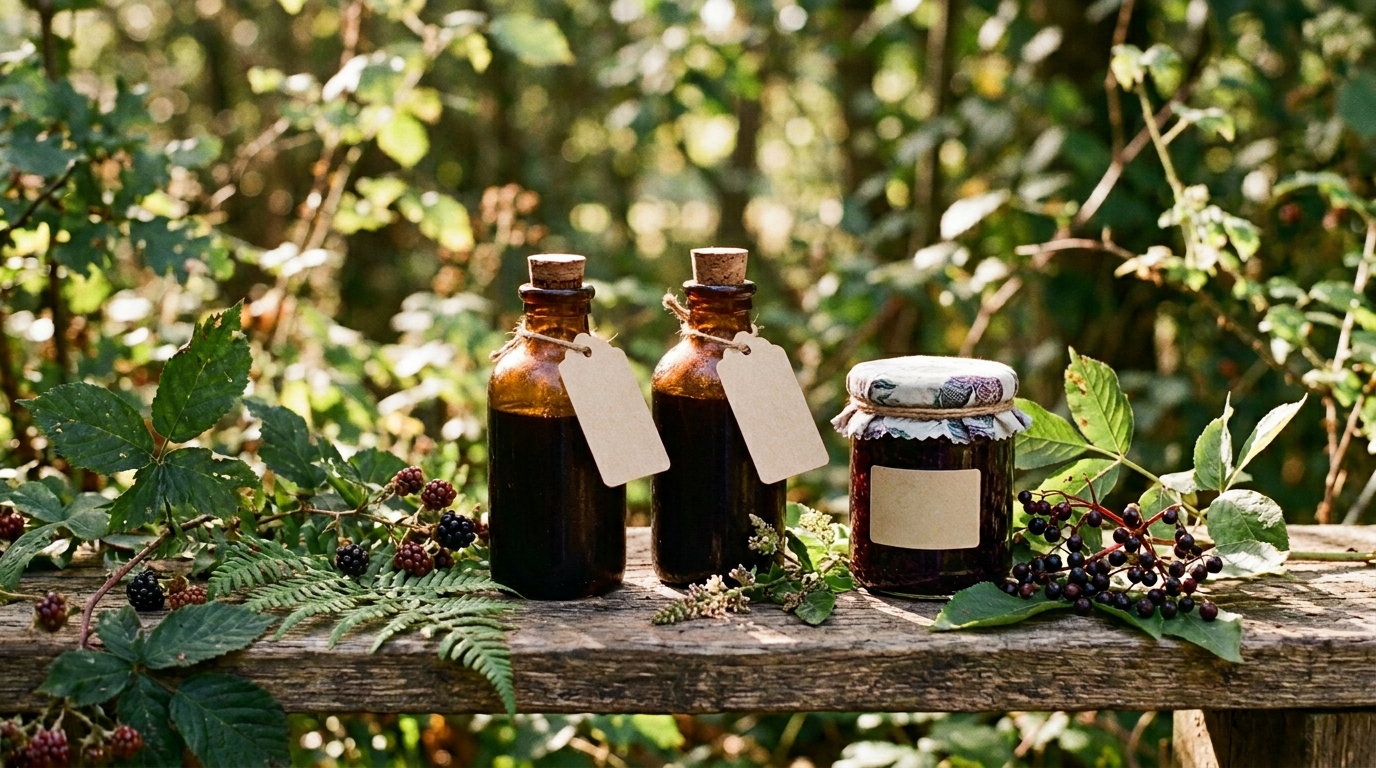
Bottle and preserve: Pour hot cordial into sterilised bottles. Keeps refrigerated for 4–6 weeks; freeze in ice cube trays for up to 6 months. Blackberry jam (equal weights fruit and sugar to setting point) into sterilised jars, sealed while hot, keeps for a year. Label with the date and species.
The old country rule about blackberries
In British folklore, blackberries must not be picked after Michaelmas (29 September) because the devil spat on them. The practical observation behind the superstition: after late September, blackberries deteriorate rapidly, becoming watery, mouldy, and infested. The devil is probably right.
Your pathway to mastery
Beginner: you're here
Summer–Autumn Year 1Blackberries, elderberries, hawthorn berries, hazelnuts, rosehips. Safe, confident identification of 5–6 unmistakeable species.
Developing
Year 2Expanding the mushroom repertoire: ceps/porcini, chanterelles, giant puffballs, chicken-of-the-woods. Spring plants: wild garlic, nettles, hawthorn buds. Sloe for gin in October.
Confident
Year 3–4Year-round calendar of 30+ species. Knowing which woodland, hedgerow, and coast habitats produce which species in which months. Making your own wine, cordials, pickles, and preserves from wild ingredients.
Skilled
Year 5+Guided walks. Teaching identification. Deep mycological knowledge. Seaweed foraging on the coast. Contributing to citizen science surveys (British Mycological Society).
The foragers to learn from
- Richard Mabey: Author of Food for Free (1972; regularly updated), the definitive UK wild food guide; also wrote The Unofficial Countryside, the best book on urban nature
- Roger Phillips: Author of Mushrooms (1981), the best photographic UK fungi guide; photographed thousands of specimens himself; essential for serious fungus identification
- Miles Irving: Author of The Forager Handbook (2009); runs foraging courses; one of the most knowledgeable UK wild food practitioners
- John Wright (River Cottage): River Cottage's resident forager; three excellent Handbook series volumes on mushrooms, hedgerow food, and seashore food; practical and cautious
Best resources
Community
Reader tips
No tips yet. Be the first to share what worked for you.
Share a tip
Sign in to share what worked for you.
Same category
What to learn next
Bicycle Maintenance
Fix a puncture, adjust brakes, clean and lube a drivetrain. The core maintenance skills every cyclist needs. No bike shop required.

Bicycle Touring
Plan and complete your first bicycle tour. Kit selection, route planning, pacing, camping or accommodation, mechanical basics, and how to manage a loaded bike.

Running: Starting from Zero
Run your first 5K from a standing start. A simple, realistic programme for people who aren't sure they're runners. It turns out most people are.