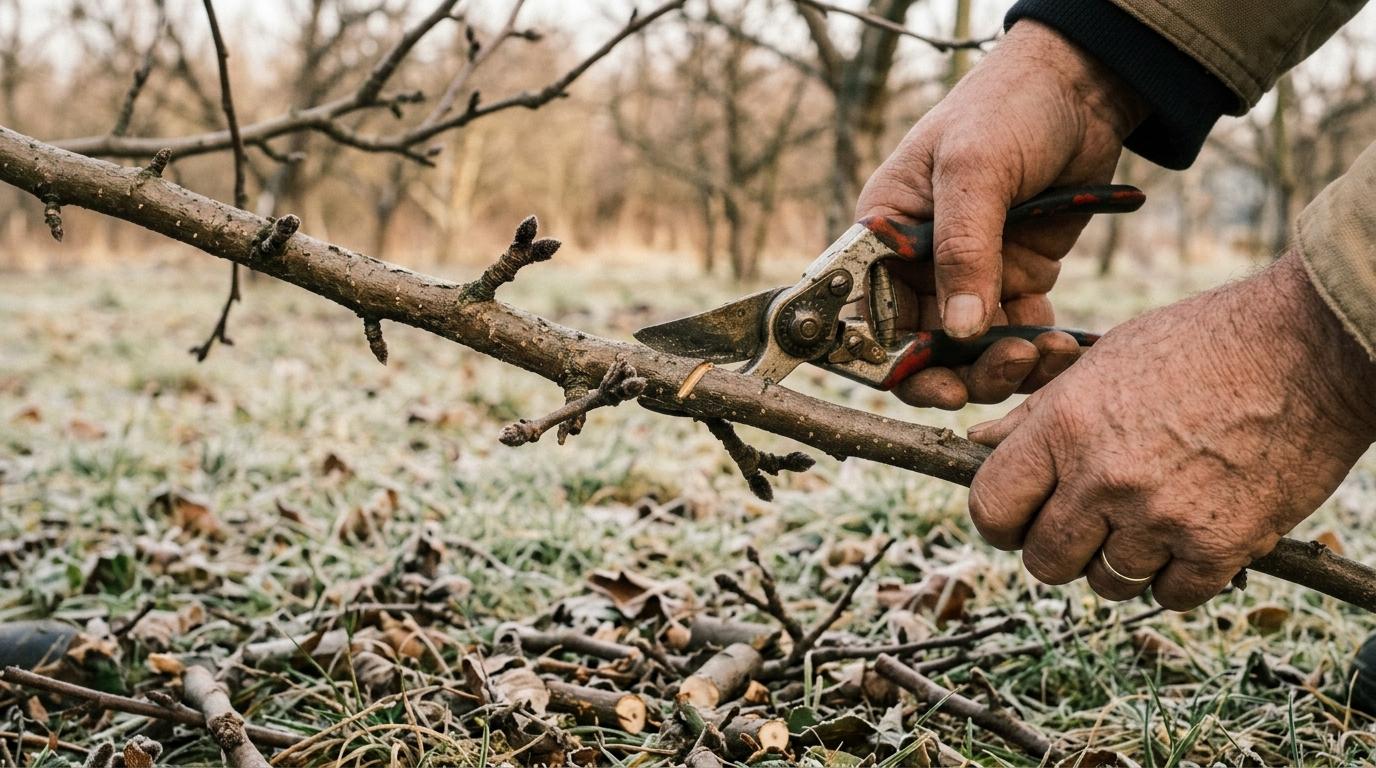
Tools: what you need and why quality matters
you can prune a whole garden with four tools. the temptation is to buy cheap and upgrade later, but with cutting tools the opposite logic applies: a cheap pair of secateurs that crush stems instead of cutting them sets you back every time you use them. buy the right thing once. it will outlast you.
Bypass secateurs: Felco 2 or Bahco P-160
£30–£65The professional choice. Bypass secateurs work like scissors: two curved blades pass each other to make a clean, precise cut. The Felco 2 is the industry benchmark: Swiss-made, high-carbon steel, fully repairable, replaceable blades. The Bahco P-160 is an excellent British-market alternative at a lower price. Both last decades with minimal care. Buy either; avoid anything else.
Affiliate link. We may earn a small commission.
Loppers (bypass action, 60–70cm handles)
£20–£45For branches between 1.5cm and 3cm diameter: too thick for secateurs, too small to justify a saw. The extended handles give leverage that secateurs can't provide. Buy bypass loppers, not anvil: the same logic applies as with secateurs. Fiskars and Darlac make reliable mid-range options.
Affiliate link. We may earn a small commission.
Folding pruning saw
£18–£40Anything over 3cm in diameter needs a saw. A folding pruning saw (Silky Gomboy or Bahco Laplander are the two standard choices) fits in a back pocket and cuts on the pull stroke, which gives excellent control in awkward positions. Far safer and more accurate than a bow saw in a tree or among crowded branches.
Affiliate link. We may earn a small commission.
Sharpening stone or diamond file
£8–£20A sharp secateur makes a cut that heals in days. A blunt one tears bark and leaves a wound that takes weeks. Sharpen before each season and after heavy use. A small diamond file (DMT Diafold or similar) works on the bevelled face of secateur blades in under two minutes. The Felco 900 is the dedicated tool if you run Felco secateurs.
Affiliate link. We may earn a small commission.
Wound sealant paste (Arbrex Seal and Heal or similar)
£6–£12Optional for most pruning, but useful on large cuts to stone fruit: plums, cherries, peaches. These trees are susceptible to silver leaf fungal disease entering through freshly cut wounds. A smear of sealant paste over any cut larger than a 50p coin provides a barrier while the tree's own wound wood forms. Less critical for apples, pears, and ornamentals.
Affiliate link. We may earn a small commission.
Where to buy pruning tools (UK)
- Crocus.co.uk: Specialist garden retailer stocking Felco, Bahco, Silky, and Niwaki tools with knowledgeable descriptions. Good for comparing the range before committing.
- Felco Direct: Buy directly from the manufacturer: full range of models, replacement parts, blades, and springs. Worth it if you commit to the Felco system: parts last decades.
- Amazon UK: Broad range, competitive pricing. Filter by 'bypass' action and check the brand carefully: the platform carries many low-quality copies alongside the genuine article.
- RHS Plants (mail order): The RHS shop stocks a curated range of garden tools that have passed their advisory team's review. Reassuring if you're spending seriously for the first time.
Avoid: anvil secateurs (the lower jaw is a flat plate, not a curved blade, so they crush stems rather than cut them). Any secateurs labelled 'anvil action' should be left on the shelf.
Some links are affiliate links. Airgap.life may earn a small commission at no extra cost to you.
Anvil secateurs crush stems: avoid them
cheap anvil secateurs have a blade that closes against a flat metal plate. instead of slicing, they squeeze the stem until it breaks. this bruising is visible under a microscope and provides a large, damaged entry surface for fungal pathogens. invest once in a quality bypass pair and they will last thirty years with occasional sharpening.
How Pruning Works: the biology behind the cut
pruning is applied plant biology. the cuts you make redirect the tree or shrub's energy according to rules that are consistent across almost every species. understand those rules and pruning stops feeling like guesswork and starts feeling like a conversation.
Why Plants Respond to Pruning
plants grow from meristems: zones of dividing cells found at the tips of shoots (apical meristems) and in buds along the stem (lateral meristems). the apical meristem produces a hormone, auxin, that suppresses the lateral buds below it. this is called apical dominance: the growing tip keeps the side buds dormant. remove the tip and the auxin suppression is released: the lateral buds below wake up and begin to grow. this is the fundamental mechanism behind almost every pruning cut.
Growth Follows Energy
a plant has a finite energy budget. when you remove wood, that energy doesn't disappear. it gets directed into what remains. cut a branch back to a bud and the bud gets a disproportionate share of the root system's resources. this is why hard pruning produces vigorous regrowth, and why light pruning on a dull tree often does very little. it's also why renovation pruning of an old, neglected shrub can be surprisingly dramatic in its results: you're releasing decades of stored root energy into a few well-placed buds.
Reading a Bud
before making any cut, find the bud you're cutting back to. buds on most trees and shrubs sit in the angle between the leaf stalk and the stem. the bud points in a direction: the shoot that grows from it will travel roughly in the direction the bud is facing. choose an outward-facing bud to encourage the new shoot to grow away from the centre of the plant, opening up the canopy and letting in light and air. choose an inward-facing bud and the result is a shoot heading into congestion. your cut determines the direction. look before you cut.
on roses, the bud union is a visible swelling at the base of the plant where the grafted variety meets the rootstock. it is important to keep this above soil level and to cut back to buds above it, not below. growth from below the bud union is rootstock growth (suckers) and will not match the named variety.
The Three-Cut Method for Large Branches
removing a branch thicker than 3–4cm in a single cut risks tearing the bark down the trunk as the branch falls under its own weight. the three-cut method prevents this. make the first cut on the underside of the branch about 30cm from the trunk, cutting a third of the way through. make the second cut on the top of the branch about 5cm further out from the first: the branch will fall cleanly without tearing because the undercut stops the tear propagating. the stub that remains is then removed cleanly just outside the branch collar (the slightly swollen ring of bark at the base of the branch) to allow rapid wound wood formation.
Identify the cut point
Find the bud or branch collar you are cutting back to. Confirm it faces outward. Check there is no crossing growth that would be better removed entirely.
Find the bud or branch collar
For a stem cut: locate the bud: it is a small pointed swelling sitting in the angle of the stem. For branch removal: locate the branch collar, the raised ring of bark at the base of the branch where it joins the parent stem.
Position secateurs at 45°
Angle the cut at roughly 45° sloping away from the bud. The low point of the cut should be level with the base of the bud; the high point opposite. This angle sheds water away from the wound.
Cut 5mm above the bud
The cut should finish approximately 5mm above the base of the bud. Too close and you damage the bud and the short stump that protects it from drying out. Too far and you leave a die-back stub that becomes an entry point for disease.
Remove entirely if dead or diseased
Dead or diseased wood should be removed completely, back to clean, healthy tissue, usually white or green in cross-section, not brown or hollow. Cut back until the wood looks healthy, even if this means cutting back further than planned.
Clean tools between plants
Wipe blade surfaces with a cloth dampened with methylated spirits or dilute Jeyes Fluid between plants, especially if cutting through diseased material. This takes fifteen seconds and prevents the spread of fungal and bacterial disease across the garden.
dormant-season pruning, from leaf-fall in November through to bud-burst in late February, is the default recommendation for most deciduous trees and shrubs. the plant is not actively growing, so wounds heal more slowly but the risk of disease transmission is lower, fungal spores are less active, and the structure of the plant is fully visible without foliage getting in the way. there are two significant exceptions. stone fruit (plums, cherries, peaches, damsons, and gages) must only be pruned in summer (May to August) in dry conditions. silver leaf disease, caused by the fungus Chondrostereum purpureum, enters through wounds and can kill branches or the entire tree; the fungus is most active and spore counts highest in autumn and winter. flowering shrubs that bloom on last year's growth (forsythia, philadelphus, weigela) are pruned immediately after flowering, not in winter. prune them in winter and you remove the flower buds that are already set for the following spring.
Fruit Trees and Roses: the specific cuts
the principles from step 2 apply universally, but fruit trees and roses each have specific timing, forms, and management priorities that are worth knowing precisely. the difference between an apple tree that fruits well and one that doesn't is almost always pruning.
Apple and Pear Trees
apples and pears are pruned in winter, when dormant. they are grown in several trained forms, each of which has a slightly different management approach.
the bush is the most common form: an open-centred tree on a short leg (45–60cm of clear trunk), with three to five main scaffold branches radiating outward from the top of the leg. the aim is a bowl shape: open in the centre to let light and air into the canopy. light in the centre directly correlates with fruit colour, flavour, and disease resistance. a shaded centre produces poor fruit and encourages scab.
the cordon is a single stem trained at 45° against a fence or wire, usually on a dwarfing M9 rootstock. it's extraordinarily space-efficient: five cordons take the space of one bush tree and allow you to grow five different varieties. annual pruning shortens all laterals back to three to four leaves from the base in August (summer pruning), then removes any secondary growth in September.
the espalier has horizontal tiers of branches trained against a wall or wire. the most ornamental form, and one of the most productive. takes three to four years to build the full framework of tiers; annual pruning thereafter follows the same summer pruning regime as a cordon for the fruiting laterals.
formative pruning for a bush tree in the first three years: in year one, cut the main stem back by half to a third, to a healthy outward-facing bud, to encourage three to five scaffold branches. in year two, shorten each scaffold leader by a third, cutting to an outward-facing bud. remove any shoots crossing the centre. by year three the framework should be established. from year four, maintenance pruning annually: remove the three D's first (dead, diseased, damaged), then remove any crossing or rubbing branches, then open the centre if it is becoming congested. aim to remove roughly a quarter to a third of the older fruiting wood each year to stimulate replacement growth.
Plum and Cherry (Stone Fruit)
the single rule that most beginners get wrong with stone fruit: never prune in autumn or winter. that is the full rule. understand it and everything else follows.
silver leaf disease (Chondrostereum purpureum) enters through pruning wounds. it is a fungal pathogen whose spores are most abundant in autumn and winter, exactly when gardeners are most tempted to do their annual pruning. infection travels through the vascular system, and by the time silvery sheen appears on the leaves, the damage is done. the affected branch, and often the whole tree, is lost.
prune stone fruit only between late May and August, in dry conditions. the tree is actively growing, sap is flowing, and wound wood forms quickly. in wet conditions even in summer, delay: water in open wounds is an infection vector. the cuts themselves are the same as for any other tree (remove dead and crossing wood, cut to the branch collar), but the timing is everything.
Stone fruit: summer pruning only
plums, cherries, peaches, damsons, nectarines, and apricots must only be pruned between May and August, in dry conditions. silver leaf fungal disease (Chondrostereum purpureum) enters through winter wounds and can kill the tree within two seasons. if you prune in winter, you will not see the damage for another year, by which point the infection is established.
Climbing and Shrub Roses
roses divide clearly into two groups for pruning purposes: those that flower on old wood, and those that flower on new wood. get this distinction right and rose pruning becomes logical. get it wrong and you remove the year's flowers before they bloom.
hybrid tea and floribunda roses (the classic bedding roses with large individual blooms or clusters) flower on new growth produced in the current season. prune hard in March, just as new buds are beginning to break, cutting back to outward-facing buds at 20–30cm from the ground for hybrid teas, slightly higher for floribundas. hard pruning produces the best blooms. tentative pruning produces a leggy, weak plant. at the same time, remove any old, grey, woody, dead canes entirely from the base: these produce nothing and harbour disease.
climbers (which are repeat-flowering and flower on wood produced in the current season) are pruned in autumn after the last flush: shorten the side shoots (laterals) that have flowered back to two or three buds from the main framework stems. train new long stems horizontally where possible: horizontal training suppresses the main stem's apical dominance and encourages more flowering laterals along its length.
ramblers flower once, in summer, on canes produced the previous year. prune immediately after flowering, typically July or August, cutting the canes that have flowered back to ground level or to a vigorous new cane arising from low on the plant. the new canes produced this year are what will flower next summer. never prune a rambler in winter or spring: you will remove next year's flowers entirely.
The Three D's: always start here
every pruning session on any plant begins the same way: remove Dead wood, Diseased wood, and Damaged wood first, before making any other cuts. once the three D's are out, the structure of what remains is much clearer and the remaining pruning decisions are easier to read. this is the most important part of the session, not a preliminary to it.
Common Mistakes
cutting flush to the trunk: removing the branch collar destroys the specialised cells that form wound wood. always cut just outside the collar, not flush.
leaving long stubs: a stub of dead wood above the bud or beyond the branch collar dies back, rots, and becomes an entry point for disease. cut to the right point: 5mm above the bud, or to the branch collar. nothing longer.
pruning stone fruit in winter: covered above, but the most consequential single error in domestic fruit tree management. it kills trees.
pruning spring-flowering shrubs in winter or early spring: forsythia, philadelphus, weigela, and chaenomeles all set their flower buds on growth made the previous summer. prune them in winter and you remove the flowers for the following spring. prune immediately after flowering instead.
blunt or dirty tools: a blunt cut causes bruising; a dirty blade spreads disease. sharpen before each season. clean between plants if disease is present.
Shrubs, Hedges, and the Path to Mastery
the same principles apply to ornamental shrubs and hedges as to fruit trees, but the timing and objectives differ: you are managing for flower, form, and appropriate size rather than yield. once you understand which shrubs flower on old wood and which on new, the pruning decisions become almost automatic.
Deciduous Shrubs
buddleia (butterfly bush) flowers on growth produced in the current season. cut it back hard to about 30cm from the ground in March, as buds break. it will grow 1.5–2m and flower abundantly by July. left unpruned it becomes a large, ungainly shrub with flowers only at the tips of long arching stems. hard pruning in March is the single intervention that keeps it productive and compact.
forsythia flowers in early spring on canes produced the previous summer: it flowers on old wood. prune immediately after flowering (April), cutting some of the oldest flowered stems back to the base and shortening others to vigorous new shoots. do not prune in winter or autumn: you remove next year's flowers. if a forsythia has become old and congested, renovate over three years by removing a third of the oldest stems each spring after flowering.
hydrangea macrophylla (mophead and lacecap hydrangeas, the common garden types) also flower on old wood. in early spring, remove only the dead flowerheads from the previous year, cutting back to a pair of fat, healthy buds just below the old head. do not cut back hard: this removes the buds that carry this year's flowers. in exposed sites, leaving the old flowerheads through winter provides frost protection for the buds below. tidy in April once the risk of hard frost has passed.
hydrangea paniculata (the later-flowering, white-to-pink conical-flowered species) is the exception: it flowers on growth produced in the current season, like buddleia. cut it back hard in March to a framework of short stubs at about 30–60cm. it produces vigorous new growth and flowers better for it. this is the opposite treatment to macrophylla, a confusion that catches many gardeners out.
Evergreen Shrubs
lavender should be cut back by about a third immediately after flowering, or in September, every year without fail. never cut into old, grey, woody growth: lavender does not regenerate from old wood and a plant cut too hard dies from the cut point downward. the annual trim keeps the plant compact and productive for a decade. a lavender never trimmed becomes a woody, open, flopping plant within three years that cannot be rescued.
box (Buxus sempervirens) is clipped to shape once or twice a year: the first cut in May or June after the main flush of new growth settles, the second in August. avoid clipping in full summer sun or on frosty mornings: both scorch the exposed cut surfaces. box is susceptible to box blight (Cylindrocladium buxicola): if brown patches appear, cut out affected material, disinfect tools, and remove fallen leaves from around the base. many gardeners are replacing box with alternatives (Ilex crenata, Lonicera nitida) that carry lower blight risk.
rosemary is lightly trimmed after flowering in spring. like lavender, it will not regenerate from old wood, so never cut back into the grey, leafless portions of old stems. keep cuts in the green, leafy growth. a rosemary trimmed annually stays productive for twenty years; one ignored for a decade becomes a sprawling, woody, half-dead mound that cannot be recovered.
Hedges
formal hedges (box, yew, hornbeam, beech) are cut once or twice a year depending on the species and the standard required. yew and box clip in August or September, after the nesting season (birds nest in hedges through to late July; disturbing an active nest is an offence under the Wildlife and Countryside Act 1981). hornbeam and beech clip in August. always check for nesting birds before cutting any hedge between March and the end of July.
informal flowering hedges (hawthorn, pyracantha, flowering currant) are pruned after flowering if used for their blossom, or lightly clipped in late summer if the priority is berry or fruit production. these do not need to be cut to a formal line and generally look better for a more relaxed approach.
First secateurs purchased
Day 1Bypass secateurs bought, sharpened, and cleaned. First cuts made, on dead stems, to practice the 45° angle and 5mm rule.
Fruit tree formative pruning understood
First winterApple or pear framework established in years one to three. Scaffold branches selected. Open-centre form begun.
Annual maintenance pruning routine established
Year 1–2Winter pruning of apples and pears completed annually. Roses pruned in March. Buddleia cut back hard. Lavender trimmed after flowering. The full seasonal calendar running.
Renovation pruning of an overgrown tree
Year 2–3An old, neglected apple or shrub renovated over two to three seasons. Dead and crossing wood removed; open centre restored; productivity returned.
Training espaliers and cordons
Year 3+A cordon or espalier trained against a wall or wire from a maiden (one-year) tree. Tiers built one by one. The most satisfying form of pruning: part craft, part sculpture.
The People to Learn From
- RHS (rhs.org.uk): The best free pruning calendar available online: species-specific, month-by-month, written by horticulturalists. The RHS pruning pages are the reference standard for UK gardeners.
- Jim Arbury: RHS pruning adviser based at Wisley. Has written and advised on RHS pruning guidance for decades. His demonstrations at Wisley garden are among the best practical instruction available.
- Monty Don: Gardeners' World presenter, BBC. Practical, accessible, and filmed in real UK growing conditions. His annual apple and rose pruning demonstrations are watched by hundreds of thousands of gardeners each February.
- John Walker: Writer on sustainable gardening and former editor of Kitchen Garden magazine. His approach to pruning is ecological as well as horticultural, useful for thinking about the wider plant-environment relationship.
- No dedicated pruning app is strong in this area. Use the RHS website (rhs.org.uk/advice/pruning) for species-specific timing; it is better than anything available as a standalone app.
Community
Reader tips
No tips yet. Be the first to share what worked for you.
Share a tip
Sign in to share what worked for you.
Same category
What to learn next
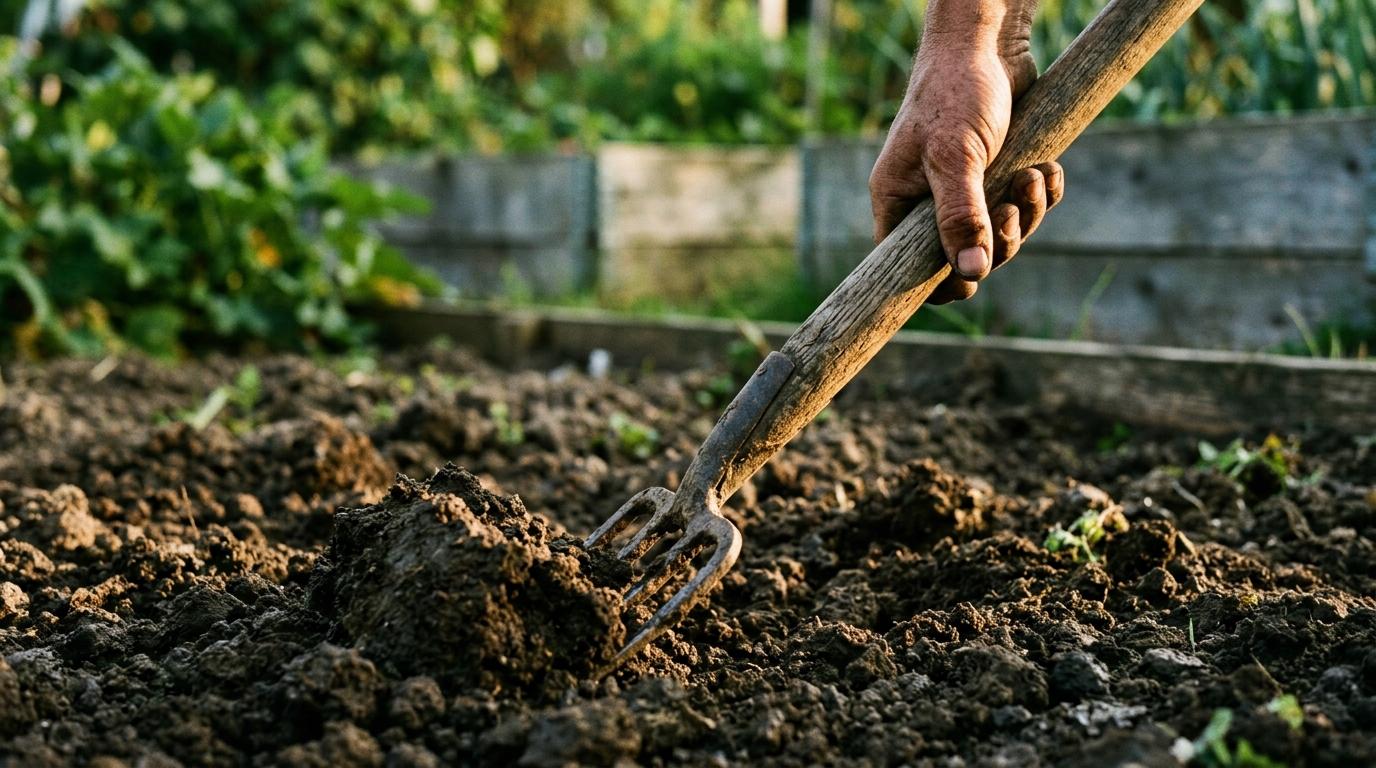
Your First Allotment
How to get an allotment, plan your plot, improve the soil, and grow your first full season of vegetables. The complete beginner's guide to UK allotment growing.
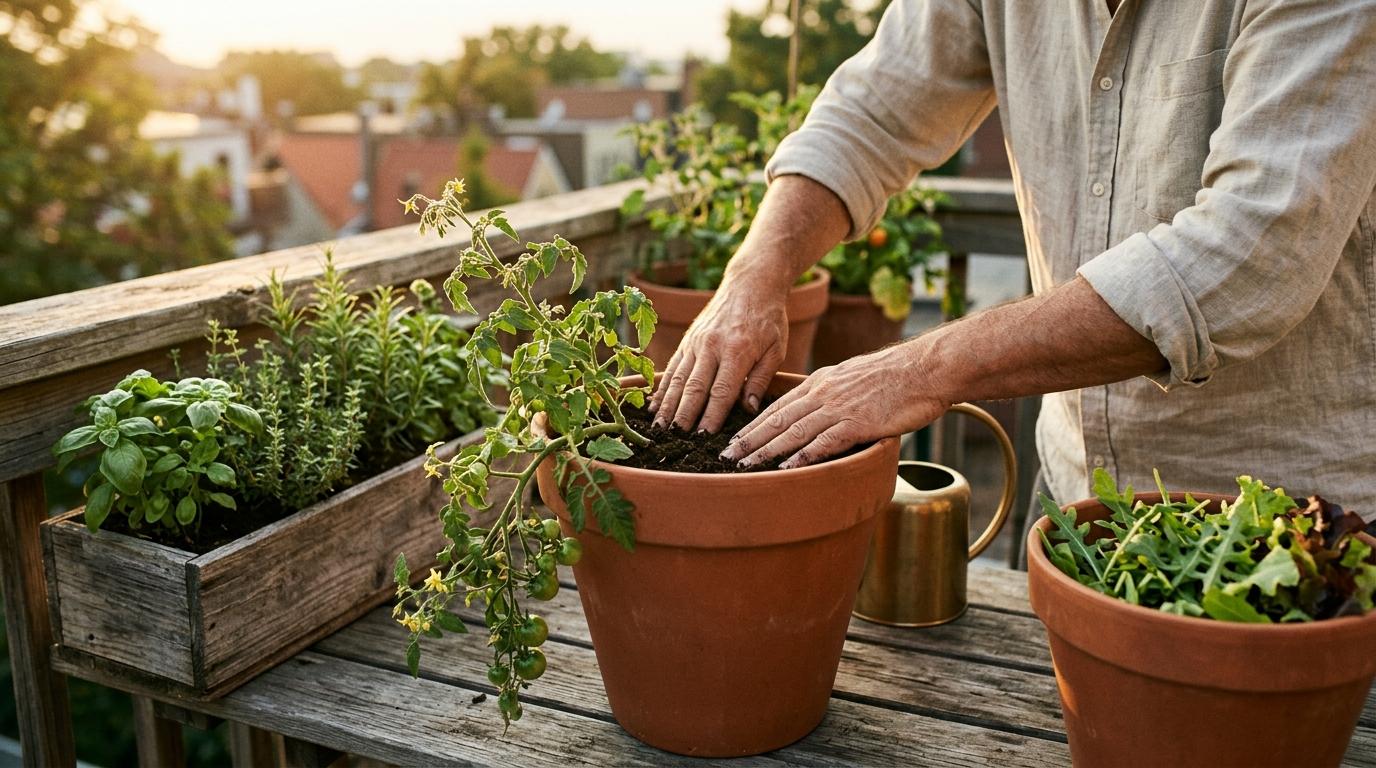
Balcony and Container Gardening
Grow food and flowers on a balcony, roof terrace, or patio. Container selection, compost, watering, and what works in small spaces.
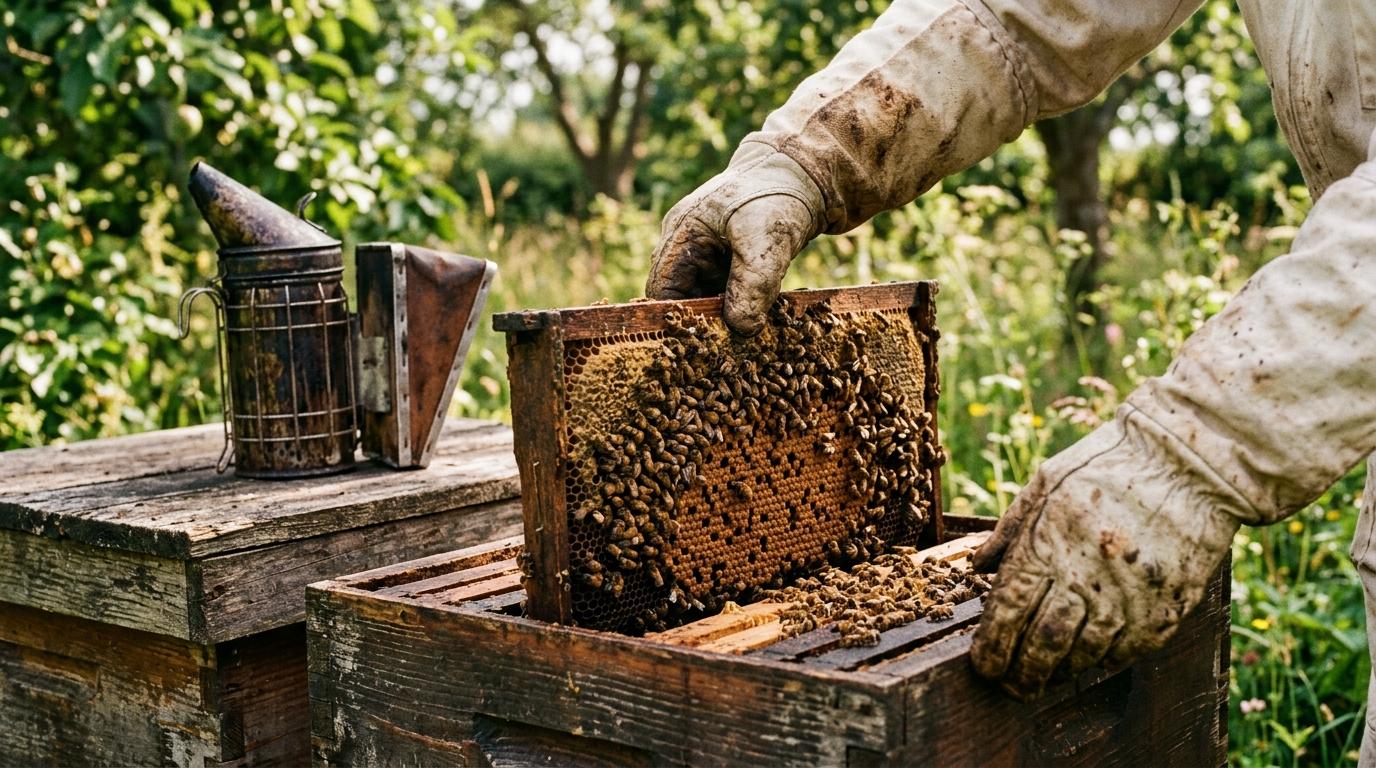
Colony Management and Bee Health
Inspecting and managing a honeybee colony: the seven-point frame check, swarm control, varroa and the notifiable foul broods, honey handling and the law. Preparation for the BBKA Basic Assessment.