Getting started
An allotment is a rented plot of land, typically owned by your local council, where you grow fruit and vegetables for yourself and your family. The tradition goes back to the Enclosure Acts and was formalised by the Allotments Act 1908, which obliged councils to provide plots if residents demanded them. There are around 330,000 allotment plots in England alone, and demand has outpaced supply for decades.
How allotments work in the UK
Most allotments are let by local councils, though some are run by private associations or charities. Rents are deliberately kept low, typically £50–100 per year for a standard plot, because the legal framework treats allotments as a social good, not a commercial one.
Plot sizes are measured in rods (also called poles or perches), an old unit equal to 5.029 metres. The standard allotment is 10 rods, roughly 250 square metres, about the size of a doubles tennis court. Many councils now offer half plots of 5 rods, which is the better starting point for a beginner. Five rods is still enough to grow courgettes, beans, potatoes, salad, chard, and kale through a full season.
To get on the waiting list, contact your local council's parks or leisure department; search "[your borough] allotment waiting list". In cities, waits of two to five years are common. Register with every council whose boundaries you can reasonably reach. The National Allotment Society (nsalg.org.uk) maintains a directory of sites and can advise on your rights as a tenant if you run into difficulties.
Ask about surrendered plots
Councils rarely advertise when a plot comes up mid-season. Ring the allotment office every few months and ask directly; a proactive call often gets you a plot years ahead of your official waiting list position.
When you take on a plot, do a quick inspection with the site manager before signing. Note any rubbish, old structures, perennial weeds like bindweed or couch grass, and whether there's mains water nearby. A neglected plot isn't a dealbreaker; soil improves fast. Knowing what you're inheriting helps you plan.
Your essential tool kit
You don't need much to start. The following seven tools cover every task on an allotment for the first several years. Buy secondhand where you can; car boot sales and Facebook Marketplace often have solid steel tools for a few pounds each. Avoid lightweight aluminium handles on digging tools: they flex and snap under load.
Spade
£30–60 new, £5–15 secondhandYour most-used tool. Used for digging beds, lifting root vegetables, turning compost, and cutting edges. A border spade (slightly smaller blade) is easier to use all day than a full-size digging spade.
Affiliate link. We may earn a small commission.
Garden fork
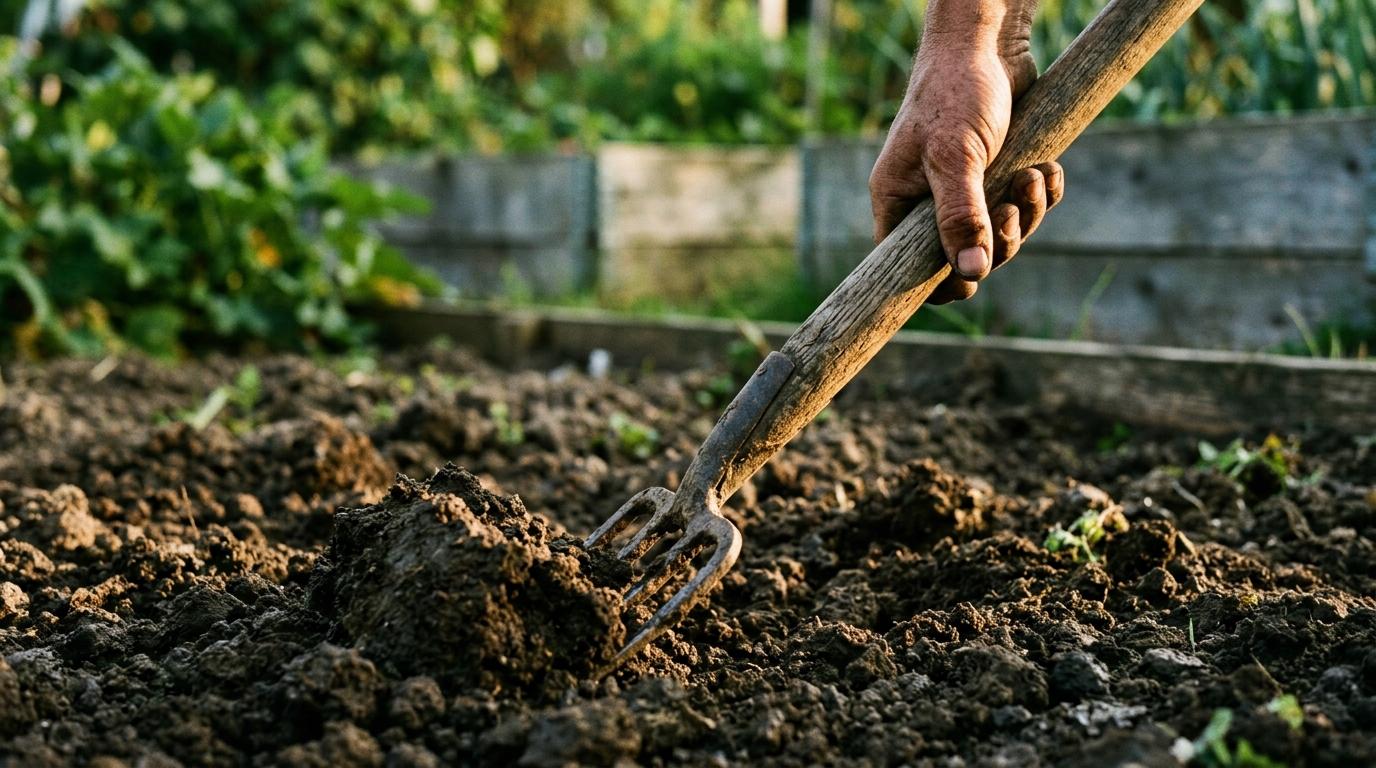
£30–55 new, £5–15 secondhandEssential for breaking up compacted ground, working compost into beds, and lifting root crops without slicing them. Four tines penetrate clay soil where a spade bounces off.
Affiliate link. We may earn a small commission.
Hoe
£15–35 new, £3–10 secondhandA Dutch or draw hoe lets you weed standing up, slicing weed seedlings just below the surface. Use it weekly on bare soil between rows and you'll almost eliminate hand weeding. The most time-saving tool on the plot.
Affiliate link. We may earn a small commission.
Trowel
£8–20 new, £1–5 secondhandFor planting out seedlings, transplanting, dibbing holes, and close work between established plants. A stainless steel trowel with a comfortable rubber grip will last decades.
Affiliate link. We may earn a small commission.
Rake
£15–30 new, £3–8 secondhandLevels soil before sowing, breaks up clods after digging, and draws seed drills. Also useful for gathering leaves and clearing debris. A standard 12-tine steel rake covers most jobs.
Affiliate link. We may earn a small commission.
Watering can
£10–25 newA 9-litre can with a fine rose head for seedlings and a coarser rose for established plants. Metal cans last longer than plastic but are heavier when full. You will make more trips than you expect in a dry June.
Affiliate link. We may earn a small commission.
Kneeler
£10–30 newSpending hours kneeling on damp soil destroys your knees over a season. A foam kneeler or hinged garden kneeler-seat that doubles as a low stool is worth every penny by week three.
Affiliate link. We may earn a small commission.
Where to buy tools
- Spear & Jackson: UK manufacturer making solid steel tools since 1760. Available at most hardware shops and online. Lifetime guarantee on many ranges.
- Bulldog Tools: Premium UK-made tools, particularly good forks and spades. Worth the extra cost if you plan to use them for decades.
- Screwfix / Toolstation: Good budget-to-mid range tools. Useful for replacing handles or picking up a spare hoe cheaply.
- Facebook Marketplace / Gumtree: Search for old Bulldog, Spear & Jackson, or Chillington tools. Quality steel from the 1970s–90s often outperforms new budget tools.
- RHS Shop: Curated range of quality tools, seed, and accessories. Proceeds support the RHS.
Buy the best tools you can afford second-hand rather than cheap tools new. A £5 Bulldog fork from a car boot sale will outlast a £20 own-brand fork from a supermarket.
Some links are affiliate links. Airgap.life may earn a small commission at no extra cost to you.
The one thing most beginners skip
Get a water butt or two as soon as you can. Mains water on allotment sites is often shared between dozens of plots on a single tap, and in a dry July there will be queues. A 200-litre butt fed from your shed roof fills surprisingly fast and costs nothing to run.
Community
Reader tips
No tips yet. Be the first to share what worked for you.
Share a tip
Sign in to share what worked for you.
Same category
What to learn next
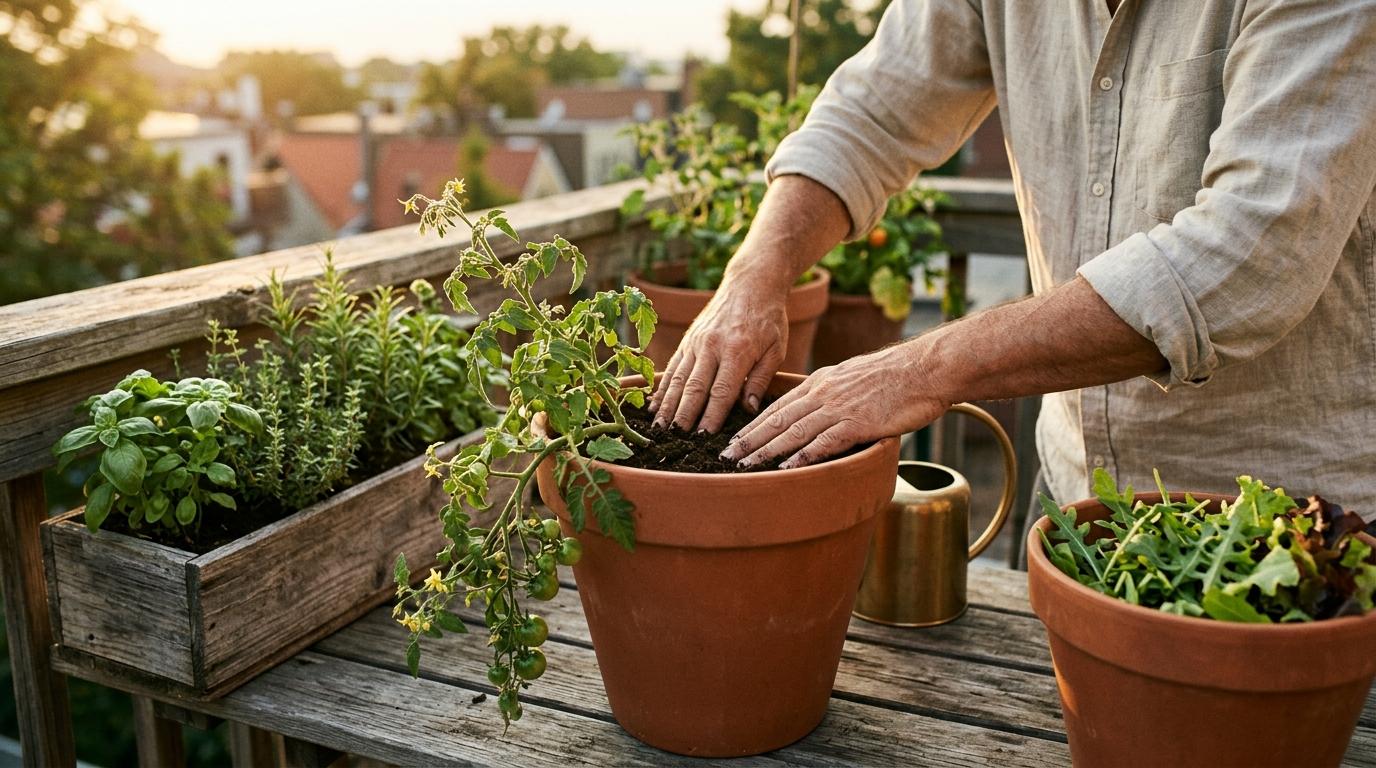
Balcony and Container Gardening
Grow food and flowers on a balcony, roof terrace, or patio. Container selection, compost, watering, and what works in small spaces.
Colony Management and Bee Health
Inspecting and managing a honeybee colony: the seven-point frame check, swarm control, varroa and the notifiable foul broods, honey handling and the law. Preparation for the BBKA Basic Assessment.
Composting
Learn to make great compost: bin types, the browns and greens balance, hot and cold methods, troubleshooting, and using the finished product across the garden.
Side quests