The basics: what compost is and what it needs
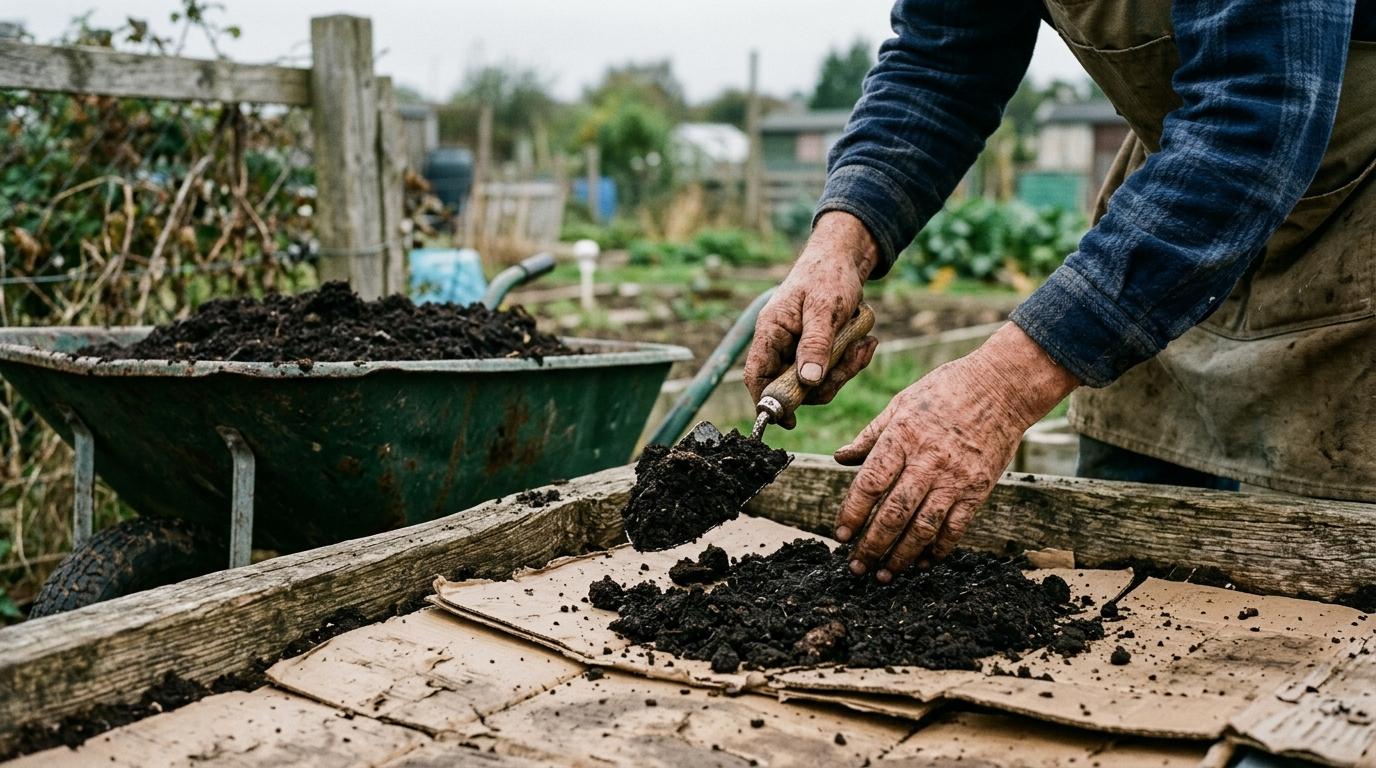
Compost is the product of controlled decomposition. Bacteria and fungi break down organic material (garden waste, kitchen scraps, cardboard) into a dark, crumbly substance that improves soil structure, feeds soil life, suppresses weeds, and gradually releases nutrients in forms plants can use. It's the most valuable material a gardener can produce, and it costs nothing beyond time and material you'd otherwise throw away.
The process isn't difficult. Microbes decompose organic matter whether you intervene or not: the heap in the corner that's been sitting untouched for two years is still composting, just slowly. Active composting is about giving those microbes the conditions to work faster.
What microbes need
Carbon and nitrogen in roughly the right ratio. Carbon (the 'browns') provides energy; nitrogen (the 'greens') provides protein for growth. The optimal C:N ratio for fast composting is roughly 25:1 by weight. In practice, that means roughly equal volumes of browns and greens by bulk. Too much nitrogen and the heap goes slimy and smells of ammonia. Too much carbon and it dries out and takes forever.
Moisture: the heap should feel like a wrung-out sponge. Squeeze a handful and a few drops of water should appear. Too dry and microbial activity stops. Too wet and anaerobic bacteria take over, and they smell.
Air: aerobic bacteria (the fast, odourless composters) need oxygen. A heap that becomes compacted or waterlogged goes anaerobic. Turning it, even occasionally, reintroduces oxygen and speeds the process significantly.
Bin types
A simple open heap: works perfectly well for garden waste, requires no investment, takes up space. Best for gardeners with a lot of material.
Plastic dalek bin: the council-subsidised standard. Retains some heat and moisture, protects from pests. Fine for small gardens and kitchen waste mixed with garden material. Not ideal for large volumes.
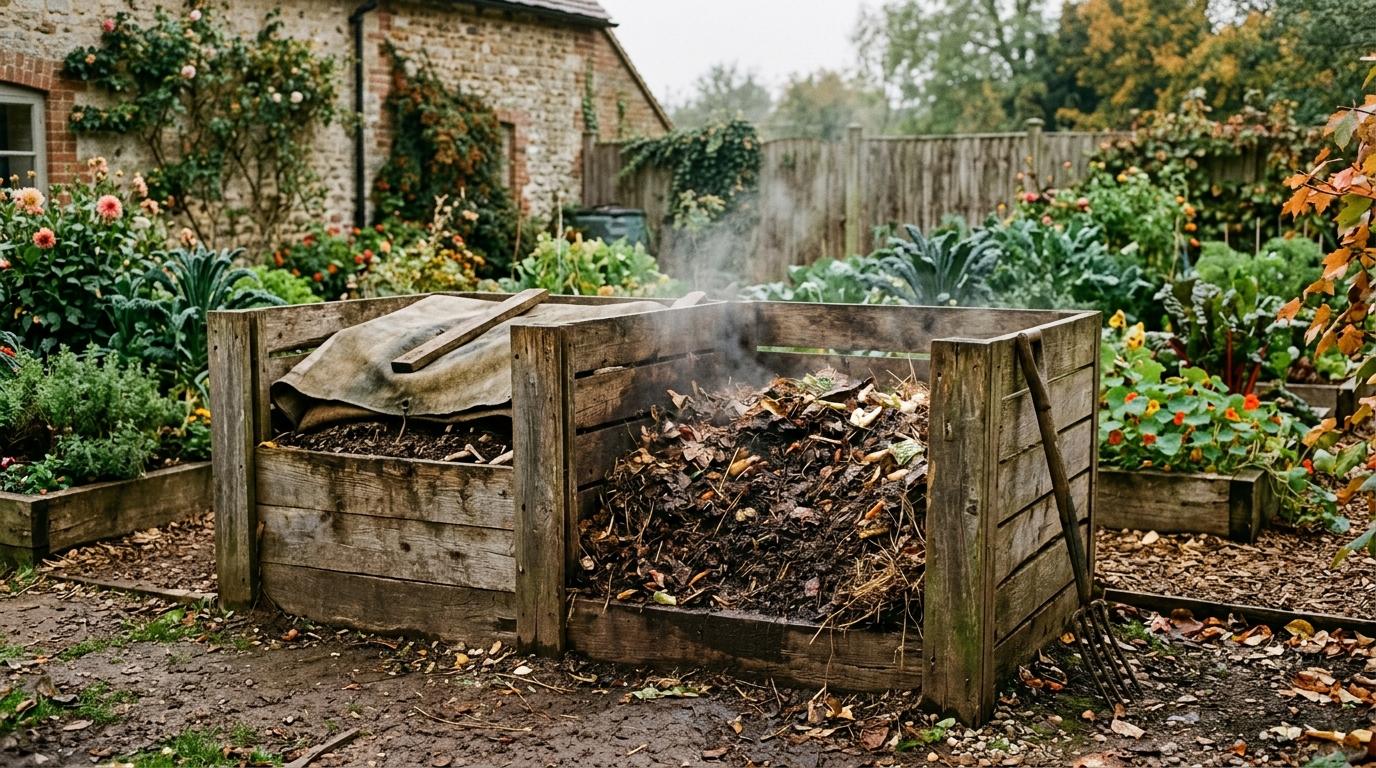
Wooden pallet bay: DIY from four pallets. Large volume, good aeration through the gaps, cheap or free. Ideal for gardens generating significant material. Build two or three bays: one filling, one maturing, one finished.
Hotbin or similar insulated bin: accelerated hot composting in a well-insulated unit. Can process cooked food and meat (which open heaps shouldn't take). Produces finished compost in 30–90 days rather than 3–6 months. Higher initial cost but considerably faster.
Wooden compost bin (240–330L)
£25–£60Slatted sides allow airflow; natural material regulates moisture better than plastic; larger volume than a dalek bin. Most wooden bins are open at the bottom, allowing soil contact and worm ingress from below, which accelerates decomposition.
Affiliate link. We may earn a small commission.
Start with two bins if you can
One bin is always half-full of material at different stages. Two bins let you fill one completely, close it off, and wait while it matures, while the second catches new material. The most common composting frustration ('it never seems to be ready') comes from continuously adding to a single bin.
Community
Reader tips
No tips yet. Be the first to share what worked for you.
Share a tip
Sign in to share what worked for you.
Same category
What to learn next
Your First Allotment
How to get an allotment, plan your plot, improve the soil, and grow your first full season of vegetables. The complete beginner's guide to UK allotment growing.
Balcony and Container Gardening
Grow food and flowers on a balcony, roof terrace, or patio. Container selection, compost, watering, and what works in small spaces.
Colony Management and Bee Health
Inspecting and managing a honeybee colony: the seven-point frame check, swarm control, varroa and the notifiable foul broods, honey handling and the law. Preparation for the BBKA Basic Assessment.
Side quests