The machine, part by part
if you did the practical start course, you can already thread a machine and sew a straight seam. this course is about what is happening while you do, because the difference between someone who sews and someone who fights their machine is that the first one knows what each part is for. a sewing machine is not a mystery box. it is about eight parts that matter, doing the same dance five hundred times a minute.
you do not need a new machine for this course. the one in the cupboard, the one from the charity shop, the hand-me-down: almost any working machine from the last forty years can do everything taught here. if you are buying, buy boring and mechanical.
A basic mechanical machine (if you need one)
£120–200 new, £40–80 second-handBrother and Janome entry-level mechanical machines are the reliable choices: metal where it matters, simple to service, parts everywhere. you want a machine with adjustable stitch length and width, a zigzag stitch, and a one-step buttonhole. computerised extras add price, not capability, at this stage
Affiliate link. We may earn a small commission.
Universal needle assortment
£4–8a mixed pack of sizes 70/10 to 100/16 plus a pack of ballpoints for knits. needles are the most misunderstood consumable in sewing: they blunt, they bend microscopically, and they cause most of the faults people blame on the machine. buy plenty and change them often
Affiliate link. We may earn a small commission.
Bobbins that match your machine
£3–6 for tenbobbins look interchangeable and are not. a class 15 bobbin in a machine built for 66s sits a fraction of a millimetre wrong and causes tension faults nobody can diagnose. check your manual or measure an original, and buy a box of the right ones
Affiliate link. We may earn a small commission.
Good thread
£2–3 a reelbargain-bin thread is spun short-fibre, sheds lint into the machine and snaps under tension. a branded all-purpose polyester such as Gütermann Sew-All runs cleaner, sews stronger, and costs pennies more per project. cheap thread is the second most common cause of faults after the needle
Affiliate link. We may earn a small commission.
Lint brush, seam ripper, small screwdriver
£4–8 for the setthe maintenance kit, and most machines include all three in the accessory tray. if yours are missing they cost almost nothing to replace, and the lint brush earns its place every week
Affiliate link. We may earn a small commission.
Find your manual before anything else
every machine differs in small ways this course cannot cover: bobbin orientation, tension dial range, oiling points. manuals for almost every machine ever made are free online as PDFs. search the model number on the front or side of the machine, download it, and keep it with the machine. ten minutes now, repaid for years.
Thread, tension, needles
The stitch, honestly explained
a machine stitch is two threads locking around each other in the middle of the fabric. the needle carries the top thread down through the cloth. as the needle rises a few millimetres, the thread bulges into a small loop, and a rotating hook under the plate catches that loop and swings it right around the bobbin. the two threads are now interlinked, and the take-up lever snatches the knot tight so it settles inside the fabric layers.
everything about tension follows from that picture. a lockstitch looks right when the knot sits in the middle, invisible from both sides. if the knot is being pulled to the top, the top thread is winning: its tension is too high, or the bobbin's is too low. loops underneath mean the opposite.
Tension without fear
the tension dial adjusts spring pressure on two discs the top thread runs between. that is all it is. middle of the range (usually 4 on a dial of 0–9) suits most fabric with matching thread top and bottom. test on a scrap folded to two layers before every project, look at both sides, and adjust one number at a time.
the rule that saves the most grief: tension faults are nearly always threading faults. before touching the dial, rethread completely, top and bobbin, with the presser foot up. the foot lever opens and closes the tension discs, and a machine threaded with the foot down has its top thread lying uselessly on top of closed discs. this one mistake accounts for more abandoned machines than any mechanical failure.
Leave the bobbin screw alone
the bobbin case has a tiny tension screw. it was set at the factory and it is right. generations of machines have been ruined by quarter-turns of that screw chasing a problem that lived in the top threading. adjust it only if you have ruled out everything else, and mark its starting position first.
Needles are consumables
the needle is the cheapest part of the machine and causes the most faults. sizes run 70/10 (fine, for lawn and lining) through 80/12 (the everyday size), 90/14 (denim weight, canvas, two layers of towelling) to 100/16 (heavy canvas, upholstery weight). the bigger number is the shaft diameter in hundredths of a millimetre; too thin a needle for the cloth deflects and snaps, too thick punches visible holes.
point type matters as much as size. universal points handle woven fabric. knits need a ballpoint, because a sharp point cuts the loops of the knit and the fabric ladders like tights. jeans needles are reinforced for dense weaves. change the needle after every project, or sooner if you hear a punching sound on entry: that is bluntness, audible.
The troubleshooting clinic
Care and mastery
Community
Reader tips
No tips yet. Be the first to share what worked for you.
Share a tip
Sign in to share what worked for you.
Same category
What to learn next
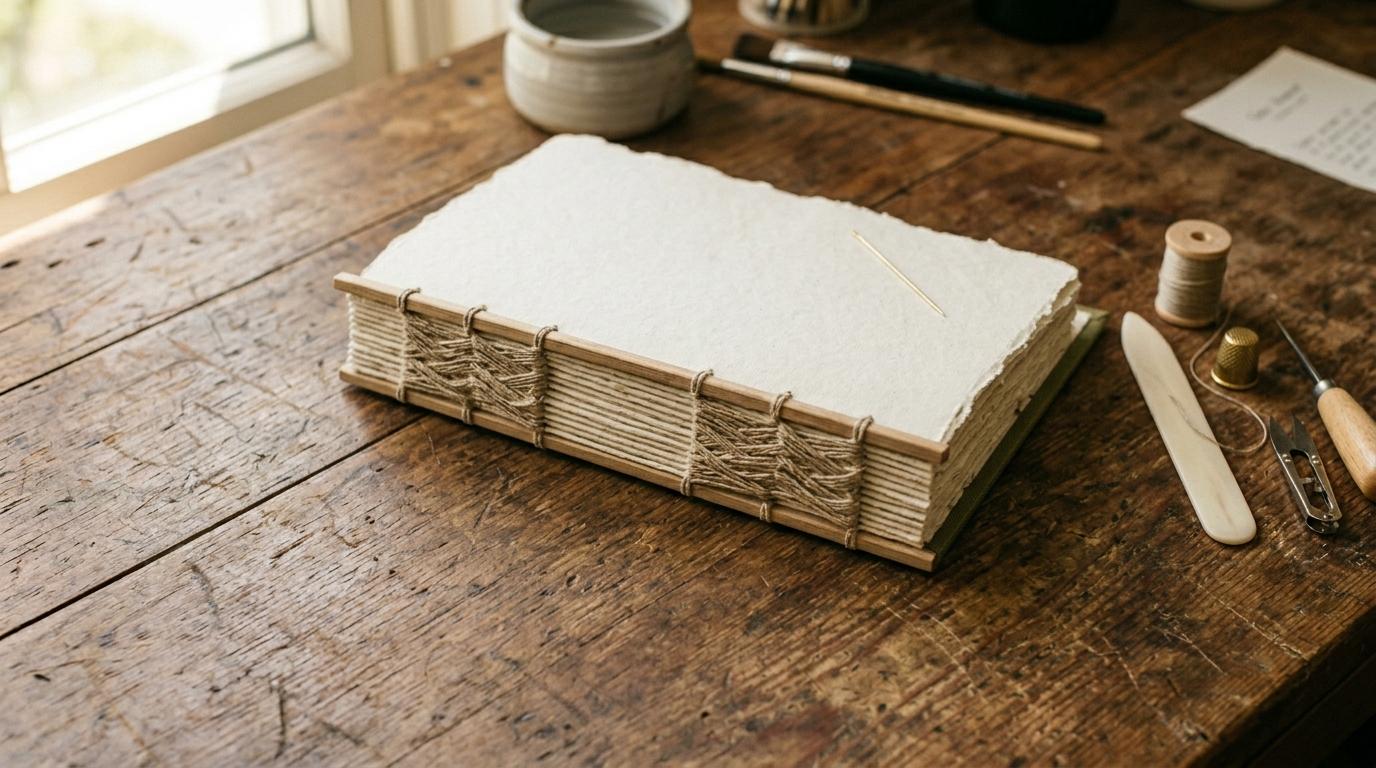
Bookbinding: Your First Journal
Fold, sew, and case a hardback journal by hand. The Coptic stitch and case binding are the two foundational methods, both achievable in a single afternoon session.
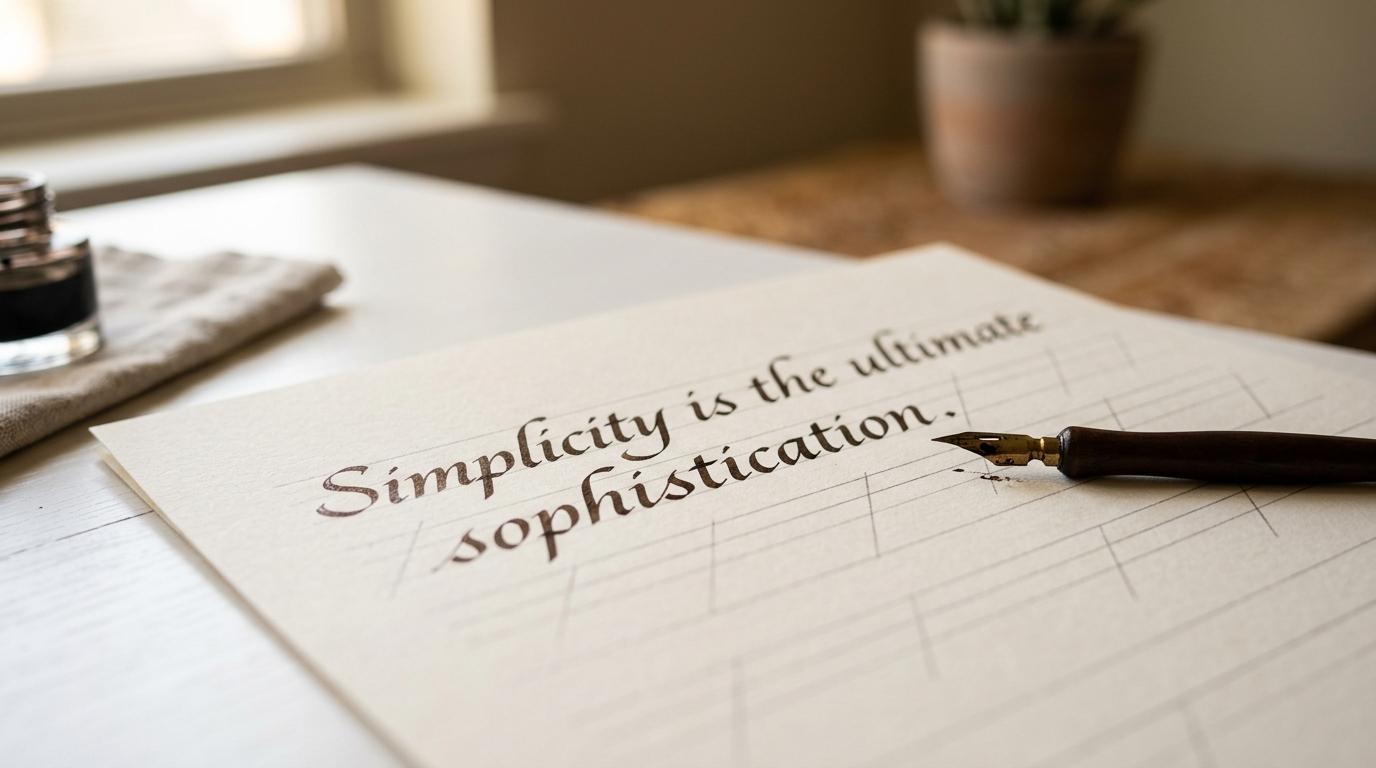
Calligraphy: The Foundational Script
Italic script with a pointed nib. The foundational Western calligraphy hand: clear, elegant, and achievable. Every lettering tradition descends from this one.

Candle Making
Make container candles with soy wax, fragrance oil, and cotton wicks. Published in late October, six weeks before Christmas: enough time to make gifts.