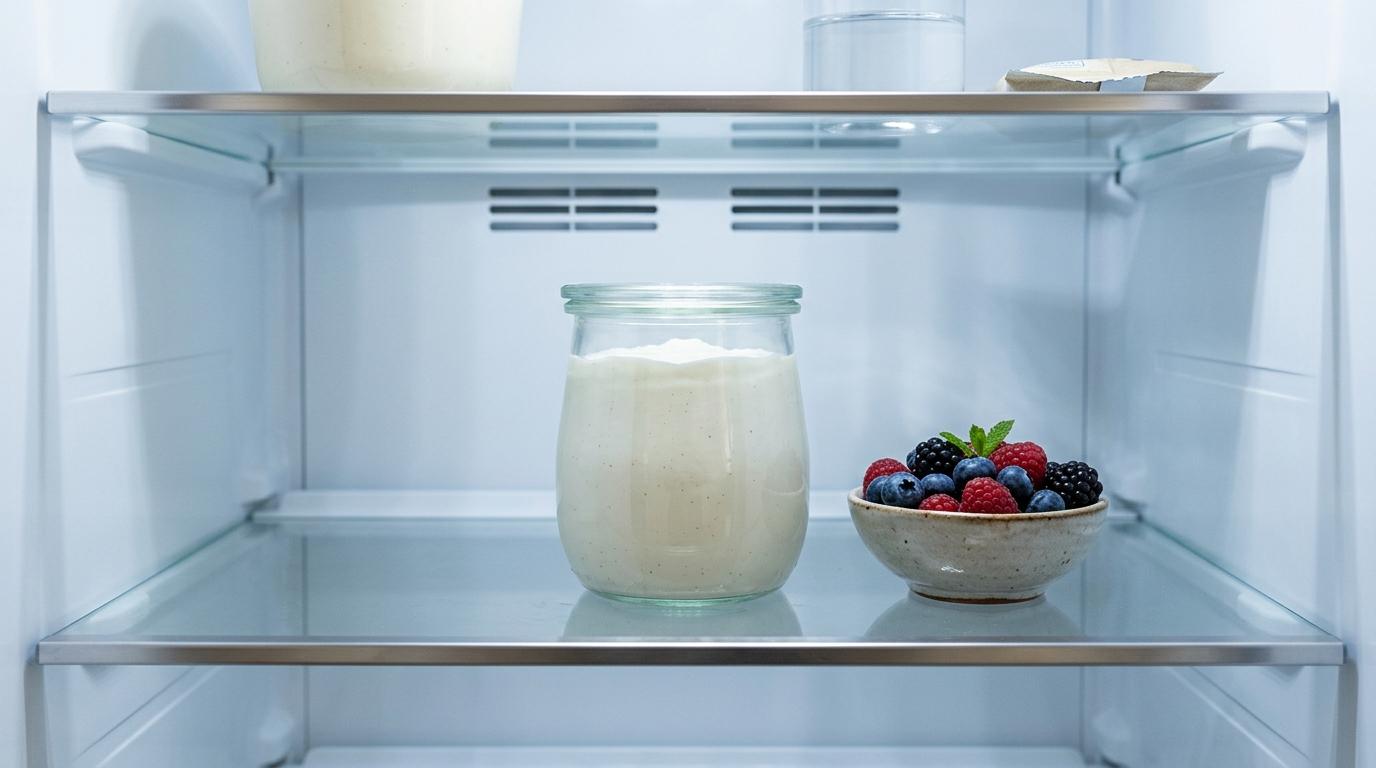
What you need to get started
Yoghurt requires almost no equipment. The barrier isn't kit. It's not knowing the two temperatures that matter. Get those right and every batch works.
Equipment
Digital thermometer
£5–10The single essential tool. You need to hit 82°C on the way up (to scald the milk) and 43–45°C on the way down (to add the culture). Eye-balling it doesn't work reliably. A cheap probe thermometer (£5–10) is all you need. It will pay for itself on your first batch.
Affiliate link. We may earn a small commission.
Heavy-based saucepan
Already in most kitchensMilk scorches easily on thin pans. A heavy base distributes heat evenly. Any decent saucepan works; a 2-litre capacity is right for a 1-litre batch.
Glass jar or bowl with a lid (1 litre)
£2–8Glass retains heat well during incubation, which helps the culture work. A Kilner jar, a large jam jar, or a lidded pyrex bowl all work well. Avoid reactive metals.
Affiliate link. We may earn a small commission.
Something to incubate in
Free (oven light method) or £15–25 for a yoghurt makerThe culture needs 6–12 hours at 38–43°C. Options: an oven with just the light on (typically holds 35–40°C, check with your thermometer), a wide-mouth thermos flask, a slow cooker set to warm, or a jar wrapped in a towel inside a cool bag. A dedicated yoghurt maker (£15–25) is the most convenient but entirely optional.
Affiliate link. We may earn a small commission.
Ingredients
What to buy
- Whole milk: 1 litre: Full-fat gives the thickest, creamiest result. Semi-skimmed works but produces a thinner yoghurt. Skimmed milk produces a watery result. Fresh pasteurised milk is ideal. UHT milk works in a pinch (the proteins behave slightly differently, but it sets).
- Live plain yoghurt: 2 tablespoons: This is your starter culture. It must say 'live cultures' or 'live bacteria' on the label. Any plain live yoghurt works. A supermarket own-brand is fine. Greek yoghurt works well. Avoid flavoured or heat-treated yoghurts (they've killed the bacteria). Once you've made your first batch, save a spoonful to start the next one.
Cost per litre: roughly 80p–£1.20 for whole milk. Compare to £2–4 for a similar-quality supermarket yoghurt.
Some links are affiliate links. Airgap.life may earn a small commission at no extra cost to you.
Your starter is your only ongoing cost
After your first batch, save 2 tablespoons before you eat it. That becomes the starter for the next batch. You can perpetuate the same culture indefinitely. Re-culturing every week keeps it active. The bacteria are alive and multiplying; you're just redirecting them.
Community
Reader tips
No tips yet. Be the first to share what worked for you.
Share a tip
Sign in to share what worked for you.
Same category
What to learn next
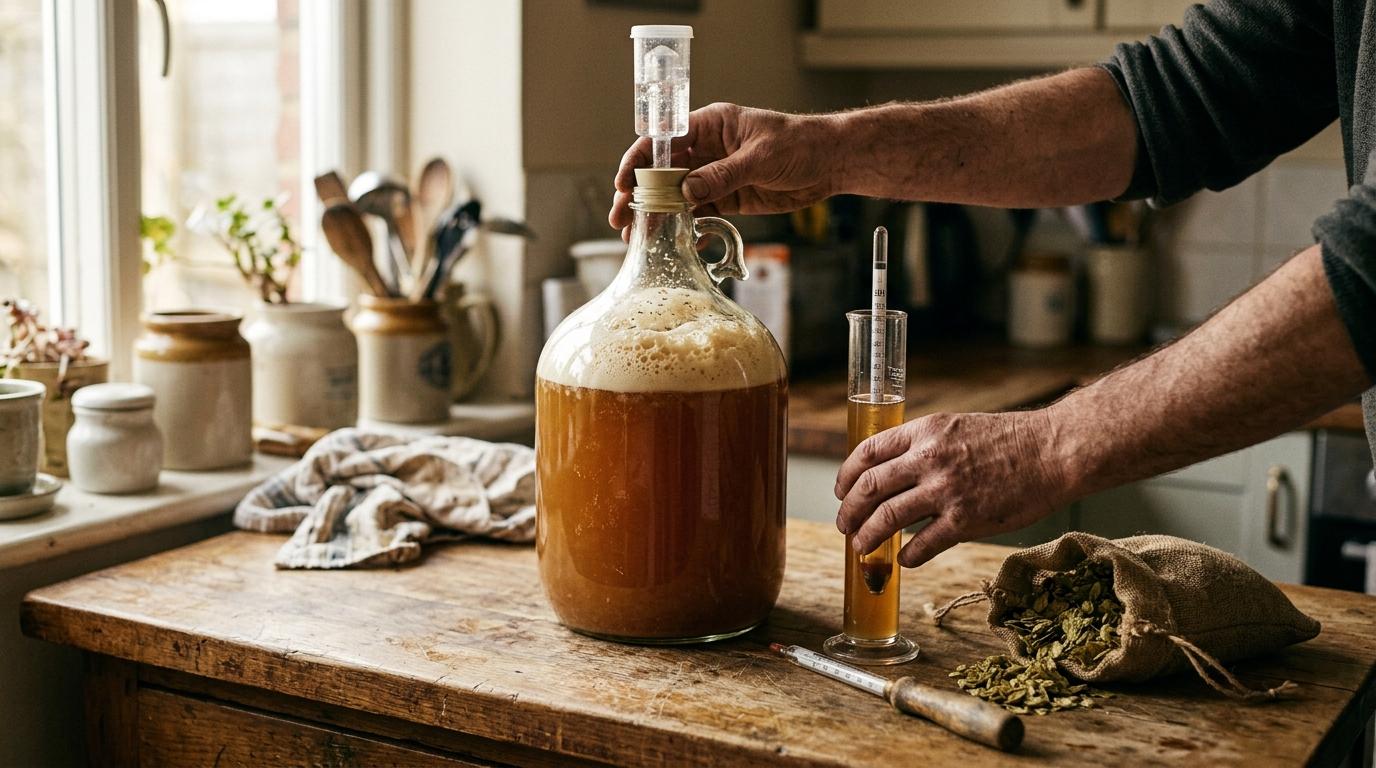
Home Beer Brewing
Brew your first batch of real ale at home. Equipment, ingredients, the brewing process, fermentation, and bottling, step by step.
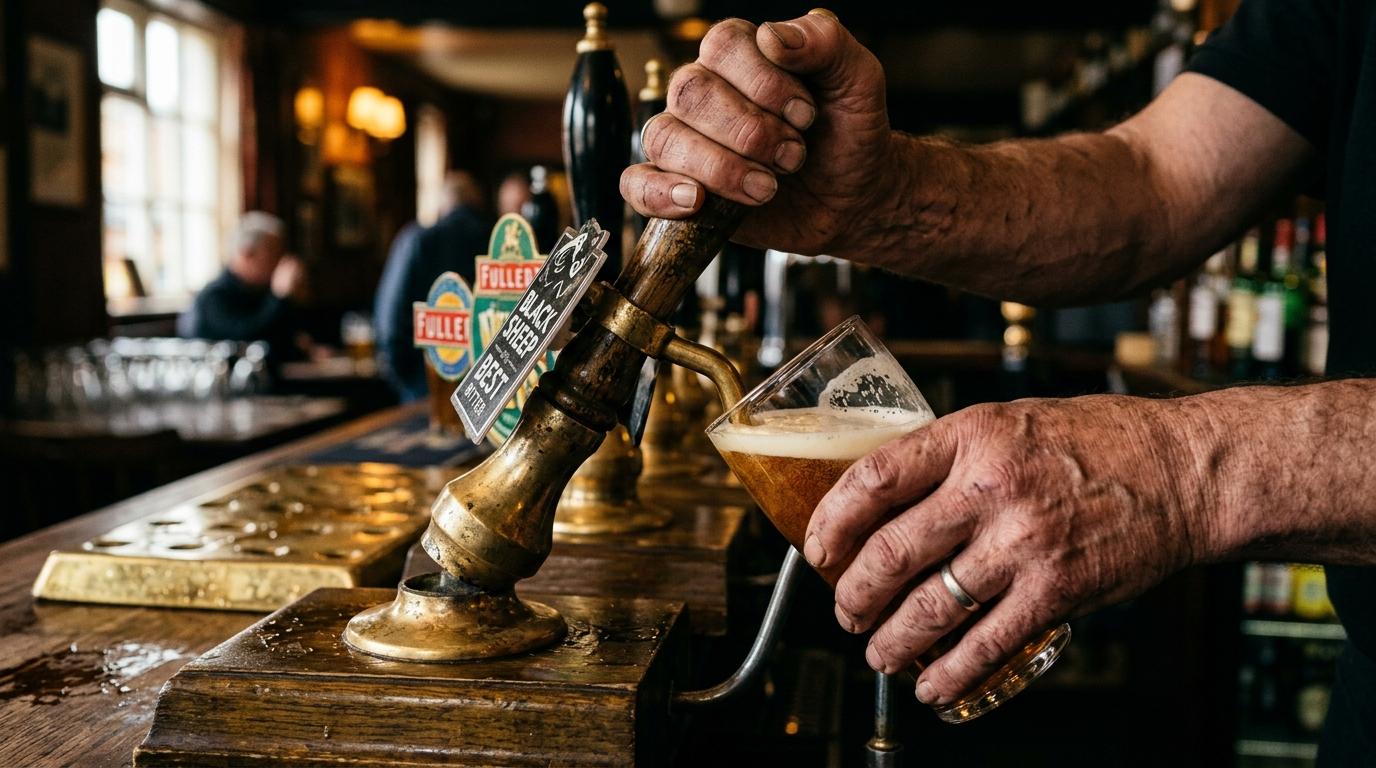
Beer: Styles, Serving and Off-Flavours
Beer styles, storage and draught service, glassware, pouring, and the common off-flavours and their causes. Preparation for the Cicerone Certified Beer Server (Level 1) exam.
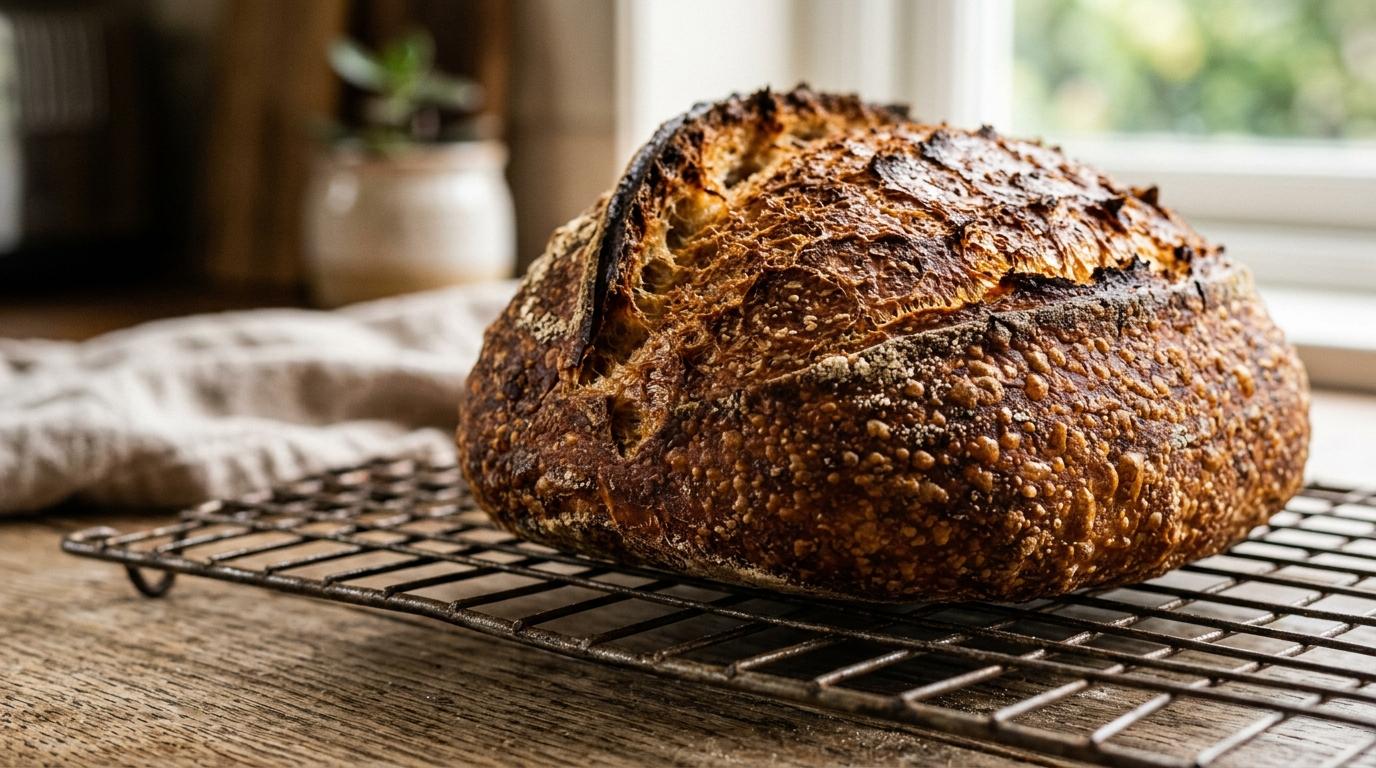
Bread Baking from Scratch
Your first proper loaf in an afternoon. Flour, water, salt, time, and the foundations of a skill that will feed people for life.