What you need to get started
The single biggest improvement in coffee quality comes not from equipment but from grind: freshly ground coffee, ground just before brewing, is categorically different from pre-ground coffee that's been sitting in a bag for weeks. Start there.
A burr grinder (manual or electric)
£25–45 for a manual burr grinder; £120–200 for entry-level electricBurr grinders produce a consistent particle size. Blade grinders chop unevenly, producing a mix of powder and chunks that extracts inconsistently. A manual burr grinder (Hario Mini Mill, Timemore C2) is cheaper and quieter than electric; an electric burr grinder (Baratza Encore, Fellow Ode) is faster. Either makes a marked difference to your coffee.
Affiliate link. We may earn a small commission.
A V60 pour-over dripper and papers
£10–30 for the V60 and papersThe V60 (Hario) is the most taught and most forgiving manual brew method. Produces clean, clear, complex coffee. Paper filters are cheap (£3–5 for 100). The plastic V60 is £10; the ceramic version retains heat better but costs £20–30. The method is transferable to any cone dripper.
Affiliate link. We may earn a small commission.
A gooseneck kettle
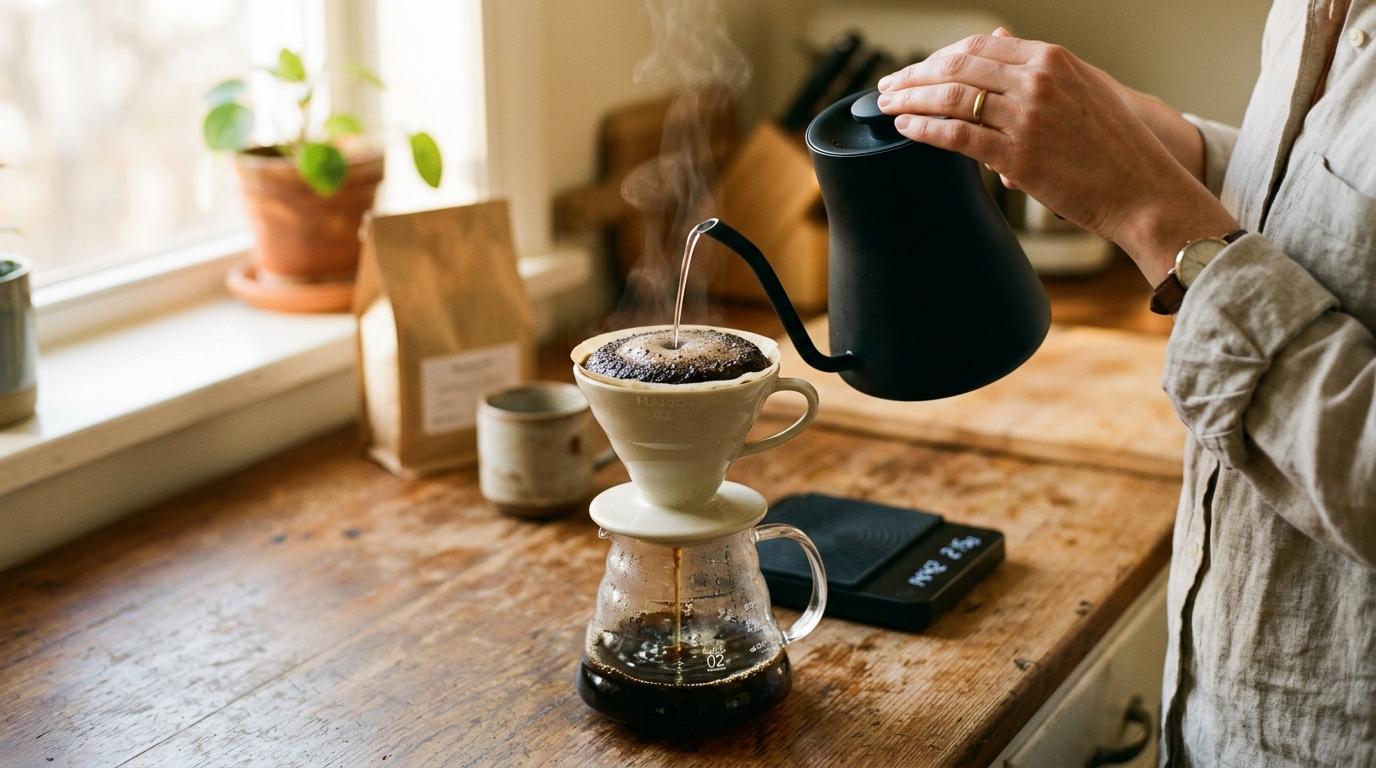
£15–25 for a basic gooseneck; £50–90 for temperature-controlled electricPrecise control over water flow rate is essential for V60: you're pouring in a slow, steady spiral. A gooseneck (swan-neck) kettle makes this possible. An electric gooseneck with temperature control eliminates the boiling-then-waiting step. A standard kettle with a steady pour works in a pinch, but slowly.
Affiliate link. We may earn a small commission.
Digital scales (0.1g precision)
£8–20Coffee-to-water ratio is the second biggest variable after grind. The standard starting ratio is 60g coffee per litre of water (6%). Scales eliminate the guesswork of tablespoons and scoops, which vary widely by grind size. Kitchen scales work; a small, accurate set (0.1g) makes the margin finer.
Affiliate link. We may earn a small commission.
The coffee
What to buy and where
- Freshly roasted single origin beans: Look for a roast date on the bag (not a best-before date, a roast date). Coffee is best 7–21 days after roasting. A bag with no roast date is probably stale. Single origin lets you taste the actual flavour of the bean rather than a blend designed for consistency.
- Light to medium roast for filter: Dark roasts mask origin flavour with roast flavour (bitterness, smokiness). Light-medium roasts preserve the fruit, floral, and acidic notes specific to the bean's origin and variety.
- UK specialty roasters: Square Mile (London), Workshop (London), North Star (Leeds), Hasbean (Stafford), Origin (Cornwall), Dark Arts (London). Most offer subscriptions. All ship fresh.
Price difference between good specialty coffee and supermarket beans: approximately £2 per 250g bag. Per cup, the difference is pennies.
Some links are affiliate links. Airgap.life may earn a small commission at no extra cost to you.
Community
Reader tips
No tips yet. Be the first to share what worked for you.
Share a tip
Sign in to share what worked for you.
Same category
What to learn next
Home Beer Brewing
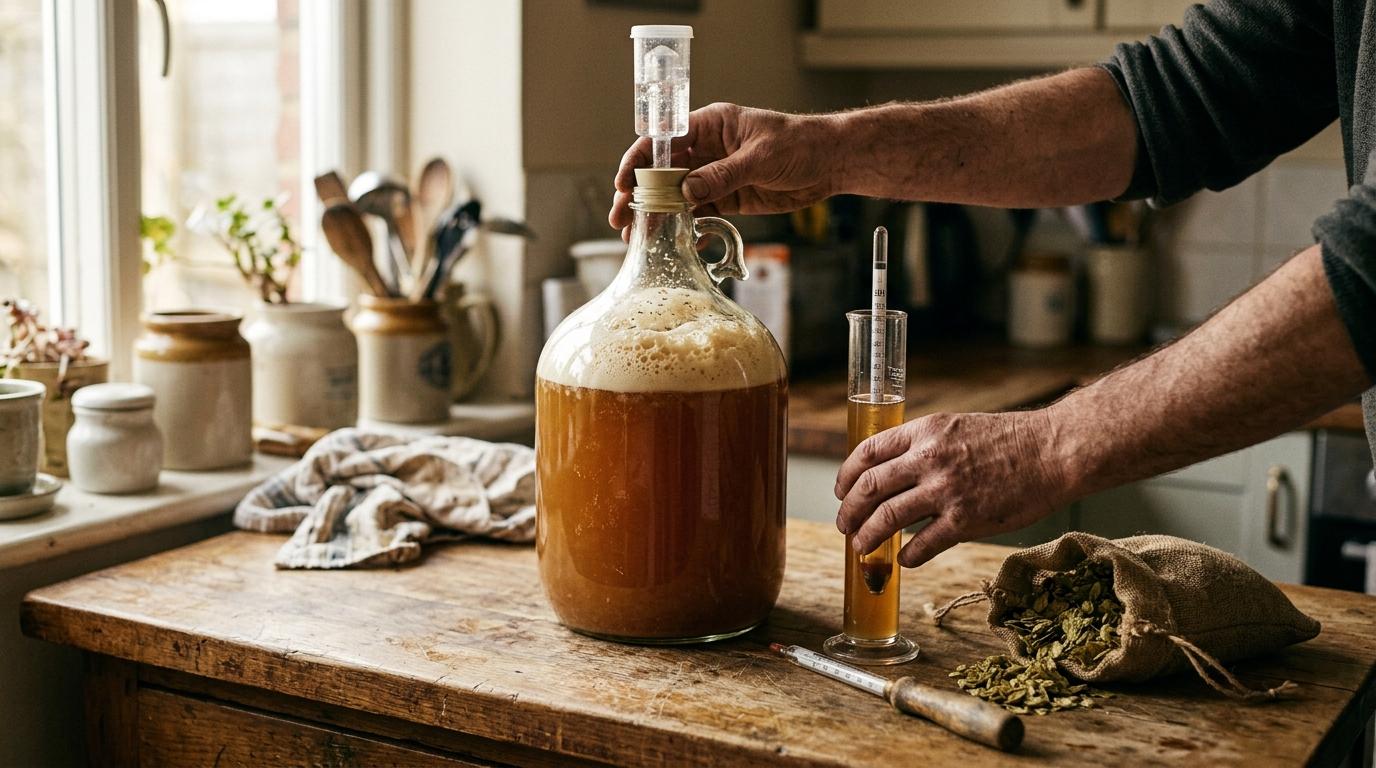
Brew your first batch of real ale at home. Equipment, ingredients, the brewing process, fermentation, and bottling, step by step.
Beer: Styles, Serving and Off-Flavours
Beer styles, storage and draught service, glassware, pouring, and the common off-flavours and their causes. Preparation for the Cicerone Certified Beer Server (Level 1) exam.
Bread Baking from Scratch
Your first proper loaf in an afternoon. Flour, water, salt, time, and the foundations of a skill that will feed people for life.
Side quests