What you need to get started
Fresh pasta requires very little. Two ingredients, two pieces of equipment. The skill is in the dough feel and the rolling technique, both learnable in a single session.
'00' flour (doppio zero)
£1.50–2.50 for 500g (makes 4 portions)Italian '00' flour is milled very finely from high-protein durum wheat. It makes a smooth, silky, extensible dough that rolls thin without tearing. Standard strong bread flour works as a substitute (produces a slightly chewier pasta), but '00' is the right choice for fresh pasta. Widely available in UK supermarkets (Tipo '00' or Pizza & Pasta flour).
Affiliate link. We may earn a small commission.
Eggs: large, free-range
£1.50–3 for 6 (you'll use 2 per batch)The classic Italian fresh pasta ratio: 100g flour per egg. The yolks provide fat (richness and golden colour) and protein (structure). Free-range eggs have richer, more orange yolks; the colour difference in the finished pasta is visible and beautiful.
Affiliate link. We may earn a small commission.
A rolling pin: long and thin
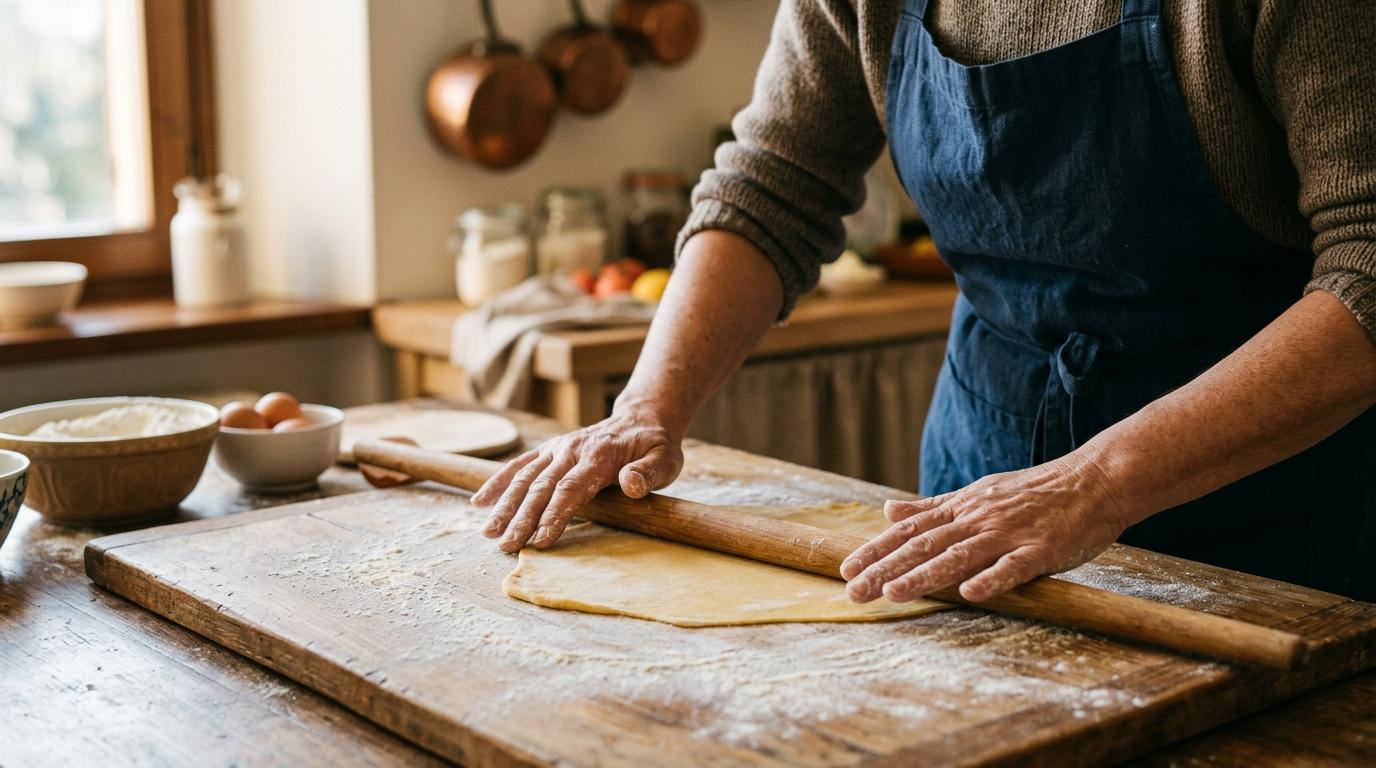
Already owned; or £5–15 for a mattarelloA long, thin French-style rolling pin (no handles) gives more control over pasta rolling than a standard handled rolling pin. You roll across the pasta using the centre of the pin, then work outward. An Italian mattarello (60–80cm, thin) is ideal. A long handled rolling pin works fine.
Affiliate link. We may earn a small commission.
A sharp knife or pasta wheel
Already ownedFor cutting tagliatelle, pappardelle, and pici from the rolled sheet. A sharp chef's knife, a pasta wheel (£3–8), or a pizza cutter. For ravioli: a pasta wheel for the edges and a pastry brush for the egg wash seal.
Affiliate link. We may earn a small commission.
The pasta machine question
A hand-cranked pasta machine (Atlas, Imperia) makes rolling faster and thinner more easily once you're making pasta regularly. But it's not necessary for a first batch. Rolling by hand teaches you more about the dough. Learn to roll by hand first; buy a machine when you're making pasta weekly.
The dough, the gluten, and why rest matters
What fresh pasta dough is
Fresh pasta dough is a high-protein flour hydrated with eggs. As the dough is kneaded, the proteins form gluten, the elastic network that allows the pasta to be rolled thin without tearing. The more you knead, the more developed the gluten, and the more elastic and extensible the dough.
After kneading, the dough must rest. Resting lets the gluten relax: a just-kneaded dough springs back when you try to roll it thin. After 30 minutes at room temperature (wrapped), the dough rolls out smoothly and compliantly. Skip the rest and rolling becomes a battle.
Types of fresh pasta dough
Egg pasta (all'uovo): for most fresh pasta
100g '00' flour + 1 large egg. Rich, golden, slightly tender. The standard for tagliatelle, pappardelle, lasagne, ravioli, and most Northern Italian pasta.
Egg yolk pasta: for special occasions
Replace whole eggs with egg yolks only (approximately 5 yolks per 100g flour). Produces a much richer, golden, silky dough, almost pasta from a restaurant. Worth making for special meals.
Semolina and water (pasta al semola): for extruded pasta
Durum wheat semolina + water, no eggs. Used for orecchiette, cavatelli, and pici rolled by hand. Stiffer dough, different texture, coarser surface that holds sauces. A different skill set from egg pasta.
Make your first batch: tagliatelle for two
Ingredients: 200g '00' flour · 2 large eggs · pinch of salt.
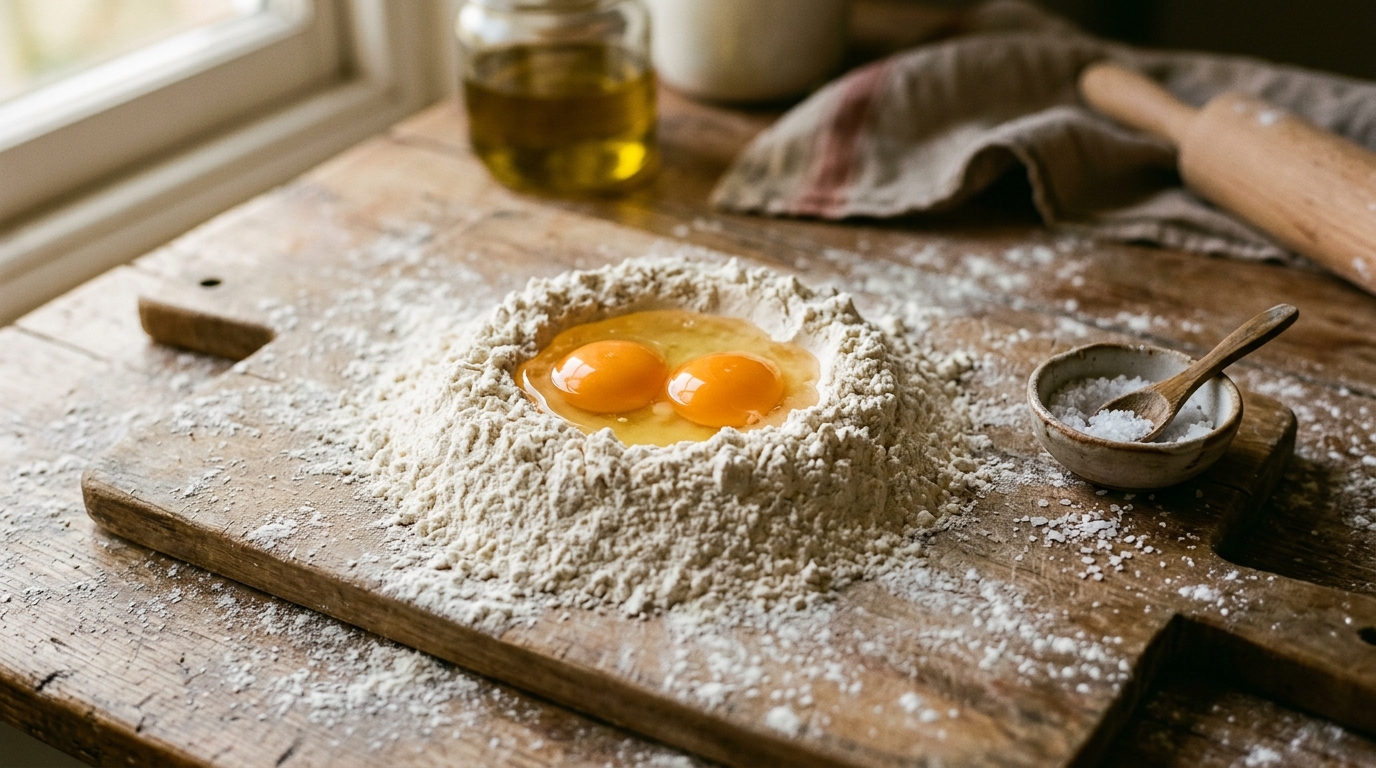
Make the well: Mound 200g '00' flour on a clean work surface. Make a well in the centre wide enough to hold two eggs without spilling. Crack both eggs into the well. Add a pinch of salt. The well must be deep enough. If the eggs break through, catch them with your hands and reform the well.
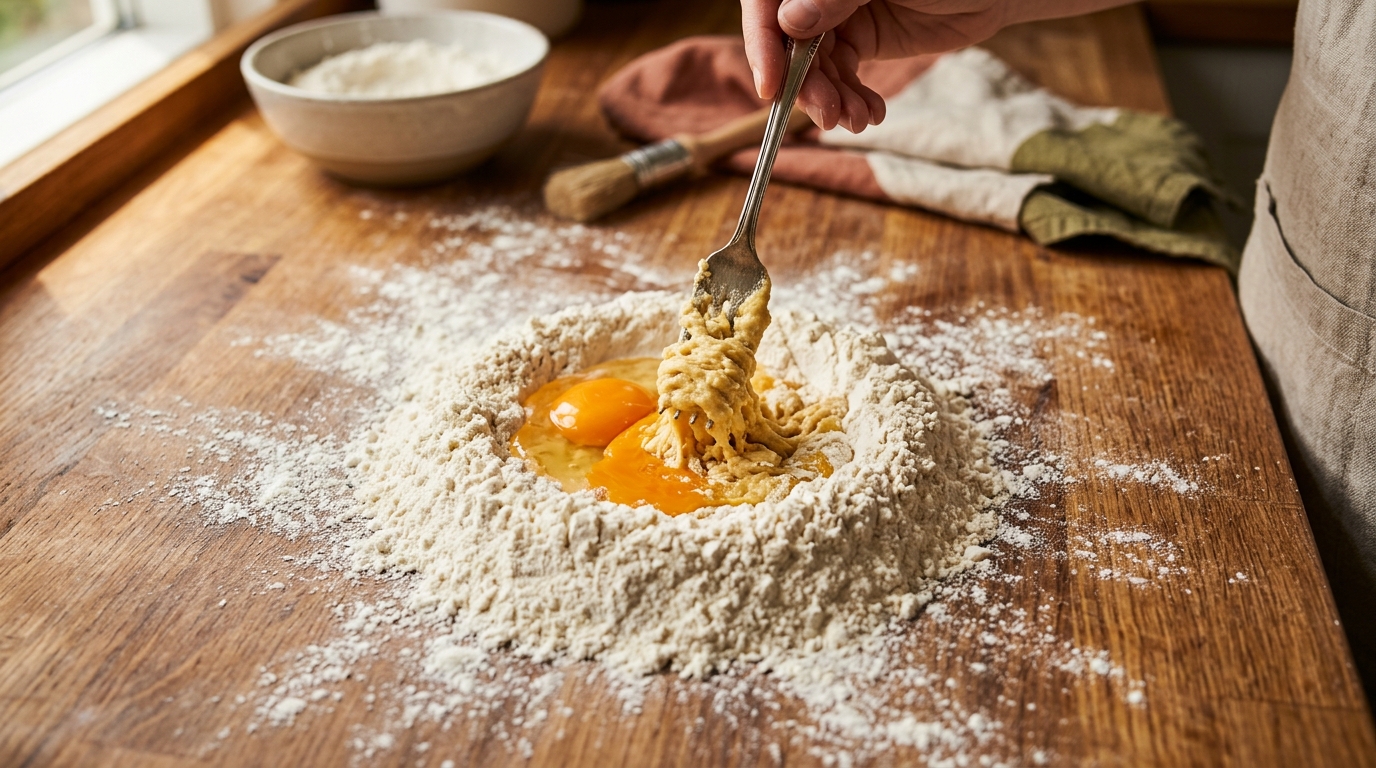
Combine: Using a fork, gradually beat the eggs into the flour from the inside wall of the well outward. Draw in flour a little at a time. Move too fast and the eggs escape. When it becomes too thick for the fork, switch to your hands. Work the rough mass together until no dry flour remains.
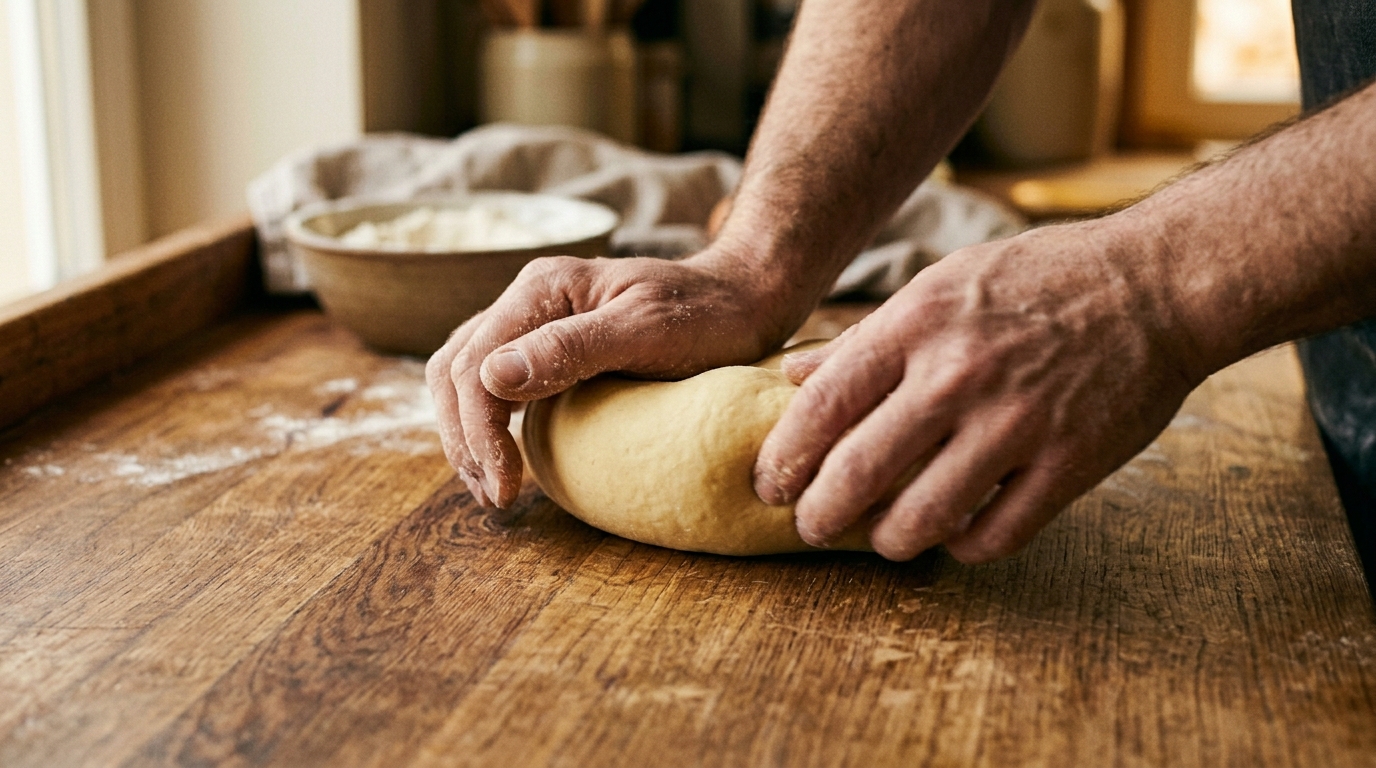
Knead: Turn onto an unfloured surface (the slight stickiness helps the gluten develop). Knead firmly for 8–10 minutes: press with the heel of your hand, fold, rotate 90°, repeat. Correctly kneaded dough is smooth, silky, and elastic: it springs back slowly when pressed. If sticky, add a small amount of flour. If dry, dip hands in water.
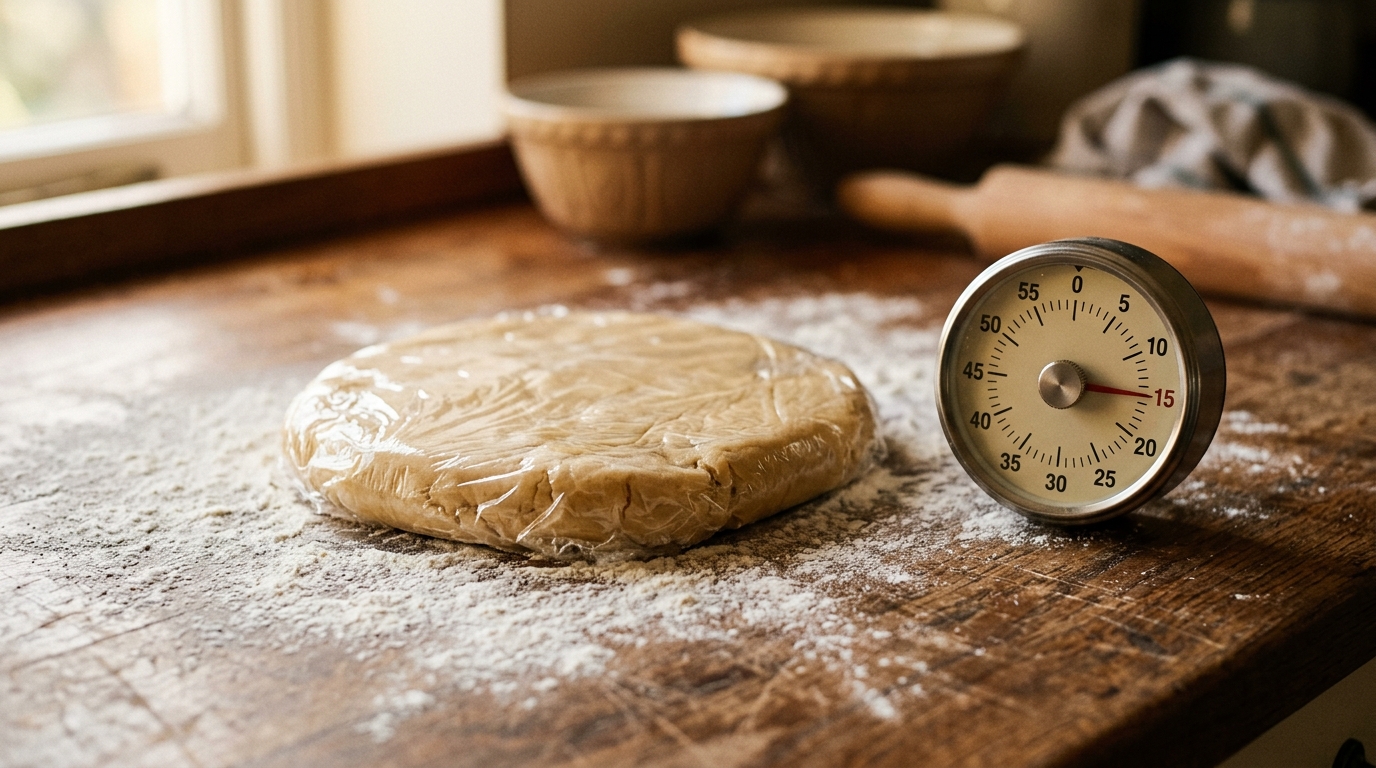
Rest: Wrap tightly in cling film. Rest at room temperature for 30 minutes minimum, though 1 hour is better. Resting relaxes the gluten, making the dough much easier to roll. Dough that won't roll thin without snapping back needs more rest, not more force.
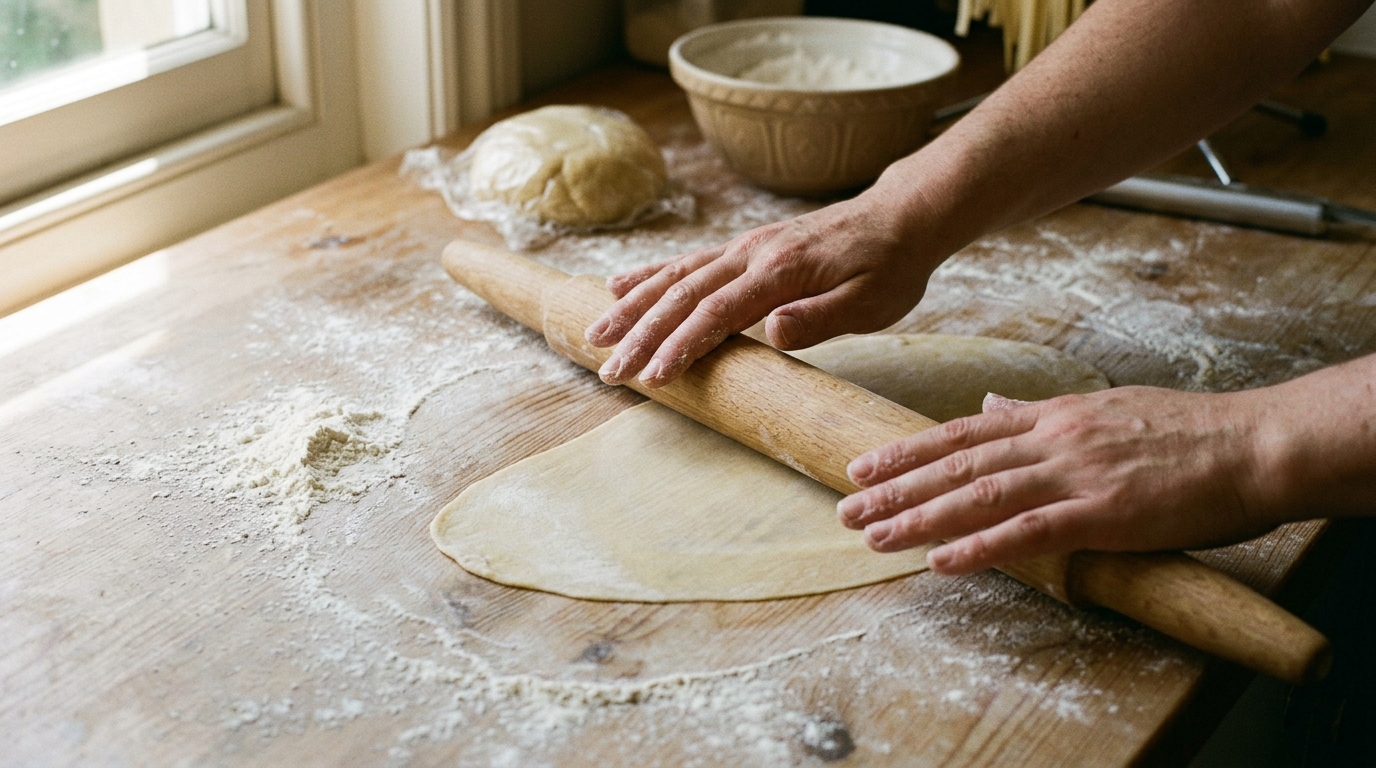
Roll thin: Divide the rested dough in half. On a lightly floured surface, roll one piece into a rectangle as thin as possible: aim for 1–2mm (you should just see your hand through it). If it springs back, cover and rest 5 minutes. Dust both sides with flour as you roll to prevent sticking.
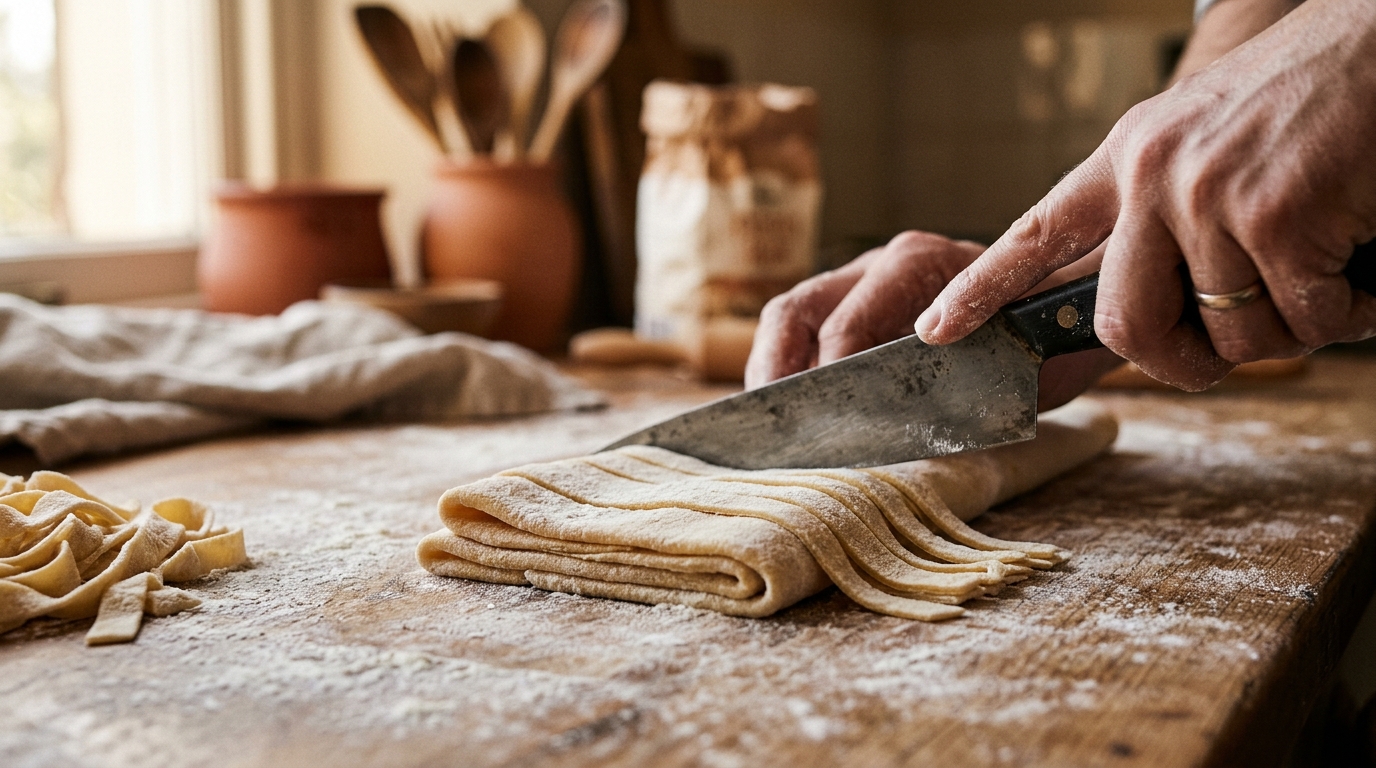
Cut tagliatelle: Dust the rolled sheet lightly with flour or semolina. Fold it loosely, not pressing down, into a flat roll. Cut across the folds at 6–8mm intervals. The cuts should be firm and quick, not dragged.
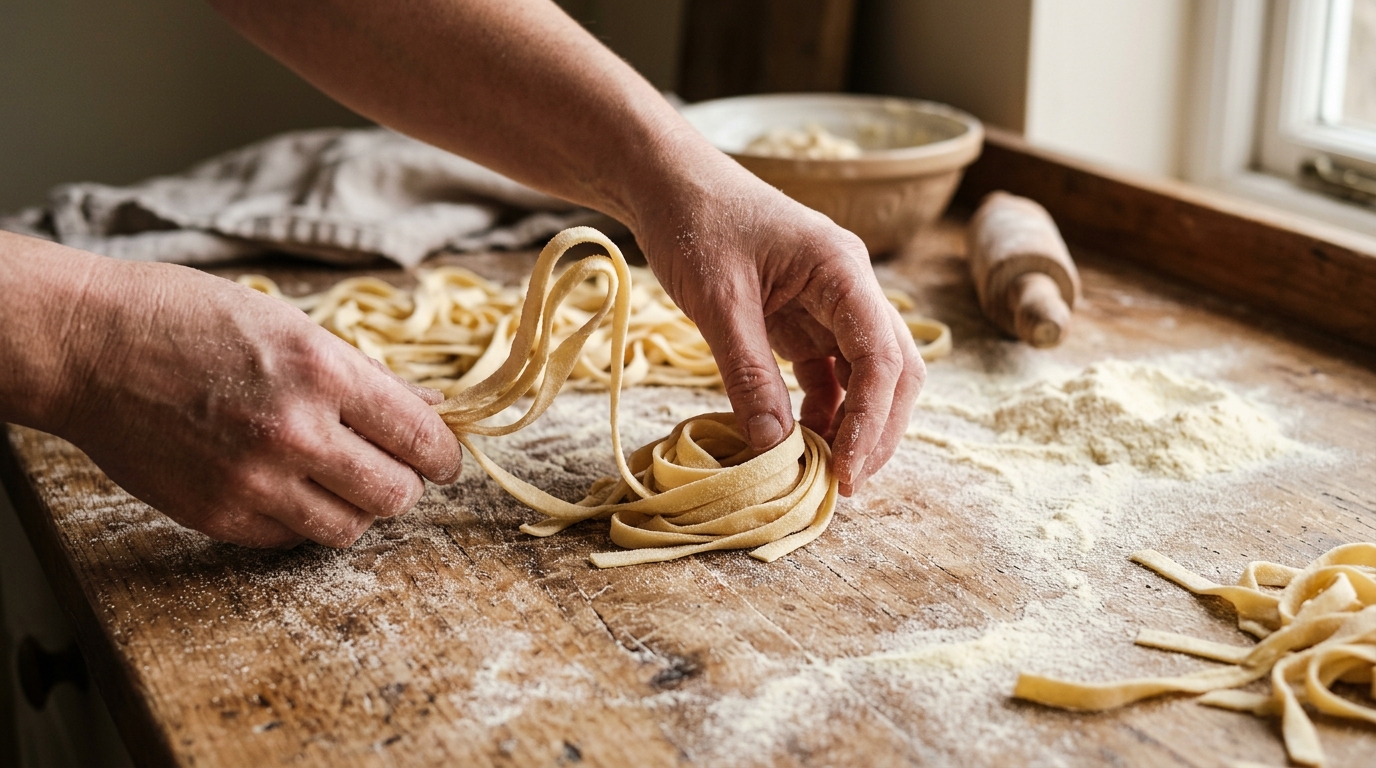
Unfurl into nests: Pick up a few strips and gently shake them open, unfurling from the folded cuts into ribbons. Arrange in loose nests on a floured tray. Dust with a little semolina to prevent sticking. Rest for 15–30 minutes before cooking, or use immediately.
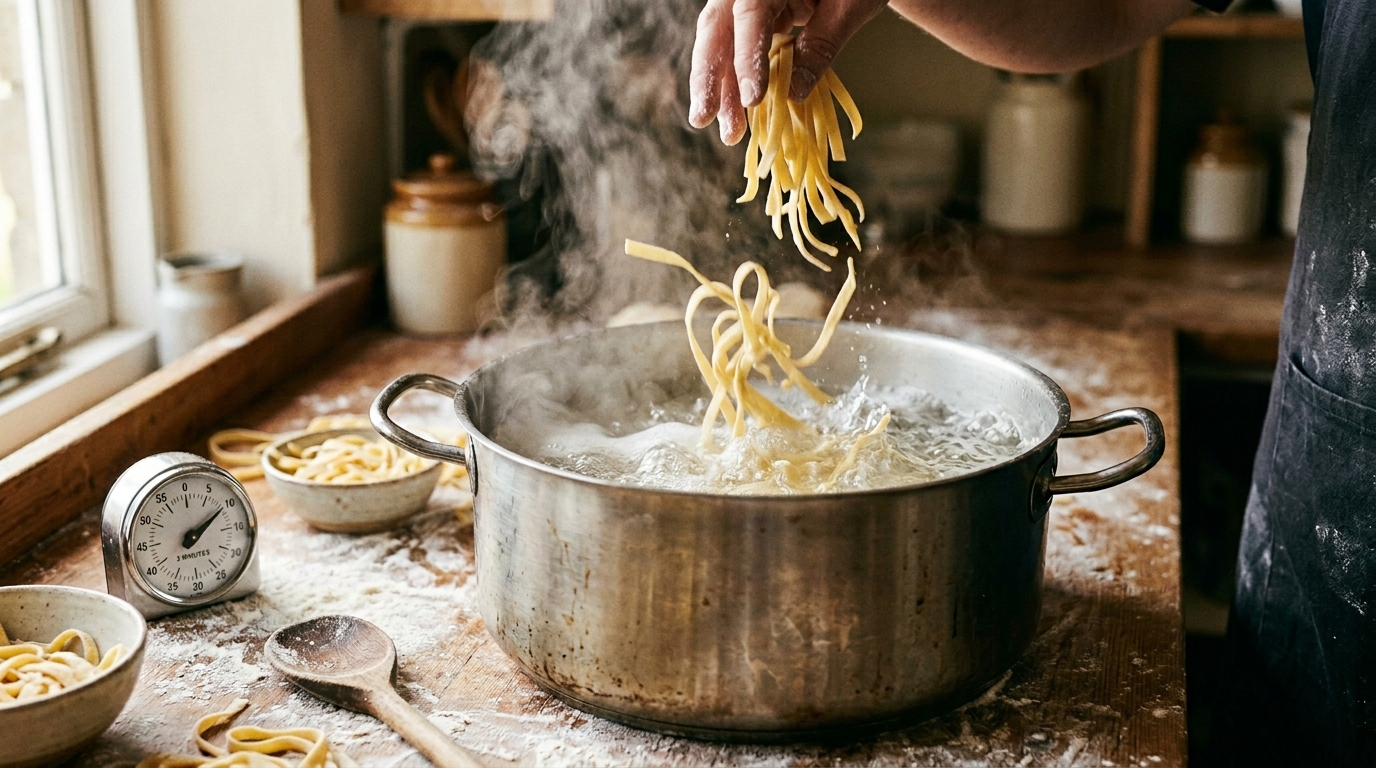
Cook: Bring a large pot of generously salted water to a rolling boil (it should taste of the sea). Add the pasta. Fresh tagliatelle cooks in 2–3 minutes: taste at 2 minutes. It should be al dente. Reserve a cup of pasta water before draining.
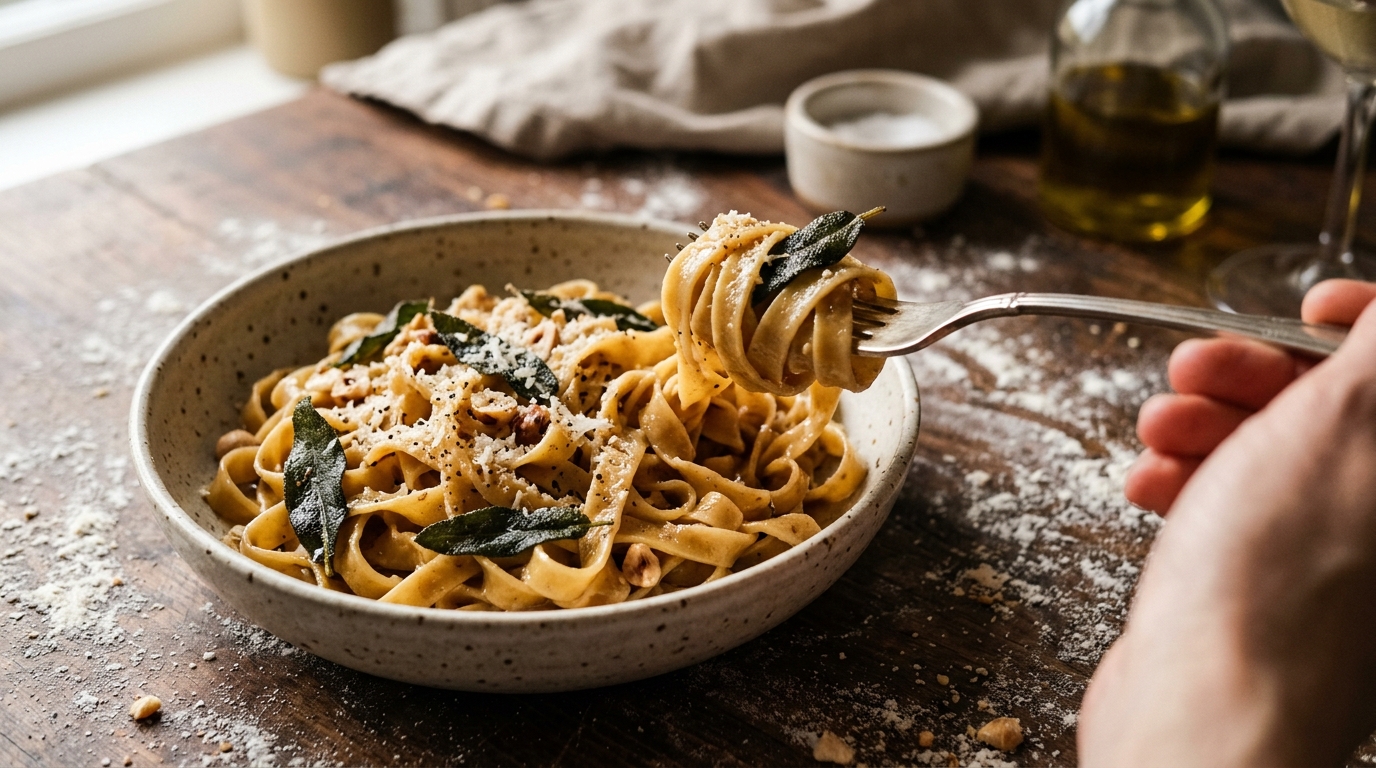
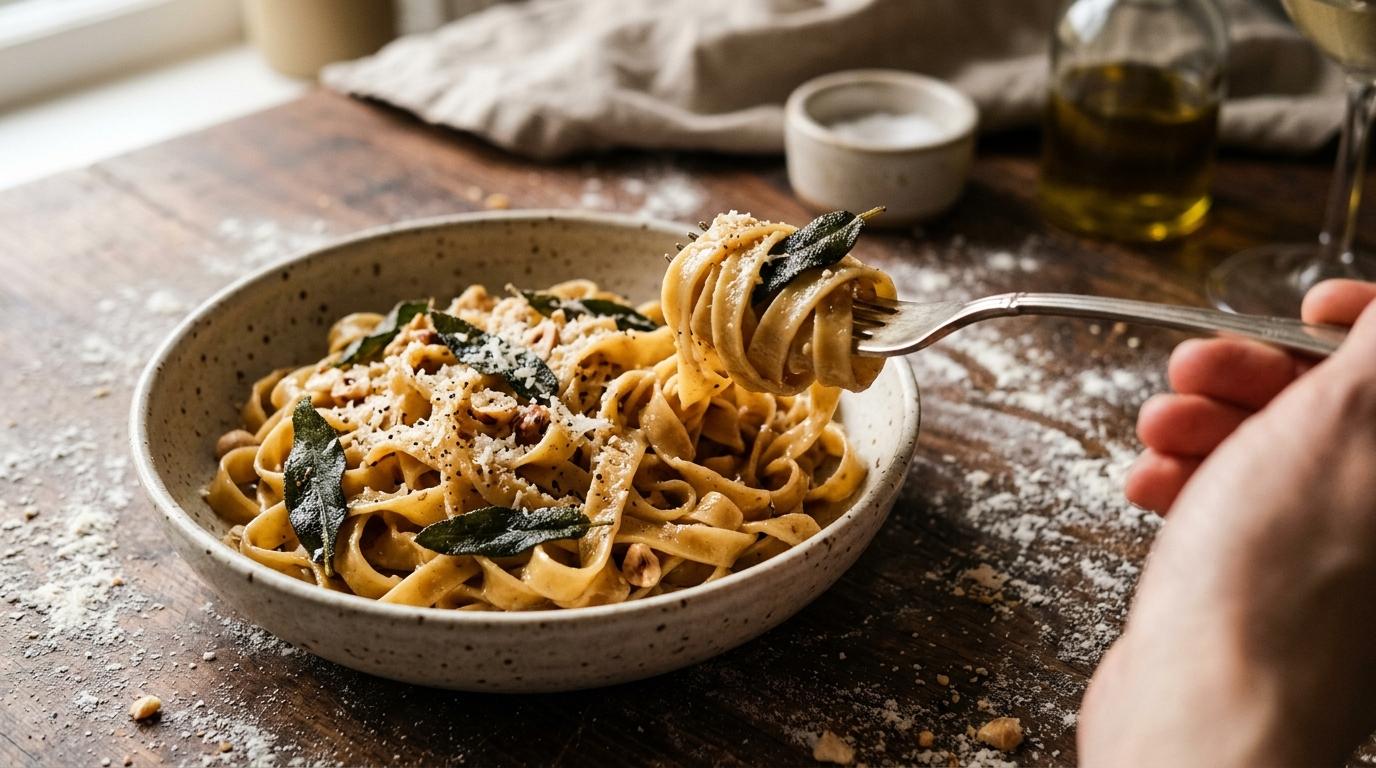
Serve immediately: Toss directly from the pot into a warm pan with brown butter and a few sage leaves, or cacio e pepe, or a slow-cooked ragù. Add a splash of pasta water if the sauce is too thick. Fresh pasta waits for no one. Eat it at once.
Pasta water
Pasta cooking water is starchy and salted: it's an emulsifier that helps sauces cling to pasta. Always reserve a cup before draining. A splash added to a sauce while you toss the pasta through it is what makes restaurant pasta glossy and cohesive.
Your pathway to mastery
Beginner: you're here
Week 1–4Egg pasta dough, tagliatelle by hand. Understanding gluten, resting, and rolling. A satisfying meal made from scratch.
Developing
Month 2–6Ravioli and tortellini (filled pasta, which requires sealing technique). Pasta machine for consistent thickness. Pappardelle, lasagne sheets, maltagliati. Semolina doughs for hand-rolled shapes.
Confident
Year 1Spinach pasta, squid ink pasta, beetroot pasta (coloured doughs). Orecchiette by hand. Regional Italian shapes: trofie, gnocchi Sardi, busiate. Homemade pasta as a weekly ritual.
Skilled
Year 2+Complex filled pasta (tortelloni, cappelletti). Rolling sfoglia at 0.5mm, professional thickness. Teaching. Understanding regional Italian pasta traditions and their specific shapes and pairings. Making pasta as a gift.
The cooks to learn from
- Marcella Hazan: The definitive English-language authority on Italian cooking; The Essentials of Classic Italian Cooking (1992) is the book every home cook should own; her pasta chapters are foundational
- Evan Funke: LA-based pasta chef who apprenticed under sfoglina (professional pasta makers) in Bologna; American Sfoglino (2019) is the most serious English-language pasta book yet written
- Pasta Grannies (Vicky Bennison): UK YouTube channel and cookbook documenting elderly Italian women making regional pasta by hand; the most authentic and emotionally resonant pasta resource in any language
Best resources
Community
Reader tips
No tips yet. Be the first to share what worked for you.
Share a tip
Sign in to share what worked for you.
Same category
What to learn next
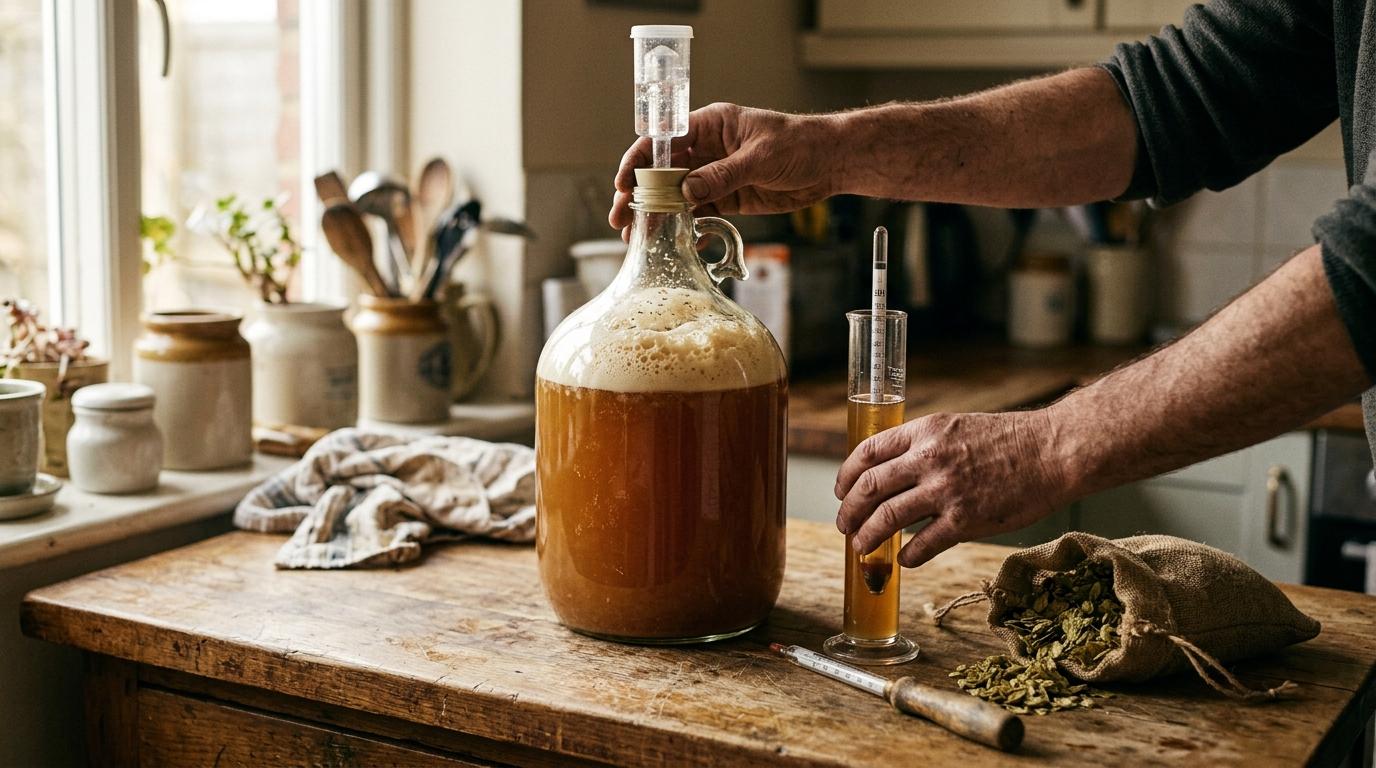
Home Beer Brewing
Brew your first batch of real ale at home. Equipment, ingredients, the brewing process, fermentation, and bottling, step by step.

Beer: Styles, Serving and Off-Flavours
Beer styles, storage and draught service, glassware, pouring, and the common off-flavours and their causes. Preparation for the Cicerone Certified Beer Server (Level 1) exam.
Bread Baking from Scratch
Your first proper loaf in an afternoon. Flour, water, salt, time, and the foundations of a skill that will feed people for life.
Side quests