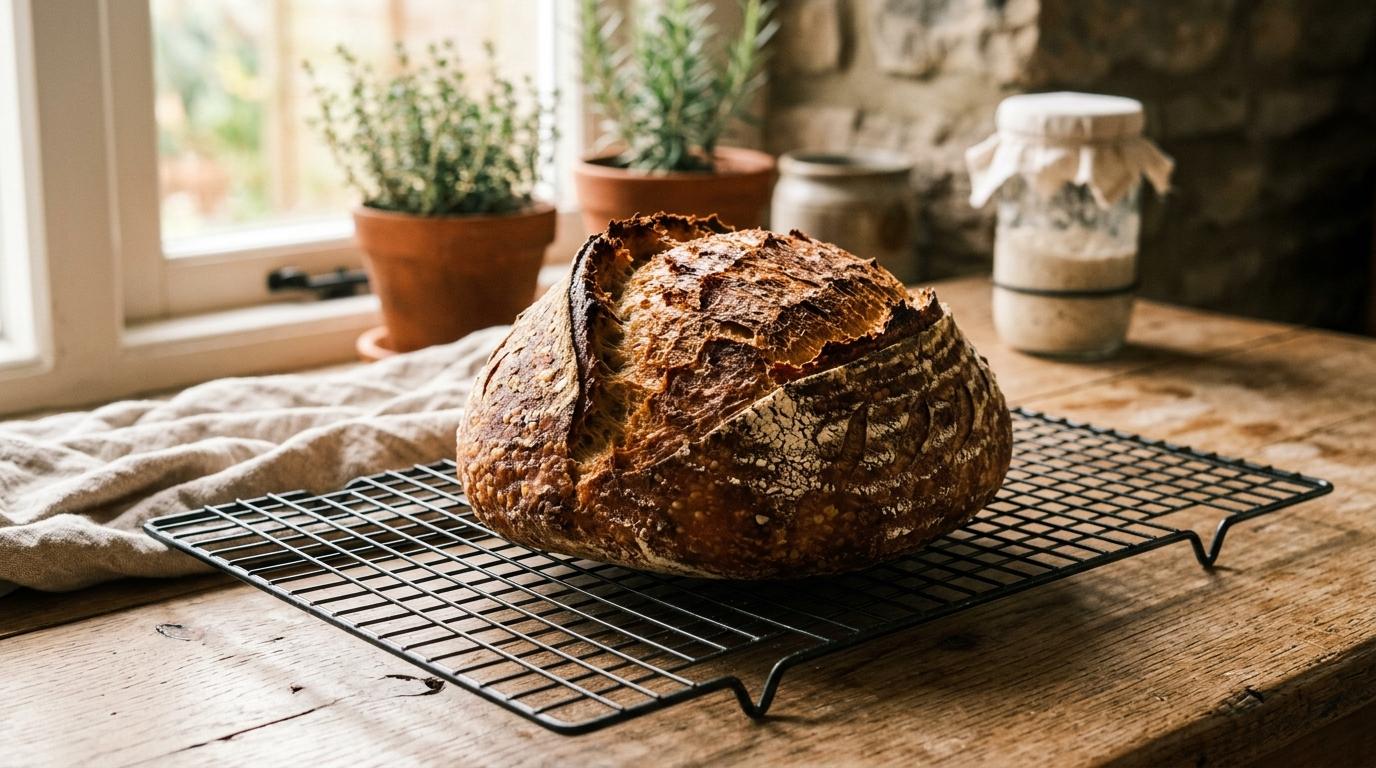
What you need to get started
Sourdough requires patience more than equipment. The loaf takes 24–48 hours from mixing to baking, mostly waiting. The starter (the living culture at the heart of sourdough) takes 7–14 days to establish. Everything else is time and attention.
Equipment
A glass jar, 500ml to 1 litre
Already in your kitchen, or £2–5For your starter. Glass so you can see the activity. Wide-mouthed for easy feeding. Marks on the side (use a rubber band) to track when the starter has doubled. Don't use a sealed lid: the starter produces CO₂ and needs to breathe.
Affiliate link. We may earn a small commission.
Dutch oven or heavy lidded casserole (22–26cm)
£20–40 second-hand; £150–250 new (not necessary)The lid traps steam during the initial bake, creating the thick, blistered crust that is sourdough's signature. Without the lid you get a thin crust and less oven spring. The same pot works for yeasted bread. If you already have one, you're set.
Affiliate link. We may earn a small commission.
Proving basket (banneton), 22–25cm oval or round
£12–20 for a banneton; free if using a lined bowlSupports the shaped dough during the final cold prove in the fridge (the retard). The coiled rattan leaves a beautiful spiral pattern on the crust. A bowl lined with a well-floured linen cloth is a workable substitute.
Affiliate link. We may earn a small commission.
Digital kitchen scales
£8–15 for a reliable setSourdough is unforgiving of imprecision. Flour and water must be weighed, not measured by volume. Starter percentage, hydration percentage, salt percentage: all of sourdough is ratios by weight.
Affiliate link. We may earn a small commission.
Lame (bread scoring tool) or a razor blade
£5–10 for a lame; a fresh disposable razor blade in a cork works identicallyYou score the dough just before baking: a single cut, 1cm deep, at 45°. This controls where the loaf expands and creates the dramatic ear (the raised flap of crust). A sharp knife works, but a lame's thin blade doesn't drag on wet dough.
Affiliate link. We may earn a small commission.
Ingredients
For the starter (to make once and maintain)
- Strong white bread flour (for feeding): Higher protein content feeds the wild yeast more effectively than plain flour. Waitrose, Sainsbury's, or Shipton Mill.
- Wholemeal or rye flour (for the initial starter): Wild yeast and bacteria live on the outside of wheat grains. Wholemeal flour contains more of the bran and germ where they concentrate, which accelerates the starter's initial establishment.
- Unchlorinated water: Chlorine in tap water can inhibit yeast activity. Use filtered water, or leave tap water out overnight for the chlorine to dissipate. Some bakers never bother with this and have no problems. If your tap water tastes good, it's probably fine.
Once your starter is established, you only need strong white flour and water to maintain it indefinitely.
Some links are affiliate links. Airgap.life may earn a small commission at no extra cost to you.
Community
Reader tips
No tips yet. Be the first to share what worked for you.
Share a tip
Sign in to share what worked for you.
Same category
What to learn next
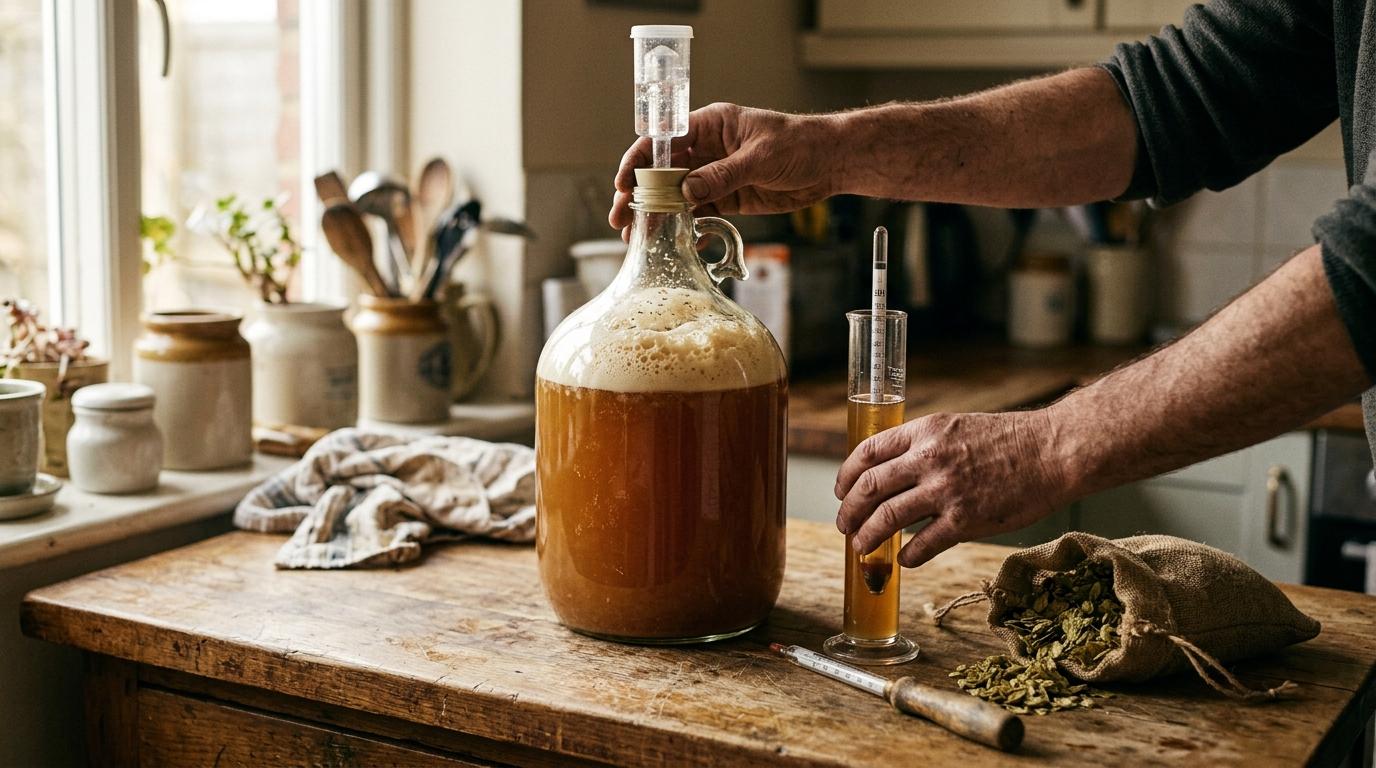
Home Beer Brewing
Brew your first batch of real ale at home. Equipment, ingredients, the brewing process, fermentation, and bottling, step by step.
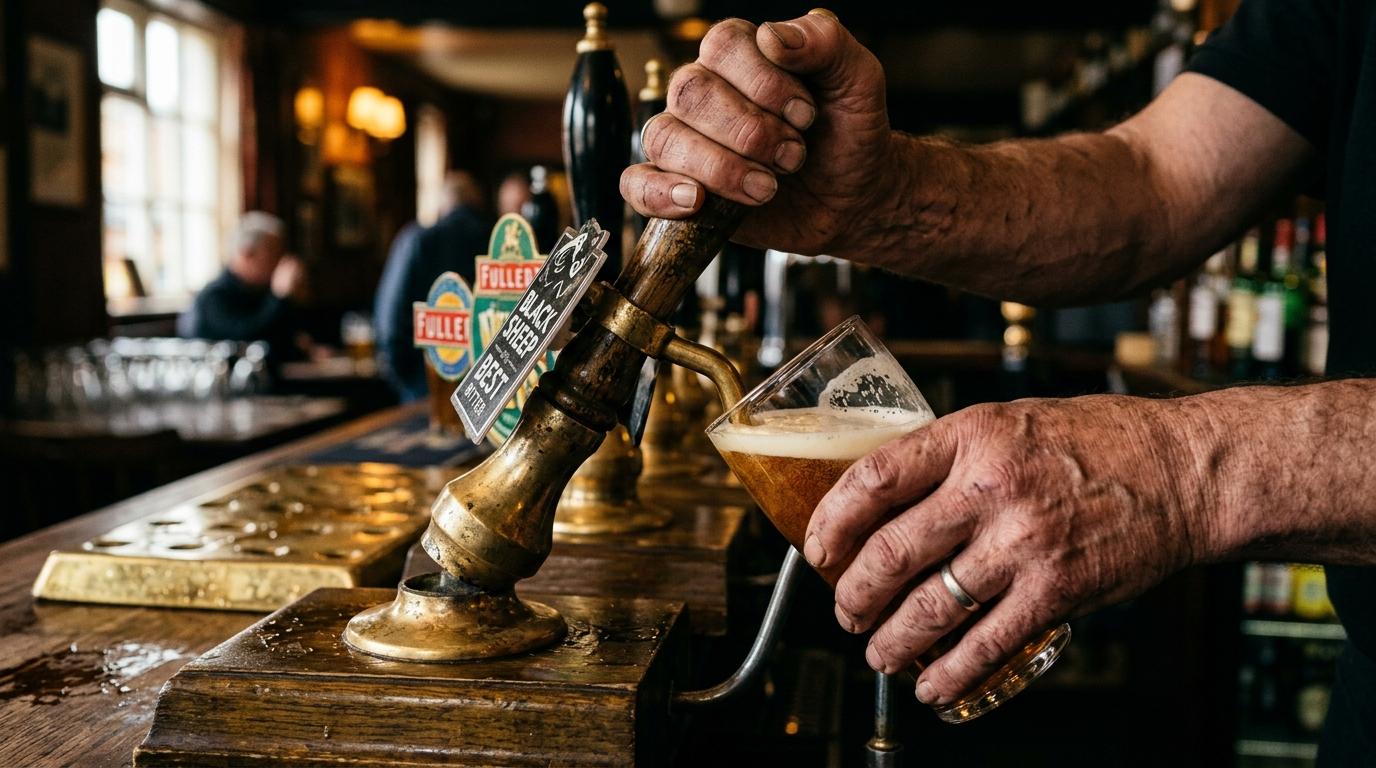
Beer: Styles, Serving and Off-Flavours
Beer styles, storage and draught service, glassware, pouring, and the common off-flavours and their causes. Preparation for the Cicerone Certified Beer Server (Level 1) exam.
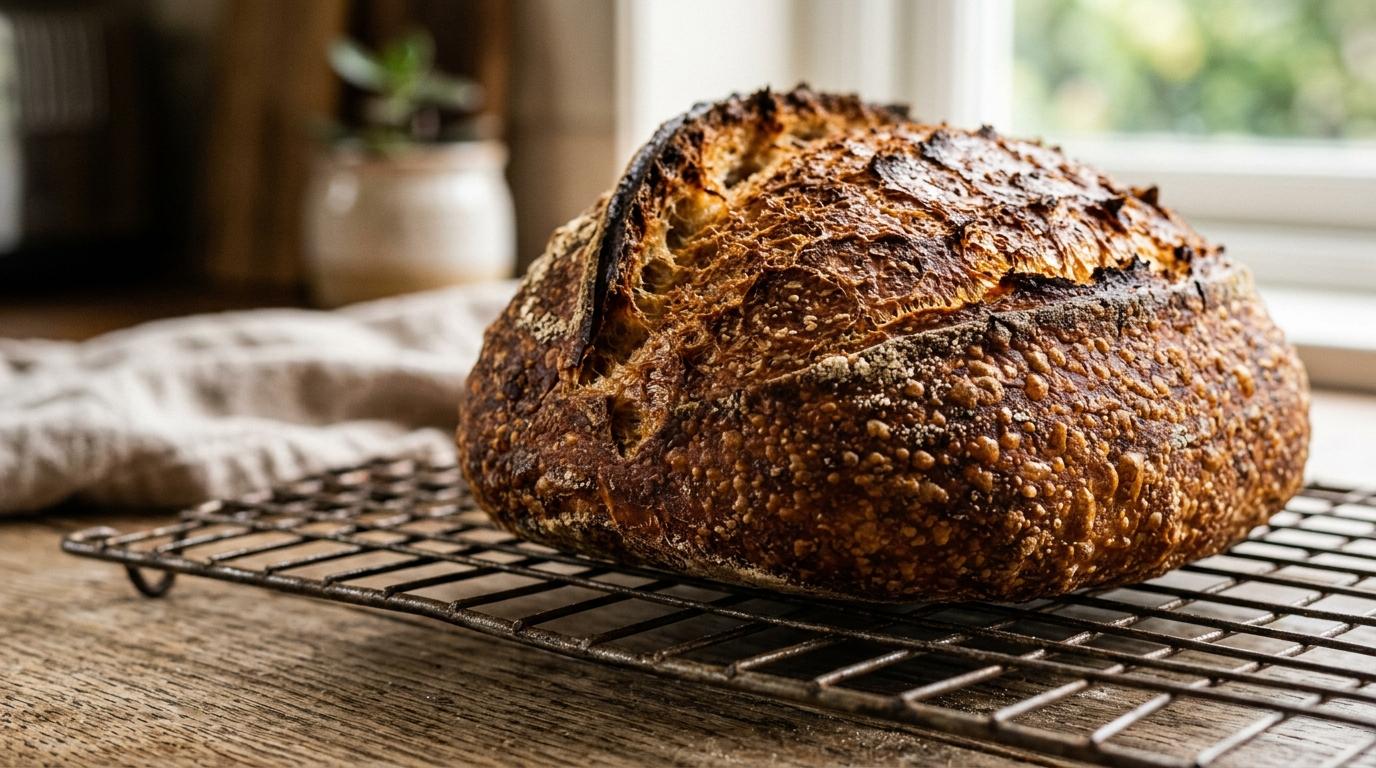
Bread Baking from Scratch
Your first proper loaf in an afternoon. Flour, water, salt, time, and the foundations of a skill that will feed people for life.
Side quests
Practice drills for this course
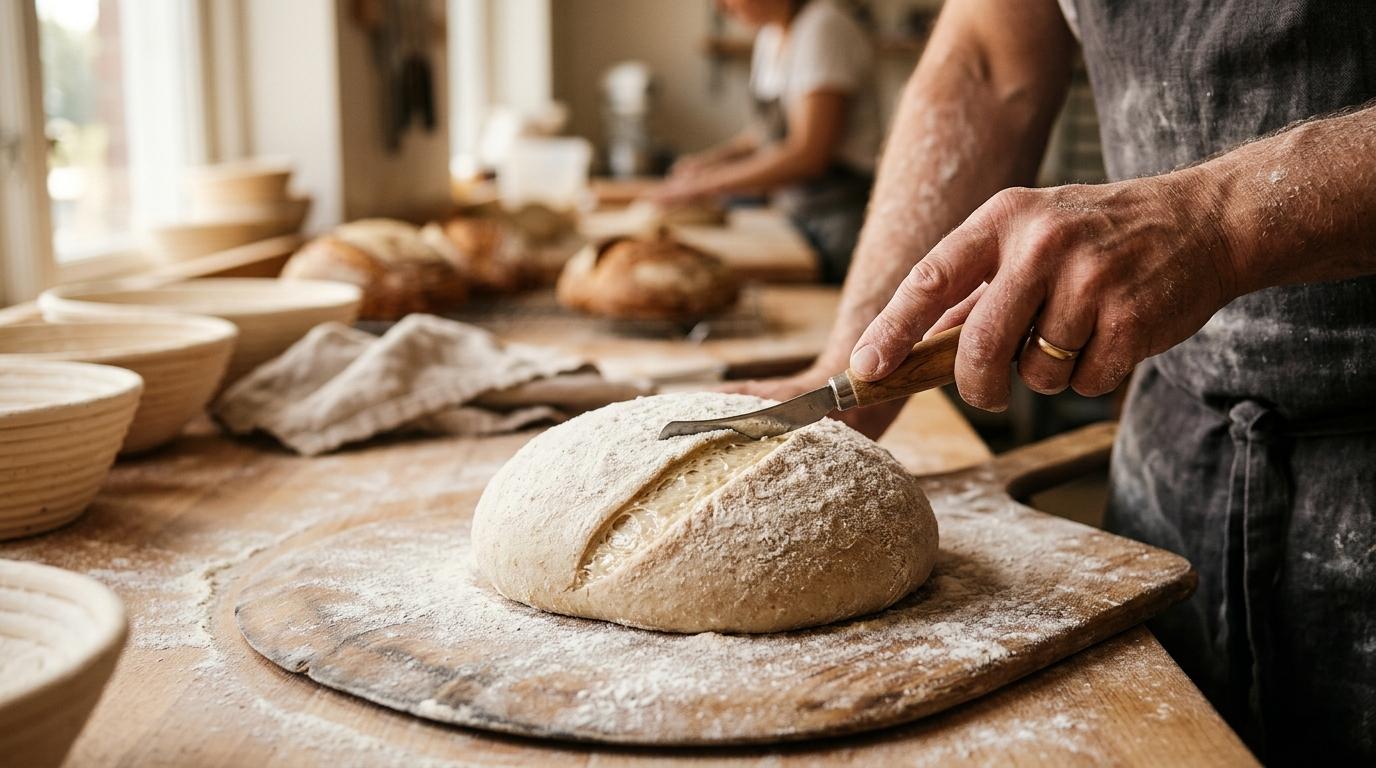
How to score bread before baking
Learn to score bread before baking: which blade to use, how deep to cut, and the slash patterns that make a loaf rise tall instead of bursting at the seams.
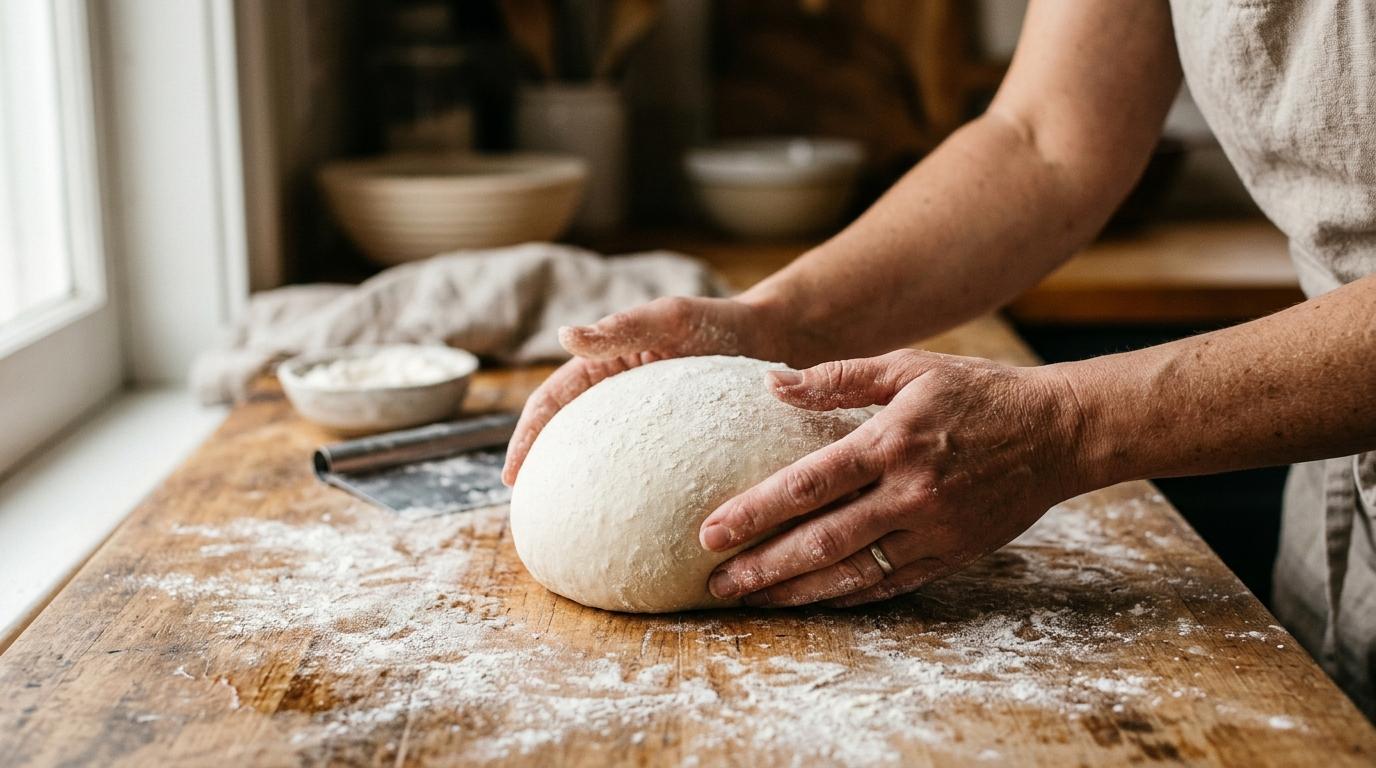
How to shape a boule
Learn to fold and tension a round loaf so it holds its shape and opens beautifully in the oven.