What you need to get started
The machine is the main investment. Everything else is modest. Start with the minimum. Acquire specialist tools as projects demand them.
The machine
Brother LS14S or LS14
£90–110 newThe beginner benchmark. Simple threading, reliable tension, 14 stitch types. Exactly what you need and nothing confusing you don't.
Affiliate link. We may earn a small commission.
SINGER Heavy Duty 4432
£150–180 newFaster motor and metal interior frame. Better for denim, canvas, and heavier fabrics. Worth the extra if you plan to sew bags or outerwear.
Affiliate link. We may earn a small commission.
Second-hand machine (Singer or Brother, 1980s–2000s)
£30–60 second-handPre-2000s machines are often built better than modern equivalents. An old Singer 4423 from eBay or a charity shop is a serious machine.
Affiliate link. We may earn a small commission.
Everything else
Fabric scissors (dedicated)
£20–35Never use fabric scissors for paper. It dulls them immediately. A dedicated pair of 20cm dressmaking shears lasts decades.
Affiliate link. We may earn a small commission.
Seam ripper
£4–6You will make mistakes. A good seam ripper lets you undo them cleanly without damaging fabric. Buy a comfortable one with a cap.
Affiliate link. We may earn a small commission.
Sewing pins or Wonder Clips
£8–12Clips are faster for thick fabrics; pins are more precise. Start with pins.
Affiliate link. We may earn a small commission.
Measuring tape + ruler
£8–12A 150cm flexible tape for the body and a 30cm clear quilting ruler for fabric cutting.
Affiliate link. We may earn a small commission.
Iron and ironing board
Already owned or £25–40Pressing seams open is not optional. It is what makes the difference between homemade-looking and professional-looking work.
Affiliate link. We may earn a small commission.
Where to buy fabric (UK)
- Minerva Crafts: Huge online selection, good beginner packs, regular sales
- The Cloth House (London): Beautiful natural fabrics, ethical sourcing
- IKEA fabric remnants: Cheap canvas and cotton for practice. Seriously.
- Local markets: Often cheap pre-washed cotton and linen, ideal for beginners
Pre-wash all fabric before cutting. Fabric shrinks. If you skip this, your finished project will shrink.
Some links are affiliate links. Airgap.life may earn a small commission at no extra cost to you.
Start with linen or medium-weight cotton
Silk, stretch jersey, and very thin cotton are difficult to handle. Natural woven fabrics (linen, calico, quilting cotton) are forgiving and press well. Save slippery or stretchy fabrics for after your first five projects.
Theory, technique & terminology
How a sewing machine works
A lockstitch machine uses two threads at once: one from the top spool (threaded through the needle) and one from a bobbin beneath the fabric. The needle pierces the fabric, loops around the bobbin thread, and locks when the thread is pulled up. Both threads must be correctly tensioned: if the bobbin thread loops on the top surface, your top tension is too tight, and vice versa.
Threading and tension
Threading is where most errors start. Always thread with the presser foot raised: the tension discs open when the foot is up, letting the thread seat correctly. If thread keeps breaking, re-thread completely before touching the tension dial. 90% of tension problems are threading problems.
Stitch types you need to know
Straight stitch
The workhorse. 2.5mm length for most seams; 1.5mm for curves or reinforcing stress points.
Zigzag stitch
Finishes raw edges to prevent fraying. Also used on stretch fabric to allow the seam to move.
Backstitch
Always start and end seams with 3–4 backstitches to lock the thread. Otherwise seams unravel under washing.
Pressing vs. ironing
Ironing moves the iron back and forth and is for clothes. Pressing is for sewing: lift and lower the iron, don't drag it. Press each seam open before crossing it with another. That's what makes corners lie flat and reduces bulk.
Terminology
History
Hand sewing dates to approximately 30,000 BCE, with bone needles found in caves used to stitch animal hides. Barthélemy Thimonnier filed the first mechanical sewing machine patent in France in 1830, but tailors who feared for their livelihoods destroyed his factory. Isaac Singer commercialised the first practical machine in the United States in 1851, launching the Singer brand that still exists. The domestic sewing machine became the first true domestic appliance, preceding the washing machine and vacuum cleaner by decades. Haute couture, bespoke high-end dressmaking, emerged in Paris in the 1850s under Charles Frederick Worth, the first named fashion designer.
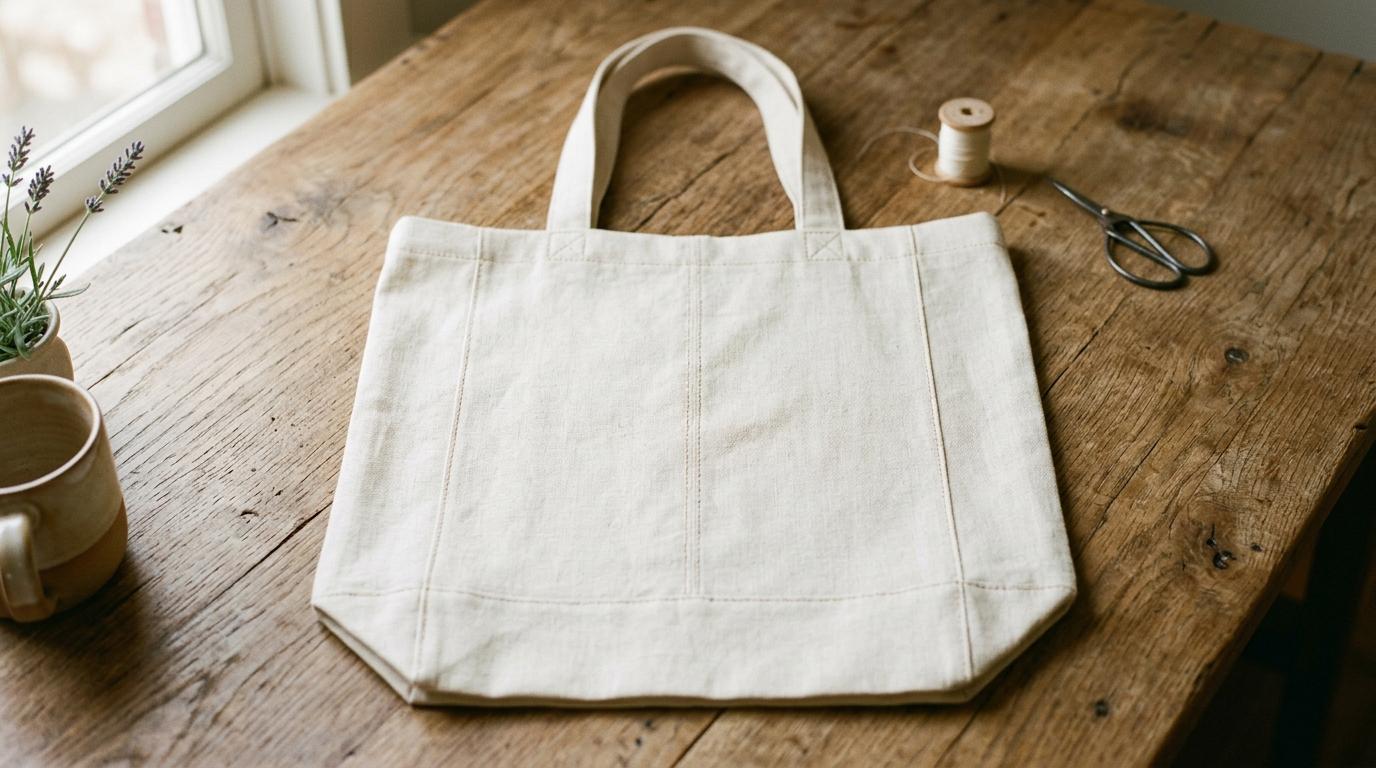
The project: a linen tote bag
Flat pieces, straight seams, one handle join. Every technique you need is in this project, and the result is something you'll use.
Materials
Cut list (seam allowance: 1cm)
Assembly order
- Pre-wash and press the linen.
- Make the handles: fold each strip in thirds lengthways, press, stitch along both long edges.
- Fold the main body in half (right sides together), matching the short edges. Pin side seams.
- Stitch both side seams with a 1cm allowance. Backstitch at start and end.
- Finish raw edges with zigzag stitch or serger if you have one.
- Press seams open.
- Pin handles to the bag opening, 10cm from side seams, with 3cm overlap inside.
- Fold and press the top hem (1cm, then 3cm). Pin handles in place.
- Stitch the hem, encasing the handle ends. Stitch a box-X reinforcement on each handle.
- Turn right side out, press again. Done.
The box-X reinforcement
The handle join is the highest-stress point. Stitch a 2cm box, then stitch an X across it diagonally. This is how bag handles are reinforced industrially.
Your pathway to mastery
Beginner (you're here)
Month 1–3Straight seams, basic hems, simple bags and accessories. Understand tension, pressing, and grain.
Competent
Month 4–12Zip insertions, pockets, lining, waistbands. Simple garments: pyjama bottoms, elastic-waist skirts, cushion covers.
Confident maker
Year 2Reading and adapting commercial patterns, fitting adjustments, dressmaking. Garments that fit properly.
Skilled
Year 3+Pattern drafting from scratch, tailoring, couture techniques, sewing for others professionally.
The people to learn from
- Professor Pincushion (YouTube): Best structured sewing tutorials on YouTube; clear, methodical, beginner-focused
- Gertie Hirsch (Gertie Sews): Vintage-style garment construction; excellent for understanding fit and pattern adjustment
- Helen Joseph-Armstrong: Author of Patternmaking for Fashion Design, the definitive textbook if you go beyond patterns
- Mimi G Style: Inspiring community builder; demonstrates that sewing your own wardrobe is achievable
Qualifications
City & Guilds Fashion & Textiles (Level 1–3)
UK vocational qualification. Level 2 equivalent to GCSE; Level 3 to A-level. Widely recognised by employers.
UAL (University of the Arts London) courses
Continuing education courses in dressmaking, patternmaking, tailoring. Evenings and weekends available.
Savile Row Bespoke apprenticeship
The pinnacle of British tailoring training. Extremely competitive; typically begins age 16–18.
Best resources
Community
Reader tips
No tips yet. Be the first to share what worked for you.
Share a tip
Sign in to share what worked for you.
Same category
What to learn next
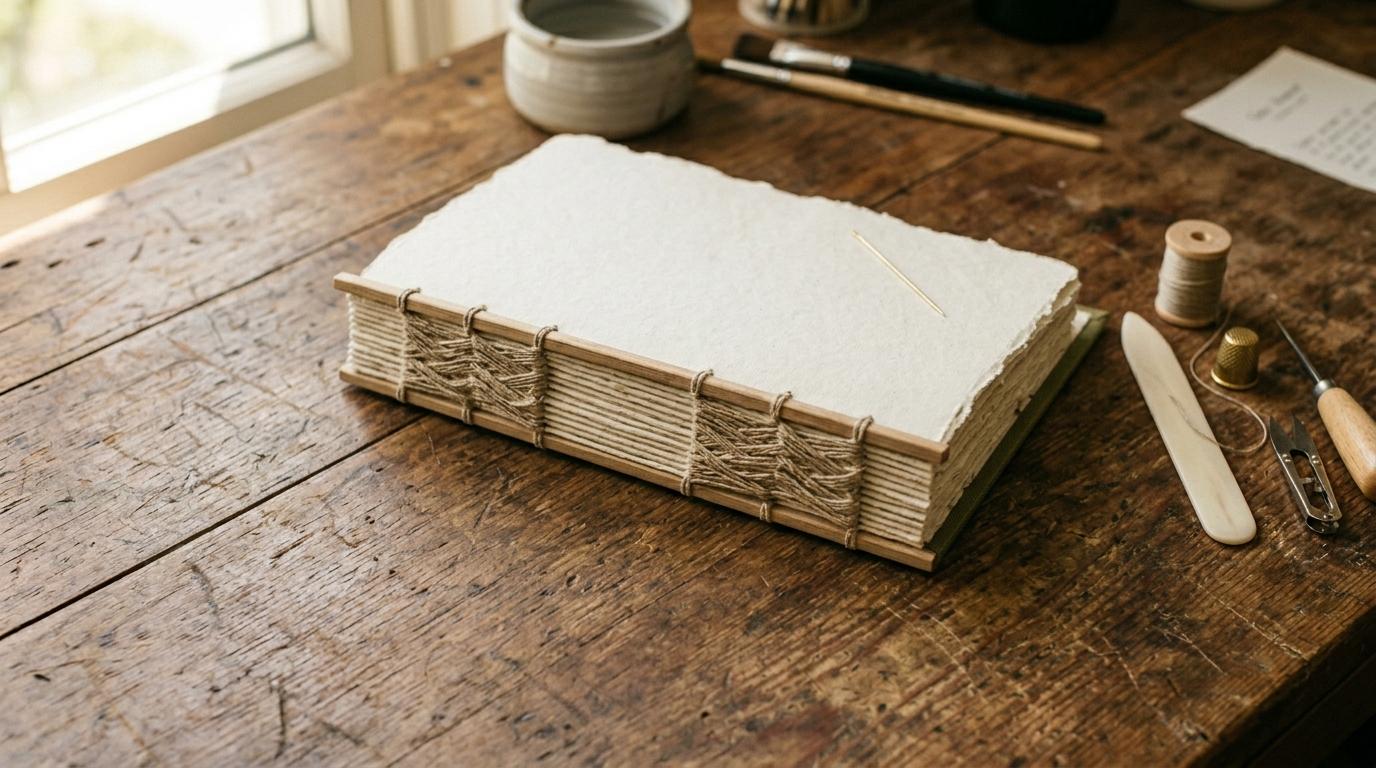
Bookbinding: Your First Journal
Fold, sew, and case a hardback journal by hand. The Coptic stitch and case binding are the two foundational methods, both achievable in a single afternoon session.
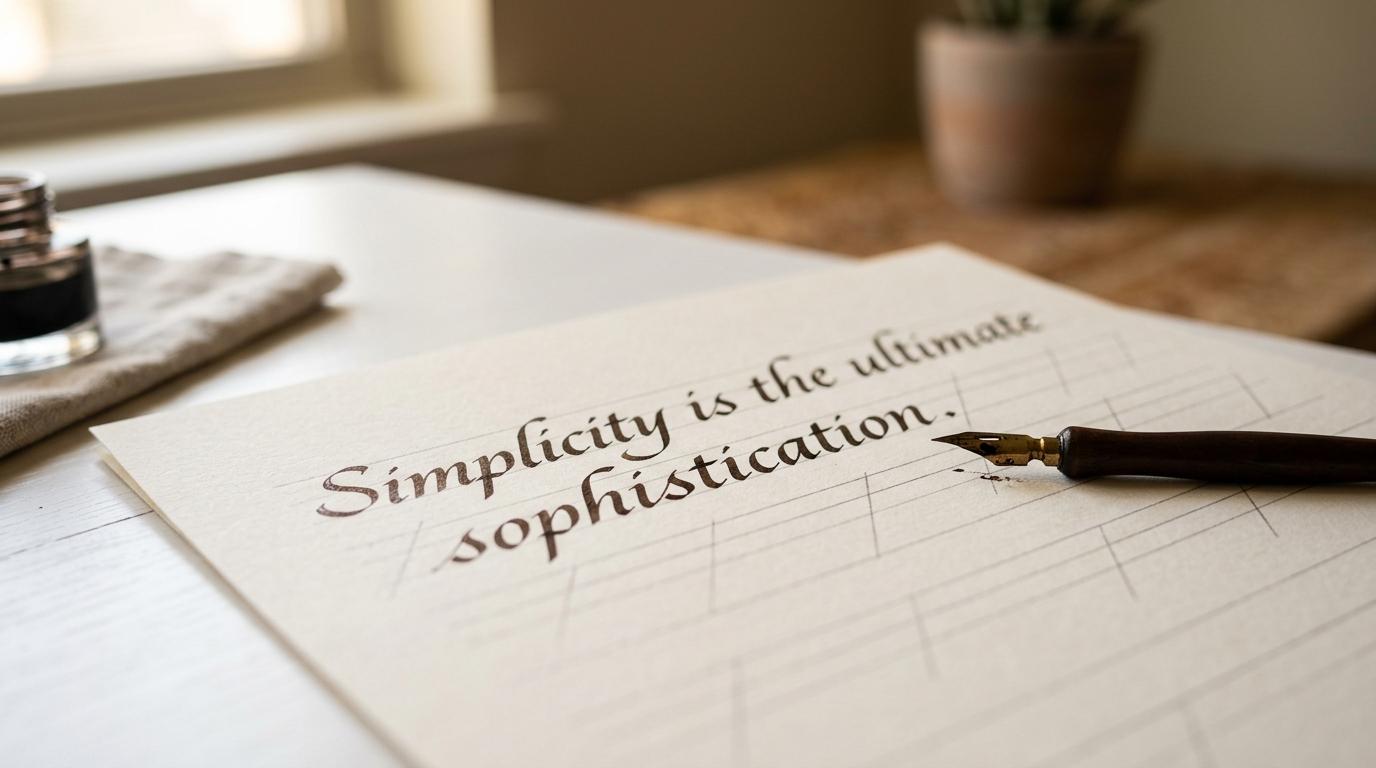
Calligraphy: The Foundational Script
Italic script with a pointed nib. The foundational Western calligraphy hand: clear, elegant, and achievable. Every lettering tradition descends from this one.
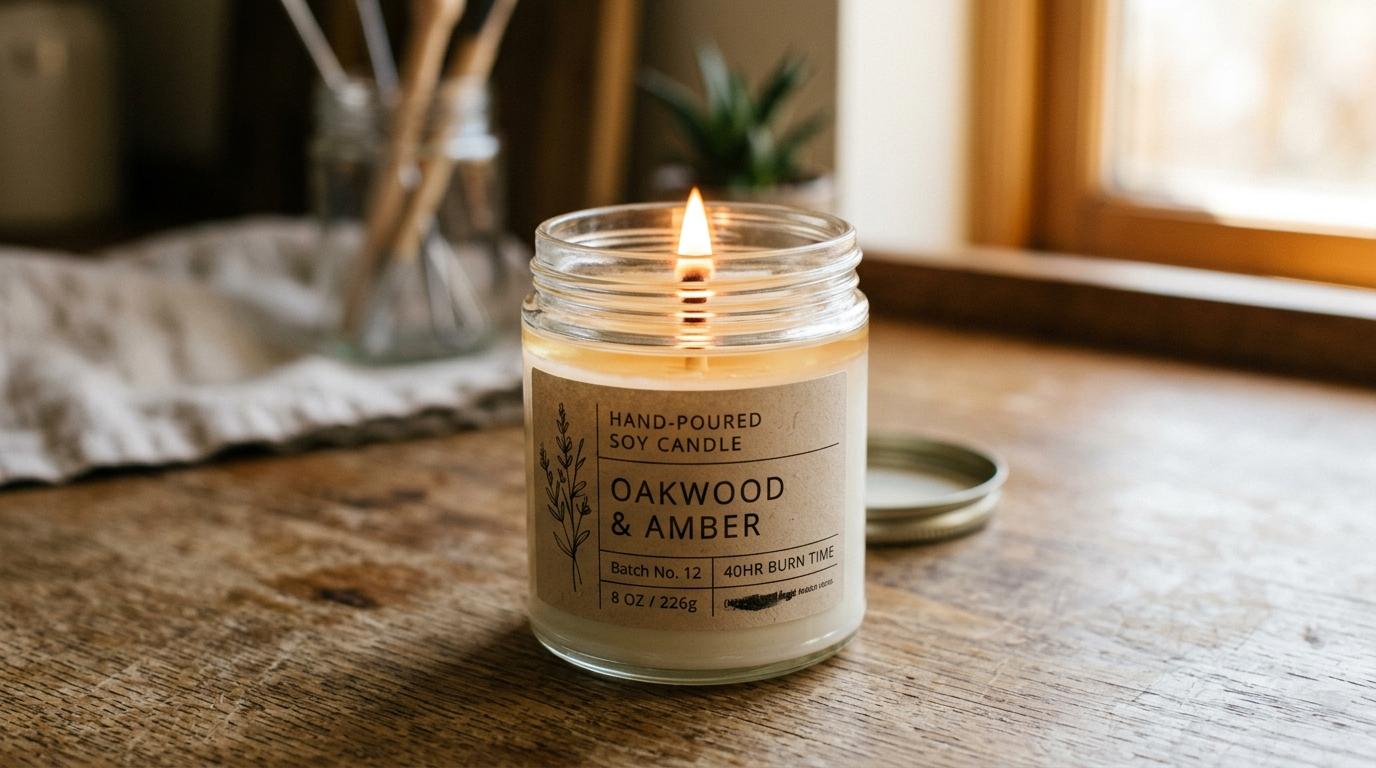
Candle Making
Make container candles with soy wax, fragrance oil, and cotton wicks. Published in late October, six weeks before Christmas: enough time to make gifts.
Side quests
Practice drills for this course
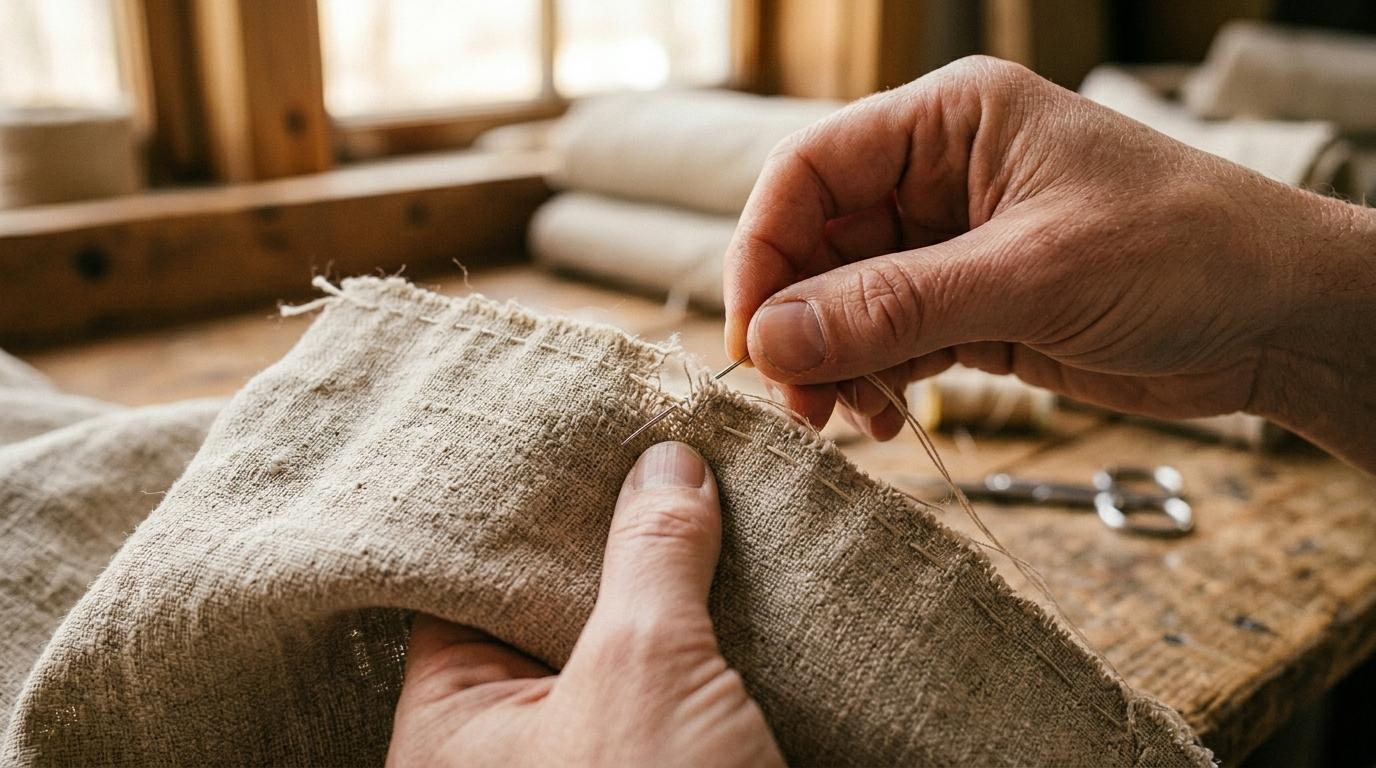
How to sew a ripped seam by hand
Fix a split seam by hand in minutes: no machine needed, just a needle, thread, and patience.
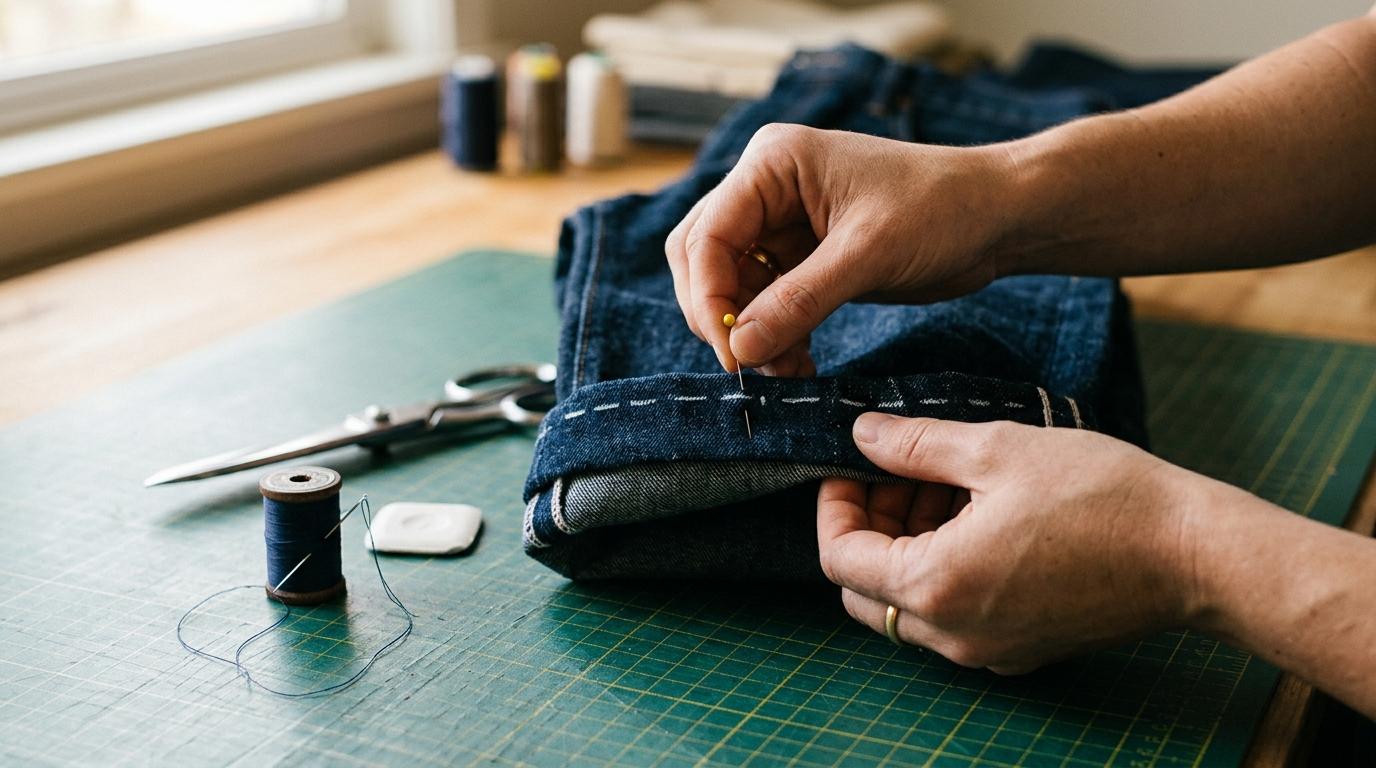
How to hem jeans by hand
Learn to shorten jeans with a needle and thread: no machine needed, result lasts for years.
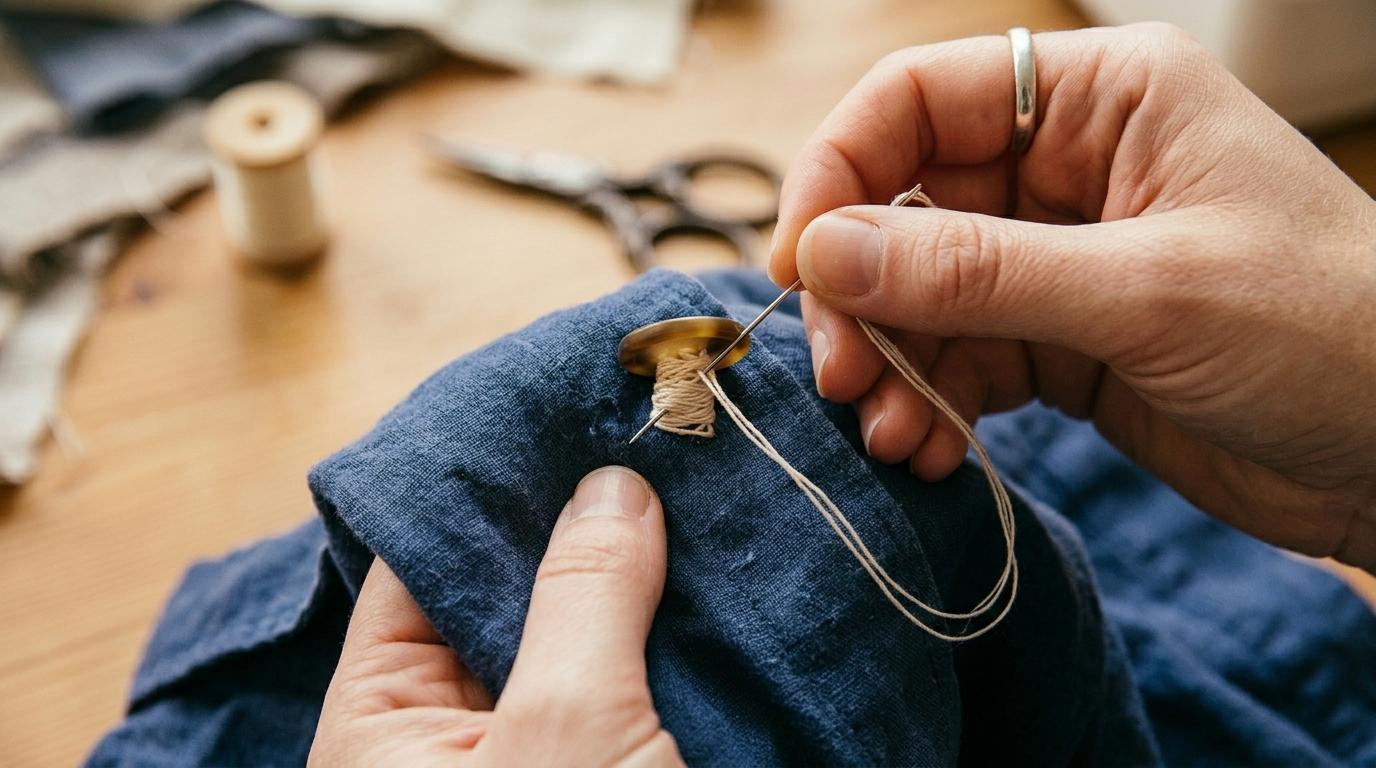
How to sew a button back on
Reattach a button so it never falls off again: the anchor stitch, the shank trick, and a knot that holds. Five minutes, no sewing machine needed.